SEARCH

Mahmood F, Helliwell P. Prompt diagnosis can prevent joint damage in psoriatic arthritis. Practitioner Dec 2017;261(1810):17-22
Prompt diagnosis can prevent joint damage in psoriatic arthritis
20 Dec 2017
AUTHORS
Dr Farrouq Mahmood MB BS, Clinical Research Fellow in Rheumatology, Bradford Teaching Hospitals NHS Trust, Bradford, UK
Dr Philip Helliwell MA DM PhD FRCP, Senior Lecturer & Honorary Consultant in Rheumatology, Leeds Institute of Rheumatic and Musculoskeletal Medicine, University of Leeds, Chapel Allerton Hospital, Leeds, UK
Competing interests: None
Article
Abstract
Psoriatic arthritis (PsA) is a chronic, autoimmune inflammatory condition that can affect up to 30% of patients with psoriasis. It is part of the seronegative spondyloarthropathy group of rheumatic diseases which also includes reactive arthritis and ankylosing spondylitis. PsA is a progressive, debilitating condition that can result in considerable disability and reduced quality of life. It can be a multisystem disease affecting the eyes, the gut and the tendons and is associated with comorbidities such as ischaemic heart disease and metabolic syndrome. Early diagnosis is key as structural joint damage can occur within two years of disease onset. Unlike rheumatoid arthritis, PsA does not have a uniform pattern of presentation and it can be difficult to make a diagnosis, especially if the patient has no skin signs of psoriasis. Patients will usually have a history of psoriasis preceding any joint involvement, but in 15% of cases arthritis precedes any skin features. Patients with psoriasis who complain of joint pains should be thoroughly examined for inflammatory joint disease. PsA can present as a symmetrical polyarthritis, but it can also cause a monoarthritis or oligoarthritis associated with early morning stiffness for longer than 30 minutes. Patients complain of joint pains worse at rest and improved with activity and may present with inflammatory back pain indicating sacroiliitis. Dactylitis, diffuse swelling of an entire digit, most commonly the 3rd to 4th toes, can occur in up to half of PsA patients. Enthesitis can also be a presenting feature, commonly affecting the Achilles tendon insertion at the heel. While severity of skin psoriasis may predict co-existing joint disease, psoriatic nail dystrophy is more often associated with PsA.
Article
Psoriatic arthritis (PsA) is a chronic, autoimmune inflammatory condition that can affect up to 30% of patients with psoriasis.1 It is part of the seronegative spondyloarthropathy group of rheumatic diseases which include reactive arthritis and ankylosing spondylitis (AS).
If left untreated it can result in progressive, irreversible joint damage causing chronic pain and disability. Quality of life can be severely affected with some patients unable to work, and some may suffer from depression and anxiety.2
It can be a multisystem disease, affecting the eyes, gut and tendons and is associated with multiple comorbidities such as ischaemic heart disease and metabolic syndrome.2
Once thought to be a benign disease, it is increasingly recognised that PsA has a severe burden of illness for sufferers.
PsA is a treatable condition and evidence has shown that early diagnosis and management can result in more favourable outcomes. Early diagnosis is key as structural joint damage can occur within the first two years of disease onset.2 PsA can manifest in several different clinical presentations, thus making diagnosis challenging. Symptoms and signs may also overlap with other musculoskeletal conditions such as osteoarthritis, thus leading to misdiagnosis. There is a clinical need to develop diagnostic systems which will enable clinicians to recognise the condition and initiate treatment earlier.
Clinical presentations
Unlike rheumatoid arthritis (RA), PsA does not have a uniform pattern of presentation, thus diagnosis can be difficult, especially if the patient has no skin signs of psoriasis. While in most cases patients will usually have a history of psoriasis preceding any joint involvement, in 15% of cases arthritis can precede any skin features.2 PsA may be misdiagnosed as another inflammatory arthritis or as osteoarthritis because it can present with similar clinical features.1
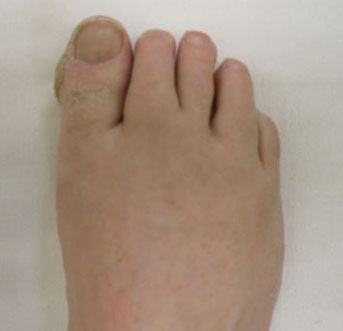
PsA can present as a symmetrical polyarthritis, but it can also cause a monoarthritis or oligoarthritis associated with early morning stiffness lasting longer than 30 minutes. Patients complain of joint pains worse at rest and improved with activity. Patients may present with inflammatory back pain indicating sacroiliitis, see table 1. Dactylitis, diffuse swelling of an entire digit (see figure 1), most commonly affects the 3rd to 4th toes, and can occur in up to half of PsA patients.1 Enthesitis can also be a presenting feature, commonly affecting the Achilles tendon insertion at the heel.
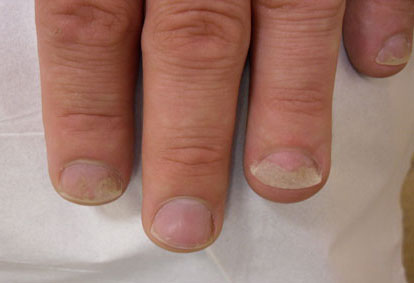
While severity of skin psoriasis may predict co-existing joint disease,3 the presence of psoriatic nail dystrophy e.g. pitting, onycholysis, see figure 2, is more often associated with PsA.4 Areas such as the elbows, knees, natal cleft and scalp should be examined for any signs of psoriasis. Patients should be examined for enthesitis especially at the Achilles tendon.
Currently studies are underway to develop clinical scoring systems to enable clinicians to make an early clinical diagnosis of PsA. The CASPAR criteria can be applied in a clinical setting but only in patients with inflammation of joints, spine or entheses,5 see table 2. The CASPAR criteria have been shown to be more sensitive for classifying early PsA.
A variety of screening questionnaires have also been developed for use in dermatology clinics and general practice to help identify psoriasis patients who may also suffer from PsA. Patients complete questionnaires such as the Psoriasis Epidemiology Screening Tool (PEST) see figure 3. For those who score ≥ 3 out of 5, referral for a specialist rheumatology opinion should be considered.
Head-to-head trials comparing the different questionnaires available have shown limitations in correctly identifying PsA, so studies are ongoing to develop an appropriate tool for clinical practice.6
Investigations
Routine blood tests should be requested to check for anaemia of chronic disease and raised inflammatory markers, although it should be noted that C-reactive protein (CRP) is positive in only 50% of patients,2 thus a negative CRP does not exclude the diagnosis, but if positive could predict a more severe disease course. PsA patients are usually, but not always, negative for rheumatoid factor and anti-cyclic citrullinated peptide antibodies, so the presence of these autoantibodies can help distinguish between RA and PsA.
Patients should have plain radiographs of their hands and feet requested. PsA has typical appearances on X-ray which can aid in diagnosis.
Characteristically PsA results in new bone formation as well as bone destruction, although this rarely occurs in early disease. X-rays may show peripheral joint erosions with fluffy margins along the bones called periostitis which indicates new bone formation. There is joint space narrowing. Typically, it is the distal interphalangeal (DIP) joints that are affected in PsA, whereas in RA erosions are more likely to affect the metacarpophalangeal (MCP) and proximal interphalangeal (PIP) joints in a symmetrical fashion. Patients with severe disease may have pencil-in-cup deformity, which is osteolysis of the joint.
Plain films of the sacroiliac joints may show sacroiliitis which can be either unilateral or bilateral in patients with inflammatory back pain.
In early disease X-rays may be normal. Ultrasound can be a useful modality to help identify inflammatory arthritis in difficult cases. As well as erosions it can identify enthesitis and soft tissue inflammation which can be difficult to recognise on plain films. It can be a helpful test in obese patients where it is difficult to assess for synovitis or dactylitis clinically, although obesity can also be a confounder in distinguishing between normal and PsA patients.8 Ultrasound is operator dependent and there may be differences in interpretation between practitioners.
Treatment
PsA can be a complex disease to manage because of its clinical heterogeneity. Patients may have concurrent involvement of their joints and skin. Current treatments available require regular blood monitoring, and patients may experience unpleasant side effects which leads to dissatisfaction and lack of compliance with treatment regimens (see table 3, opposite). Physicians may also share similar concerns over long-term tolerability and safety of systemic therapies leading to undertreatment of the disease.9
For patients who present with mild symptoms of joint inflammation and low disease activity non-steroidal anti-inflammatory drugs (NSAIDs) can be used for symptom relief.
Caution should be exercised in patients with co-existing ischaemic heart disease and gastrointestinal (GI) disease. PPIs should be co-prescribed.
If patients are at very high risk of GI bleeding or ischaemic heart disease then it may be better to use alternative analgesia such as co-codamol.
Steroid therapy can also be used for symptom relief in more severe cases, either as a short course of tablets or an intramuscular injection. Patients should be warned that there is a risk of psoriasis flare with both NSAID and steroid use.2 They could also mask symptoms and signs when a patient is being assessed by a specialist.
Patients should be referred to physiotherapy to help with exercise and rehabilitation, and occupational therapy where necessary. Counselling should be an option for patients as chronic pain and disability can be associated with low mood and anxiety.
Disease modifying antirheumatic drugs (DMARDs) have traditionally been use as first-line therapy by specialists to control inflammation and halt disease progression. Drugs such as methotrexate, sulfasalazine and leflunomide have been proven to be efficacious for rheumatoid arthritis, but there is a paucity of data to support their use in PsA.10
Methotrexate is typically used as a first-line DMARD as it has been shown to improve both skin and joints. There does not seem to be much effect on the other domains of PsA such as enthesitis and spondylitis.10 Clinicians should also be aware of side effects such as nausea and pneumonitis, and blood tests should be carried out every three months for neutropenia and deranged liver function.
Biologic drugs, such as tumour necrosis factor inhibitors (anti-TNF-alpha agents) are used as second-line therapy if DMARDs fail or are not tolerated by the patient and these are prescribed in secondary care. These agents include etanercept,11 infliximab,11 adalimumab,11 golimumab12 and certolizumab.13 Evidence from studies has shown that these drugs are able to control joint inflammation and skin disease. Data have also shown that they are able to halt radiographic progression2 and they have some benefit for the other domains of PsA.
Despite their benefits there are side effects and safety issues which can limit their use. Patients may struggle to use them as injections if they have hand pain or deformity. Patients must be screened for tuberculosis. There is a risk of patients developing side effects such as congestive cardiac failure, demyelinating diseases and lymphoma. Although the risk is very low it does necessitate that these patients are regularly monitored. Anti-TNF-alpha agents can also become less effective over time requiring a switch to another agent.
For optimal treatment of PsA, a drug is needed that can treat all facets of the disease while having an acceptable safety profile and requiring less intensive monitoring.
Newer agents that target different cytokines in the inflammatory pathway include the interleukin inhibitors secukinumab13 and ustekinumab,14 PDE4 inhibitor apremilast,15 and janus kinase inhibitors tofacitinib and baricitinib. These medications are now becoming available allowing further therapeutic options for specialists in cases where anti-TNF-alpha agents have failed.
Treatment guidelines are available to help guide clinicians in selecting appropriate therapies and to escalate treatment if needed. The European League Against Rheumatism (EULAR)16 and Group for Research and Assessment of Psoriasis and Psoriatic Arthritis (GRAPPA)17 have published recommendations which outline how to manage these patients on a step-by-step basis.
Disease monitoring
In conditions such as RA and AS there are validated clinical measures which can be used by the clinician to assess disease activity (the DAS-28 score and the BASDAI score respectively). In PsA there is no such system yet in practical use, although there have been studies to develop such a measure. Traditionally some clinicians would apply the DAS-28 score to PsA patients, but since PsA affects various clinical domains not covered by this score it is not a satisfactory method of assessing disease activity in this cohort and is not generally used in primary care in any setting.
Patients with PsA who attend for review should have a global assessment of disease activity which includes examining both skin and joints, as well as looking for enthesitis and nail dystrophy. They should be asked to rate their pain score from 0 (no pain) to 10 (severe). The number of disease flares patients have had in between appointments should also be recorded as this could indicate how well their disease is controlled. Routine blood tests should be carried out at least every three months if a patient is on DMARDs.
Specific PsA disease activity scores have been developed in clinical trials,2 but are not yet used in routine clinical practice. There is evidence to suggest that patients who present with polyarticular involvement, raised inflammatory markers and radiological joint damage at baseline are more at risk of progression.2 Recent data suggest that severity of skin psoriasis is associated with higher prevalence of joint disease.3
Comorbidities
There is an increased prevalence of cardiovascular comorbidities such as myocardial infarction and stroke in PsA patients,18 thus they should be screened for risk factors and treated as appropriate. An annual check of height, weight, blood pressure, lipids and glucose is generally recommended.
Studies have also suggested an increased risk of diabetes in PsA, due in part to obesity and lifestyle factors.19 Smoking cessation, alcohol consumption and weight loss should also be discussed when these patients are reviewed.
It is important to remember that PsA can also affect other organs such as the eyes. The risk of uveitis is increased in PsA patients compared with the normal population, so clinicians should be aware of this complication and manage as appropriate.
Conclusions
PsA is a complex, challenging disease to diagnose and manage. If untreated it can result in progressive joint damage and long-term disability. Evidence has shown that it is both underdiagnosed and undertreated. Patients who are suspected of inflammatory joint disease should be thoroughly examined for any signs of psoriasis. Earlier recognition of the disease and a multidisciplinary team approach can lead to better outcomes, and newer treatments are being developed which can treat all domains of the disease.
REFERENCES
1 Ritchlin CT, Colbert RA, Gladman DD. Psoriatic arthritis. N Engl J Med 2017;376(21):2095-96
2 Mease PJ, Armstrong AW. Managing patients with psoriatic disease: the diagnosis and pharmacologic treatment of psoriatic arthritis in patients with psoriasis. Drugs 2014;74(4):423-41
3 Ogdie A, Gelfand JM. Clinical risk factors for the development of psoriatic arthritis among patients with psoriasis: A review of available evidence. Curr Rheumatol Rep 2015;17(10):64
4 Wilson FC, Icen M, Crowson CS, McEvoy MT et al. Incidence and clinical predictors of psoriatic arthritis in patients with psoriasis: a population-based study. Arthritis Rheum 2009;61(2):233-39
5 Coates LC, Conaghan PG, Emery P et al. Sensitivity and specificity of the classification of psoriatic arthritis criteria in early psoriatic arthritis. Arthritis Rheum 2012;64(10): 3150-55
6 Coates LC, Walsh J, Haroon M et al. Development and testing of new candidate psoriatic arthritis screening questionnaires combining optimal questions from existing tools. Arthritis Care Res 2014;66:410-16. doi:10.1002/acr.22284
7 Weisman MH. Inflammatory back pain. Rheum Dis Clin North Am 2012;38(3):501-12
8 Gladman DD. Recent advances in understanding and managing psoriatic arthritis. F1000Research 2016;5:2670
9 van de Kerkhof PC, Reich K, Kavanaugh A et al. Physician perspectives in the management of psoriasis and psoriatic arthritis: results from the population-based Multinational Assessment of Psoriasis and Psoriatic Arthritis survey. J Eur Acad Dermatol Venereol 2015;29(10):2002-10
10 Marchesoni A, Lubrano E, Cauli A et al. Psoriatic disease: Update on traditional disease-modifying antirheumatic drugs. J Rheumatol Suppl. 2015;93:61-4
11 National Institute for Health and Care Excellence (TA199). Etanercept, infliximab and adalimumab for the treatment of psoriatic arthritis. NICE. London. 2010
12 National Institute for Health and Care Excellence (TA220). Golimumab for the treatment of psoriatic arthritis. NICE. London. 2011
13 National Institute for Health and Care Excellence. (TA445). Certolizumab pegol and secukinumab for treating active psoriatic arthritis after inadequate response to DMARDs. NICE. London 2017
14 National Institute for Health and Care Excellence. (TA340). Ustekinumab for treating active psoriatic arthritis. NICE. London. 2015 (updated 2017)
15 National Institute for Health and Care Excellence. TA433. Apremilast for treating active psoriatic arthritis. NICE. London. 2017
16 Gossec L, Smolen JS, Ramiro S et al. European League Against Rheumatism (EULAR) recommendations for the management of psoriatic arthritis with pharmacological therapies: 2015 update. Ann Rheum Dis 2016;75:499-510
17 Coates LC, Kavanaugh A, Mease et al. Group for Research and Assessment of Psoriasis and Psoriatic Arthritis 2015 Treatment Recommendations for Psoriatic Arthritis. Arthritis Rheumatol 2016; 68:1060-71
18 Ogdie A, Yu Y, Haynes K et al. Risk of major cardiovascular events in patients with psoriatic arthritis, psoriasis and rheumatoid arthritis: a population-based cohort study. Ann Rheum Dis 2015;74(2):326-32
19 Dubreuil M, Rho YH, Man A et al. Diabetes incidence in psoriatic arthritis, psoriasis and rheumatoid arthritis: a UK population-based cohort study. Rheumatology (Oxford, England) 2014;53(2):346-52
 Download this article in PDF format