SEARCH

Preset searches
PubMed -Respiratory medicine
Obstructive sleep apnoea hypopnoea
Tuberculosis primary care review
Upper respiratory tract infections
Lower respiratory tract infections
Palmer E. Higgins B. Optimising the management of patients with difficult asthma. Practitioner 2015; 259 (1787):21-24
Optimising the management of patients with difficult asthma
25 Nov 2015
AUTHORS
Dr Evelyn Palmer MBBS MRCP, Specialist Registrar in Respiratory Medicine
Dr Bernard Higgins MD FRCP, Consultant Respiratory Physician Freeman Hospital, Newcastle upon Tyne, UK
Article
Abstract
Asthma affects 5.4 million people in the UK, around 1 in 12 of the population. Between 5 and 10% of asthma (depending on the definition used) is categorised as difficult asthma, a term which generally refers to patients who continue to experience symptoms and frequent exacerbations despite the prescription of high-dose asthma therapy. Difficult asthma is an indication for specialist review by an appropriate respiratory physician, but close liaison between primary, secondary and tertiary care is critical and it is therefore important that primary care health professionals should be aware of the principles of management. One of the most important questions to ask is whether the individual with difficult asthma is taking their treatment. Identifying this, however, is not easy. GPs could assess prescription uptake, looking for low use of preventers and excess use of short-acting bronchodilators. Newer means of assessing adherence have been developed. Inhaler devices that can monitor completion and timing of actuations have been produced. Meters that measure FeNO are available. A recent UK study found that 12 out of 100 patients referred for difficult asthma did not have reversible airflow obstruction or a history suggestive of asthma. Diagnoses included COPD, cystic fibrosis, cardiomyopathy, respiratory muscle dysfunction and severe anxiety with vocal cord dysfunction.
Asthma affects 5.4 million people in the UK,1 approximately 1 in 12 of the population.
Most of these patients are successfully managed in primary care. However, 5-10% of asthma (depending on the definition used) is categorised as difficult asthma, a term which generally refers to patients who continue to experience symptoms and frequent exacerbations despite the prescription of high-dose asthma therapy.2 In the UK this equates to those who remain symptomatic while receiving BTS/SIGN step 4 or step 5 treatments.2
Although they represent a minority of those with asthma, these patients will feature on most practice lists and be familiar to GPs as managing these patients is tricky, time-consuming and potentially expensive.
Difficult asthma is an indication for specialist review by an appropriate respiratory physician, but close liaison between primary, secondary and tertiary care is critical and it is therefore important that primary care healthcare professionals should be aware of the principles of management.
This article outlines the management of difficult to treat asthma, taking for granted that basic measures such as ensuring good inhaler technique and smoking avoidance are in place; and that, as in milder asthma, patients are offered self-management education which should include a personalised asthma management plan.
Contributing factors
Poor adherence
One of the most important questions to ask is whether the individual with difficult asthma is taking their treatment. UK studies in specialist clinics for difficult asthma have documented high levels of poor adherence.3 Identifying this, however, is not easy.
Direct questioning may be revealing but more often it is necessary to acquire objective evidence. GPs could assess prescription uptake, looking for low use of preventers and excess use of short-acting bronchodilators. In some parts of the country it is possible to look at filled pharmacy prescriptions.
Newer means of assessing adherence have been developed. Inhaler devices that can monitor completion and timing of actuations have been produced, but are not in general use.
Meters that measure fractional exhaled nitric oxide (FeNO) are available now, although currently used in few practices. High FeNO levels are suggestive of undertreatment, including poor adherence. For those on regular oral corticosteroids, prednisolone levels can be measured although at present the number of laboratories offering this is limited.
Once identified, strategies to improve adherence will need to be based on the individual circumstances of the patient, working around the particular reasons for their non-adherence.
At-risk patients
People with severe asthma and one or more adverse psychological factors, see table 1, are at increased risk of death.
The National Review of Asthma Deaths showed that behavioural and adverse psychological factors were recorded in the majority of patients who died from asthma,4 that they tended to miss appointments and to have less GP contact or fewer home visits as well as poor treatment adherence. These behavioural patterns and the associated psychological factors can be identified in primary care.
Despite the close association between asthma exacerbations and psychological factors, there is a lack of evidence that interventions specifically targeting psychological morbidity are of benefit in asthma.
A meta-analysis of psychoeducational interventions in adults and children with difficult asthma concluded that although there was some evidence for reduced rates of hospital admission in adults and improved symptom control in children, many of the studies were of poor quality and provide insufficient evidence to support major changes in clinical practice.5
A more pragmatic approach is to develop a risk register for each practice, as described in a recent UK study.6
In those deemed to be at risk (not only those with difficult asthma, but encompassing them) electronic prompts were used to alert practice staff with the aim of improving access and encouraging opportunistic asthma intervention. Hospitalisation and A&E attendance were reduced. This is a single study and further assessment of risk registers would be useful, but this seems to us to be an eminently sensible system with the potential to improve asthma care significantly.
Alternative diagnoses
A recent UK study found that 12 out of 100 patients referred for difficult asthma did not have reversible airflow obstruction or a history suggestive of asthma.7
Diagnoses included COPD, cystic fibrosis, cardiomyopathy, respiratory muscle dysfunction and severe anxiety with vocal cord dysfunction.
Observational studies have also identified a high number of patients with difficult asthma who were diagnosed with dysfunctional breathing as an alternative or concomitant diagnosis to asthma.7,8
These alternative diagnoses can be difficult to establish within the confines of a primary care appointment, but specialist referral for review of patients with asthma who do not respond to treatment should generate a review of the diagnosis.
High BMI
A significant number of patients with difficult asthma have a high BMI.
This will increase breathlessness for obvious mechanical reasons, but there is also some evidence that obesity may have a direct adverse effect on the inflammatory processes of asthma.
In a recent study, bariatric surgery not only improved lung function and quality of life measures, but also reduced systemic inflammatory markers.9 Clearly surgery is not appropriate in all cases, but weight loss should be actively promoted in patients with a high BMI and difficult asthma.
Management
Drug therapy
Checking adherence and looking for concomitant diagnoses will negate the need for high levels of asthma therapy in many patients.
In others, however, the underlying airway inflammation will be severe, and treatment at steps 4 or 5 of the BTS/SIGN guideline will be necessary. Oral corticosteroids will provide control in the vast majority, but the well known side effects demand that other forms of treatment should be considered.
Patients with this degree of asthma should be under joint supervision by primary and secondary care; some of the newer treatments require input from regional difficult asthma teams.
Omalizumab: This is a monoclonal antibody against native IgE. In patients with confirmed IgE-dependent allergic asthma, uncontrolled despite optimal pharmacological treatment and with IgE levels 30-700 IU/ml, a trial of omalizumab is appropriate.10,11
Patients should be monitored for improvements in symptom control, reduction in exacerbations and reduced hospital admissions. If a patient does not respond within four months the medication should be discontinued.
Methotrexate: In patients who require daily oral steroids, methotrexate can be used as a steroid-sparing agent. It should only be used in specialist centres because of safety concerns and the need for monitoring.10
Azithromycin: Macrolide antibiotics are known to have anti-inflammatory and immune modulatory actions which reduce airways reactivity and inflammation. They are used with good effect in other airways diseases including COPD and bronchiectasis. One study of low-dose azithromycin suggested benefit in non-eosinophilic asthma, but the role of macrolides is not firmly established.12
Triazoles: Antifungal treatments are only recommended for patients with asthma who develop allergic bronchopulmonary aspergillosis (ABPA).10 However, there is some data showing benefit in patients without the complete picture of ABPA, but with severe asthma and evidence of fungal sensitisation.
Again, further studies are required before this treatment can be recommended, particularly given that triazoles can cause significant liver and cardiac toxicity.
Other monoclonal antibodies: A number of agents which block specific modulators of the airway inflammation of asthma are in development. Their use is likely to be governed by NHS England’s specialised commissioning arrangements, and by NICE appraisal, and detailed consideration here is premature.
The furthest advanced is mepoluzimab, an IL5 antagonist, which is currently being appraised and is scheduled to appear in mid-2016.
Bronchial thermoplasty
This novel technique has been approved for the treatment of patients with severe asthma.13 The aim of bronchial thermoplasty in severe asthma is to reduce the small airways smooth muscle mass, thereby decreasing the airways’ ability to constrict.
The procedure is carried out under sedation or general anaesthetic and involves inserting a catheter into the bronchial tree and administering radiofrequency energy to the airway walls, see figure 1.
Studies to date show an improvement in symptoms and quality of life, reduced exacerbations and hospital admissions.13 The long-term benefits and risks from this procedure are not yet known.
Monitoring response to treatment
There is considerable interest in the use of objective monitoring to guide adjustment of asthma treatment, as opposed to the traditional symptom-driven management. The potential advantage is that this may forestall deterioration of asthma, and is clearly of great potential value in those with severe asthma and frequent asthma attacks.
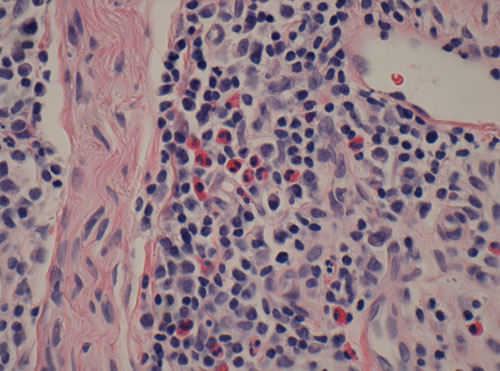
One well conducted study used sputum eosinophil counts to guide treatment and proved superior to the conventional control arm,14 see figure 2.
However, this approach is not recommended for children and is restricted to adults who can produce induced sputum samples.
It is only performed in specialist centres and has not yet been sufficiently standardised to be widely available.
There is debate about the role of FeNO in routine monitoring. A NICE diagnostic appraisal suggested that it should have a role,15 but a recent international guideline did not recommend it.10 We believe that it is useful particularly in those who are symptomatic at review.
Patients on long-term steroids should have annual eye examinations to assess for cataracts, bone density measurement every 1-3 years and glucose and cholesterol monitoring. Children on long-term corticosteroids should have their growth monitored.
Conclusion
Difficult asthma accounts for a small proportion of all patients with asthma. It is important to be aware of the factors that contribute to difficult to treat asthma and identify patients who continue to experience symptoms and exacerbations despite high doses of corticosteroids.
These patients are at risk of fatal or near-fatal asthma exacerbations and should be referred for specialist review. There is a range of treatment options available which must be tailored to the individual patient. This is a complex population of patients and requires input from a multidisciplinary team to provide holistic care.
REFERENCES
1 Asthma UK: Asthma facts and FAQs. Available from: www.asthma.org.uk/asthma-facts-and-statistics
2 British Thoracic Society and Scottish Intercollegiate Guidelines Network. SIGN141. British guideline on the management of asthma. SIGN. Edinburgh. 2014
3 Gamble J, Stevenson M, McClean E, Heaney L. The prevalence of nonadherence in difficult asthma. Am J Resp Crit Care Med 2009;180(9):817-22
4 Royal College of Physicians. Why asthma still kills: The National Review of Asthma Deaths (NRAD). RCP. London. 2014
5 Smith JR, Mugford M, Holland R et al. A systematic review to examine the impact of psycho-educational interventions on health outcomes and costs in adults and children with difficult asthma. Health Technol Assess 2005;9(23):iiiiv,1-167
6 Smith JR, Noble MJ, Musgrave S et al. The at-risk registers in severe asthma (ARRISA) study: a cluster-randomised controlled trial examining effectiveness and costs in primary care. Thorax 2012;67:1052-60
7 Robinson D, Campbell D, Durham S et al. Systematic assessment of difficult-to-treat asthma. Eur Resp J 2003;22:478-83
8 Heaney LG, Conway E, Kelly C et al. Predictors of therapy resistant asthma: outcome of a systematic evaluation protocol. Thorax 2003;58(7):561-66
9 Van Huisstede A, Rudolphus A, Castro Cabezas M et al. Effect of bariatric surgery on asthma control, lung function and bronchial and systemic inflammation in morbidly obese subjects with asthma. Thorax 2015;70:659-67
10 Chung KF, Wenzel SE, Brozek J et al. International ERS/ATS guidelines on definition, evaluation and treatment on severe asthma. Eur Resp J 2014;43(2):343-73
11 National Institute for Health and Care Excellence. TA278. Omalizumab for treating severe persistent allergic asthma. NICE. London. 2013
12 Brusselle GG, Vanderstichele C, Jordens P et al. Azithromycin for prevention of exacerbations in severe asthma (AZISAST): a multicentre randomised double-blind placebo-controlled trial. Thorax 2013;68:322-29
13 National Institute for Health and Care Excellence. IPG419. Bronchial thermoplasty for severe asthma. NICE. London. 2012
14 Green RH, Brightling CE, McKenna S et al. Asthma exacerbations and sputum eosinophil counts: a randomised controlled trial. Lancet 2002;360(9347):1715-21
15 National Institute for Health and Care Excellence. DG12. Measuring fractional exhaled nitric oxide concentration in asthma: NIOX MINO, NIOX VERO and NObreath. NICE. London. 2014
ARTICLE IN PDF
 Download this article in PDF format

PRESET SEARCHES
Immediate CPD prompts
These handy templates* prompt immediate drafting of personal learning, reflection and planning. Save your record straight into your personal development folder on your device or Cloud storage system.
*Adobe reader needed for iPad
EXTERNAL WEBLINKS
The British guideline on asthma management. SIGN 153
Last revised 2016
Asthma: diagnosis, monitoring and chronic asthma management NICE NG80
In November 2017 NICE published the above guideline on diagnosing, monitoring and managing asthma in adults, young people and children. It does NOT cover managing severe asthma or acute asthma attacks.
Putting NICE NG80 guideline into practice in the UK
NICE recommends objective testing with spirometry and FeNO for most people with suspected asthma. Additional infrastructure and training is needed in primary care. In the meantime, NICE say primary care services should implement what they can of NG80 guideline, using currently available approaches to diagnosis.
Asthma UK professional resources
Videos to talk through inhaler technique with patients
Action plans for adults
Action plans for children
Non-English action plans
Filling in an asthma plan with a patient