SEARCH

Preset searches
PubMed -Respiratory medicine
Obstructive sleep apnoea hypopnoea
Tuberculosis primary care review
Upper respiratory tract infections
Lower respiratory tract infections
Charalampopoulos A, Raphael C, Gin-Sing W. Diagnosing and managing pulmonary hypertension. Practitioner 2012;256 (1756):21-25
Diagnosing and managing pulmonary hypertension
12 Dec 2012
AUTHORS
Dr Athanasios Charalampopoulos MD, Cardiology Specialist Registrar1
Dr Claire Raphael MA MRCP, Cardiology Specialist Registrar 1
Ms Wendy Gin-Sing RN MSc, Clinical Nurse Specialist1
Dr J Simon R Gibbs MD FRCP, Senior Lecturer in Cardiology,2 Honorary Consultant Cardiologist 1
1 National Pulmonary Hypertension Service, Hammersmith Hospital, London, UK
2 National Heart & Lung Institute, Imperial College, London, UK
Article
Pulmonary hypertension (PH) is a common finding in a wide range of diseases.1 It is defined as an increase in mean pulmonary arterial pressure ≥ 25 mmHg at rest as assessed invasively by right heart catheterisation.2 PH can affect patients at any age and presents with non-specific symptoms. Accurate diagnosis is important as while PH is a potentially lethal disease it is treatable.
Underlying Causes
Identification of the cause of PH is crucial to ensure that the patient receives appropriate management. Patients should be referred to one of the designated PH centres in the UK for confirmation of the diagnosis and identification of the underlying cause, see below.
The causes of PH are listed in table 1. The most common causes are heart and lung disease and specialist drug therapies for PH are contraindicated in these patients.
However, PH is also associated with a diverse group of diseases. Pulmonary arterial hypertension (PAH) is a rare type of PH which may deteriorate rapidly without treatment. There is a familial form of this disease which can skip generations. Specialist drug therapies for PH will benefit patients with PAH.
Chronic thromboembolic pulmonary hypertension (CTEPH) can be treated by pulmonary endarterectomy which offers excellent outcomes in selected patients.4 Inoperable patients are offered specialist PAH drug therapies.
Presentation
The most common symptom of PH is breathlessness on exertion. Syncope may be the presenting symptom especially in children. Other PH symptoms include: angina pectoris, palpitations, dry cough, exertional nausea and vomiting.
PH patients often receive treatment for bronchial asthma before being diagnosed with PH. Lack of response to conventional treatment for dyspnoea should alert the GP to search for another cause of the patient’s symptoms, one of which could be PH.
As most patients are not breathless and their oxygen saturation is within normal limits at rest, they can erroneously be assumed to be well.
GPs should be aware that patients who appear to be minimally symptomatic may have severe PH with a right ventricular decompensation on exercise.
Syncope is one of the most serious manifestations of clinical deterioration in PH patients.
On clinical examination the most common clinical signs are:
• presence of right ventricular heave
• loud pulmonary component of the second heart sound
• pansystolic murmur of tricuspid regurgitation
In the presence of heart failure, clinical examination may also reveal elevated jugular venous pressure, ascites and peripheral oedema. The chest is commonly clear, unless there is an underlying lung disease. Signs of connective tissue disease and deep venous thrombosis may also be present.
Primary care Investigations
Patients should have an ECG, a chest radiograph and a range of blood tests.
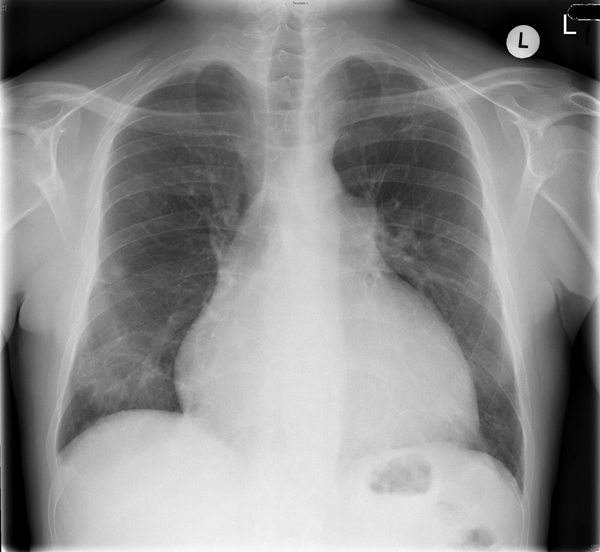
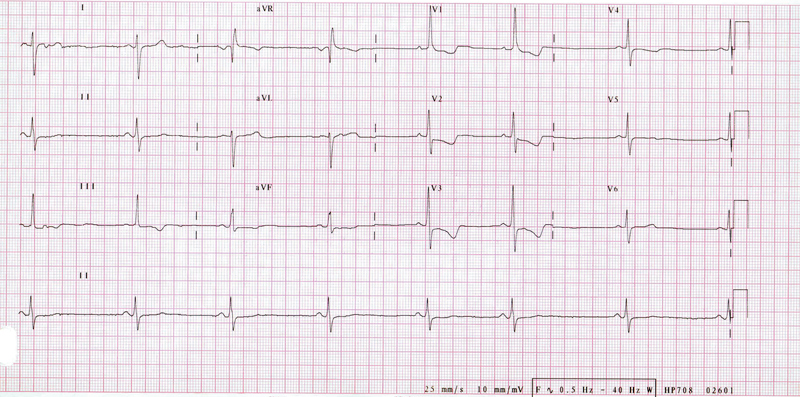
A chest radiograph can show enlargement of the pulmonary arteries and cardiac silhouette, see figure 1. In PAH, the ECG usually shows right axis deviation, complete or incomplete right bundle branch block and T wave inversion in right precordial leads, V1-V3, see figure 2. However, neither a normal ECG nor a normal chest radiograph will exclude PH.
Blood tests including a full blood count, renal and liver function as well as thyroid function tests may exclude another cause of breathlessness.
Referral
When PH is suspected, referral to the local cardiology or respiratory department is recommended. This referral should be urgent if the patient is syncopal, has rapidly progressing symptoms or is in heart failure.
The investigation of choice for detecting elevated pulmonary pressures is the echocardiogram. As well as detecting a rise in estimated pulmonary pressures, an echocardiogram can also detect tricuspid regurgitation, a dilated right atrium and ventricle with or without impaired systolic function.
If the echocardiogram shows signs of PH then the patient should be referred to a designated PH centre if PAH or CTEPH are suspected or if PH is of uncertain cause.
The role of the PH centres (see useful information box) is to:
• provide advice for healthcare professionals
• make an accurate diagnosis
• evaluate the severity of PH
• manage specialist drug therapies (see table 1, above)
The definitive diagnosis of PH can be made only by a cardiac catheterisation study which is usually performed in one of the designated PH centres.
The functional classification of PH is shown in box 1, below.
Lifestyle advice
PH patients are generally advised to keep themselves active and to exercise to the extent that they do not get breathless or dizzy and can hold a conversation and complete sentences. Furthermore, they should avoid lifting heavy weights since this may cause syncope.
Patients in functional class III and IV (see box 1, below) and those with PaO2 consistently lower than 8 kPa need supplemental oxygen during long flights.2
Contraception
Pregnancy in PAH patients has a high maternal mortality rate.6, 7 Subcutaneously implanted hormonal contraception is considered to be the mainstay of contraception in PAH patients, while dual contraception (Implanon and Cerazette or two Implanon devices) is needed for patients on bosentan/ambrisentan. Mirena coils should not be inserted or removed outside hospital because of the risk of vasovagal syncope.
Pharmacotherapy
Warfarin
In patients with CTEPH the mainstay of treatment is warfarin. INR therapeutic target is usually between 2 and 3 and it is crucial that these patients be covered with subcutaneous enoxaparin
1.5 mg/kg/day when they come off warfarin for any reason (e.g. prior to cardiac catheterisation or any other invasive procedure/surgery).
In addition, most PAH patients are also treated with warfarin. As the evidence for treatment only comes from retrospective studies, warfarin in PAH can safely be stopped for short periods. If the risk of bleeding is high warfarin should be avoided in these patients.
Diuretics
Many patients with PH appear with signs of heart failure, mainly with significant ascites sometimes more marked than dependent oedema for which they are treated with diuretics. The main principles of diuretic management are: adequate hydration (no less than 1.5 L/day), avoidance of drugs which may precipitate fluid retention (e.g. NSAIDs or sodium-rich antibiotics), restriction of sodium intake from food and regular renal function and electrolyte checks.
PH patients with heart failure may also need support from heart failure nurses.
Pulmonary arterial hypertension drugs
PAH drugs are prescribed by the PH team but GPs should be familiar with these drugs in order to recognise their possible side effects and avoid interactions with other medications.
PAH therapies include three classes of drugs which act on different pathophysiological pathways.
Endothelin pathway: The endothelin receptor antagonists (ERA) act on this pathway and include bosentan, ambrisentan, and macitentan.
These drugs are administered orally.
Nitric oxide pathway: Phosphodiesterase type-5 inhibitors, sildenafil and tadalafil, and the soluble guanylate cyclase activators e.g. riociguat are administered orally.
Prostacyclin pathway: Prostacyclin analogues which include epoprostenol, iloprost and treprostinil are administered parenterally.
Epoprostenol and treprostinil are administered intravenously via a permanent tunnelled central venous catheter and a pump as a continuous infusion. Treprostinil can also be given subcutaneously as a continuous infusion with the use of a pump while iloprost is administered as an inhaler.
The main side effects and interactions of these drugs are listed in table 2, above.8-14 The major side effect of ERA is an increase in transaminases in around 10% of patients treated with bosentan and 2% with ambrisentan. Hence patients on ERA are required to have monthly liver function tests. If transaminases increase >3 times the upper limit of normal, the blood test should be repeated urgently and management should be discussed with the PH team. Phosphodiesterase type-5 inhibitors should never be used concomitantly with nitrates or nicorandil because of the high risk of profound hypotension.
Patients on intravenous prostacyclin analogues will be fully trained by PH clinical nurse specialists in the use of the pump. Patients will always have a spare, so that the pump can be replaced if it becomes damaged or malfunctions. Specialist homecare delivery companies also provide support in the community.
These patients are at risk of line infection and sepsis. Any bleeding, swelling or redness around the tunnelled catheter or any pyrexia should be considered as a potential line infection (unless another source of infection is detected). Blood cultures should be taken and the PH team consulted. In the case of a line infection the patient needs to be admitted to the PH centre and an intravenous catheter change is mandatory. Patients on prostacyclin infusions also seem to be at risk of developing thyrotoxicosis.15
A few PAH patients may be on calcium channel blockers. These drugs are prescribed only in patients with a positive vasodilatory response after nitric oxide inhalation during the cardiac catheterisation study. They are uptitrated to the highest tolerated dose which is usually much higher than other clinical indications.2
PAH drugs should never be stopped or downtitrated without discussion with the PH team.
Complications
Loss of atrial contraction can have a detrimental effect on patients’ exercise capacity. Atrial flutter is the most common arrhythmia that PAH patients may develop, and usually necessitates urgent admission to hospital.
PAH patients are susceptible to developing pneumonia which may not be accompanied by fever, with an increased mortality risk. Vaccination against influenza and pneumococcal pneumonia is recommended.
Other reasons for deterioration may be anaemia (especially in elderly patients on sildenafil and warfarin who are at risk of bleeding), a new pulmonary embolism (especially in patients with CTEPH with poor anticoagulation control), deterioration of a systemic disease (e.g. scleroderma) or thyrotoxicosis.
All the complications mentioned above should be treated as in any other case, but always in collaboration with the PH team.
Referral to specialist local palliative care services is indicated when patients’ needs are beyond the expertise of the PH team.
Conclusions
PH can affect patients at any age. PAH is a lethal disease and early diagnosis is crucial. Any cases of unexplained breathlessness or breathlessness resistant to conventional treatment for lung or heart disease should always raise the suspicion of PH.
Patients with syncope require either urgent referral (for new patients) or urgent discussion with the PH team (for patients already diagnosed with PH).
PAH specific therapies are prescribed by the PH team but the GP should be aware of their common side effects and interactions.
Arrhythmias in PAH patients or any suspicion of line infection and sepsis in patients on parenteral PAH therapies should be urgently discussed with the PH team.
Common medical problems should be managed in PH patients as in any other patient however, consultation with the PH team is advisable. GPs should always seek advice from the PH centres for any problems that arise in their patients with PH.
REFERENCES
1 Hoeper MM, Barbera JA, Channick RN et al. Diagnosis and treatment of non-pulmonary arterial hypertension pulmonary hypertension. J Am Coll Cardiol 2009; 54 (1):S85-96
2 Galiè N, Hoeper M, Humbert M et al. Guidelines for the diagnosis and treatment of pulmonary hypertension. Eur Heart J 2009; 30:2493-2537
3 Simonneau G, Robbins I, Beghetti M et al. Updated clinical classification of pulmonary hypertension. J Am Coll Cardiol 2009; 54: S43-S54
4 Thistlethwaite PA, Kaneko K, Madani MM, Jamieson SW. Technique and outcomes of pulmonary endarterectomy surgery. Ann Thorac Cardiovasc Surg 2008;14:274-82
5 Barst RJ, McGoon M, Torbicki A et al. Diagnosis and differential assessment of pulmonary arterial hypertension. J Am Coll Cardiol 2004;43: S40-S47
6 Curry RA, Fletcher C, Gelson E et al. Pulmonary hypertension and pregnancy— a review of 12 pregnancies in 9 patients. BJOG 2012;119(6):752-61
7 Bedard E, Dimopoulos K, Gatzoulis MA. Has there been any progress made on pregnancy outcomes among women with pulmonary arterial hypertension? Eur Heart J 2009;30:256-65
8 Rubin LJ, Badesch DB, Barst RJ et al. Bosentan therapy for pulmonary arterial hypertension. N Engl J Med 2002; 346:896-903
9 Galiè N, Beghetti M, Gatzoulis MA et al. Bosentan therapy in patients with Eisenmenger syndrome: a multicenter, double-blind, randomized, placebo-controlled study. Circulation 2006; 114:48-54
10 Galiè N, Rubin LJ, Hoeper M et al. Treatment of patients with mildly symptomatic pulmonary arterial hypertension with bosentan (EARLY study): a double blind, randomized, controlled trial. Lancet 2008; 371:2093-2100
11 Galiè N, Olschewski H, Oudiz RJ et al. Ambrisentan for the treatment of pulmonary arterial hypertension: results of the Ambrisentan in Pulmonary Arterial Hypertension, randomized, double-blind, placebo-controlled, multicenter, efficacy (ARIES) study 1 and 2. Circulation 2008; 117:3010-3019
12 Galiè N, Badesch D, Oudiz R et al. Ambrisentan therapy for pulmonary arterial hypertension. J Am Coll Cardiol 2005; 46:529-35
13 Galiè N, Ghofrani HA, Torbicki A et al. Sildenafil citrate therapy for pulmonary arterial hypertension. N Engl J Med 2005; 353:2148-57
14 Galiè N, Brundage B, Ghofrani A et al. Tadalafil therapy for pulmonary arterial hypertension. Circulation 2009; 119:2894-2903
15 Chadha C, Pritzker M, Mariash CN. Effect of epoprostenol on the thyroid gland: enlargement and secretion of thyroid hormone. Endocr Pract 2009;15(2):116-121
ARTICLE IN PDF
 Download this article in PDF format
EXTERNAL WEBLINKS
Pulmonary Hypertension Association UK
Pulmonary Hypertension Professionals group