SEARCH

Preset searches
PubMed -Respiratory medicine
Obstructive sleep apnoea hypopnoea
Tuberculosis primary care review
Upper respiratory tract infections
Lower respiratory tract infections
Frost F, Walshaw M. Managing complications of cystic fibrosis in adults. Practitioner Nov 2018;262(1820):23-26
Managing complications of cystic fibrosis in adults
22 Nov 2018
AUTHORS
Dr Freddy Frost BMedSci BMBS MRCP, Cystic Fibrosis Fellow
Professor Martin Walshaw MBChB (Hons) MD FRCP Consultant Respiratory Physician
Adult Cystic Fibrosis Unit, Liverpool Heart and Chest Hospital, NHS Foundation Trust, Liverpool, UK
Competing interests
Dr Freddy Frost has received grants from Gilead Sciences, non-financial support from Vertex, non-financial support from Gilead Sciences, personal fees from Gilead Sciences, outside the submitted work. Professor Martin Walshaw has no competing interests.
Article
Abstract
Overall survival has improved dramatically for patients with cystic fibrosis (CF) since the millennium such that median life expectancy now extends into the fifth decade. However, with increasing longevity comes a range of comorbidities, some as complications of the disease itself but others as a consequence of long-term treatments required to manage CF. Chronic infection and inflammation eventually cause irreversible bronchiectasis and decline in pulmonary function, and 90% of CF deaths are caused by progressive respiratory failure. Chronic Pseudomonas aeruginosa infection is associated with increased morbidity and mortality, and by adulthood more than 50% of patients with CF are infected. Regular surveillance for lung infection is warranted, ideally with regular sputum sampling. Around 98% of males are infertile because of congenital absence of the vas deferens. In women with CF, mucus plugs may act as mechanical barriers to conception but the reproductive tract is otherwise structurally normal. CF related diabetes is associated with accelerated decline in pulmonary function and a three-fold increase in mortality. Other common comorbidities include polyposis and chronic sinusitis in the upper respiratory tract, low bone mineral density, gastro-oesophageal reflux and renal disease. GPs are responsible for prescribing long-term medications as advised by the specialist team, providing routine annual immunisation for patients with CF and their families, managing health problems not related to CF, supporting family members or carers, providing illness certification and working in partnership with the CF specialist team at the end of life.
Cystic fibrosis (CF) is the most common life-limiting genetic condition in the western world, with more than 10,000 sufferers in the UK alone.1
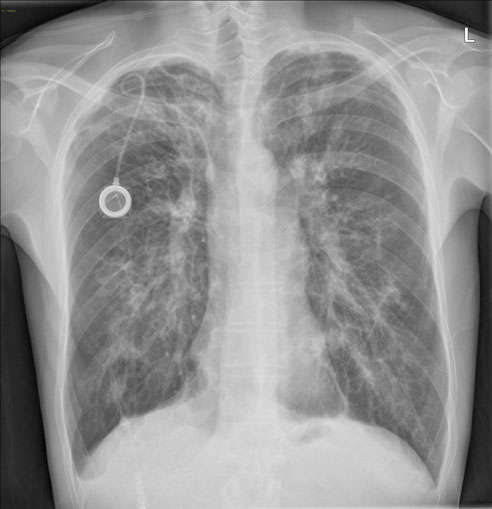
It is caused by mutations in the gene encoding for the cystic fibrosis transmembrane conductance regulator (CFTR) protein that regulates ion and water content of epithelial secretions. Defective CFTR results in thick viscid secretions in many different body systems. CF is a truly multiorgan disease that manifests itself most obviously in the lungs. Impaired mucociliary clearance leads to chronic infection, inflammation and subsequent bronchiectasis (see figure 1) with progressive loss of lung function and ultimately respiratory failure.
CF is inherited as a classic Mendelian autosomal recessive trait and the UK has a relatively high prevalence where 1 in 25 Caucasians are CFTR mutation carriers with a disease incidence of 1 in 2,500 live births; ethnic minorities have a lower carrier incidence with correspondingly lower disease rates.
'Median life expectancy for patients with cystic fibrosis now extends into the fifth decade’
Overall survival has improved dramatically since the millennium such that median life expectancy for patients with CF now extends into the fifth decade.1 However, with increasing longevity comes a range of comorbidities, some as complications of the disease itself but others as a consequence of long-term treatments required to manage CF.
In 2017 NICE published guidance on the diagnosis and management of CF in both children and adults.2
Diagnosis
Since 2007 a national newborn blood spot screening programme (NBSP) has been in place throughout the UK and most patients are now diagnosed shortly after birth via the heel prick test. However, the NBSP does not detect less common
CF-related mutations such that some children with CF still go undiagnosed and along with those born before 2007 may reach adulthood before diagnosis is contemplated.
Furthermore, it is increasingly recognised that the NBSP identifies some infants with no clinical features of CF, but who may be at risk of developing the CF syndrome later in life and have been given the designation of cystic fibrosis screen positive inconclusive diagnosis. It is therefore important to maintain vigilance for those whose features suggest CF, see table 1. In such cases a referral to a local respiratory service is warranted so that further testing and/or referral on to the specialist CF centre can be facilitated.
The diagnosis of CF can be made based on clinical presentation alone; however, a diagnosis is best supported by genetic screening or an elevated sweat chloride level.
Lung disease
Reduced clearance of thick mucus results in stasis of respiratory secretions, creating a microenvironment ripe for infection and inflammation.
‘Chronic infection with P. aeruginosa is associated with increased morbidity and mortality’
Chronic infection and inflammation eventually cause irreversible bronchiectasis and decline in pulmonary function, and 90% of CF deaths are caused by progressive respiratory failure. Infection, commonly with Haemophilus influenzae and Staphylococcus aureus, may be detected early in life.
The prevalence of Pseudomonas aeruginosa increases with age; by adulthood more than 50% of CF patients are infected.1 Unfortunately, chronic P. aeruginosa infection is associated with increased morbidity and mortality and in order to prevent cross-infection between patients, clinics are segregated based upon microbiology.
Extrapulmonary complications
Defective CFTR is expressed in many organs, resulting in multisystem disease contributing to excessive morbidity, see table 2.
One of the most common extrapulmonary manifestations is in the reproductive system. Around 98% of males are infertile because of congenital absence of the vas deferens. In women with CF, mucus plugs may act as mechanical barriers to conception but the reproductive tract is otherwise structurally normal.3
The pancreas is another commonly affected organ and the term cystic fibrosis was coined from its appearance at autopsy.4 Viscid pancreatic secretions become static with local autolysis, inflammation and fibrosis with subsequent exocrine and endocrine insufficiency.
Exocrine abnormalities are characterised by malabsorption of fat and fat-soluble vitamins, whereas dysregulated beta-cells struggle to release insulin adequately and cystic fibrosis related diabetes (CFRD) ensues.5 CFRD is not only associated with aberrant glycaemia but also accelerated pulmonary function decline and a three-fold increase in mortality.6
‘Cystic fibrosis related diabetes is associated with a more rapid decline in pulmonary function and a three-fold increase in mortality’
Elsewhere, stasis of hyperviscous bile can accumulate in the biliary tree causing focal inflammation and fibrosis. In this setting, persistent hepatocyte injury can lead to CF related liver disease, the third most common cause of death in children and adolescents with CF.7,8 Other common comorbidities include polyposis and chronic sinusitis in the upper respiratory tract,9 low bone mineral density,10 gastro-oesophageal reflux11 and renal disease.12
Management
The management of individuals with CF has evolved dramatically over the past few decades and increasing survival can be attributed to improvements in nutrition, the aggressive treatment of infection, and the recognition of comorbidities, see table 3.
Specialist services have also evolved over time and patients should be managed in regional CF centres.
The CF centre model of care revolves around a specialist multidisciplinary team (MDT) with close links to other medical and surgical specialties. The core CF MDT consists of a respiratory physician, specialist nurse, specialist physiotherapist, clinical psychologist, dietitian and pharmacist. CF centres should be organisationally and structurally designed to minimise the risk of cross-infection between patients.
Treatment of infection
Regular surveillance for lung infection is warranted from an early age, ideally with regular sputum sampling. Antibiotic strategies are targeted towards chronic suppression of the classical CF pathogens S. aureus and P. aeruginosa. In younger age groups S. aureus is more prevalent and the recent NICE guideline suggests chronic prophylaxis with flucloxacillin may be appropriate.2 In those with a first or new growth of P. aeruginosa, initiation of eradication treatment has been shown to be successful.
Eradication strategies should include nebulised antibiotics in addition to a short course of oral or intravenous antibiotics. Despite eradication being initially successful, infection often returns and treatments targeted toward chronic P. aeruginosa infection include long-term nebulised antibiotics such as colistimethate, tobramycin and aztreonam. In the past decade, dry powder formulations of some nebulised antibiotics have become available which are quicker and easier to take but can be associated with increased cough.13-15
Chronic pulmonary infection is punctuated by exacerbations characterised by acute deterioration in symptoms and lung function. Although milder exacerbations can be successfully treated with oral antibiotics, many require admission to hospital for intravenous antibiotics, glucocorticoids, optimisation of nutritional status and input from chest physiotherapists for intensive airway clearance.
Exacerbations carry an associated risk of mortality and hence chronic inhaled antibiotics are targeted towards the suppression of infection to prevent exacerbations. In addition, chronic macrolide therapy, e.g. azithromycin has been shown to reduce pulmonary inflammation and exacerbation rates effectively in both adults and children.
Airway clearance
Historically, physiotherapy for CF was focused solely on manual chest clearance techniques to help mobilise respiratory secretions. However, physiotherapy now includes a combination of chest clearance techniques, exercise and inhaled mucolytic therapies. Physiotherapists work with patients and families to tailor an individualised regimen that is effective and as efficient as possible.
Mucolytic therapies include recombinant human DNA cleaving enzymes such as dornase alpha (nebulised to break down viscid human and bacterial DNA material in CF sputum) and mucus hydrators such as nebulised hypertonic saline and inhaled mannitol.
‘Physiotherapy now includes a combination of chest clearance techniques, exercise and inhaled mucolytic therapies’
Nutritional status
Malnutrition has strong associations with poorer clinical outcomes in CF and hence close attention to nutritional status is important.16 Increased daily energy demands due to progressive lung disease require increased oral calorie intake including enteral tube feeding if oral supplementation is insufficient. Exocrine pancreatic insufficiency is present in 85% of the CF population where oral pancreatic enzyme replacement therapy (PERT) is given with fat and protein containing meals, snacks and drinks.17
Additionally, supplementation of the fat-soluble vitamins A, D, E and K is needed to optimise nutritional status. Poor nutritional status, pulmonary disease and glucocorticoid use can all have a detrimental impact on bone health and low bone mineral density is present in around 20% of individuals with CF.1 Monitoring of vitamin D levels and DEXA are therefore routinely performed in at-risk patients.
Close monitoring of complications
CF MDTs should offer a comprehensive annual review of all patients in order to optimise current management, assess pulmonary and nutritional status and screen for other complications.
CFRD is a distinct form of diabetes and is associated with more rapid decline in lung function and increased morbidity at lower levels of dysglycaemia than type 1 and 2 diabetes. It is therefore recommended that the CF MDT performs annual screening for the disease preferably involving continuous glucose monitoring.
An assessment of liver disease, renal disease and exercise capacity and a medication review are also recommended at least annually.
People with CF face considerable psychosocial challenges and symptoms of anxiety and depression are up to three times higher than in the general population.18 CF MDTs must assess mental wellbeing and other psychosocial indicators annually and facilitate CF tailored psychological input or psychiatric input where appropriate. GPs should be aware that the higher prevalence of anxiety and depression extends to family members and carers of people with CF.
Disease modifiers
Drugs targeting the defective CFTR protein are being developed and are licensed for some genotypes. Ivacaftor is funded for use in patients with certain gating mutations (around 5% of the UK CF population) under the proviso that it can only be prescribed by specialist CF centres.19
In those with responsive genotypes, ivacaftor is associated with dramatic improvements in lung function, nutritional status, exacerbation rate and rate of pulmonary function decline.20
Licensed products for those with the more common F508del mutation are less effective and are not currently funded for use in the UK, but ongoing trials of other agents appear promising.21
GP support
The specialist CF MDT should provide timely information so that GPs can provide appropriate support to patients and their families, see table 4. Particularly close support may be required at the end of life, in partnership with the CF centre or local homecare teams, or at the time of transition from paediatric to adult services.
REFERENCES
1 UK Cystic Fibrosis Registry 2016 Annual Data Report. London. 2017
2 National Institute for Health and Care Excellence. NG78. Cystic fibrosis: diagnosis and management NICE. London. 2017
3 Edenborough FP. Women with cystic fibrosis and their potential for reproduction. Thorax 2001;56(8):649-55
4 Andersen DH. Cystic fibrosis of the pancreas and its relation to celiac disease. Am J Dis Child 1938;56:344-99
5 Olivier AK, Yi Y, Sun X et al. Abnormal endocrine pancreas function at birth in cystic fibrosis ferrets. J Clin Invest 2012;122(10):3755-68
6 Adler AI, Shine B, Haworth C et al. Hyperglycemia and death in cystic fibrosis-related diabetes. Diabetes Care 2011;34(7):1577-78
7 Parisi GF, Di Dio G, Franzonello C et al. Liver disease in cystic fibrosis: an update. Hepat Mon 2013;13(8):e11215
8 Debray D, Narkewicz MR, Bodewes F et al. Cystic fibrosis-related liver disease: Research challenges and future perspectives. J Pediatr Gastroenterol Nutr 2017;65(4):443-48
9 Le C, McCrary HC, Chang E. Cystic fibrosis sinusitis. Adv Otorhinolaryngol 2016;79:29-37
10 Smith N, Lim A, Yap M et al. Bone mineral density is related to lung function outcomes in young people with cystic fibrosis-A retrospective study. Pediatr Pulmonol 2017;52(12):1558-64
11 Robinson NB, DiMango E. Prevalence of gastroesophageal reflux in cystic fibrosis and implications for lung disease. Ann Am Thorac Soc 2014;11(6):964-68
12 Nazareth D, Walshaw M. A review of renal disease in cystic fibrosis. J Cyst Fibros 2013;12(4):309-17
13 Uttley L, Harnan S, Cantrell A et al. Systematic review of the dry powder inhalers colistimethate sodium and tobramycin in cystic fibrosis. Eur Respir Rev 2013;22(130):476-86
14 Konstan MW, Wagener JS, Pasta DJ et al. Clinical use of tobramycin inhalation solution (TOBI(R)) shows sustained improvement in FEV1 in cystic fibrosis. Pediatr Pulmonol 2014;49(6):529-36
15 Schuster A, Haliburn C, Doring G, Goldman MH. Safety, efficacy and convenience of colistimethate sodium dry powder for inhalation (Colobreathe DPI) in patients with cystic fibrosis: a randomised study. Thorax 2013;68(4):344-50
16 Sinaasappel M, Stern M, Littlewood J et al. Nutrition in patients with cystic fibrosis: a European Consensus. J Cyst Fibros 2002;1(2):51-75
17 Singh VK, Schwarzenberg SJ. Pancreatic insufficiency in cystic fibrosis. J Cyst Fibros 2017;16 Suppl 2:S70-S8
18 Quittner AL, Goldbeck L, Abbott J et al. Prevalence of depression and anxiety in patients with cystic fibrosis and parent caregivers: results of The International Depression Epidemiological Study across nine countries. Thorax 2014;69: 1090-97
19 Clinical Commissioning Policy: Inhaled therapy for adults and children with cystic fibrosis: NHS England; 2014 [updated December 2014]
20 Bessonova L, Volkova N, Higgins M et al. Data from the US and UK cystic fibrosis registries support disease modification by CFTR modulation with ivacaftor. Thorax 2018;0:1-10
21 National Institute for Health and Care Excellence. TA398. Lumacaftor-ivacaftor for treating cystic fibrosis homozygous for the F508del mutation. NICE. London. 2016
 Download this article in PDF format