SEARCH

Masengu A, Courtney A. Improving recognition of inherited renal disease. Practitioner 2012; 256 (1748):17-20
Improving recognition of inherited renal disease
23 Feb 2012
AUTHORS
Dr Agnes Masengu MRCP
Specialty Registrar in Renal Medicine
Dr Aisling E Courtney MPhil FRCP
Consultant Nephrologist
Regional Nephrology Unit, Belfast City Hospital, Belfast
Article
Hereditary diseases of the kidney are less common than acquired disease and can present in a myriad of ways at any time from the prenatal period to late adulthood.
As with other illnesses the GP is usually the first medical professional to be consulted. This can be a potentially daunting prospect for GPs as most hereditary renal conditions are extremely rare.
However, this article will focus on the most common disorders which are likely to be encountered by GPs in the UK.
Hereditary renal disease can be categorised as follows:
• Cystic kidney disease
• Familial glomerular syndromes
• Inherited disorders of sodium and water handling
Additionally, there may be a hereditary component to some of the congenital anomalies of the kidney and urinary tract.
Table 1, details the most common causes of inherited renal disease in the UK; polycystic kidney disease (PKD) and Alport’s syndrome are the most prevalent.
Autosomal dominant polycystic kidney disease
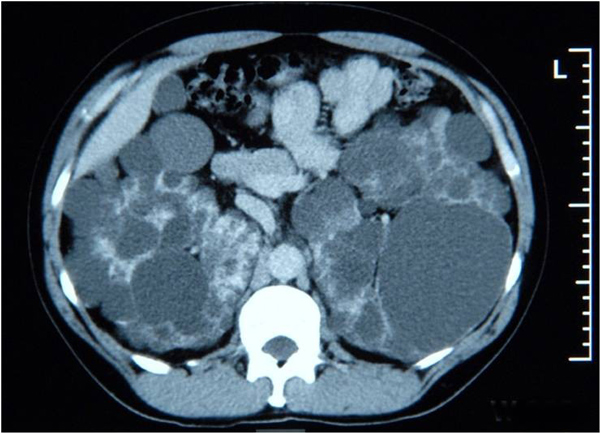
Autosomal dominant polycystic kidney disease (ADPKD) is characterised by the formation of fluid-filled cysts in the kidneys resulting in progressive renal impairment. In the UK, an average GP practice is likely to have at least six patients with ADPKD. In 2009, ADPKD was the cause of renal failure in 7% of patients starting renal replacement therapy, either dialysis or transplantation, in the UK.1
Mutations in two genes, PKD1 on chromosome 16 and PKD2 on chromosome 4 have been identified. The PKD1 gene abnormality is responsible for 85% of cases of ADPKD in Europe.2 Patients with PKD2 mutations
typically present later and progress more slowly.3 The clinical presentation is summarised in box 1.
Diagnosis
The diagnosis of ADPKD has traditionally been based on ultrasound imaging. In at-risk individuals aged 15-39 years old, ≥ 3 cysts unilateral or bilateral is diagnostic. As simple renal cysts become more common with age, ≥ 2 cysts in each kidney is the criterion in those aged 40-59 years old.4
Genetic testing is very rarely carried out as the PKD1 and PKD2 genes are very large, extremely intricate, and ADPKD can be caused by different mutations at the same locus. It is also currently unclear if all mutations cause disease.
Genetic analysis may be considered when imaging is equivocal or when consideration for kidney donation is being undertaken, using linkage or sequence analysis of DNA.
Screening
It is common for a patient with PKD to ask about screening of other family members. A normal ultrasound scan in those under 30 years old is not conclusive. In the light of this, the absence of specific therapy to minimise cyst growth, and the potential detrimental impact in terms of employment or life insurance, it is not recommende that children are screened.
Once individuals are 18 years old, they can make an informed choice with regard to screening. As a minimum, all should have an annual blood pressure check; hypertension precedes deterioration in renal function and is a modifiable factor in minimising disease progression.
Adults with a new diagnosis of PKD should be encouraged to discuss this with their siblings who should attend their own GP. Screening will reduce the incidence of a late diagnosis when renal disease is advanced. Appropriate counselling before investigation should be provided. Those who choose not to be screened should be offered regular blood pressure monitoring and general health screening.
Treatment
The management approach is twofold; symptomatic relief when required and minimisation of the rate of progression of chronic kidney disease, see table 2, opposite.
Progression to end-stage renal disease (ESRD) is not inevitable in PKD, particularly in those with milder genetic mutations. The key to minimising the rate of progressive disease is tight blood pressure control. Hypertension almost always predates a rise in creatinine, often by years.
Compliance with antihypertensive medication in these, often young people who feel very well, can be improved by explaining that tight blood pressure control will delay progression to ESRD.
Increased activity of the renin-angiotensin system, possibly caused by focal ischaemia due to cyst expansion, and extracellular volume expansion may play an important role in the rise in blood pressure. ACE inhibitors are recommended as the initial antihypertensive agent unless contraindicated. In addition to the antihypertensive effect ACE inhibitors may slow the rate of progression in those with proteinuria.5
Phase lll clinical trials of the vasopressin inhibitor tolvaptan are underway.6 Animal models demonstrated an encouraging reduction in cyst formation and rate of expansion with the use of this medication.
The optimal form of renal replacement therapy for these patients is kidney transplantation. The options for live kidney donors may be minimised by the presence of disease in other family members who may otherwise wish to donate, but genetically unrelated donors are increasingly coming forward and early consideration of potential donors should be encouraged.
Alport’s syndrome
Alport’s syndrome is a disorder characterised by abnormal type IV collagen which is found in the kidney, eyes, skin and ears. Only around one in ten practices are likely to have a patient with Alport’s syndrome.
Eighty per cent of patients have the X-linked form of the disease which is associated with mutations in the COL4A5 gene. Men typically have a more severe phenotype with 50% of males reaching ESRD by the age of 25 and 100% by the age of 40. Autosomal recessive inheritance occurs in 15% of cases and 5% have an autosomal dominant pattern.
Clinical presentation
The key presenting features are listed in box 2. The combination of reduced hearing and urinary abnormalities in a young boy should alert GPs to consider this as a possible diagnosis and initiate referral. Diagnosis can be confirmed by renal or skin biopsy.
Screening
All first-degree relatives of a patient with confirmed Alport’s syndrome should be offered screening in conjunction with the renal and genetic services.
Treatment
Progression to ESRD in males is inevitable and preparation for transplantation is important. Early treatment with ACE inhibitors may delay progression to ESRD and improve life expectancy.7
Thin basement membrane disease
Thin basement membrane (TBM) disease is also caused by an abnormality of type IV collagen but is a benign condition in the vast majority of patients. The inheritance pattern is autosomal dominant. Typically the presentation is with non-visible haematuria detected during routine health screening, potentially with a family history of haematuria but not renal failure.
Primary care follow-up is appropriate for young patients (
• eGFR ≥ 60 ml/min and
• ACR < 30mg/mmol or
PCR and
• BP < 140/90mmHg
Annual assessment of renal function, urinalysis and blood pressure is recommended.8
Supporting patients and their families
The diagnosis of an inherited renal disease affects not only the individual but also their family resulting in a substantial burden of distress concerning the future health of the patient, and also that of siblings, children and grandchildren. There is also the potential for discrimination with regard to employment or health insurance with such a diagnosis.
The rarity of inherited kidney disorders can prove a challenge for GPs. A patient or family may arrive at a consultation armed with information researched on the internet and appear better informed than the healthcare professional who has never had a patient with this particular condition before.
Support for both the patient and their GP should be provided by renal and genetic specialists. Accurate information with regard to the disease and its prognosis is vital in planning and coping with what is a chronic disease. Organisations such as the National Kidney Foundation provide information and support to patients and healthcare professionals.
Ongoing support in primary care is imperative for these patients and their families. In most cases there are no specific treatment options to deal with the genetic abnormality, and the patients will require lifelong follow-up. Typically this will be in the context of managing progressive kidney disease, and renal replacement therapy if, or when, required.
The primary care team can provide advice and reassurance to parents with regard to screening children when it may be inappropriate and unhelpful, e.g. in ADPKD, or ensuring screening when early diagnosis would be of benefit e.g. Alport’s syndrome. Information regarding support groups that allow individuals and families to meet and share experiences may also be helpful for some patients.
Conclusion
Many hereditary renal diseases are uncommon but several are not and most GPs will have some patients with inherited kidney problems. Specialist renal and/or genetic input is important for most, but much of the regular care and support will be provided in the primary care setting. The impact of a chronic disease process for the individual and family can be substantial and GPs are experts in managing this.
REFERENCES
1 UK Renal Registry 2010. 13th Annual Report of the Renal Association UK Renal Registry, Bristol http://www.renalreg.com/
2 Peters D and Sandkuyl L. Genetic heterogeneity of polycystic kidney disease in Europe. Contrib Nephrol 1992;97:128–39
3 Hateboer N, v Dijk MA, Bogdanova N et al. Comparison of phenotypes of polycystic kidney disease types 1 and 2. European PKD1-PKD2 Study Group. Lancet 1999;353(9147):103-7
4 Pei Y, Obaji J, Dupuis A et al. Unified Criteria for Ultrasonographic Diagnosis of ADPKD. J Am Soc Nephrol 2009;20:205–12
5 Jafar TH, Stark PC, Schmid CH et al. The effect of angiotensin-converting-enzyme inhibitors on progression of advanced polycystic kidney disease. ACE Inhibition in Progressive Renal Disease (AIPRD) Study Group. Kidney Int 2005;67(1):265-71
6 Torres VE, Meijer E, Bae KT et al. Rationale and design of the TEMPO (tolvaptan efficacy and safety in management of autosomal dominant polycystic kidney disease and its outcomes) 3-4 study. Am J Kidney Dis 2011;57:692–9
7 Gross O, Licht C, Anders HJ et al. Early angiotensin-converting enzyme inhibition in Alport syndrome delays renal failure and improves life expectancy. Kidney Int doi:10.1038/ki.2011.407
8 Joint consensus statement on the initial assessment of haematuria. Renal Association and British Association of Urological Surgeons; 2008. www.renal.org/clinical/OtherGuidelines.aspx
ARTICLE IN PDF
 Download this article in PDF format