SEARCH

Mkandawire MJ, Maxell AP. Reducing cardiovascular risk pivotal in diabetic kidney disease. Practitioner February 2021;265(1845):11-15
Reducing cardiovascular risk pivotal in diabetic kidney disease
21 Feb 2021
AUTHORS
Dr Mercy J Mkandawire MBBS MMed Int Med FCP(SA), International Training Fellow in Renal Medicine
Professor Alexander P Maxwell MD PhD FRCP, Consultant Nephrologist Regional Nephrology Unit, Belfast City Hospital, Belfast, UK
Article
Diabetic kidney disease is the most common cause of chronic kidney disease (CKD) and the main cause of end-stage renal disease worldwide. The rise in diabetic kidney disease prevalence is predominantly in individuals with type 2 diabetes. Diabetic kidney disease is associated with a very high risk of cardiovascular disease (CVD) and premature mortality from cardiovascular events. Modifiable risk factors for diabetic kidney disease (and CVD) include poor glycaemic control, hypertension, smoking and hyperlipidaemia. Early diabetic kidney disease is asymptomatic. Microalbuminuria, defined as a urinary ACR of 3-30 mg/mmol on two occasions three months apart is the earliest clinically detectable indicator of diabetic kidney disease. Diagnosis is based on elevated urinary albumin excretion and/or reduced renal function. Individuals with type 2 diabetes should have annual urinary ACR measurements from the time of diabetes diagnosis while annual ACR measurements should begin from the age of 12 in those with type 1 diabetes. There is good evidence that multifactorial interventions that optimise BP, limit proteinuria and minimise cardiovascular risk can reduce morbidity and premature mortality. Excellent glycaemic control can delay onset of microalbuminuria. HbA1c targets are individualised. All patients with diabetic kidney disease should have at least yearly measurements of BP, renal function (serum creatinine; eGFR) and urinary ACR.
Diabetic kidney disease is the most common cause of chronic kidney disease (CKD) and the main cause of end-stage renal disease worldwide.1
Clinical features of diabetic kidney disease can develop in up to 40% of individuals with diabetes.2 The rise in diabetic kidney disease prevalence is predominantly in individuals with type 2 diabetes mellitus as it is more common than type 1 diabetes and the risk factors for CKD are clustered in older adults with type 2 diabetes.2
Diabetes is associated with a reduction in life expectancy of around six years3 but the combination of diabetes and cardiovascular disease (CVD) is associated with a reduction of around 12 years.3 Individuals with diabetic kidney disease have an even greater reduction in life expectancy of around 16 years4 primarily because diabetic kidney disease is associated with a very high risk of CVD and premature mortality from cardiovascular events.2,3
Risk factors
There are genetic and environmental risk factors for diabetic kidney disease. Modifiable risk factors for diabetic kidney disease, and CVD, include poor glycaemic control, hypertension, smoking and hyperlipidaemia.5
Non-modifiable risk factors for diabetic kidney disease include genetic susceptibility, duration of diabetes, increasing age and male sex.5
Optimal blood glucose control coupled with effective blood pressure lowering can substantially reduce the risk of development and progression of diabetic kidney disease.6,7 Diabetic kidney disease is a microvascular diabetic complication and typically occurs in association with diabetic retinopathy and neuropathy.5,6,7
Mechanisms
The clustering of diabetic microvascular and macrovascular complications is linked to common pathological mechanisms. These include formation of advanced glycation end products, increased oxidative stress, endothelial dysfunction, growth factor pathway disruption and accelerated atherosclerosis.8
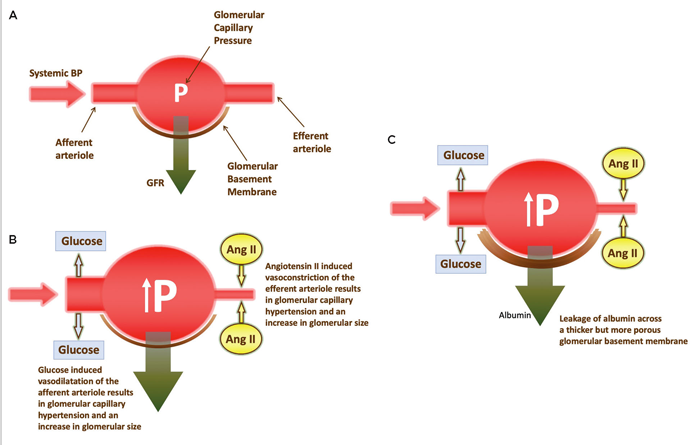
Diabetic kidney disease is driven by abnormal renal haemodynamics that result in elevated intraglomerular capillary pressure (see figure 1). Individuals with diabetes can have a combination of afferent arteriole dilatation (secondary to high glucose levels) and efferent arteriole vasoconstriction (secondary to high angiotensin II levels) that cause a rise in intraglomerular capillary pressure (see figure 1).2,8 Other changes include glomerular basement membrane thickening and loss of podocytes (cells that are integral to the glomerular filtration barrier).2 These pathological changes result in loss of glomerular barrier function detected clinically by albuminuria (see figure 1) and eventually by a fall in glomerular filtration rate (GFR).
The afferent arteriole dilatation (of the glomerulus) can be reversed by SGLT2 inhibitors (SGLT2i). The efferent arteriole vasoconstriction can be modified by blockade of the renin-angiotensin-aldosterone system (RAAS).2,8
Detection
Early diabetic kidney disease is asymptomatic and can be detected by persistently high urinary albumin (protein) excretion or sustained reduction in estimated glomerular filtration rate (eGFR) below 60 ml/min/1.73m2.2
The rise in urinary albumin excretion frequently precedes any fall in eGFR, therefore serum creatinine can be normal initially. Urinary albumin excretion is measured by the urinary albumin: creatinine ratio (ACR) and the risk of diabetic kidney disease is directly related to the absolute amount of albumin excretion.
Microalbuminuria, defined as a urinary ACR of 3-30 mg/mmol on two occasions three months apart (see table 1), is the earliest clinically detectable indicator of diabetic kidney disease.
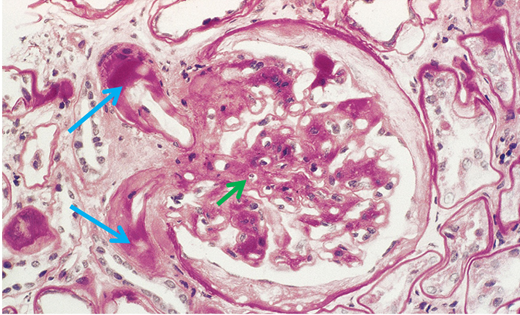
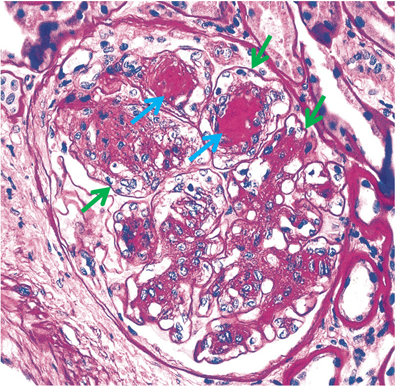
Patients with diabetic kidney disease are diagnosed based on elevated urinary albumin excretion and/or reduced renal function. A renal biopsy (see figure 2) is rarely necessary to confirm diabetic kidney disease. Individuals with type 2 diabetes should have annual urinary ACR measurements from the time of diabetes diagnosis9 while annual ACR measurements should begin from the age of 12 in those with type 1 diabetes.10
Referral
NICE has published chronic kidney disease (CKD) guidelines9 but has not produced separate guidance for diabetic kidney disease. Risk for cardiovascular events and/or progression to end-stage renal disease can be stratified by eGFR (G) and albuminuria (A) (see table 1).
NICE guidelines suggest that patients with known or suspected CKD should be referred to a nephrologist in the following situations:
• eGFR < 30 ml/min/1.73 m2 (i.e. CKD stages 4 and 5)
• ACR ≥ 70 mg/mmol despite maximum tolerated angiotensin converting enzyme inhibitor (ACEi) or angiotensin II receptor blocker (ARB) therapy
• Sustained decrease in GFR ≥ 25%, and a change in GFR category or sustained decrease in GFR ≥ 15 ml/min/1.73 m2 within 12 months
• ACR ≥ 30 mg/mmol (ACR category A3), together with haematuria
• Uncontrolled hypertension on four antihypertensive drugs at therapeutic dose
• Suspicion of alternative CKD diagnosis (family history, kidney structural problem or renal stone disease)
• Suspected renal artery stenosis
NICE recommendations for frequency of clinical follow-up are based on CKD stage and amount of proteinuria.9
In 2020, Kidney Disease: Improving Global Outcomes (KDIGO) guidelines were published for diabetic kidney disease incorporating the recent evidence for benefits of SGLT2i in reducing cardiovascular and renal risks.11 Multiple clinical trials of different SGLT2i (CREDENCE, EMPA-REG, CANVAS, DAPA-HF) have demonstrated that these agents are associated with reduced rates of major adverse cardiovascular events, heart failure hospitalisation, cardiovascular death and composite renal outcomes (stabilisation of GFR and reduction in proteinuria).11,12
Management
Ideally, patients should be empowered to achieve optimal control of blood glucose and understand how to minimise their individual modifiable risk factors for diabetic kidney disease.13 Unfortunately, fragmentary care can occur if the patient is attending multiple hospital clinics and receives conflicting advice.
There is good evidence that multifactorial interventions that optimise blood pressure, limit proteinuria and minimise cardiovascular risk can reduce morbidity and premature mortality.7 Smoking cessation, aerobic exercise, a healthy diet and weight control are all useful non-pharmacological components of diabetes care.
Excellent glycaemic control can delay onset of microalbuminuria.6,13 HbA1c targets are individualised, e.g. < 53 mmol/mol (< 7%), in a patient with a long life expectancy, hypoglycaemia awareness and few comorbidities. In contrast, a more relaxed HbA1c target can be adopted if the patient has end-stage renal disease, macrovascular complications, a short life expectancy and limited hypoglycaemia awareness.11
For individuals with diabetes and albuminuria, a blood pressure target < 130/80 mmHg is advocated by NICE guidelines.9 A reduction of proteinuria to < 1 g/day (ACR < 70 mg/mmol) retards progression of diabetic kidney disease and reduces the number of cardiovascular events.14
If proteinuria is still ≥ 1 g/day (ACR ≥ 70 mg/mmol) some guidelines have suggested a more stringent target BP of 125/75 mmHg particularly for younger patients and those with type 1 diabetes. A less stringent target systolic blood pressure of < 150 mmHg is appropriate in much older individuals to reduce risks associated with multiple antihypertensive drugs.
RAAS blockade is effective in reducing proteinuria, managing hypertension and reducing cardiovascular risk.
ACEi and ARB are considered equivalent in terms of efficacy.15 Both ACEi and ARB can lower intraglomerular capillary pressure as they reverse the angiotensin II mediated vasoconstriction of the glomerular efferent arteriole. Unless there are clear contraindications all patients with diabetic kidney disease should be prescribed an ACEi or ARB at the maximum tolerated dose.9,11
KDIGO recommends prescribing SGLT2i for individuals with type 2 diabetes and eGFR ≥ 30 ml/min/1.73m2.11 SGLT2i can reduce intraglomerular capillary pressure by increasing the glomerular afferent arteriole tone.16 SGLT2i act by blocking sodium coupled glucose reabsorption in the proximal tubule resulting in increased sodium delivery to the distal tubule that in turn stimulates tubuloglomerular feedback and an increase in afferent arteriole tone.
SGLT2i are also associated with a modest reduction in weight and blood pressure (related to salt and water losses associated with reduction in tubular glucose reabsorption).11,16 If the patient is at risk of hypovolaemia, consider reducing or stopping diuretics before starting SGLT2i treatment.11 SGLT2i have been well tolerated in clinical trials and can continue to be used when eGFR is < 30 ml/min/1.73m2.
SGLT2i are associated with an increased risk of genital fungal infections and a small increased risk of ketoacidosis.11,12,16 The effects of SGLT2i are additive to RAAS blockade with ACEi or ARBs.11,16
After commencing a RAAS blocker some patients will experience an initial rise in serum creatinine. Provided this is not > 30% of baseline creatinine and potassium levels remain < 6 mmol/L RAAS blockade can be safely continued. Paradoxically, it has been observed that an initial fall in eGFR after RAAS blockade is predictive of a slower long-term decline in renal function.17
Treatment with an ACEi (or ARB) should be temporarily stopped during intercurrent illness or episodes of volume depletion (vomiting, diarrhoea, the perioperative period), see box 1. Too great a reduction in intraglomerular pressure can lead to a rapid fall in GFR and acute kidney injury.
Patients with diabetic kidney disease and persisting proteinuria ≥ 1 g/day (ACR ≥ 70 mg/mmol) may require additional antihypertensive agents to achieve targets. Despite this, blood pressure and proteinuria may still be poorly controlled.
It is worth checking concordance with drug therapy as well as ensuring that dietary sodium restriction is maximised.
The effects of RAAS blockade can be blunted if sodium intake is too high.18
A daily sodium chloride intake of 5 g or less is recommended.9,11 Great care should be taken if using salt substitutes containing potassium chloride, as individuals with diabetic kidney disease taking RAAS inhibitors may develop dangerous hyperkalaemia.
Addition of a diuretic to aid sodium excretion can be useful particularly for oedematous patients. Dual RAAS blockade with an ACEi and ARB is not recommended because of the risk of hyperkalaemia and acute kidney injury.
As GFR falls, dose reduction is required for some drugs.24 Metformin can be continued at reduced dose when eGFR is < 45 ml/min/1.73m2 but is usually discontinued when eGFR < 30 ml/min/1.73m2.11 Metformin should be temporarily stopped in the setting of acute illness such as sepsis, volume depletion or acute cardiac events as there is a small but important risk of lactic acidosis.
Glucagon-like peptide receptor agonists (GLP-1 RA) can be helpful in patients with type 2 diabetes and diabetic kidney disease who have not achieved HbA1c targets despite metformin and SGLT2i (or who are unable to use those drugs).11 Several GLP-1 RA drugs do not need dose adjustments for CKD but there is limited data on their use in severe CKD (eGFR < 15 ml/min/1.73m2). GLP-1 RA should not be used in combination with dipeptidyl peptidase-4 (DPP-4) inhibitors.
Insulin, as it is metabolised by the kidney, may accumulate as GFR falls and so dosing requirements may need to be reduced.
Sulphonylureas should be used with caution as even the ‘short acting’ analogues can have prolonged duration of action in CKD. This increases the risk of hypoglycaemia and potential accidents e.g. while driving.
Thiazolidinediones are associated with fluid retention and increased cardiovascular risk making other oral hypoglycaemic classes more attractive.
One important practice point to bear in mind is that the accuracy and precision of HbA1c measurement decreases in advanced CKD (eGFR < 30 ml/min/1.73m2) and especially in dialysis patients (with shorter red cell survival and unpredictably prolonged half-life of several hypoglycaemic drugs).11
Monitoring and follow-up
Individuals with early diabetic kidney disease (CKD stages 1-3) will typically have stable or very slowly progressive loss of renal function.
Arguably, the major focus of care for patients with diabetic kidney disease should be on limiting the excess cardiovascular risk. Statin therapy for primary prevention of CVD is recommended for individuals with type 1 diabetes who have had diabetes for at least ten years or who are older than 40 years of age.19 Most individuals with type 2 diabetes and diabetic kidney disease will have a 10% or greater ten-year risk of CVD and would be suitable for statin therapy.19
All patients with diabetic kidney disease should have at least yearly measurements of blood pressure, renal function (serum creatinine; eGFR) and urinary ACR.
The NICE guidelines for CKD are helpful in deciding when to refer a patient with diabetic kidney disease to a nephrologist for shared care.9 Nephrology clinics can help with longer term monitoring of renal function, patient education and discussion about renal replacement therapy choices for end-stage renal disease (dialysis, renal transplantation, conservative care).20,21
The recent SGLT2i clinical trials provide evidence for important benefits of these drugs in reducing cardiovascular and renal morbidity and mortality.
Competing interests: None
REFERENCES
1 United States Renal Data System Annual Report 2018. Chapter 11, International comparisons
2 Alicic RZ, Rooney MT, Tuttle KR. Diabetic kidney disease: Challenges, progress, and possibilities. Clin J Am Soc Nephrol 2017;12:2032-45
3 Emerging Risk Factors Collaboration. Association of cardiometabolic multimorbidity with mortality. JAMA 2015;314:52-60
4 Wen CP, Chang CH, Kuang MK et al. Diabetes with early kidney involvement may shorten life expectancy by 16 years. Kidney Int 2017;92:388-96
5 Harjutsalo V, Groop PH. Epidemiology and risk factors for diabetic kidney disease. Adv Chronic Kidney Dis 2014;21:260-66
6 Diabetes Control and Complications Trial Research Group. The effect of intensive treatment of diabetes on the development and progression of long-term complications in insulin-dependent diabetes mellitus. N Engl J Med 1993;329(14):977-86
7 Gaede P, Oellgaard J, Carstensen B. Years of life gained by multifactorial intervention in patients with type 2 diabetes mellitus and microalbuminuria: 21 years follow-up on the Steno-2 randomised trial. Diabetologia 2016;59:2298-2307
8 Maqbool M, Cooper ME, Jandeleit-Dahm KAM. Cardiovascular disease and diabetic kidney disease. Semin Nephrol 2018;38:217-32
9 National Institute for Health and Care Excellence. CG182. Chronic kidney disease in adults: assessment and management. NICE. London. 2014 Updated 2015
10 National Institute for Health and Care Excellence. NG18. Diabetes (type 1 and type 2) in children and young people: diagnosis and management. NICE. London. 2015 Updated 2020
11 KDIGO 2020 Clinical practice guidelines for diabetes management in chronic kidney disease. Kidney Int 2020;98:Supplement S1-S115
12 Rangaswami J, Bhalla V, de Boer IH et al. Cardiorenal protection with newer diabetic agents in patients with diabetes and chronic kidney disease: a scientific statement from the American Heart Association. Circulation 2020;142:e265-e286
13 Adler AI, Stevens RJ, Manley SE et al. Development and progression of nephropathy in type 2 diabetes: the United Kingdom Prospective Diabetes Study (UKPDS 64). Kidney Int 2003;63(1):225-32
14 Ritz E. Clinical manifestations and natural history of diabetic kidney disease. Med Clin N Am 2013;97(1):19-29
15 Wu HY, Huang JW, Lin HJ et al. Comparative effectiveness of renin-angiotensin system blockers and other antihypertensive drugs in patients with diabetes: systematic review and Bayesian network meta-analysis. BMJ 2013;347:f6008
16 Wheeler DC, James J, Patel D et al. SGLT2 inhibitors: slowing of chronic kidney disease progression in type 2 diabetes. Diabetes Ther 2020;11(12):2757-74
17 Holtkamp FA, de Zeeuw D, Thomas MC et al. An acute fall in estimated glomerular filtration rate during treatment with losartan predicts a slower decrease in long-term renal function. Kidney Int 2011;80(3):282-87
18 Slagman MC, Waanders F, Hemmelder MH et al. Moderate dietary sodium restriction added to angiotensin converting enzyme inhibition compared with dual blockade in lowering proteinuria and blood pressure: randomised controlled trial. BMJ 2011;343:d4366
19 National Institute for Health and Care Excellence. CG181. Cardiovascular disease: risk assessment and reduction, including lipid modification. NICE. London. 2014 Updated 2016
20 Jones RK, Hampton D, O’Sullivan DJ, Phillips A. Diabetes and renal disease: who does what? Clin Med 2013;13(5):460-64
21 Rayner HC. Comment on Diabetes and renal disease: who does what? Clin Med 2014;14(1):93
ARTICLE IN PDF
 Download this article in PDF format
EXTERNAL WEBLINKS
For healthcare professionals
KDIGO guidelines
2020 Clinical practice guideline for diabetes management in CKD Summary of recommendations and practice points, pp S22-S29
NICE guidelines
NG28. Type 2 diabetes in adults: management
CG182. Chronic kidney disease in adults: assessment and management
Edinburgh Renal Unit
For patients
Diabetes UK: Kidneys (nephropathy)
Patient Info
Edinburgh Renal Unit