SEARCH

Paisley P, Serpell M. Controlling joint pain in older people. Practitioner 2016;260(1789):11-15
Controlling joint pain in older people
25 Jan 2016
AUTHORS
Dr Peter Paisley MBChB MSc FRCA, Anaesthetic Registrar, Glasgow Royal Infirmary, Glasgow, UK
Dr Mick Serpell MB ChB FCPodS ECFMG FRCA FFPMRCA, Consultant and Senior Lecturer in Anaesthesia & Pain Medicine, University of Glasgow, Glasgow, UK
Article
Abstract
The prevalence of chronic pain in older people in the community ranges from 25 to 76% and for those in residential care, it is even higher at 83 to 93%. The most common sites affected are the back, hip, or knee, and other joints. There is increased reporting of pain in women (79%) compared with men (53%). Common conditions include osteoarthritis and, to a lesser extent, the inflammatory arthropathies such as rheumatoid arthritis. The differential diagnosis includes non-articular pain such as vascular limb pain and nocturnal cramp, some neuropathic pain conditions (such as compressive neuropathies and postherpetic neuralgia), soft tissue disorders such as fibromyalgia and myofascial pain syndromes. In addition to an assessment of pain intensity, a biopsychosocial model should be adopted to ascertain the effect of the pain on the patient’s mood, social function and activities of daily living. This will aid monitoring for improvement resulting from initiation of analgesic therapies. It also ensures that the clinician screens for potential psychological sequelae of persistent pain such as depression, anxiety and fear avoidance behaviour. In osteoarthritis the patient will typically describe pain on movement of the affected joint, pain worse at the end of the day and sometimes a degree of background pain at rest. The disease is often localised to the large load-bearing joints, predominantly the hips and knees. In contrast to osteoarthritis, the inflammatory arthritides typically present with symmetrical swollen, stiff, and painful small joints of the hands and feet, usually worse in the morning.
The diagnosis and management of joint pain in the elderly can be challenging for a variety of reasons. The detection of pain in this group is difficult as demonstrated by the wide-ranging prevalence figures reported. The figure for those in the community experiencing chronic pain ranges from 25 to 76% 1,9-14 and for those in residential care, it is even higher at 83 to 93%.4,8,15 The most common sites affected are the back,1,2,4,5,7-9,12-15 hip, or knee,2-8,12,13,15 and other joints. 6,7,9 There is a difference between the sexes with an increased reporting of pain in women (79%) compared with men (53%).1
Common causes
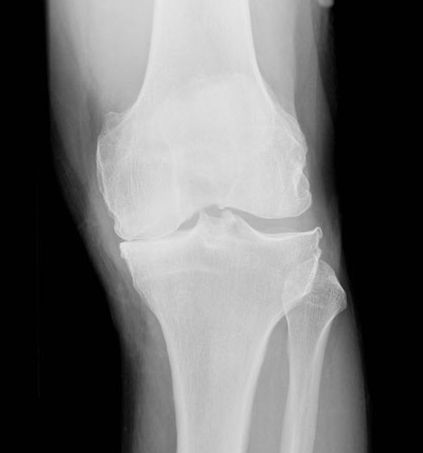
There are many potential causes for joint pain in the elderly and a careful history and examination is paramount, with appropriate investigations where required. Common conditions include osteoarthritis (see figure 1, above) and, to a lesser extent, the inflammatory arthropathies such as rheumatoid arthritis.
The differential diagnosis includes non-articular pain such as vascular limb pain and nocturnal cramp, some neuropathic pain conditions (such as compressive neuropathies and postherpetic neuralgia16,17), soft tissue disorders such as fibromyalgia and myofascial pain syndromes. This article will focus on the principal causes of joint pain, their assessment, diagnosis and management.
Assessment and diagnosis
Stoicism in patients, or the erroneous belief, which may be held by carers and physicians, that pain is part of the normal ageing process can hamper its detection.18 Visual, hearing or cognitive impairment may also hinder communication. In patients with cognitive impairment, assessment may depend on the history reported by the carers and direct observations such as facial expressions, behavioural changes and non-specific measurable physiological variables such as heart rate and blood pressure.
There are a number of tools available such as the verbal and numerical rating scales, visual analogue scales, the pain disability index and the short form McGill pain questionnaire.19 Some advocate the use of the simpler instruments such as the verbal and graphical scales because of a low failure rate in the elderly and those who are cognitively impaired.20 However, a recent systematic review looking specifically at pain assessment in the context of dementia concluded that ‘no one tool could be recommended’ and there is limited evidence on the validity, reliability and clinical utility of current assessment tools.21
In addition to an assessment of pain intensity, a biopsychosocial model should be adopted to ascertain the effect of the pain on the patient’s mood, social function and activities of daily living. This will aid monitoring for improvement resulting from initiation of analgesic therapies. It also ensures that the clinician screens for potential psychological sequelae of persistent pain such as depression, anxiety and fear avoidance behaviour.
Assessment should focus on:
• Distribution of joint involvement
• Symmetry
• Any disruption of normal anatomy
• Limitations of movement
• Presence of joint effusions or a single hot swollen joint
The latter should prompt exclusion of septic arthritis which, if untreated, can destroy the joint within 24 hours.22
The recently updated NICE guidelines stipulate that in patients over 45, a history of activity-related pain without significant morning stiffness is satisfactory for a diagnosis of osteoarthritis without the need for further investigation, see table 1.23
In osteoarthritis the patient will typically describe pain on movement of the affected joint, pain worse at the end of the day and sometimes a degree of background pain at rest. The disease is often localised to the large load-bearing joints, predominantly the hips and knees. There may be evidence of joint swelling, tenderness, Heberden’s nodes (bony lumps at the distal interphalangeal joint), Bouchard’s nodes (proximal interphalangeal joint), decreased range of movement and mild synovitis. Imaging, when performed, will typically show narrowing of the joint space, the presence of bony cysts, marginal osteophytes and subchondral sclerosis.24 The presence of any red flag symptoms should warrant prompt investigation and exclusion of more sinister pathology, see table 2.
In contrast to osteoarthritis, the inflammatory arthritides typically present with symmetrical swollen, stiff, and painful small joints of the hands and feet, usually worse in the morning.24 Early tenosynovitis may not be clinically evident but in the long-term will cause swollen, inflamed, deformed and tender joints. The characteristic boutonnière and ‘swan-neck’ deformities may be seen, along with ulnar deviation of the digits. Rheumatoid arthritis is a multisystem disease, the diagnosis and management of which is beyond the scope of this article.
Any suspicion of an undiagnosed inflammatory arthritis should prompt specialist referral for assessment, in accordance with NICE guidelines, see table 3.25 Onset is typically in the fourth or fifth decade, with a female preponderance and a prevalence of around 1% of the population.22 This is in stark contrast to osteoarthritis, for which a third of the UK population over the age of 45 have sought treatment.26
Management strategies
Once the diagnosis is made, a full explanation of the condition should be given to the patient to help them self-manage their condition.23
Positive behavioural changes should be encouraged such as weight loss, appropriate footwear and graded exercise with a focus on both local muscle strengthening and general aerobic fitness.23 Recent evidence suggests exercise can reduce pain, improve function and delay joint replacement in hip osteoarthritis.27-29
Thermotherapy with either heat or cold should be considered as a useful and safe adjunct.23 A Cochrane review of acupuncture demonstrated a statistically significant benefit in both controlled (sham needles) and waiting-list controlled trials.30 Despite this finding, some argue whether this difference is clinically significant and NICE does not at present recommend offering acupuncture to patients with osteoarthritis.23
Transcutaneous electrical nerve stimulation (TENS) has been shown in a recent one-year follow-up study to reduce pain intensity, lower analgesic requirements and improve quality of life.31 It is a simple, safe, and effective tool with few contraindications.
Nutraceuticals such as glucosamine and chondroitin are not routinely recommended.23
All patients who describe functional limitation or a reduced quality of life warrant initiation of pharmacological therapy. The physiological changes that occur with ageing and impact on drug handling are too extensive to be covered in this article, but a summary of the key points is presented in table 4. Regular paracetamol, with dose adjusted for weight, remains an effective and safe starting point. There is no convincing evidence of harm when used at an appropriate dose.32
The efficacy of NSAIDs in the Oxford league table of analgesics is superior to parenteral morphine. The number needed to treat (NNT) to achieve a 50% reduction in pain over six hours compared with placebo is 1.5, 1.8 and 2.1 for etoricoxib, diclofenac and celecoxib respectively. The NNT for 10 mg of intramuscular morphine is considerably higher at 2.9.33 Caution is required in the elderly because of increased susceptibility to side effects.34
A rational approach would be starting with topical NSAID therapy followed by escalation to oral therapy if required, ensuring concomitant prescription of a gastroprotective agent. Using the lowest dose for the shortest time possible with routine review to assess if the benefits of treatment outweigh the risks is a sensible approach to minimise any potential adverse events.
NSAIDs and COXIBs are equally analgesic, but the incidence of their side effects differ. An algorithm which can be used to determine which type of drug is preferential, based on the patient’s risk of gastrointestinal or cardiovascular events, is shown in figure 2.35
Topical capsaicin has recently been demonstrated to reduce pain intensity in patients with clinically (or radiographically) diagnosed osteoarthritis.36 Capsaicin 0.025% cream should be applied to the painful area four times per day for a six-week trial period, and continued thereafter if effective. It is generally well tolerated as burning and itching usually peaks after one week and then subsides with ongoing treatment.
Old age per se is not a contraindication to treatment with opioids. The British Pain Society guidelines for the prescription of strong opioids should be adhered to, ensuring patients undergo frequent review of dosing, side effects and endpoints of treatment.37 If there is no improvement in pain intensity or level of function they should be slowly discontinued. Tolerance and physical dependence are risks, although genuine addiction in this population is not commonly described.
Referral
For those in whom the above treatment modalities have failed to control symptoms, the next step is referral for specialist advice.
Intra-articular injections of corticosteroid, hyaluronic acid and platelet-rich plasma have all been shown to be of benefit for knee osteoarthritis.38 However, any benefits are short lived and this treatment is limited by cost effectiveness, particularly in the case of the latter two.
Referral for joint surgery should be made for patients with severe symptoms, a significant impact on their quality of life, severe functional limitation and in whom non-surgical methods have failed.23 Counselling about the risks and benefits of surgery, the necessary rehabilitation after surgery, and limitations of a prosthesis, should be begun at an early stage. This is being increasingly recognised with the advent of ‘joint school’ education programmes forming part of an enhanced recovery after surgery (ERAS) programme.
Although the focus of this article has been limited to the management of peripheral joint arthritis, those patients with low back pain and examination (tender over the joints themselves; pain on lumbar extension) or imaging suggestive of facet joint osteoarthritis should be referred to a pain specialist for consideration of interventional therapy. This can take the form of intra-articular injections or targeting of the medial branch of the dorsal ramus supplying the joint with local anaesthetic, steroid or radiofrequency ablation.
Conclusion
In the UK, almost nine million people have sought treatment for arthritis.26 In those over 75 years old the figure is 50% which, with an increasingly elderly population, is likely to become a bigger care burden in the future. Management should include a biopsychosocial assessment by the physician, education regarding self-management and physical exercise, treatment with topical and oral analgesics, and referral for specialist advice where all else has failed.
REFERENCES
1 Bergh I, Steen G, Waern M et al. Pain and its relation to cognitive function and depressive symptoms: a Swedish population study of 70-year-old men and women. J Pain Symptom Manage 2003;26:903-12
2 Lichtenstein M, Dhanda R, Cornell J et al. Disaggregating pain and its effects on physical functional limitations. J Gerontol Med Sci 1998;53A:M361-71
3 Asghari A, Ghaderi N, Ashory A. The prevalence of pain among residents of nursing homes and the impact of pain on their mood and quality of life. Arch Iranian Med 2006;9:368-73
4 Boerlage AA, van Dijk M, Stronks DL et al. Pain prevalence and characteristics in three Dutch residential homes. Eur J Pain 2008;12:910-16
5 Dos Reis LA, de Vasconcelos Torres G et al. Pain characterization in institutionalized elderly patients. Arq Neuropsiquiatr 2008;66:331-5
6 McClean WJ, Higginbotham NH. Prevalence of pain among nursing home residents in rural New South Wales. Med J Aust 2002;177:17-20
7 Tsai YF, Tsai HH, Lai YH et al. Pain prevalence, experiences and management strategies among the elderly in Taiwanese nursing homes. J Pain Symptom Manage 2004;28:579-84
8 Weiner DK, Peterson B, Ladd K et al. Pain in nursing home residents: an exploration of prevalence, staff perspectives, and practical aspects of management. Clin J Pain 1999;15:92-101
9 Blay SL, Andreoli SB, Gasta FL. Chronic painful physical conditions, disturbed sleep and psychiatric morbidity: results from an elderly survey. Ann Clin Psychiatry 2007;19:169-74
10 Blyth FM, March LM, Brnabic AJ et al. Chronic pain in Australia: a prevalence study. Pain 2001;89:127-34
11 Elliott AM, Smith BH, Penny KI et al. The epidemiology of chronic pain in the community. Lancet 1999;354:1248-52
12 McCarthy LH, Bigal ME, Katz M et al. Chronic pain and obesity in elderly people: results from the Einstein aging study. J Am Geriatr Soc 2009;57:115-9
13 Sa KN, Baptista AOF, Matos MA, Lessa I. Chronic pain and gender in Salvador population, Brazil. Pain 2008;139:498-506
14 Yu HY, Tang FI, Kuo BI, Yu S. Prevalence, interference, and risk factors for chronic pain among Taiwanese community older people. Pain Manag Nurs 2006;7(1):2-11
15 Zanocchi M, Maero B, Nicola E et al. Chronic pain in a sample of nursing home residents: prevalence, characteristics, influence on quality of life (QoL). Arch Gerontol Geriatr 2008;47:121-8
16 Paisley P, Serpell M. The diagnosis and management of postherpetic neuralgia. Practitioner 2015;259(1778):21-4
17 Latinovic R, Gulliford MC, Hughes RAC. Incidence of common compressive neuropathies in primary care.
J Neurol Neurosurg Psychiatry 2006;77(2):263-65
18 Helme RD, Gibson SJ. The epidemiology of pain in elderly people. Clin Geriatr Med 2001;17: 417-31
19 Melzack R. The short form McGill pain questionnaire. Pain 1987;30(2):191-97
20 Brook P, Connell J, Pickering T. Oxford Handbook of Pain Management. Oxford University Press. Oxford. 2011
21 Lichtner V, Dowdling D, Esterhuizen P et al. Pain assessment for people with dementia: a systematic review of systematic reviews of pain assessment tools. BMC Geriatrics 2014;14:130
22 Longmore M, Wilkinson I, Turmezel T et al. Oxford Handbook of Clinical Medicine. 7th edition, Oxford University Press. Oxford. 2007
23 National Insititute for Health and Care Excellence. CG177. Osteoarthritis: care and management in adults. NICE. London. 2014
24 Kumar P, Clark M. Clinical Medicine, 8th Edition. Elsevier. 2012
25 National Insititute for Health and Care Excellence CG79. Rheumatoid arthritis in adults. NICE. London. 2009
26 Arthritis Research UK (2013). Osteoarthritis in General Practice. www.arthritisresearchuk.org/arthritis-information/data-and-statistics/data-by-condition/osteoarthritis.aspx
27 Fransen M, McConnell S, Hernandez-Molina et al. Exercise for osteoarthritis of the hip. Cochrane Database Syst Rev 2014;4:CD007912
28 Villadsen A, Overgaard S, Holsgaard-Larsen A et al. Immediate efficacy of neuromuscular exercise in patients with severe osteoarthritis of the hip or knee: a secondary analysis from a randomized controlled trial. J Rheumatol 2014;41:1385-94
29 Svege I, Nordsletten L, Fernandes L et al. Exercise therapy may postpone total hip replacement surgery in patients with hip osteoarthritis: a long-term follow-up of a randomised trial. Ann Rheum Dis 2015;74:164-69
30 Manheimer E, Cheng K, Linde K et al. Acupuncture for peripheral joint osteoarthritis. Cochrane Database Syst Rev 2010;Jan 20(1):CD001977
31 Cherian JJ, Harrison PE, Benjamin SA et al. Do the effects of transcutaneous electrical nerve stimulation on knee osteoarthritis pain and function last? J Knee Surg 2015 Nov(5) [ePub ahead of print]
32 Paisley P, Serpell M. Risks vs benefits of paracetamol. Practitioner 2015;259(1782):5
33 Oxford league table of analgesics. www.medicine.ox.ac.uk/ bandolier/booth/painpag/ acutrev/analgesics/lftab.html
34 Smith SG. Dangers of NSAIDs in the elderly. Can Fam Physician 1989;35:653-54
35 Lanas A, Benito P, Alonso J et al. Safe prescription recommendations for non steroidal anti-inflammatory drugs: Consensus document elaborated by nominated experts of three scientific associations (SER-SEC-AEG) Rheumatol Clin 2014;10:68-84
36 Laslett LL, Jones G. Capsaicin for osteoarthritis pain. Prog Drug Res 2014;68:227-91
37 Stannard C, Chumbley G, Myles J et al. Opioids for persistent pain – Good practice. British Pain Society. London. 2010. www.britishpainsociety.org/static/ uploads/resources/files/book_opioid_main.pdf
38 Ayhan E, Kesmezacar H, Akgun I. Intraarticular injections (corticosteroid, hyaluronic acid, platelet rich plasma) for knee osteoarthritis. World J Orthop 2014;18:5(3):351-61
ARTICLE IN PDF
 Download this article in PDF format
PRESET SEARCHES
Pub Med
Joint pain elderly primary care
NICE evidence search
Immediate CPD prompts
These handy templates* prompt immediate drafting of personal learning, reflection and planning. Save your record straight into your personal development folder on your device or Cloud storage system.
*Adobe reader needed for iPad
EXTERNAL WEBLINKS
We welcome your feedback
If you would like to comment on this article or have a question for the authors, write to: [email protected]