SEARCH

Chouliaras L, Topiwala A, Cristescu T, Ebmeier KP. Establishing the cause of memory loss in older people. Practitioner 2015; 259 (1778):15-19
Establishing the cause of memory loss in older people
22 Jan 2015
AUTHORS
Dr Leonidas Chouliaras PhD, Academic Clinical Fellow
Dr Anya Topiwala MRCPsych, Clinical Lecturer
Dr Tamara Cristescu PhD, Academic Clinical Fellow
Professor Klaus P. Ebmeier MD, Professor of Old Age Psychiatry, Department of Psychiatry, University of Oxford, Oxford, UK
Article
The increasing number of people surviving into older age has resulted in a rise in patients with age-related memory impairment.
Common causes of memory loss in older people are mild cognitive impairment (MCI), the various types of dementia, and psychiatric illness, mainly depression.1-3
The prevalence of MCI is estimated to be 3-30% of those above 65, while about 20% will experience symptoms of depression.4, 5 Approximately 36 million people worldwide suffer from dementia, 850,000 in the UK.6 Around 10% of patients with MCI progress to dementia each year.7, 8
The most common type is Alzheimer’s disease (AD), accounting for 60-80% of all cases. Other common types of dementia are vascular, frontotemporal (FTD), Lewy body (DLB), Parkinson’s and mixed type dementia, where features of different dementias are present.9, 10
Older people with depression usually present with low mood and the biological symptoms of depression, such as sleep disturbance and loss of appetite.1 However, a substantial proportion will experience, and complain of, memory loss and cognitive impairment.11 Nearly 50% of older people with symptoms of depression will experience symptoms of cognitive impairment that can persist.12 Executive function, episodic (e.g. word list) memory and processing speed are the most commonly affected cognitive domains. Pseudodementia can be difficult to differentiate from an underlying diagnosis of dementia.1,11
There are of course other causes of memory impairment, such as delirium, often iatrogenic associated with operations and medication, or rare conditions such as space-occupying lesions, normal pressure hydrocephalus, intracranial infections, endocrine disorders, prion diseases, dementia in progressive supranuclear palsy, and dementia in Huntington disease. These conditions are beyond the scope of this article.
Underlying mechanisms
The pathophysiology of cognitive impairment and dementia is distinct in each of the different disorders, yet they all result in a common progressive neurodegenerative process involving synaptic loss, neuronal cell death, neurotransmitter deficits, loss of connectivity between brain regions and brain shrinkage.13, 14
There is evidence suggesting that dementia pathology is established before the onset of any symptoms, and therefore MCI can be considered as a predementia stage.15, 16
Alzheimer’s disease
The hallmarks of AD are the deposition of extracellular amyloid plaques and intracellular neurofibrillary tangles. The spread of AD plaques and tangles into different brain regions correlates with localising symptoms.17
Early-onset AD is caused by mutations of genes involved in amyloid processing, the late-onset form is attributed to ageing and the interaction between genetic predisposition and environmental factors, such as diet, smoking, alcohol, education and little physical exercise.18,19 Moreover, hypertension, obesity, hyperlipidaemia, diabetes mellitus and vascular disease have also been linked with increased risk of late-onset AD.18, 19
Vascular dementia
Vascular dementia is heterogeneous and frequently comorbid with AD, stroke and vascular disease. It is sub-classified as multifocal/diffuse or focal based on the number and distribution of infarcts or haemorrhagic lesions observed in the brain.20
Other dementias
FTD consists of a group of disorders involving predominant degeneration of the frontal and temporal lobes through neuronal loss and gliosis.
FTD is attributed to the presence of genetic mutations encoding several proteins, such as tau or progranulin.21
DLB and dementia in Parkinson’s disease share similar clinical-pathological features and are associated with the spreading of Lewy bodies (neuronal α-synuclein aggregates) throughout the brain.22
Depression
The exact mechanisms underlying cognitive dysfunction in depression are poorly understood.
Neuroendocrine changes, and HPA axis dysregulation observed in depression, as well as comorbidity with vascular disease have been implicated in the cognitive deficits associated with depression.1,23
Examination and investigation
Medical history
A detailed history is required from both the patient and an informant, usually a relative. This should include enquiry about the:
• Mode of onset
• Course of progression
• Pattern of cognitive impairment
• Presence of other symptoms such as behavioural disturbance, hallucinations and delusions
A full medical and psychiatric history should be elicited, plus any relevant family history. An alcohol and drug history may inform the diagnosis. Information about social circumstances will be vital to guide future management. Of vital importance is a thorough analysis of current medications. Not only may this give clues as to possible aetiology, it will inform decisions about potential pharmacological treatments.
Mental state examination
Particular attention should be paid to any signs of neglect, state of dress (which may indicate dyspraxia), agitation or poor attention. Dysphasia may be present. Difficulty in naming objects is often present (semantic memory deficit). Evasive or circumstantial responses may indicate an attempt to minimise and conceal impairments.
Mood symptoms (including suicidal ideation) may be primary or comorbid. Abnormal thoughts and perceptions should be probed for, as psychotic symptoms are common. Finally, insight into symptoms, prognosis, and concordance with treatment should be explored.
Cognitive examination
Cognitive testing can be perceived as humiliating and should be approached sensitively. NICE guidance24 suggests examination of: attention, concentration, short- and long-term memory, praxis, language and executive function.
A standardised instrument should be used. Primary care options include: the General Practitioner Assessment of Cognition (GPCOG; www.gpcog.com.au/info.php)25 (taking < 6 minutes) or the Abbreviated Mental Test Score (5 minutes).26
The 6-Item cognitive impairment test (< 5 minutes)27 is well validated in hospital settings. Screening tools used in memory clinics include the Addenbrooke’s Cognitive Examination (ACE), Montreal Cognitive Assessment (MoCA) and Mini-Mental State Examination (MMSE). The MMSE is reliable in detecting dementia in those with suspected cognitive impairment.28
When interpreting results of such instruments, care should be taken to contextualise them with respect
to education level, prior functioning, language, sensory impairments, psychiatric and physical health. Detailed neuropsychological testing may be appropriate for mild cases or in distinguishing subtle specific deficits.
Physical examination
It is essential to screen for coexisting medical conditions that are common in older people and for potential causes of dementia.
Physical examination should cover neurological and cardiovascular systems.
The former should include: observation of gait; inspection for tremor; examination for rigidity, bradykinesia, frontal release signs, and upper motor neurone lesions. Pulse and blood pressure should be checked.
Blood tests
Blood from patients presenting with memory problems should be routinely sent for the tests listed in box 1. HIV and syphilis serology should only be requested if there is a specific indication.
Examination of urine, chest X-ray and echocardiography may be necessary if the clinical picture deems these investigations appropriate. Current evidence does not support the routine use of electroencephalopathy or cerebrospinal fluid examination in the diagnosis of dementia. However, if sporadic Creutzfeldt-Jakob disease is suspected then a lumbar puncture may be appropriate.
Brain imaging
Structural brain imaging can improve diagnostic accuracy, exclude other pathologies and act as a prognostic marker of dementia progression. The overlap in structural changes between the dementias makes imaging alone insufficient for diagnostic purposes.
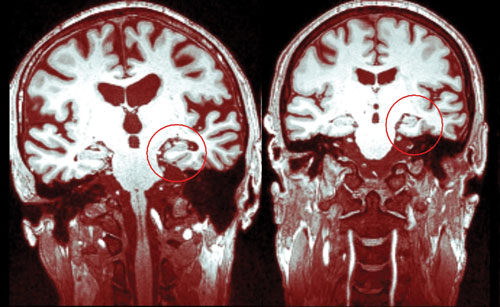
The most robust finding in AD is regional atrophy of the medial temporal lobe (MTL).29 The degree of MTL atrophy correlates with neuropathological disease progression and clinical deficit, see figure 1.30 However, it increases with age and is common in other dementia subtypes.31 It may be a useful prognostic marker as it is thought to start four years before symptoms first appear.32
In vascular dementia, findings include large infarcts or small vessel disease consisting of cerebral atrophy, white matter lesions, or microbleeds (thought to represent haemosiderin deposits in the brain).33 The pattern of atrophy in FTD, is more focused on frontal and temporal lobes than in AD.34 Single photon emission computed tomography (SPECT) can be helpful in the differential diagnosis of dementias, see box 2.
Treating risk factors
Currently, NICE guidelines24 do not recommend a population screening approach aimed at early diagnosis and prevention, but emphasise identification and treatment of modifiable risk factors, such as smoking, high blood pressure, hyperlipidaemia, alcohol, and obesity.
Genetic counselling is recommended for patients likely to have a genetic cause for their dementia, such as autosomal dominant AD, FTD, Huntington disease or CADASIL.35
Statins,36-39 NSAIDs,40 vitamin E,41-43 and hormone replacement therapy44,45 have been proposed as agents able to prevent or slow the onset of dementia, as their anti-inflammatory, anti-platelet and antioxidant effects may be neuroprotective. Unfortunately, efforts to identify clear therapeutic effects have failed so far.
Among non-pharmacological interventions, physical exercise before the onset of MCI (45-59 years) appears to be a predictor of healthier cognitive ageing and less dementia at follow-up.46 Unfortunately, the beneficial cognitive effects of physical exercise are debatable once dementia or MCI have been diagnosed.47, 48 Even if its beneficial effects are not entirely clear, exercise improves cardiovascular function, maintains a healthy BMI and enhances older patients’ ability to cope with activities of daily living.
Secondary prevention focuses on tackling smoking and alcohol intake, diabetes, obesity, high blood pressure and hyperlipidaemia. Interventions are obviously relevant in vascular dementia, but can also reduce comorbidities such as infections, diabetic emergencies, cardiovascular and cerebrovascular accidents leading to poor health and hospitalisation.
Referral
NICE guidelines recommend referral to a memory clinic for patients with MCI, those at high risk of dementia, such as patients with learning disabilities, Parkinson’s disease, or patients who have had several strokes. Memory clinics organise further investigations, such as neuroimaging and may provide follow-up. Patients with dementia should be managed in the community, if at all possible. Patients may require referral to psychiatric services, if they are severely disturbed and agitated or have complex psychiatric problems.
Management options
Non-pharmacological interventions encompass reality orientation, reminiscence, behavioural and validation therapy, but also alternative therapies such as aromatherapy, music and art therapies. Their aim is to prevent agitation and distress, preserve patients’ independence, and prevent institutionalisation arising from aggressive behaviour or accidents.49
Pharmacological management of cognitive and behavioural symptoms in mild to moderate AD and DLB include acetylcholinesterase inhibitors: donepezil, rivastigmine, and galantamine which increase the availability of acetylcholine. Their main side effects are a consequence of their action on the parasympathetic system: bradycardia, bronchoconstriction, diarrhoea, and hypersecretion.
Patients who are intolerant to acetylcholinesterase inhibitors or have severe AD may be prescribed memantine (an NMDA receptor antagonist). Memantine is not effective in mild AD.50
Antipsychotic drugs and benzodiazepines can be used to manage agitation, aggression or violence after obvious causes (e.g. pain) have been excluded and if behavioural interventions prove ineffective, but they should be given at the lowest therapeutic dose, and the patient should be monitored for dystonia and extrapyramidal side effects.
Potential complications, such as cerebrovascular accidents following antipsychotic use and disinhibition and muscle relaxation with benzodiazepines, and sedation and falls for both, should be weighed against potential benefits. Behavioural problems are often temporary, so that frequent review of sedating medication is indicated.
With growing numbers of older cognitively impaired patients in the community, GPs will become increasingly adept at diagnosing and managing these patients, preserving their quality of life for as long as possible.
REFERENCES
1 Allan CE, Valkanova V, Ebmeier KP. Depression in older people is underdiagnosed. Practitioner 2014;258 (1771):1 9-22
2 Callahan CM, Hendrie HC, Tierney WM. Documentation and evaluation of cognitive impairment in elderly primary care patients. Ann Intern Med 1995;122(6):422-9
3 Ebmeier KP. Normal cognitive decline or dementia? Practitioner 2010;254(1725):23-7
4 Luppa M, Sikorski C, Luck T et al. Age- and gender-specific prevalence of depression in latest-life--systematic review and meta-analysis. J Affect Disord 2012;136(3):212-21
5 Ward A, Arrighi HM, Michels S, Cedarbaum JM. Mild cognitive impairment: disparity of incidence and prevalence estimates. Alzheimers Dement 2012;8(1):14-21
6 Prince M, Bryce R, Albanese E et al. The global prevalence of dementia: a systematic review and metaanalysis. Alzheimers Dement 2013;9(1):63-75 e2
7 Petersen RC, Smith GE, Waring SC et al. Mild cognitive impairment: clinical characterization and outcome.
Arch Neurol 1999;56(3):303-8
8 Bruscoli M, Lovestone S. Is MCI really just early dementia? A systematic review of conversion studies. Int Psychogeriatr 2004;16(2):129-40
9 Fratiglioni L, Launer LJ, Andersen K et al. Incidence of dementia and major subtypes in Europe: A collaborative study of population-based cohorts. Neurologic Diseases in the Elderly Research Group. Neurology 2000;54(11 Suppl 5):S10-5
10 Lobo A, Launer LJ, Fratiglioni L et al. Prevalence of dementia and major subtypes in Europe: A collaborative study of population-based cohorts. Neurologic Diseases in the Elderly Research Group. Neurology 2000;54(11 Suppl 5):S4-9
11 Herrmann LL, Goodwin GM, Ebmeier KP. The cognitive neuropsychology of depression in the elderly. Psychol Med 2007;37(12):1693-702
12 Kohler S, Thomas AJ, Barnett NA, O'Brien JT. The pattern and course of cognitive impairment in late-life depression. Psychol Med 2010;40(4):591-602
13 Huang Y, Mucke L. Alzheimer mechanisms and therapeutic strategies. Cell 2012;148(6):1204-22
14 Valkanova V, Ebmeier KP. Neuroimaging in dementia. Maturitas 2014;79(2):202-8
15 Jack CR Jr, Knopman DS, Jagust WJ et al. Hypothetical model of dynamic biomarkers of the Alzheimer's pathological cascade. Lancet Neurol 2010;9(1):119-28
16 Negash S, Bennett DA, Wilson RS et al. Cognition and neuropathology in aging: multidimensional perspectives from the Rush Religious Orders Study and Rush Memory And Aging Project. Curr Alzheimer Res 2011;8(4):336-40
17 Nelson PT, Alafuzoff I, Bigio EH et al. Correlation of Alzheimer disease neuropathologic changes with cognitive status: a review of the literature. J Neuropathol Exp Neurol 2012;71(5):362-81
18 Barnes DE, Yaffe K. The projected effect of risk factor reduction on Alzheimer's disease prevalence. Lancet Neurol 2011;10(9):819-28
19 Reitz C, Brayne C, Mayeux R. Epidemiology of Alzheimer disease. Nat Rev Neurol 2011;7(3):137-52
20 Igoumenou A, Ebmeier KP. Diagnosing and managing vascular dementia. Practitioner 2012;256 (1747):13-16
21 van Swieten JC. Genetic basis of frontotemporal dementia. Lancet Neurol 2007;6(10):840-1
22 Rolinski M, Ebmeier KP. Tackling dementia in patients with Parkinson's disease. Practitioner 2011;255(1736):15-17
23 Butters MA, Young JB, Lopez O et al. Pathways linking late-life depression to persistent cognitive impairment and dementia. Dialogues Clin Neurosci 2008;10(3):345-57
24 National Institute for Clinical Excellence. CG42. Dementia: Supporting people with dementia and their carers in health and social care. NICE. London. 2006
25 Brodaty H, Pond D, Kemp NM et al. The GPCOG: a new screening test for dementia designed for general practice. J Am Geriatr Soc 2002;50(3):530-4
26 Hodkinson HM. Evaluation of a mental test score for assessment of mental impairment in the elderly. Age Ageing 2012;41 Suppl 3:iii35-40
27 Brooke P, Bullock R. Validation of a 6 item cognitive impairment test with a view to primary care usage. Int J Geriatr Psychiatry 1999;14(11):936-40
28 Petersen RC, Stevens JC, Ganguli M et al. Practice parameter: early detection of dementia: mild cognitive impairment (an evidence-based review). Report of the Quality Standards Subcommittee of the American Academy of Neurology. Neurology 2001;56(9):1133-42
29 Scheltens P, Leys D, Barkhof F et al. Atrophy of medial temporal lobes on MRI in “probable” Alzheimer's disease and normal ageing: diagnostic value and neuropsychological correlates. J Neurol Neurosurg Psychiatry 1992;55(10):967-72
30 Morra JH, Tu Z, Apostolova LG et al. Automated 3D mapping of hippocampal atrophy and its clinical correlates in 400 subjects with Alzheimer's disease, mild cognitive impairment, and elderly controls. Hum Brain Mapp 2009;30(9):2766-88
31 Barber R, Scheltens P, Gholkar A et al. White matter lesions on magnetic resonance imaging in dementia with Lewy bodies, Alzheimer's disease, vascular dementia, and normal aging. J Neurol Neurosurg Psychiatry 1999;67(1):66-72
32 Tondelli M, Wilcock GK, Nichelli P et al. Structural MRI changes detectable up to ten years before clinical Alzheimer's disease. Neurobiol Aging 2012;33(4):825 e25-36
33 Roob G, Schmidt R, Kapeller P et al. MRI evidence of past cerebral microbleeds in a healthy elderly population. Neurology 1999;52(5):991-4
34 Whitwell JL. Voxel-based morphometry: an automated technique for assessing structural changes in the brain. J Neurosci 2009;29(31):9661-4
35 Addressing global dementia. Lancet 2014;383(9936):2185
36 Chataway J, Schuerer N, Alsanousi A et al. Effect of high-dose simvastatin on brain atrophy and disability in secondary progressive multiple sclerosis (MS-STAT): a randomised, placebo-controlled, phase 2 trial. Lancet 2014;383(9936):2213-21
37 Ma M, Uekawa K, Hasegawa Y et al. Pretreatment with rosuvastatin protects against focal cerebral ischemia/reperfusion injury in rats through attenuation of oxidative stress and inflammation. Brain Res 2013;1519:87-94
38 Moon GJ, Kim SJ, Cho YH et al. Antioxidant effects of statins in patients with atherosclerotic cerebrovascular disease. J Clin Neurol 2014;10(2):140-7
39 Vaughan CJ, Delanty N. Neuroprotective properties of statins in cerebral ischemia and stroke. Stroke 1999;30(9):1969-73
40 Wang J, Tan L, Wang HF et al. Anti-inflammatory drugs and risk of Alzheimer's Disease: An updated systematic review and meta-analysis. J Alzheimers Dis 2014. Sep 16. [Epub ahead of print] DOI:10.3233/JAD-141506
41 Morris MC, Evans DA, Tangney CC et al. Relation of the tocopherol forms to incident Alzheimer disease and to cognitive change. Am J Clin Nutr 2005;81(2):508-14
42 Brewer GJ. Why vitamin E therapy fails for treatment of Alzheimer's disease. J Alzheimers Dis 2010;19(1):27-30
43 Farina N, Isaac MG, Clark AR et al. Vitamin E for Alzheimer's dementia and mild cognitive impairment. Cochrane Database Syst Rev 2012;11:CD002854
44 Barron AM, Pike CJ. Sex hormones, aging, and Alzheimer's disease. Front Biosci (Elite Ed) 2012;4:976-97
45 Spence RD, Hamby ME, Umeda E et al. Neuroprotection mediated through estrogen receptor-alpha in astrocytes. Proc Natl Acad Sci USA 2011;108 (21):8867-72
46 Elwood P, Galante J, Pickering J et al. Healthy lifestyles reduce the incidence of chronic diseases and dementia: evidence from the Caerphilly cohort study. PLoS One 2013;8(12):e81877
47 Gates N, Fiatarone Singh MA, Sachdev PS, Valenzuela M. The effect of exercise training on cognitive function in older adults with mild cognitive impairment: a meta-analysis of randomized controlled trials. Am J Geriatr Psychiatry 2013;21(11):1086-97
48 Forbes D, Thiessen EJ, Blake CM et al. Exercise programs for people with dementia. Cochrane Database Syst Rev 2013;12:CD006489.
49 Douglas S, James I, Ballard C. Non-pharmacological interventions in dementia. Advances in Psychiatric Treatment 2004;10:171-7
50 Schneider LS, Dagerman KS, Higgins JP, McShane R. Lack of evidence for the efficacy of memantine in mild Alzheimer disease. Arch Neurol 2011;68(8):991-8.
ARTICLE IN PDF
 Download this article in PDF format
PRESET SEARCHES
Pubmed
Diagnosing memory loss in older people
NICE evidence search
Immediate CPD prompts
These handy templates* prompt immediate drafting of personal learning, reflection and planning. Save your record straight into your personal development folder on your device or Cloud storage system.
*Adobe reader needed for iPad