SEARCH

Allan CL, Behrman S, Ebmeier KP. Early diagnosis beneficial in Alzheimer’s disease. Practitioner 2013;257 (1757):15-18
Early diagnosis beneficial in Alzheimer’s disease
24 Jan 2013
AUTHORS
Dr Charlotte L Allan MBChB (Hons) MRCPsych, Wolfson Junior Research Fellow and Clinical Research Fellow, University Department of Psychiatry, Oxford
Dr Sophie Behrman, BA BM BCh, CT2 in Psychiatry, Oxford Deanery
Professor Klaus P. Ebmeier, MD, Professor of Old Age Psychiatry, University of Oxford, Oxford, UK
Article
The number of people aged over 65 is predicted to double between 2008 and 2051,1 and with this population change the presentation of memory loss will become increasingly common in primary care.
Diagnosis
A diagnosis of Alzheimer’s disease requires clinical and pathological evidence.2 In clinical practice, GPs should consider a diagnosis of dementia when a patient presents with functional impairment (e.g. needing a greater level of help with activities of daily living, struggling to manage own finances and bills) in addition to at least two changes in cognitive function e.g. short-term memory, language, reasoning, spatial orientation, or personality change. The patient, friends, family or professional carers should have noticed these changes for at least six months.
Patients should be referred to a memory clinic to make a formal diagnosis of probable or possible Alzheimer’s disease and to exclude other types of dementia including vascular, Lewy body and frontotemporal dementia. When the history, neuro-imaging and cognitive scores are taken into consideration, a clinical diagnosis of Alzheimer’s disease can be made with high sensitivity and specificity, see box 1,2,3 however, post-mortem confirmation of the clinical diagnosis remains the gold standard.4
Early diagnosis should be communicated in a careful and considerate manner, ideally within specialist memory services where treatment, information, care and support are available. The National Dementia Strategy5 highlights the benefits of early diagnosis, in particular the advantage of improved access to treatment and information for patients and their carers, see box 2. Although early diagnosis is beneficial for the majority of patients, participating in a programme of early diagnosis and treatment must be voluntary, and may not be appropriate for all.
Assessment
Key to assessment is a careful history of cognitive and functional changes, medical conditions and past psychiatric history. Enquiring about social circumstances is important, as this will have a significant impact on future care. An objective cognitive assessment is important, and in primary care screening tools such as the General Practitioner Assessment of Cognition (www.gpcog.com.au) provide a useful adjunct to justify referral to specialist services.
More thorough measures of cognition can be performed relatively quickly. The Montreal Cognitive Assessment (MoCA) and Mini Mental State Examination (MMSE) can both be used to assess cognition, although the MoCA is superior as a global assessment tool, particularly in determining the earlier stages of cognitive decline.6 The accuracy of both scales is increased if used in conjunction with a measure of functional deterioration, such as the Bristol Activities of Daily Living Scale (BADLS).
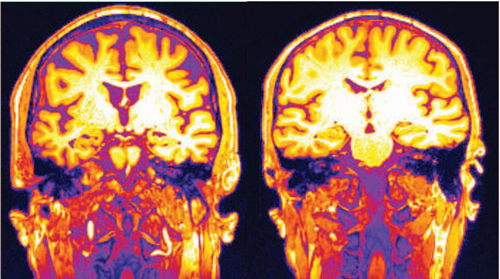
Patients should have a physical examination and a dementia screen to exclude treatable causes of cognitive impairment, see box 3. Structural brain imaging is needed to assist with diagnosis, but more importantly to exclude differential diagnoses including tumours and hydrocephalus. A CT brain scan is used most frequently, but if available, an MRI scan provides greater anatomical detail, and can be used to support a positive diagnosis of Alzheimer’s disease, see figure 1.
Referral
Referral should be for two purposes: to clarify diagnosis and to initiate treatment. A central triage service should be commissioned which involves specialties with relevant expertise, such as psychiatry, neurology and geriatric medicine.
This central service can direct referrals through the most appropriate pathway depending on the nature of a patient's presentation, and local availability of imaging and treatments.
Specialist treatments are currently available for Alzheimer’s disease, such as acetylcholinesterase inhibitors and memantine. The management and prophylaxis of cerebrovascular disease is well within the purview of general practice; behavioural and family intervention, community care, safeguarding, and the organisation of care packages may require the involvement of the psychiatric team.
Treatment
Possible treatment targets are the maintenance of cognitive and functional abilities, management of behavioural and psychological symptoms, and treatment of comorbid affective disorders. Additionally, all carers should receive a specific assessment of their own needs.7
Acetylcholinesterase inhibitors and memantine (an NMDA receptor antagonist) both slow the progression of cognitive decline and extend independence in activities of daily living.8,9,10,11
NICE recommends donepezil, rivastigmine or galantamine for mild to moderate Alzheimer’s disease, and memantine for severe Alzheimer’s disease (or those with moderate disease who are intolerant of acetylcholinesterase inhibitors).12 These should be commenced soon after diagnosis, following a discussion with the patient, and their family or carers.
Other proposed interventions, such as vitamin E, nimodipine, folic acid and ginkgo biloba are ineffective or have adverse effects which outweigh any potential benefit.13
Psychosocial interventions for Alzheimer’s disease lack a robust evidence base. NICE recommends cognitive stimulation, which involves activities with some degree of cognitive processing, often in a social context, for those with mild to moderate Alzheimer’s disease.7, 14 There is insufficient evidence to recommend more structured, individually tailored therapies such as cognitive training or cognitive rehabilitation.13
Behavioural and psychological symptoms of dementia (BPSD) cover a variety of symptoms, and therefore require diverse management strategies. With the exception of comorbid affective disorders, the primary management strategies recommended for BPSD are behavioural, environmental or psychosocial.7
Evidence from case series and small non-randomised trials supports the use of: aromatherapy, multisensory stimulation, animal-assisted therapy, massage, and therapeutic use of music and/or dancing.
It is important to make a thorough physical assessment of any patient with dementia presenting with behavioural disturbance, and to search for triggers and maintaining factors.
A study of patients with dementia in nursing homes found a significant reduction in agitation in the group started on analgesia, suggesting that some patients may be agitated in response to physical pain.15
Pharmacological interventions for BPSD have become a source of contention, with the recognition that antipsychotic drugs, which are prescribed for agitation and psychosis in dementia without strong cost-benefit evidence,16 may not be quite so clinically effective as once believed.17 Furthermore, they can significantly increase the risk of cerebrovascular events and death.18 NICE recommends reserving antipsychotics for psychosis or agitation in dementia only after a number of precautions, including a careful risk-benefit analysis, discussion with the patient and carers, and careful monitoring.7 Other psychotropic medication has been proposed for BPSD, including memantine,19 but evidence of efficacy in a clinical population is, at present, lacking.20
Recent developments
The neuropathology of Alzheimer’s disease is relatively well described, however, disease modifying treatments have not yet been successful. A vaccine against beta-amyloid peptide in Alzheimer’s plaques was designed with the intention of boosting amyloid clearance and therefore slowing disease progression. Although animal models suggested this would be a fruitful strategy, unfortunately in humans, the phase ll trial had to be stopped because some participants developed meningoencephalitis, although there had been some response in those with higher antibody levels.21
Other immunotherapies are being considered in the light of this trial, with the hope that using smaller fragments of beta-amyloid or direct administration of antibodies will lead to fewer adverse events.22 The aggregation of tau has been proposed as a further target for disease modifying treatments and a phase lll trial of methylthioninium chloride (methylene blue), which interferes with the aggregation of tau has been launched, after positive results from the phase ll trial.23
Other symptomatic treatments considered include latrepirdine, an antihistamine with cholinesterase inhibitory and possible neuroprotective properties, which produced promising results in phase ll trials in Russia, but these results were not replicated in phase lll trials. Trials of huperzine A, a plant extract with acetylcholinesterase inhibitory properties, as well as potentially shifting metabolism of the amyloid precursor protein to a non-amyloidogenic pathway,are underway.24
Further research is warranted to compare and combine psychological approaches, such as cognitive stimulation therapy, with acetylcholinesterase inhibitors.13
Primary care team
Dementia is a growing problem, partly because people are living longer and also because the baby boomer generation is entering old age. Therefore, any advances in the treatment and management of dementia are likely to be devolved quickly to primary care. For example, the first of the treatments used in Alzheimer’s dementia, the acetylcholinesterase inhibitors, are currently initiated in specialist clinics, but are likely to be devolved to primary care in the foreseeable future. It will, therefore, be essential for the whole primary care team to stay abreast of developments and acquire, or further develop, the skills needed to support patients with dementia.
Primary care is optimally placed to screen for cognitive impairments, e.g. by administration of the MoCA as a standard screen in the elderly, to provide essential longitudinal information that will make a diagnosis of dementia safer. Primary care also has a crucial role in primary and, particularly secondary, prevention programmes to tackle excessive weight, lack of activity, smoking, and other lifestyle risk factors for dementia including Alzheimer’s disease.25
Equally important is the treatment of medical conditions, which increase dementia risk, e.g. hypertension, diabetes, cardiovascular disease, and the treatment and prevention of complicating physical disease, including vaccination for influenza or pneumonia.
Primary care should also provide a hub of information, with easy referral pathways into social work, voluntary agencies and further clinical resources to promote better health for patients, and their carers.
REFERENCES
1 Rowan SE. National population projections, series PP2 No.27. Office for National Statistics. London. 2008
2 McKhann GM, Knopman DS, Chertkow H et al. The diagnosis of dementia due to Alzheimer's disease: recommendations from the National Institute on Aging-Alzheimer's Association workgroups on diagnostic guidelines for Alzheimer's disease. Alzheimers Dement 2011;7(3):263-9
3 Snowden JS, Thompson JC, Stopford CL et al. The clinical diagnosis of early-onset dementias: diagnostic accuracy and clinicopathological relationships. Brain 2011;134(Pt 9):2478-92
4 Fearing MA, Bigler ED, Norton M et al. Autopsy-confirmed Alzheimer's disease versus clinically diagnosed Alzheimer's disease in the Cache County Study on Memory and Aging: a comparison of quantitative MRI and neuropsychological findings. J Clin Exp Neuropsychol 2007;29(5):553-60
5 Banerjee S, Owens J. Living well with dementia: a national dementia strategy. Department of Health. London. 2009
6 Roalf DR, Moberg PJ, Xie SX et al. Comparative accuracies of two common screening instruments for classification of Alzheimer's disease, mild cognitive impairment, and healthy aging. Alzheimers Dement 2012. Dec 20. pii: S1552-5260(12)02463-6. doi: 10.1016/j.jalz.2012.10.001. [Epub ahead of print]
7 National Institute for Health and Clinical Excellence. CG42. Supporting people with dementia and their carers in health and social care settings. NICE. London. 2006
8 Whitehead A, Perdomo C, Pratt RD et al. Donepezil for the symptomatic treatment of patients with mild to moderate Alzheimer's disease: a meta-analysis of individual patient data from randomised controlled trials. Int J Geriatr Psychiatry 2004;19(7):624-33
9 Wilkinson D, Murray J. Galantamine: a randomized, double-blind, dose comparison in patients with Alzheimer's disease. Int J Geriatr Psychiatry 2001;16(9):852-7
10 Winblad B, Cummings J, Andreasen N et al. A six-month double-blind, randomized, placebo-controlled study of a transdermal patch in Alzheimer's disease--rivastigmine patch versus capsule. Int J Geriatr Psychiatry 2007;22(5):456-67
11 Doody RS, Tariot PN et al. Meta-analysis of six-month memantine trials in Alzheimer's disease. Alzheimers Dement 2007;3(1):7-17
12 National Institute for Health and Clinical Excellence. TA217. Donepezil, galantamine, rivastigmine and memantine for the treatment of Alzheimer's disease. Review of NICE technology appraisal guidance 111. NICE. London. 2011
13 Dementia. The NICE-SCIE guideline on supporting people with dementia and their carers in health and social care. National Collaborating Centre for Mental Health: The British Psychological Society and Gaskell. London. 2011
14 Aguirre E, Woods RT, Spector A, Orrell M. Cognitive stimulation for dementia: A systematic review of the evidence of effectiveness from randomised controlled trials. Ageing Res Rev 2012;12(1):253-62
15 Husebo BS, Ballard C, Sandvik R et al. Efficacy of treating pain to reduce behavioural disturbances in residents of nursing homes with dementia: cluster randomised clinical trial. BMJ 2011;343:d4065
16 Alexopoulos GS, Streim J, Carpenter D, Docherty JP. Using antipsychotic agents in older patients. J Clin Psychiatry 2004;65 Suppl 2:5-99; discussion 100-02
17 Schneider LS, Tariot PN, Dagerman KS et al. Effectiveness of atypical antipsychotic drugs in patients with Alzheimer's disease. N Engl J Med 2006;355(15):1525-38
18 Mittal V, Kurup L, Williamson D et al. Risk of cerebrovascular adverse events and death in elderly patients with dementia when treated with antipsychotic medications: a literature review of evidence. Am J Alzheimers Dis Other Demen 2011;26(1):10-28
19 Wilcock GK, Ballard CG, Cooper JA, Loft H. Memantine for agitation/aggression and psychosis in moderately severe to severe Alzheimer's disease: a pooled analysis of 3 studies. J Clin Psychiatry 2008;69(3):341-8
20 Fox C, Crugel M, Maidment I et al. Efficacy of memantine for agitation in Alzheimer's dementia: a randomised double-blind placebo controlled trial. PloS one 2012;7(5):e35185
21 Gilman S, Koller M, Black RS et al. Clinical effects of Abeta immunization (AN1792) in patients with AD in an interrupted trial. Neurology 2005;64(9):1553-62
22 Lobello K, Ryan JM, Liu E et al. Targeting beta amyloid: a clinical review of immunotherapeutic approaches in Alzheimer's disease. Int J Alzheimers Dis 2012;2012:628070
23 Wischik CM, Bentham P, Wischik DJ, Seng KM. O3-04-07: Tau aggregation inhibitor (TAI) therapy with rember™ arrests disease progression in mild and moderate Alzheimer's disease over 50 weeks. Alzheimers Dement 2008;4(4):T167
24 Tayeb HO, Yang HD, Price BH, Tarazi FI. Pharmacotherapies for Alzheimer's disease: beyond cholinesterase inhibitors. Pharmacol Therap 2012;134(1):8-25
25 Ebmeier KP. Normal cognitive decline or dementia? Practitioner 2010;254(1725):23-7
26 Scheltens P, Leys D, Barkhof F et al. Atrophy of medial temporal lobes on MRI in "probable" Alzheimer's disease and normal ageing: diagnostic value and neuropsychological correlates. J Neurol Neurosurg Psychiatry 1992;55(10):967-72
ARTICLE IN PDF
 Download this article in PDF format
EXTERNAL WEBLINKS
Alzheimer's UK
Alzheimer's Research UK
Age UK
Living well with dementia: A national dementia strategy (2011)