SEARCH

Practitioner 2012; 256 (1747):13-16
Diagnosing and managing vascular dementia
24 Jan 2012
AUTHORS
Dr Artemis Igoumenou MSc PhD MRCPsych
ST6 in Psychiatry, Oxford Health NHS Foundation Trust
Professor Klaus P. Ebmeier MD FRCPsych
Professor of Old Age Psychiatry
Department of Psychiatry, University of Oxford, Warneford Hospital, Oxford
Article
Vascular dementia (VaD) is common. Pure vascular disease may account for 5–20% of all cases of dementia, while mixed dementia, Alzheimer's disease (AD) with VaD, occurs at least as frequently.1
It is unusually heterogeneous and frequently overlapping and comorbid with other conditions such as stroke, other cardiovascular and cerebrovascular diseases and their risk factors, as well as AD. There is no specific treatment or cure for VaD, but its proximity to other conditions may make it amenable to interventions at various stages of the disease.
Causes
The causes of VaD are multifactorial and involve neuronal networks needed for memory and cognition, executive function and behaviour.2 A variety of neuropathological changes can be observed, see table 1, p14.3 Lesion patterns may differ. When VaD coexists with AD large infarcts are more common whereas in pure VaD arteriosclerosis and microangiopathies are more frequently observed.3
Hypertensive angiopathy (whether cortical plus subcortical, or purely subcortical) is the major known causative factor in VaD.4
Hereditary angiopathies include:
• hereditary multi-infarct dementia
• cerebral autosomal dominant arteriopathy with subcortical infarcts and leucoencephalopathy (CADASIL)
• cerebral autosomal recessive arteriopathy with subcortical infarcts and leucoencephalopathy (CARASIL, Maeda syndrome)
• cerebroretinal vasculopathy (CRV), hereditary endotheliopathy with retinopathy, nephropathy and stroke (HERNS), and hereditary vascular retinopathy
• MELAS syndrome (mitochondrial myopathy encephalopathy, lactic acidosis and stroke-like episodes)3
Risk factors
Most recent research suggests that VaD and AD occupy ends of the same spectrum and share common risk factors.5 As VaD is closely related to cardiovascular disease, modifying cardiovascular risk factors may assist in its prevention. Cardiovascular risk factors such as hypertension, dyslipidaemia, obesity, smoking and diabetes are closely associated with cognitive impairment, AD, as well as VaD.5 While hypertension in midlife increases the risk of all-cause dementia including AD,5 a reduction in blood pressure may occur with the onset of AD.6
Regular screening of high-risk individuals could help to detect dementia early on and enable appropriate preventive intervention. This could involve pharmacological as well as behavioural modulation of risk factors. Medication for hypertension, diabetes and hypercholesterolaemia is recommended, as treatment reduces the risk of developing cognitive impairment and dementia. Behavioural treatments include enhancing and encouraging cognitive and physical activity, social engagement, smoking cessation and healthy diet, including alcohol reduction.5
Although smoking and excessive alcohol consumption are so far not directly linked to VaD, they are risk factors for cardiovascular disease and stroke. Until there is conclusive evidence about their role in VaD, they should be treated as indirect risk factors.7
It should not be forgotten that depressive illness or symptoms in old people can affect their cognitive function and worsen existing cognitive impairment.
The causal relationship between depression and dementia is likely to be complex. Depression can be an early symptom or prodrome of dementia, or patients with dementia may become more depressed, aware of their early cognitive symptoms. Research suggests that comorbid depression is common in older people with dementia. Treating depression can improve cognition, so primary and secondary care professionals should be aware that treating both conditions provides better outcomes than focusing on one disorder alone. Beyond its high prevalence in dementia, depressive mood is considered typical of VaD (see below).
Presentation
Although patients may already be well known to their GP because of their previous history of cerebrovascular disease and its risk factors, including hypertension, cardiovascular disease and diabetes, some may present for the first time with symptoms and signs of VaD. Typically, patients are in their late sixties or early seventies, and may present after a cerebrovascular event. The onset is usually more acute than that of AD. Typical signs and symptoms are:
• Early gait disturbance - small step
gait (marche à petit pas), magnetic, apraxic-ataxic or parkinsonian gait
• History of unsteadiness and frequent, unprovoked falls
• Early urinary frequency, urgency, and other urinary symptoms not explained by urological disease
• Pseudobulbar palsy
• Personality and mood changes: lack of motivation (aboulia), depression, emotional lability (incontinence), psychomotor slowing (retardation) and impaired executive function
A recognisable syndrome is post-stroke cognitive impairment. It usually occurs within three months of a clinically diagnosed stroke and presents with infarctions in the brain areas related to the manifested impaired cognitive functions.1
Usual neurological symptoms and signs are hemiparesis and hemianopia (see table 2). In addition, it is often attention and executive function that suffer, although such cognitive symptom patterns are not specific for VaD. The cognitive deficits appear to be patchy, associated with the brain regions that have been affected.1
Emotional and personality changes are usually early signs. Depression is a common finding in individuals with VaD, as is emotional lability. Anxiety and behavioural retardation is more common than in AD. Confusion is a common symptom, especially at night. The insight of the sufferer is preserved until late in the disease. Seizures or other manifestations of cerebral ischaemic accidents (see table 2) are not infrequent.8
The course of VaD is characterised by stepwise deterioration with periods of partial recovery that can last months between periods of deterioration and cognitive decline. About half the patients will die from ischaemic heart disease, a cerebral infarction or renal complications, most between four and five years from diagnosis.8
Diagnosis
NICE recommends that primary healthcare professionals should consider referring people who show signs of mild cognitive impairment to memory assessment services to aid early identification of dementia, as more than 50% of people with mild cognitive impairment later develop dementia.9
Diagnosis of dementia should only be made after a thorough assessment of the person’s personal and medical history, a cognitive and mental state examination, a physical examination, neuropsychological testing and appropriate investigations (routine haematology and biochemistry, thyroid function, serum B12 and folate).9,10
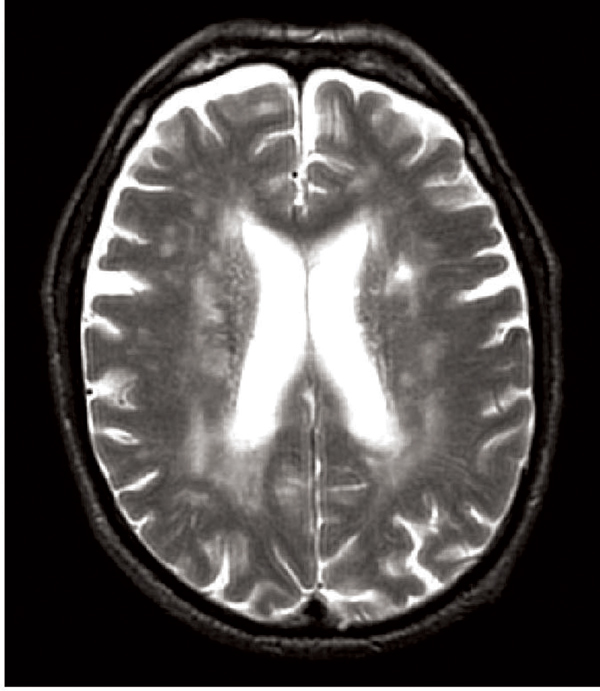
Structural imaging can help to exclude alternative causes of memory impairment and to establish the subtype diagnosis. Generally, MRI is the preferred option, as it has superior resolution and soft tissue contrast (see figure 1). HMPAO-SPECT can assist in the differential diagnosis between VaD, fronto-temporal dementia, and AD.9,11,12 Other potentially relevant imaging modalities are FDG-PET of the head (glucose metabolism), CT(A) head and/or neck with/without contrast (structural changes and large vessel pathology) and carotid ultrasound with Doppler.11
Internationally accepted criteria for the diagnosis of vascular dementia are the NINDS-AIREN criteria (see table 3).8 A commonly used diagnostic scale is the Hachinski Ischaemic Scale13 (see table 2). Alternative criteria are included in ICD-10 and the DSM-IV. The criteria for VaD do not have an established diagnostic accuracy; though they seem to be useful in discriminating VaD from other types of dementia.
Management
In the absence of a specific cure, supporting individuals with dementia and their families can be a challenging task. Dementia of any subtype can involve high levels of morbidity and dependency especially in the later stages of the disease.
Patients, carers and healthcare professionals need to work together in order to manage the cognitive, behavioural, emotional, psychiatric and physical problems that could be present.
To complicate the picture further, activities of daily living can often be seriously affected demanding a high level of support. Primary and secondary healthcare services as well as social work should be well coordinated and equally involved in the provision of treatment and support for dementia sufferers and their carers. It should be remembered that the family and professional carers may also require support and supervision in coping with a difficult or aggressive patient.
Most treatment options for dementia are psychosocial, with pharmacological treatments mainly targeting cognitive symptoms and behavioural changes, including so-called challenging behaviour, and emotional disorders. Medications prescribed for individuals with AD can be of use in VaD,14 although their efficacy and safety is inconclusive.1,15-18
Most often prescribed in AD are the cholinesterase inhibitors rivastigmine, donepezil and galantamine. A recent meta-analysis of randomised controlled trials of treatments for VaD concluded that cholinesterase inhibitors (and memantine) can slightly improve the cognitive symptoms of patients with VaD, although the clinical significance of these findings was not clearly demonstrated.19
While the benefit of treatment may be limited to behavioural symptoms, rivastigmine could, for example, facilitate reduction of neuroleptics and benzodiazepines in patients with VaD.20 Efficacy may be limited to subgroups: younger patients with VaD may not benefit from rivastigmine: side effects such as raised blood pressure and cerebrovascular accidents, and mortality are increased. Older patients, on the other hand, may show a good response to this medication, possibly because of the coexistence of AD pathology.15
Similarly, research on galantamine 16,17 and donepezil 21-23 has shown mixed results. A recent study with donepezil in patients with CADASIL demonstrated improvement in some aspects of executive function, but the authors concluded that the clinical relevance of these findings needs clarification.24
Using acetylcholinesterase inhibitors in VaD may also carry a cost, as at least one study suggests an increase in mortality in the active treatment group.1
Memantine, a non-competitive NMDA receptor antagonist used for the treatment of several disorders of the central nervous system, has shown efficacy in the treatment of AD.
A randomised placebo controlled trial in VaD reported a positive treatment effect on cognition. This could be attributed to the direct effect of memantine on cognition, or alternatively the augmentation of the recovery mechanisms naturally found in patients with cerebrovascular lesions.25
The American College of Physicians and the American Academy of Family Physicians recently highlighted the fact that there is no clear evidence that one treatment is more effective than the others.26
Pharmacological interventions can involve the treatment of comorbid depression and behavioural problems, apart from targeting cognitive and global functioning. An evaluation for general medical, psychiatric, environmental, or psychosocial problems that underlie the disturbance should be undertaken, and any causes found should be treated first.1
Pain can cause distress and behavioural problems not otherwise expressed. Assessment and treatment of pain is, therefore, important.9
Antidepressants can be used for the treatment of comorbid depression in people with dementia, but with caution and after thorough individualised assessment, including suicidal ideation. Similarly, both conventional and atypical antipsychotics can be prescribed to treat behavioural problems associated with dementia, carefully considering their side effect profile and the potential for serious adverse effects.12 Appropriate use of antipsychotic drugs may relieve symptoms, reduce distress and increase safety for patients and those around them.1 On the downside, they may worsen cognitive impairment, cause oversedation, falls, tardive dyskinesia, and neuroleptic malignant syndrome, as well as hyperlipidaemia, weight gain, diabetes mellitus, cerebrovascular accidents, and increased mortality.1,9
Careful assessment of potential risks, benefits and alternatives, including behavioural interventions is good practice, as is intermittent review of the need for the dose and the medication itself.1,9 Benzodiazepines may have a higher risk of side effects and a lower likelihood of benefit than antipsychotics,1 but they may be useful in treating agitated patients with dementia, particularly those with prominent anxiety.1 Similarly, carbamazepine may have modest benefits for agitation when used in low doses in patients with dementia.1
Conclusion
Overall, the absence of good evidence-based pharmacological interventions and the additional risks of potentially severe complications in patients with dementia emphasises the need for explicit weighing up of risks and benefits, and the promotion of safe and effective nursing interventions to de-escalate and control agitated and 'challenging' behaviours in residential settings and homes.
REFERENCES
1 Rabins PV, Blacker D, Rovner BW et al. American Psychiatric Association practice guideline for the treatment of patients with Alzheimer's disease and other dementias. Second edition. Am J Psych 2007;164 (12 Suppl):5-56
2 Jellinger KA. The pathology of "vascular dementia": a critical update. J Alzheimers Dis 2008;14(1):107-123
3 Jellinger KA. The enigma of vascular cognitive disorder and vascular dementia. Acta Neuropathol 2007;113(4):349-388
4 Moretti R, Torre P, Antonello RM et al. Risk factors for vascular dementia: hypotension as a key point. Vasc Health Risk Manag 2008;4(2):395-402
5 Middleton LE, Yaffe K. Promising strategies for the prevention of dementia. Arch Neurol 2009;66(10):1210-1215
6 Landin K, Blennow K, Wallin A et al. Low blood pressure and blood glucose levels in Alzheimer's disease. Evidence for a hypometabolic disorder? J Intern Med 1993;233(4):357-363
7 Takahashi PY, Caldwell CR, Targonski PV. Effect of alcohol and tobacco use on vascular dementia: a matched case control study. Vasc Health Risk Manag 2011;7:685-691
8 Roman GC, Tatemichi TK, Erkinjuntti T et al. Vascular dementia: diagnostic criteria for research studies. Report of the NINDS-AIREN International Workshop. Neurology 1993;43(2):250-260
9 National Institute for Health and Clinical Excellence. CG42. Dementia: supporting people with dementia and their carers in health and social care (amended March 2011). NICE. London. 2011
10 Staekenborg SS, van der Flier WM, van Straaten EC et al. Neurological signs in relation to type of cerebrovascular disease in vascular dementia. Stroke 2008;39(2):317-322
11 Wippold F, Cornelius R, Broderick D et al. ACR Appropriateness Criteria® - Dementia and Movement Disorders: American College of Radiology; 2010
12 Scottish Intercollegiate Guidelines Network. SIGN 86. Management of patients with dementia. SIGN. Edinburgh. 2006
13 Hachinski VC, Iliff LD, Zilhka E et al. Cerebral blood flow in dementia. Arch Neurol 1975;32(9):632-637
14 Viswanathan A, Rocca WA, Tzourio C. Vascular risk factors and dementia: how to move forward? Neurology 2009;72(4):368-374
15 Ballard C, Sauter M, Scheltens P et al. Efficacy, safety and tolerability of rivastigmine capsules in patients with probable vascular dementia: the VantagE study. Curr Med Res Opin 2008;24(9):2561-2574
16 Erkinjuntti T, Kurz A, Gauthier S et al. Efficacy of galantamine in probable vascular dementia and Alzheimer's disease combined with cerebrovascular disease: a randomised trial. Lancet 2002;359(9314):1283-1290
17 Auchus AP, Brashear HR, Salloway S et al. Galantamine treatment of vascular dementia: a randomized trial. Neurology 2007;69(5):448-458
18 Erkinjuntti T, Roman G, Gauthier S et al. Emerging therapies for vascular dementia and vascular cognitive impairment. Stroke 2004;35(4):1010-1017
19 Kavirajan H, Schneider LS. Efficacy and adverse effects of cholinesterase inhibitors and memantine in vascular dementia: a meta-analysis of randomised controlled trials. Lancet Neurol 2007;6(9):782-792
20 Moretti R, Torre P, Antonello RM et al. Different responses to rivastigmine in subcortical vascular dementia and multi-infarct dementia. Am J Alzheimers Dis Other Demen 2008;23(2):167-176
21 Black S, Roman GC, Geldmacher DS et al. Efficacy and tolerability of donepezil in vascular dementia: positive results of a 24-week, multicenter, international, randomized, placebo-controlled clinical trial. Stroke 2003;34(10):2323-2330
22 Wilkinson D, Doody R, Helme R et al. Donepezil in vascular dementia: a randomized, placebo-controlled study. Neurology 2003;61(4):479-486
23 Roman GC, Salloway S, Black SE et al. Randomized, placebo-controlled, clinical trial of donepezil in vascular dementia: differential effects by hippocampal size. Stroke 2010; 41(6):1213-1221
24 Dichgans M, Markus HS, Salloway S et al. Donepezil in patients with subcortical vascular cognitive impairment: a randomised double-blind trial in CADASIL. Lancet Neurol 2008;7(4):310-318
25 Orgogozo JM, Rigaud AS, Stoffler A et al. Efficacy and safety of memantine in patients with mild to moderate vascular dementia: a randomized, placebo-controlled trial (MMM 300). Stroke 2002;33(7):1834-1839
26 Qaseem A, Snow V, Cross JT, Jr et al. Current pharmacologic treatment of dementia: a clinical practice guideline from the American College of Physicians and the American Academy of Family Physicians. Ann Intern Med 2008;148(5):370-378
ARTICLE IN PDF
 Download this article in PDF format