SEARCH

Practitioner 2010; 254 (1725): 23-27
Normal cognitive decline or dementia?
16 Jan 2010
AUTHORS
Professor Klaus P. Ebmeier MD
Foundation Professor of Old Age Psychiatry, University of Oxford,UK
Article
Brain ageing is generally thought of as atrophy, a more or less pathological loss of neurones, leading to cognitive deficits and functional impairment, if not clear-cut symptoms and signs of dementia. This model is likely to be relevant for the dementias,2 or for brain changes associated with systemic, especially vascular pathologies.3, 4 There are, however, also physiological reductions in cell numbers, connectivity and brain plasticity during the life span, right from birth, that may play an important role in the adjustment of brain function to the changing roles of the individual (see box 1, right).1
Normal ageing
There is general agreement that cognitive speed, inhibitory function, and memory performance decline with age while crystallised, particularly verbal, abilities remain largely intact in those who survive for long-term follow-up.5
The following factors appear to predict faster cognitive decline:5
- poor health
- fewer years of education
- lower activity
- the presence of the APOE ε4 allele (which appears associated with age-related cognitive impairment, cardiovascular disease, Alzheimer's disease, and poor outcome after brain trauma)
- high blood pressure
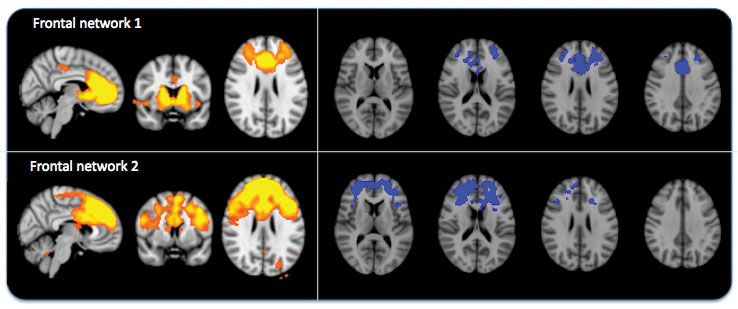
Age-related reductions in hippocampal function and particularly in plasticity may account for some of these changes.6 Typically, however, the brain is not a passive organ that just shows local underactivity in the affected region. Compensatory additional recruitment of neurones occurs mainly in prefrontal brain areas (see figure 1, above) to back up compromised functions.7, 8 This may explain the observation that older people may perform as well as their younger peers by using alternative strategies. How effectively such prefrontal scaffolding works, will affect the speed of functional deterioration. It is likely that compensatory mechanisms rather than the primary deficit associated with declining short-term memory are modified by training, so they should be the focus of remedial strategies against cognitive deterioration.7
Halting decline
What measures, if any, can be taken to halt decline in function? This question can only be answered by randomised controlled trials. There is a temptation to infer risks and benefits from association studies, but unfortunately there is often no correspondence between the results of cohort or
case-control studies which may be confounded, and the properly controlled randomised studies.9
Tables 1-4, above and opposite, summarise recent reviews of studies examing risk factors and interventions to ameliorate cognitive decline.
Evidence of benefit
Alcohol: Drinking small to moderate amounts of alcohol appears to confer some benefit (see table 1, above).
Stopping smoking: Both smoking and diabetes increase the risk of all types of dementia (see table 2, above), not smoking or even stopping smoking reduces this risk, but better control of type 2 diabetes does not appear to have a measurable effect (although the most recent review was carried out in 2002).10
Evidence of no benefit
There is some evidence that the following are NOT helpful (see table 3, opposite):
- HRT
- DHEA supplementation
- BP lowering in patients without prior cerebrovascular disease
- statins
- vitamin B6
- procaine
Usefulness under debate
The usefulness of the following remains CONTROVERSIAL (see table 4, opposite) as there is insufficient evidence to establish or refute a beneficial effect:
- exercise
- treatment of type 2 diabetes
- omega-3 fatty acids
- folic acid with or without vitamin B12
- antioxidant vitamins
- ginkgo biloba
Diagnosing dementia
Dementia is diagnosed in the presence of objective cognitive impairment, both long- and short-term memory, plus at least one additional (cortical) cognitive deficit, such as:
- dysphasia
- dyspraxia
- agnosia
- disturbance in executive functioning (e.g. planning, organising, sequencing)
In addition, patients have to show:
- significant impairment in social or occupational functioning and a significant decline from previous levels32
Any evidence of the following may point towards alternative causes of cognitive deterioration:
- cerebrovascular disease
- Parkinson's disease
- Huntington's disease
- subdural haematoma
- normal-pressure hydrocephalus
- brain tumour
Thus, any localising neurological symptoms and signs require careful evaluation to exclude treatable disease.
Depression
Depressive symptoms are more prevalent than dementia in the community.33 Clinical (major) depression can present with cognitive deterioration, often associated with subjective complaints. Obviously any sign of low mood is suggestive of depressive aetiology, but also evidence of diurnal variation, especially with worse symptoms in the morning, psychomotor slowing, anxiety and agitation, disturbance of sleep, appetite and motivation.
Disproportionately severe deterioration particularly with complaints of poor memory or ‘something wrong with the brain', in the absence of signals of underlying physical illness should prompt a review of depressive symptoms.
Delirium
The other cause of rapid cognitive deterioration, delirium, is characterised by evidence of underlying physical disease, sometimes trivial such as urinary tract infection, and psychiatric symptoms, such as (visual) hallucinations, anxiety, agitation, and disorientation.
Conclusion
Patients presenting with cognitive deterioration, i.e. subjective deterioration or decline observed by their family, require an estimation of degree of functional impairment relative to pre-morbid levels if any, and then a systematic evaluation of physical and mental state, with referral to memory clinics or other specialist assessment if necessary.34
Patients with subjective or objective memory impairment, but without functional deterioration, can be referred to the local memory clinic (where available), while demented patients eligible for acetylcholinesterase inhibitor treatment, patients whose diagnosis is unclear and who may need some specific investigations, as well as patients who may benefit from a combined approach with psychotropic drugs and behavioural support should be referred to the local mental health team.34
If patients are depressed, referral may be indicated if: the first or later line of antidepressant treatment fails; patients are acutely psychotic, suicidal or at risk of self-neglect; or if a specialist psychotherapeutic intervention appears warranted.33
REFERENCES
1 de Magalhaes JP, Sandberg A. Cognitive aging as an extension of brain development: a model linking learning, brain plasticity, and neurodegeneration. Mech Ageing Dev 2005;126 (10): 1026-33
2 Nelson PT, Braak H, Markesbery WR. Neuropathology and cognitive impairment in Alzheimer disease: a complex but coherent relationship. J Neuropathol Exp Neurol 2009; 68(1): 1-14
3 Schmahmann JD, Smith EE, Eichler FS et al. Cerebral white matter: neuroanatomy, clinical neurology, and neurobehavioral correlates. Ann N Y Acad Sci 2008; 1142: 266-309
4 Iadecola C, Park L, Capone C. Threats to the mind: aging, amyloid, and hypertension. Stroke 200; 40 (3 Suppl): S40-4
5 Christensen H. What cognitive changes can be expected with normal ageing? Aust N Z J Psych 2001; 35(6): 768-7
6 Lister JP, Barnes CA. Neurobiological changes in the hippocampus during normative aging. Arch Neurol 2009; 66(7): 829-33
7 Park DC, Reuter-Lorenz P. The adaptive brain: aging and neurocognitive scaffolding. Annu Rev Psychol 2009; 60: 173-96
8 Han SD, Bangen KJ, Bondi MW. Functional magnetic resonance imaging of compensatory neural recruitment in aging and risk for Alzheimer's disease: review and recommendations. Dement Geriatr Cogn Disord 2009;27 (1): 1-10.
9 McGuinness B, Craig D, Bullock R, et al. Statins for the prevention of dementia. Cochrane Database Syst Rev 2009 (2): CD003160
10 Areosa SA, Grimley EV. Effect of the treatment of Type II diabetes mellitus on the development of cognitive impairment and dementia. Cochrane Database Syst Rev 2002 (4): CD003804
11 Anstey KJ, von Sanden C, Salim A et al. Smoking as a risk factor for dementia and cognitive decline: a meta-analysis of prospective studies. Am J Epidemiol 2007; 166 (4): 367-78
12 Lu FP, Lin KP, Kuo HK. Diabetes and the risk of multi-system aging phenotypes: a systematic review and meta-analysis. PLoS One 2009; 4 (1): e414.
13 Wrighten SA, Piroli GG, Grillo CA et al. A look inside the diabetic brain: Contributors to diabetes-induced brain aging. Biochem Biophys Acta 2009;1792 (5): 444-53
14 Anstey KJ, Mack HA, Cherbuin N. Alcohol consumption as a risk factor for dementia and cognitive decline: meta-analysis of prospective studies. Am J Geriatr Psych 2009; 17(7): 542-55
15 Peters R, Peters J, Warner J et al. Alcohol, dementia and cognitive decline in the elderly: a systematic review. Age Ageing 2008; 37 (5): 505-12
16 Forbes D, Forbes S, Morgan DG et al. Physical activity programs for persons with dementia. Cochrane Database Syst Rev 2008 (3): CD006489
17 Angevaren M, Aufdemkampe G, Verhaar HJ et al. Physical activity and enhanced fitness to improve cognitive function in older people without known cognitive impairment. Cochrane Database Syst Rev 2008 (3): CD005381
18 Dunne L, Seaton TL. Does hormone replacement therapy (HRT) improve cognitive function or either delay or prevent dementia in postmenopausal women? J Fam Pract 2001; 50 (6): 547
19 Hogervorst E, Yaffe K, Richards M et al. Hormone replacement therapy to maintain cognitive function in women with dementia. Cochrane Database Syst Rev 2009(1): CD003799
20 Kurt M, Bekci B, Karakas S. Hormone replacement therapy and cognitive function in postmenopausal women. Maturitas 2006 ; 53(1): 39-48
21 Lethaby A, Hogervorst E, Richards M et al. Hormone replacement therapy for cognitive function in postmenopausal women. Cochrane Database Syst Rev 2008 (1): CD003122
22 Grimley Evans J, Malouf R, Huppert F et al. Dehydroepiandrosterone (DHEA) supplementation for cognitive function in healthy elderly people. Cochrane Database Syst Rev 2006 (4): CD006221
23 McGuinness B, Todd S, Passmore P et al. Blood pressure lowering in patients without prior cerebrovascular disease for prevention of cognitive impairment and dementia. Cochrane Database Syst Rev 2009 (4): CD004034
24 Duron E, Hanon O. Hypertension, cognitive decline and dementia. Arch Cardiovasc Dis 2008;101(3):181-9
25 Lim WS, Gammack JK, Van Niekerk J et al. Omega 3 fatty acid for the prevention of dementia. Cochrane Database Syst Rev 2006 (1): CD00537
26 Malouf R, Grimley Evans J. The effect of vitamin B6 on cognition. Cochrane Database Syst Rev 2003 (4): CD004393
27 Malouf R, Grimley Evans J. Folic acid with or without vitamin B12 for the prevention and treatment of healthy elderly and demented people. Cochrane Database Syst Rev 2008 (4): CD004514
28 Jia X, McNeill G, Avenell A. Does taking vitamin, mineral and fatty acid supplements prevent cognitive decline? A systematic review of randomized controlled trials. J Hum Nutr Diet 2008; 21(4): 317-36
29 Pratico D. Evidence of oxidative stress in Alzheimer's disease brain and antioxidant therapy: lights and shadows. Ann N Y Acad Sci 2008; 1147: 70-8
30 Birks J, Grimley Evans J. Ginkgo biloba for cognitive impairment and dementia. Cochrane Database Syst Rev 2009(1):CD003120
31 Szatmari S, Bereczki D. Procaine treatments for cognition and dementia. Cochrane Database Syst Rev 2008(4): CD005993
32 American Psychiatric Association. Diagnostic and Statistical Manual of Mental Disorders, 4th ed. American Psychiatric Association. Washington, D.C. 1994
33 Gargiulo A, Ebmeier KP. Awareness key in managing depression in later life. Practitioner 2008; 252(1705): 32-39
34 Gargiulo A, Ebmeier KP. Managing Alzheimer's disease in primary care. Practitioner 2009 ; 253(1714): 19-22
ARTICLE IN PDF
 Download this article in PDF format