SEARCH

Szalek A, Welch K, Thekkumpurath P. Diagnosing anxiety disorders in older adults can be challenging. Practitioner January 2021;265(1844):17-21
Diagnosing anxiety disorders in older adults can be challenging
25 Jan 2021
AUTHORS
Dr Anna Szalek MD MRCPsych, ST4 in Old Age Psychiatry
Dr Killian Welch BSc MBChB MPhil MD MRCPsych, Consultant Neuropsychiatrist
Dr Parvez Thekkumpurath MB BS DipPsych MRCPsych, Consultant Old Age Psychiatrist, Royal Edinburgh Hospital, Edinburgh, UK
Competing interests: None
Article
Anxiety disorders are a heterogeneous group of disorders which affect around 4.2% of the UK population. In older adults, the prevalence is higher among those with other health problems, and those in hospital and care settings. Generalised anxiety disorder is by far the most common anxiety disorder seen in older adults. Between one in three and one in four patients with an anxiety disorder also meet criteria for a mood or substance use disorder. A primary depressive disorder should be excluded whenever an older person presents with anxiety symptoms for the first time, and comorbid anxiety often indicates a more severe presentation of depression. Around four in five patients have a comorbid physical disorder. Medical conditions can mimic symptoms of, predispose to, or even directly precipitate an anxiety disorder, and may colour its symptomatology or limit treatment options. Although it is desirable to have a specific anxiety disorder diagnosis, in primary care it may be more important to elicit the nature and severity of anxiety symptoms, their impact on day to day functioning, and how they interact with other health conditions. The history should cover worries, preoccupations, ability to relax, physical symptoms, health concerns, activities which are avoided, and the level of distress, including suicide risk. A medical workup is recommended if this is the first presentation of anxiety or the patient is presenting after an extended symptom-free period. NICE recommends a stepped care approach to management guided by symptom severity and functional impairment.
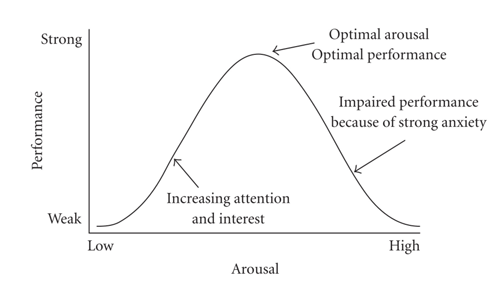
Anxiety is a feeling of unease, nervousness, or worry about something. It is a normal part of the human condition. It can be argued that anxiety is a form of arousal which is required for action. However, too much anxiety is detrimental to constructive action and is maladaptive.
Determining when anxiety is excessive and constitutes a disorder can be challenging. Markers for intervention are severity/intensity, duration, a trivial stimulus or situation as trigger, and deviation from the previous level of functioning with a detrimental impact on social, occupational or personal life.
Some may find the dysphoria (profound sense of unease or dissatisfaction) associated with anxiety itself sufficiently distressing to consult their doctor.
PRESENTATION
Anxiety disorders are a heterogeneous group of disorders.2 In the UK, they affect around 4.2% of the population.3 Prevalence decreases with age,4,5 but this may reflect underrecognition.6 Although anxiety disorders are more prevalent among women, this gender difference may decrease with increasing age.7 Prevalence varies with settings: with lower rates in the community and higher rates in older adults with other health problems, in hospital and in care settings.4,8 Generalised anxiety disorder (GAD) is by far the most common anxiety disorder seen in older adults.4
Like depression, anxiety disorders have a huge impact on quality of life9 and cause excess mortality through natural causes and suicide.10 They are thought to increase the risk of dementia,11,12 although some of the association may be explained by anxiety and depression preceding onset of dementia.13
Diagnostic categories for anxiety disorders are based on symptom clusters. However, it is important to highlight that anxiety and depression often exist on a continuum, with shared risk and vulnerability factors. This is especially true in community dwelling older adults.14 Coexistence of anxiety often indicates a more severe presentation of depression.
This emphasises the importance of screening for depression in those presenting with anxiety.14
The core symptom of anxiety is worry, which can be free-floating or specific to a situation or object. However, the breadth of symptoms is vast, see table 1.6 Older adults may complain of physical or somatic symptoms rather than mental symptoms.
COMMON COMORBIDITIES
Psychiatric
Between one in three and one in four patients with anxiety meet the criteria for a mood or substance use disorder.15 A primary depressive disorder should be excluded in an older person presenting for the first time with anxiety symptoms.
Medical
Around four in five patients have a comorbid physical disorder which in itself can predispose an individual to an anxiety disorder.15 These comorbid physical disorders can mimic symptoms of, predispose to, or even directly precipitate an anxiety disorder, and may colour its symptomatology or limit treatment options, see table 2.16
ASSESSMENT
Although it is desirable to have a specific anxiety disorder diagnosis, in primary care it may be more important to elicit the nature and severity of anxiety symptoms, their impact on day to day functioning, and how they interact with other health conditions.
Questionnaires
There is no single primary care assessment scale for all anxiety disorders, and even anxiety-specific questionnaires show substantial overlap with depression.17 Nonetheless, the Geriatric Anxiety Inventory (GAI), which has a five-item screening version (short form), and the Geriatric Anxiety Scale (GAS), which has ten items, can be useful screening tools. The Generalised Anxiety Disorder-7 (GAD-7) questionnaire may also be used.
History taking
Ask about worries, preoccupations, ability to relax, and physical symptoms. Enquire about health concerns and activities which are avoided.
Often older adults will not volunteer concerns about their mental state and instead present with physical symptoms. This may reflect misinterpretation of physiological processes as pathological processes, especially if a major health event has occurred. An example of how this can occur, and how a basic cognitive behavioural cross-sectional formulation can assist both patient and clinician in understanding how symptom-perpetuating vicious cycles can develop, is detailed in the case in box 1.
It is always important to consider the level of distress, including suicide risk, and functional impairment, rather than solely relying on number, severity or duration of symptoms.
An informant history can clarify the extent of day to day functional impairment and avoidance and identify potential therapeutic allies.
Medical workup
A medical workup is recommended if this is the patient’s first presentation of anxiety, or the patient is presenting after an extended symptom-free period.6
It should include:
• Systematic review including, ideally, cardiovascular and neurological examination
• Blood tests: FBC; U&Es; LFTs; glucose; TSH
• Urinalysis
• ECG if the patient is starting medication which could impact on cardiac conduction, especially if there is a cardiac history
• Review of known chronic health conditions and their management
Medication review
The use of medications which may contribute to anxiety should be rationalised. Common culprits include: sympathomimetics, antihistamines, corticosteroids, interferon/TNF-alpha, oestrogen and thyroid hormones.
Substance use
Ask patients about their current substance use, including alcohol, nicotine, cannabis, herbal supplements, benzodiazepines, and the oft forgotten caffeine.
Sensory impairment
Hearing and visual impairment can contribute to the severity of anxiety symptoms.18
Cognition may be affected by both anxiety and any associated depressive symptoms. There may also be preexisting cognitive impairment or dementia, making history taking more challenging.
Patients may answer negatively to general questions about anxiety but later voice their worries. Careful history taking with both open questions and narrowed questioning (re family, finances, etc.) is essential.
Diagnosis
The nature of anxiety and the setting in which it is experienced can provide pointers to the diagnosis, see table 3.
Generalised anxiety disorder
Persistent anxiety which is not restricted to any situation or topic, said to be free-floating, leads to a state of internal tension and inability to relax.
Physical symptoms and catastrophising (fear of dying, ‘going mad’, or losing control) are often prominent (as in panic disorder), but anxiety is pervasive rather than the discrete episodes of panic disorder.
It is useful to distinguish anxiety state (a current experience) from trait anxiety, a lifelong and habitual tendency to an excessive degree of anxiety which the individual has learned to adapt to.20
Panic disorder
Recurrent discrete episodes (panic attacks) of unpredictable severe anxiety, involving physical symptoms of anxiety (though not necessarily recognised as such) and often associated with catastrophising thoughts.
Social anxiety disorder (social phobia)
Fear of social situations, involving fear of criticism, and associated with low self-esteem.
Agoraphobia
A group of phobias involving fear of leaving home or being in public places with perceived poor escape options. If avoidance of such situations is maintained, patients may experience little, if any, anxiety. These are often chronic and embedded through avoidance, making it a challenge to treat.
Specific phobia
Excessive anxiety about a specific situation or object. Despite the fact that specific phobias are common most people do not seek treatment and simply avoid the situations that induce fear and anxiety.
Many phobias can be treated with basic psychotherapy approaches of exposure and desensitisation; others, such as fear of falling with its associated implications for independent mobility (see below), may require more complex formulations and interventions.
Fear of falling
High levels of physiological arousal occur when confronted with walking with subsequent avoidance of walking or confinement to home. It is often difficult to delineate the abnormal nature of fear, as it is commonly seen in people who are frail and may have a history of falling. Assessing the excessiveness of fear relative to the threat posed can help.21
As well as formulating the excessiveness of fear with the patient, treatment requires exposure and desensitisation; given there may genuinely be an increased risk of falls, this often requires input from physiotherapy to facilitate physical activity.22
Obsessive compulsive disorder
As first-time presentation of obsessive compulsive disorder (OCD) is rare in older adults, be mindful of a primary depressive illness. OCD has two components, either or both of which may be present:
• Obsessions: repetitive, intrusive thoughts (can be ideas or images), often distressing and resisted
• Compulsions: repetitive actions made to prevent something from happening, usually unpleasant, not useful and resisted
— Associated anxiety related to the above is almost always present
— Not to be confused with obsessive-compulsive personality disorder traits, which include perfectionism, excessive preoccupation with details, and conscientiousness. These are lifelong, not distressing, and do not severely impact function.
Post traumatic stress disorder (PTSD)
Initial potentially threatening event(s), such as hospitalisation in the elderly (especially in the intensive care setting) and delirium, may eventually (after a few weeks to months) give rise to flashbacks (vivid intrusive reliving of events, not just memories), nightmares, avoidance, and hypervigilance. Depressive and anxiety symptoms are also common.
MANAGEMENT
A stepped care model guided by symptom severity and functional impairment is recommended by NICE (see table 4).23
Few studies have specifically addressed management of anxiety in older adults. Difficulties with compliance may be more common, because of frailty, mobility problems, sensory or cognitive impairment.
Psychological approaches are generally well received by older adults, once a formulation of the problem is agreed between the patient and GP.26 However, there may be problems with access to such services.
Involving the multidisciplinary team (MDT) at a primary care level may help facilitate psychological approaches.
The MDT may include physiotherapy, occupational therapy, support workers, community-based mental health nurses, district nurses, counsellors, psychologists, and social workers. Family and friends may also be involved.
Psychoeducation
Discuss the diagnosis with the patient, including an explanation about the link between anxiety and physical symptoms if these are present (see box 1). Explaining any medical workup findings, rationalising existing medications, and addressing any substance misuse can also help provide reassurance that potential organic causes for symptoms have been taken into consideration and excluded.
Physical activity
Studies have shown that exercise can reduce anxiety.27,28 Consider referral to physiotherapy and occupational therapy to facilitate this if there are any problems with mobility or function. This may be useful when addressing fear of falling.22
Sleep hygiene advice
If the patient has insomnia, prior to considering medication, provide sleep hygiene advice. This should include minimising caffeine intake and avoiding caffeine altogether later in the day; establishing a bedtime routine; ensuring a comfortable environment (temperature, textures, noise level); avoiding stimulating activities before bedtime; associating the bedroom with sleeping rather than activities.
Psychological interventions
It is crucial to remember the distinction between generalised and phobic anxiety disorders.
Relaxation training together with cognitive restructuring and problem solving will be central in the management of the former, whereas exposure and desensitisation is crucial to remission of the latter.
Cognitive behaviour therapy (CBT) provides the structure for delivery of these interventions and can treat anxiety disorders either alone or as an adjunct to medication. Variants include trauma-focused therapy for PTSD and exposure and response prevention for OCD.
Medication23,29
For any anxiety disorder, a selective serotonin reuptake inhibitor (SSRI) is recommended first line, up to the maximum dose for a full trial of six weeks.30 Treatment should continue for at least 6-12 months after resolution of symptoms to prevent relapse.
Commonly used SSRIs are sertraline (50-200 mg) which is the best tolerated; citalopram (10-20 mg); and escitalopram (5-10 mg).
Although fluoxetine (maximum dose 40 mg), which has the longest half-life, has some evidence base in adults of working age, it is not well tolerated in older patients and therefore not commonly used.
Paroxetine should be avoided because of its strong anticholinergic side effect profile and shorter half-life leading to withdrawal symptoms.
The maximum licensed doses of citalopram and escitalopram were restricted due to concerns about cardiac conduction, specifically prolongation of QTc interval.
The prescriber should be mindful that while not all SSRIs are licensed in the UK for all anxiety disorders they are commonly used interchangeably as a class of drugs. This is reflected in the NICE guidelines as well as the British Association of Psychopharmacology guidelines.23,31
The second line of treatments can be a switch to a selective noradrenergic reuptake inhibitor (SNRI) such as venlafaxine (75-225 mg) or duloxetine (30-120 mg). These are recommended for generalised anxiety disorder, panic disorder, social phobia, and PTSD.
Mirtazapine with its hypnotic effects is generally well tolerated and often used, commonly in primary care, especially if there is insomnia.
Duloxetine is especially useful if there is concomitant neuropathic pain and has a better tolerance profile than venlafaxine.
There is increased bleeding risk with SSRIs, especially if the patient is on anticoagulation.32 Prescribing a gastroprotective medication as well should be considered. Mirtazapine is a recommended alternative.
All of the above medications are associated with hyponatraemia (due to SIADH). Older people are prone to this, especially if they have other risk factors.
It is advisable to check sodium levels 2-3 weeks after initiation of therapy.
Tricyclic antidepressants are not recommended owing to their strong anticholinergic side effect profile.
The exception is in OCD where clomipramine is considered second line.
Antidepressants will take longer to work for anxiety than depressive symptoms. An initial increase in anxiety or insomnia is common. Patients should be warned of this and that it will settle. Sometimes a short course of benzodiazepines, such as diazepam 2 mg BD will help with this.
Benzodiazepines although effective in the short term for anxiety disorders and insomnia, carry a risk of dependence and falls, and are associated with cognitive decline. Their use is therefore strongly discouraged except in exceptional circumstances. Pregabalin has similar long-term risks and is not recommended as first- or second-line treatment.
Propranolol can be helpful when physiological symptoms of anxiety are prominent.
Setting realistic expectations when prescribing is crucial in maintaining a therapeutic relationship and improving medication compliance. Consider a blister pack to minimise risk of overdose.
REFERRAL
Most patients with anxiety disorders are treated in primary care. Referral to specialist mental health services is indicated in the following cases:
• High risk to self (suicide, self-neglect) and/or to others
• Poor response to treatments
• Specialist psychological therapy indicated
• Diagnostic uncertainty
• Suspected diagnosis of OCD, PTSD, or specific phobias requiring treatment
• Suspected dementia
A primary depressive disorder should be excluded whenever an older person presents with anxiety symptoms for the first time, and comorbid anxiety often indicates a more severe presentation of depression. Around four in five patients have a comorbid physical disorder. Medical conditions can mimic symptoms of, predispose to, or even directly precipitate an anxiety disorder, and may colour its symptomatology orlimit treatment options. Although it is desirable to have a specific anxiety disorder diagnosis, in primary care it may be more important to elicit the nature and severity of anxiety symptoms, their impact on day to day functioning, and how they interact with other health conditions.
REFERENCES
1 Diamond DM, Campbell AM, Park CR et al. The temporal dynamics model of emotional memory processing: a synthesis on the neurobiological basis of stress-induced amnesia, flashbulb and traumatic memories, and the Yerkes-Dodson Law. Neural Plast 2007:60803
2 Lebeau RT, Glenn DE, Hanover LN et al. A dimensional approach to measuring anxiety for DSM‐5. Int J Methods Psychiatr Res 2012;21(4):258-72
3 World Health Organization. 2017. Depression and other common mental disorders: Global health estimates. WHO reference number: WHO/MSD/MER/2017.2 [Last accessed 7 Jan 2021]
4 Bryant C, Jackson H, Ames D. The prevalence of anxiety in older adults: methodological issues and a review of the literature. J Affect Disord 2008;109(3):233-50
5 Andrews G, Hobbs MJ. The effect of the draft DSM-5 criteria for GAD on prevalence and severity. Aust N Z J Psychiatry 2010;44(9):784-90
6 Byrne G. Anxiety disorder in older adults. In: Dening T, Thomas A, Stewart R, Taylor J-P (eds). Oxford textbook of old age psychiatry. Oxford textbooks in psychiatry. 3rd edition. Oxford University Press. Oxford. 2020. pp 655-70
7 Pachana NA, McLaughlin D, Leung J et al. Anxiety and depression in adults in their eighties: Do gender differences remain? Int Psychogeriatr 2012;24(1):145-50
8 Creighton AS, Davison TE, Kissane DW. The prevalence of anxiety among older adults in nursing homes and other residential aged care facilities: a systematic review. Int J Geriatr Psychiatry 2016;31(6):555-66
9 Baxter AJ, Vos T, Scott KM et al. The global burden of anxiety disorders in 2010. Psychol Med 2014;44(11):2363-74
10 Meier SM, Mattheisen M, Mors O et al. Increased mortality among people with anxiety disorders: total population study. Br J Psychiatry 2016;209(3):216-21
11 Santabarbara J, Lopez-Anton R, de la Camara C et al. Clinically significant anxiety as a risk factor for dementia in the elderly community. Acta Psychiatr Scand 2019;139(1):6-14
12 Gimson A, Schlosser M, Huntley JD, Marchant NL. Support for midlife anxiety diagnosis as an independent risk factor for dementia: a systematic review. BMJ Open 2018;8:e019399
13 Gallagher D, Coen R, Kilroy D et al. Anxiety and behavioural disturbance as markers of prodromal Alzheimer’s disease in patients with mild cognitive impairment. Int J Geriatr Psychiatry 2011;26(2):166-72
14 Schoevers RA, Beekman ATF, Deeg DJH et al. Comorbidity and risk patterns of depression, generalised anxiety disorder and mixed anxiety-depression in later life: results from the AMSTEL study. Int J Geriatr Psychiatry 2003;18(11):994-1001
15 Australian Bureau of Statistics. National survey of mental health and wellbeing. 2007. ABS Cat. No. 4326.0.
16 Chun H-Y Y, Whiteley WN, Dennis MS et al. Anxiety after stroke: the importance of subtyping. Stroke 2018;49(3):556-64
17 Balsamo M, Cataldi F, Carlucci L, Fairfield B. Assessment of anxiety in older adults: a review of self-report measures. Clin Interv Aging 2018;13:573-93
18 Jayakody DMP, Almeida O, Speelman CP et al. Association between speech and high-frequency hearing loss and depression, anxiety, and stress in older adults. Maturitas 2018;110:86-91
19 World Health Organization. International Classification of Diseases 10th Revision (ICD-10) Browser: F40-48 Neurotic, stress-related and somatoform disorders. 2016 https://icd.who.int/browse10/2019/en#/F40-F48 [Last accessed 7 Jan 2021]
20 Oyebode F. Chapter 17: Anxiety, panic, irritability, phobia, and obsession. In: Sims’ symptoms in the mind: Textbook of descriptive psychopathology. 6th edition. Elsevier. Edinburgh. 2018. pp 251-62
21 Bassil N, Ghandour A, Grossberg GT. How anxiety presents differently in older adults. Curr Psychiatry 2011;10(3):66-71
22 Kumar A, Delbaere K, Zijlstra GA et al. Exercise for reducing fear of falling in older people living in the community: Cochrane systematic review and meta-analysis. Age Ageing 2016;45(3):345-52
23 National Institute for Health and Care Excellence CG113. Generalised anxiety disorder and panic disorder in adults: management. NICE. London. 2011. Updated 2019 www.nice.org.uk/guidance/cg113 [Last accessed 7 Jan 2021]
24 Yat Ho Li S, Bressington D. The effects of mindfulness-based stress reduction on depression, anxiety, and stress in older adults: a systematic review and meta-analysis. Int J Mental Health Nurs 2019;28(3):635-56
25 Geiger PJ, Boggero IA, Brake CA et al. Mindfulness-based interventions for older adults: a review of the effects on physical and emotional well-being. Mindfulness 2016;7(2):296-307
26 Landreville P, Landry J, Baillargeon L et al. Older adults’ acceptance of psychological and pharmacological treatments for depression. J Gerontol B Psychol Sci Soc Sci 2001;56(5):285-91
27 Barbour KA, Edenfield TM, Blumenthal JA. Exercise as a treatment for depression and other psychiatric disorders. J Cardiopulm Rehabil Prev 2007;27(6):359-67
28 Asmundson GJG, Fetzner MG, Deboer LB et al. Let’s get physical: a contemporary review of the anxiolytic effects of exercise for anxiety and its disorders. Depress Anxiety 2013;30(4):362-73
29 Taylor DM, Barnes T RE, Young AH. Depression and anxiety disorders. In: The Maudsley’s prescribing guidelines in psychiatry. 13th edition. Wiley-Blackwell. Hoboken, NJ. 2018. pp 360-84
30 Baldwin D, Woods R, Lawson R, Taylor D. Efficacy of drug treatments for generalised anxiety disorder: systematic review and meta-analysis. BMJ 2011;342:d1199
31 Baldwin DS, Anderson IM, Nutt DJ et al. Evidence-based pharmacological treatment of anxiety disorders, post-traumatic stress disorder and obsessive-compulsive disorder: a revision of the 2005 guidelines from the British Association of Psychopharmacology. J Psychopharmacol 2014;28(5):403-39
32 Bixby AL, VandenBerg A, Bostwick JR. Clinical management of bleeding risk with antidepressants. Ann Pharmacother 2019;53(2):186-94
ARTICLE IN PDF
 Download this article in PDF format
EXTERNAL WEBLINKS
Royal College of Psychiatrists
Patient information leaflets
Online guided self-help programmes