SEARCH

Van de Velde V, Tidman MJ. Tailor systemic therapy to the patient with severe psoriasis. Practitioner 2016;260(1790):23-26
Tailor systemic therapy to the patient with severe psoriasis
22 Feb 2016
AUTHORS
Dr Vanessa Van de Velde MRCP, Specialist Registrar in Dermatology
Dr Michael J. Tidman MD FRCP (Ed) FRCP (Lond)Consultant Dermatologist, Department of Dermatology, Royal Infirmary of Edinburgh, Edinburgh, UK
Article
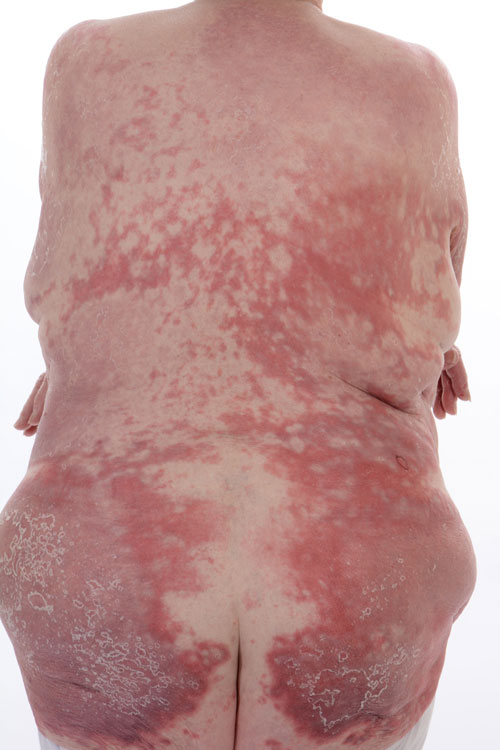
There is no standard definition regarding the severity of psoriasis, and a number of factors should be considered, including the extent and stability of skin disease, involvement of joints, response to treatment, and impact on quality of life, see figure 1.
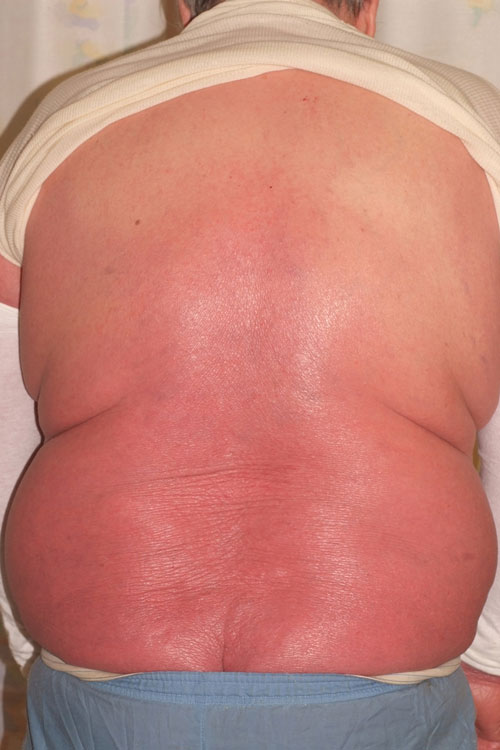
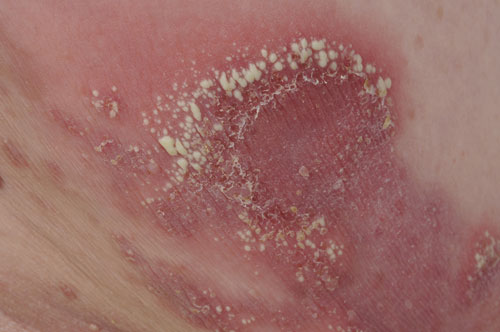
By definition, erythrodermic psoriasis (when more than 90% of the skin surface is affected, figure 2) and pustular psoriasis (when inflamed areas are studded with sterile pustules, figure 3) are severe conditions and the patient may be systemically unwell and febrile: these variants may be associated with potentially life-threatening complications such as high output cardiac failure, systemic infections, hypothermia, hypoalbuminaemia, hypocalcaemia and venous thrombosis.
The involvement of areas that are difficult to treat, such as the nails (see figure 4), face, scalp, palms, soles, flexures and genitals, can contribute significantly to the patient’s perception of severity.
This review follows on from an earlier article by one of the authors, published in The Practitioner in 2013, on psoriasis and its management in primary care.1 This article focuses on the assessment and current management options for patients with severe psoriasis.
The Psoriasis Area and Severity Index (PASI)2 and the Dermatology Life Quality Index (DLQI)3 are commonly used as markers of severity, with SIGN advising that a PASI ≥ 10 and a DLQI ≥ 10 equates to severe psoriasis.4
Assessment in primary care
GPs play a crucial role in the diagnosis and assessment of patients with psoriasis. NICE recommends that four key areas should be evaluated and recorded when assessing patients:5
• Severity, using the static Physician’s Global Assessment (sPGA)6
• Disease impact on physical, psychological and social wellbeing (DLQI)
• The presence of psoriatic arthritis
• Comorbidities
Ideally, patients should be assessed annually for psoriatic arthritis: the Psoriasis Epidemiology Screening Tool (PEST)7 is a validated tool to screen for psoriatic arthritis in both primary and secondary care.
Patients with severe psoriasis should undergo cardiovascular risk assessment at presentation and every five years, or more frequently if indicated.5 Modifiable risk factors should be assessed (including blood pressure, glucose, lipid profile and BMI), and lifestyle advice given, particularly relating to smoking cessation and alcohol intake.5
Referral
Referral to secondary care should be made for patients with any type of psoriasis with poor response to topical therapy (after two or three months according to SIGN4) and for extensive psoriasis. Cases where the psoriasis is having a significant physical or psychological impact on an individual’s quality of life warrant early referral, as do those where the diagnosis is uncertain. Patients with generalised pustular psoriasis or erythroderma should be referred urgently for same-day specialist input. Patients with acute guttate psoriasis who may require phototherapy should also be referred.4,5 Children and adolescents with any type of psoriasis should be referred to a specialist at initial presentation.
Other reasons for referral include patients with nail involvement causing significant functional or cosmetic problems. Any patient suspected of having arthritis should be referred to a rheumatologist.
Management
The range of therapeutic options available can be grouped into three broad categories: phototherapy; systemic non-biological therapy; and biological therapy. Information leaflets about these options are available from the British Association of Dermatologists, see Useful information box.
There is still a role for topical preparations in the management of severe psoriasis, used in conjunction with phototherapy and systemic therapies.
Phototherapy
Ultraviolet light has profound immunomodulatory effects on the skin, and two forms of phototherapy are routinely used to treat psoriasis: narrow-band UVB; and the more potent PUVA (psoralen + UVA). Psoralens are photosensitisers, and can be taken orally or applied topically (as a paint or in a bath).
Phototherapy is clean, and generally well tolerated. However, multiple courses of PUVA put patients at increased risk of developing skin cancer, particularly squamous cell carcinoma, and therefore a history of skin cancer is a relative contraindication.5
The time commitment of phototherapy given two to three times per week for several months can be an issue for some patients, especially when they are geographically isolated.
Systemic non-biological therapy
The major criterion for starting conventional systemic therapy is inadequate control of psoriasis by topical and light therapy and where social, psychological and physical well being are greatly affected. According to NICE guidance patients must have extensive disease (> 10% body surface area or PASI > 10) and/or localised disease causing significant functional impairment and distress and/or have failed to improve with phototherapy.5
It is important to tailor systemic therapy to the individual taking into consideration the patient’s age, disease severity, comorbidities, presence of psoriatic arthritis and their preference.
Methotrexate is generally considered as the first-line choice for patients who fulfil the requirement for systemic non-biological therapy, and is effective for both cutaneous and articular psoriasis. It is given weekly, up to 25 mg a week, and patients are usually advised to take folic acid on a separate day to reduce toxicity. Methotrexate is potentially hepatotoxic and liver disease, excessive alcohol consumption, or renal dysfunction are relative contraindications.
Ciclosporin is beneficial in those unwell patients needing rapid disease control. However, because of the danger of renal damage, ciclosporin is recommended only for short-term use (approximately 6-12 months).5 It has a relatively favourable risk/benefit profile for patients planning to start a family.
Acitretin is an option for patients where methotrexate and ciclosporin have failed or are contraindicated. It is highly teratogenic and strict adherence to contraception is advised for three years after treatment.5
Fumaric acid esters have been used to treat psoriasis for more than 30 years, but remain unlicensed in the UK. Nonetheless, this therapy can be very effective8 and is widely used.
Apremilast, a phosphodiesterase 4 inhibitor, is a novel treatment option for patients with moderate to severe psoriasis.9 It has the advantage of being administered orally and may be a good option for patients who have failed conventional systemic non-biological therapies or where they are contraindicated.
Mycophenolate mofetil is occasionally employed in the treatment of psoriasis, but hydroxycarbamide (formerly hydroxyurea) is, with the advent of the biological era, nowadays little used.
Biological therapy
The term biological refers to pharmacologically active protein or peptide-based molecules that alleviate disease by inhibiting or imitating the actions of naturally occurring proteins
in the body, and the biologics represent an expanding area of drug development for patients with severe psoriasis.
They are administered by subcutaneous injection or intravenous infusion, and target specific areas of the immune system, unlike conventional systemic agents that affect the entire immune system.10
Etanercept, adalimumab, and infliximab are TNF-alpha blocking agents, ustekinumab targets the cytokines interleukin-12 and interleukin-23, and secukinumab, one of the newest biologics, targets interleukin-17A.
Monitoring and follow-up
Although systemic treatment will usually be initiated and reviewed in secondary care, GPs have a key role, in collaboration with dermatologists and rheumatologists, in the close monitoring of the immunosuppressive agents used to treat psoriasis, with the emphasis on haematological effects, infection, cutaneous and systemic malignancy (especially lymphoproliferative), and conception-related issues.
In particular, the opportunity should be taken when the patient attends the surgery to reinforce warnings regarding symptoms of bone marrow depression (bruising, sore throats and mouth ulcers), the avoidance of drugs that might interact with the treatment, the importance of contraception if applicable, and sun protection.
The development of adverse reactions or intercurrent illness should prompt liaison with the hospital team. Immunosuppressive therapy may increase susceptibility to opportunistic infections (viral, bacterial, fungal and atypical mycobacterial), and there is a risk of reactivation of latent viral infections (hepatitis B and C, and HIV) and dormant tuberculosis.
Vaccinations should be up to date before starting systemic therapy, and travel-related vaccinations should be anticipated. Patients should have received the pneumococcal vaccine prior to commencing treatment and should have a seasonal influenza vaccination. If seronegative, hepatitis B and varicella zoster virus immunisation should be given (the latter several weeks before starting treatment as it is an attenuated live vaccine).
The primary care team may be asked to enter into a locally agreed shared care arrangement regarding specific blood tests that usually need to be carried out frequently until treatment is stabilised. Certain medications used to treat severe psoriasis have specific monitoring requirements, such as blood sugar levels in patients with diabetes taking acitretin (as insulin requirements may be altered) and blood pressure with ciclosporin.
There is some concern about the risk of salmonella and listeria, and patients on biological therapy may be warned against consuming unpasteurised milk, raw or partially cooked dairy products, fish or meat.10
Conclusion
Psoriasis is a common multisystem disease with significant morbidity and impact on quality of life. While topical treatment is the mainstay of therapy for patients with mild psoriasis, a range of systemic treatment options can be considered for patients with moderate to severe psoriasis. However, to ensure effective patient management coordination between primary and secondary care is essential, with the GP playing an integral role.
REFERENCES
1 Tidman MJ. Improving outcomes in patients with psoriasis. Practitioner 2013;257(1757):27-30
2 Fredriksson T, Pettersson U. Severe psoriasis — oral therapy with a new retinoid. Dermatologica 1978;157(4):238-44
3 Finlay AY, Khan GK. Dermatology Life Quality Index (DLQI) – a simple practical measure for routine clinical use. Clin Exp Dermatol 1994;19:210-16
4 Scottish Intercollegiate Guidelines Network. SIGN 121. Diagnosis and management of psoriasis and psoriatic arthritis in adults. SIGN. Edinburgh. 2010
5 National Institute for Health and Clinical Excellence. CG153. Psoriasis: the assessment and management of psoriasis. NICE. London. 2012
6 Feldman SR, Krueger GG. Psoriasis assessment tools in clinical trials. Ann Rheum Dis 2005;64(Suppl 2):ii65-ii68
7 Ibrahim GH, Buch MH, Lawson C et al. Evaluation of an existing screening tool for psoriatic arthritis in people with psoriasis and the development of a new instrument: the Psoriasis Epidemiology Screening Tool (PEST) questionnaire. Clin Exp Rheumatol 2009;27:469-74
8 Atwan A, Ingram JR, Abbott R et al. Oral fumaric acid esters for psoriasis. Cochrane Database Syst Rev 2015, Issue 8
9 National Institute for Health and Care Excellence. TA368. Apremilast for treating moderate to severe plaque psoriasis. NICE. London. 2015
10 Smith CH, Anstey AV, Barker JNWN et al. British Association of Dermatologists’ guidelines for biologic interventions for psoriasis. Br J Dermatol 2009;161:987-1019
ARTICLE IN PDF
 Download this article in PDF format
CLICK ON IMAGES

PRESET SEARCHES
PubMed
Severe psoriasis treatment review
NICE evidence search
Immediate CPD prompts and frameworks
These handy templates* prompt immediate drafting of personal learning, reflection and planning. Save your record straight into your personal development folder on your device or Cloud storage system.
*Adobe reader needed for iPad
EXTERNAL WEBLINKS
British Association of Dermatologists
We welcome your feedback
If you would like to comment on this article or have a question for the authors, write to: [email protected]