SEARCH

Tidman MJ. Improving outcomes in patients with psoriasis. Practitioner 2013;257 (1757): 27-30
Improving outcomes in patients with psoriasis
24 Jan 2013
AUTHORS
Dr Michael J. Tidmanm MD FRCP (Ed) FRCP (Lond), Consultant Dermatologist, Department of Dermatology, Royal Infirmary of Edinburgh, Edinburgh, UK
Article
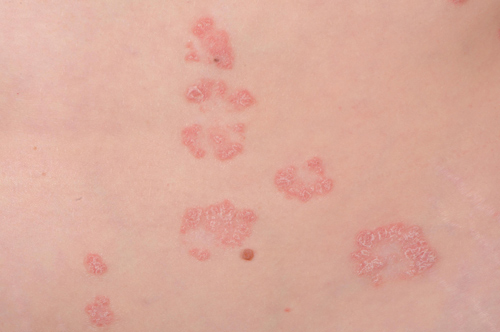
Psoriasis is a heterogeneous inflammatory disorder that targets the skin and joints. All GPs will be familiar with the salmon pink or beefy red, sometimes itchy, scaly plaques that typify this condition, see figure 1. Psoriasis affects 1.3-2% of the population.
The diagnosis of plaque psoriasis is usually straightforward, although it may present as, or develop into, unstable pustular or erythrodermic forms.
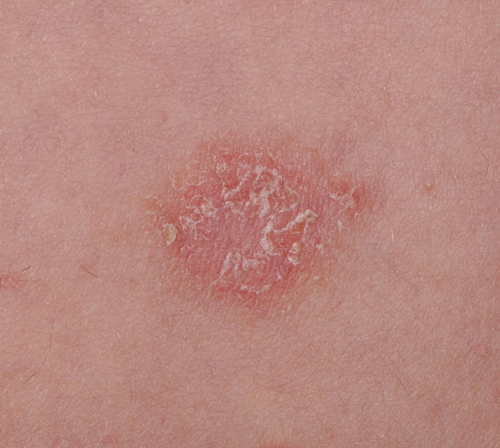
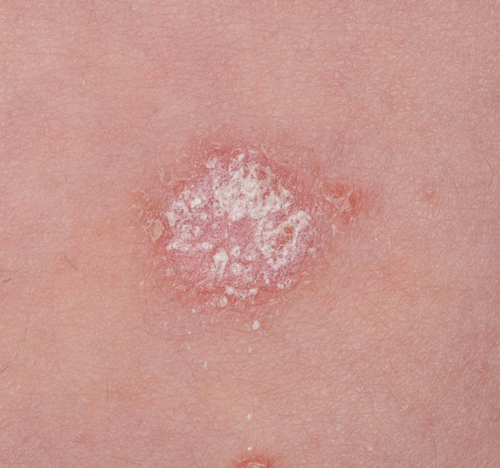
A helpful diagnostic clue is the tendency for silver scales to appear after gentle scratching of a lesion, see figure 2. Psoriatic arthritis affects 5-20% of patients with cutaneous psoriasis.
Psoriasis represents a complex interaction of genetic and environmental factors. Headway is being made into identifying the genes involved and their protein products, paving the way for personalised and stratified treatment strategies. Stress, streptococcal infection and drugs, including beta-blockers, antimalarials and lithium, may precipitate or exacerbate psoriasis.
The management of psoriasis can be challenging. The recent publication of two national guidelines, by NICE1 and SIGN2, should promote and facilitate the delivery of high quality primary healthcare for psoriasis and improve outcomes for sufferers of this chronic and potentially debilitating condition.
Quality of life
Psoriasis can result in an emotional, psychosocial and functional burden that can have a very significant adverse effect on quality of life by causing disability, embarrassment, lowered self-esteem, social stigmatisation, clinical anxiety and depression.
Its appearance, especially when face, scalp, hands, nails and genitalia are affected, shedding of scale, pruritus, painful arthropathy with impaired mobility and joint deformity, and functional difficulties resulting from involvement of the nails, hands and soles, all contribute. It is worthy of note that the impact of psoriasis on quality of life does not correlate strongly with the extent or severity of visible psoriasis.2
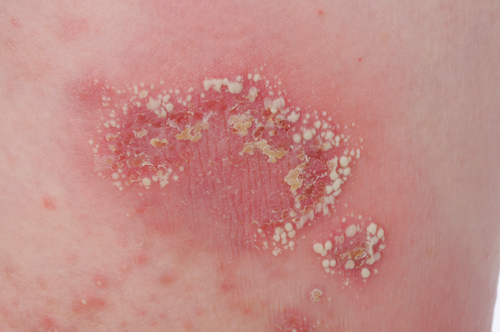
Erythrodermic and generalised pustular psoriasis are potentially life-threatening conditions which require immediate referral to secondary care. Erythroderma may cause hypothermia, fluid loss and infection, and precipitate high output cardiac failure, especially in older patients: pustular psoriasis (see figure 3) may be associated with infection, hypocalcaemia, renal and liver damage, venous thrombosis and malabsorption.
In recent years, it has been established that psoriasis, especially when severe, predisposes to metabolic syndrome. The nature of the association between psoriasis and metabolic syndrome is not fully understood, and a genetic susceptibility presumably underlies the link. Patients with psoriasis are at increased risk of ischaemic heart disease, hypertension, stroke, type 2 diabetes mellitus and hyperlipidaemia.
Obesity, smoking and heavy alcohol consumption are also associated with psoriasis, and, as well as adversely affecting the comorbid conditions, may be detrimental to the clinical expression of psoriasis and the use of certain treatments.
Additionally, psoriasis sufferers appear at increased risk of uveitis, inflammatory bowel disease, lymphoma, non-melanoma skin cancer, chronic obstructive pulmonary disease and venous thromboembolism.1,2
Assessment
Psoriasis should be assessed on the basis of: severity; impact on physical, psychological and social wellbeing; symptoms of arthritis; and presence of comorbidities.1
SIGN recommends an annual review of patients with psoriasis by their GP. This should include:
• documentation of severity with a validated tool such as DLQI, if practical
• optimisation of topical therapy
• assessment of joint symptoms
• screening for depression
• assessment of comorbid conditions in those with severe psoriasis by measuring blood pressure and BMI, and screening for diabetes mellitus and hyperlipidaemia
• consideration of referral to secondary care2
Lifestyle advice should be reinforced at the time of assessment, and patients encouraged to take regular exercise, manage their weight, moderate their alcohol consumption and stop smoking.
Treatment
Patients should be provided with evidence-based written information about the condition and its treatments, tailored to the needs of the individual.1 To facilitate this the British Association of Dermatologists has produced three information leaflets, freely available on its website: an overview of psoriasis (translated into 11 languages); topical therapy; and the treatment of moderate and severe psoriasis, see Useful information box.
Poor response to topical therapy may be as much to do with lack of compliance as lack of efficacy.2 The number of treatments each day should be kept to a minimum,2 and patients should be reviewed after four weeks when initiating or changing topical therapy to improve adherence to treatment and assess response.1 Empathetic care and the involvement of patients in decision making will also improve compliance.
The evidence base for emollient therapy in psoriasis is lacking,2 but it is assumed that the regular application of a moisturiser will improve comfort, reduce the shedding of scale and increase the efficacy of topical therapies.
There are a variety of active topical therapies as first-line treatment for chronic stable plaque psoriasis,
see box 1. Patients should be instructed in the use of topical preparations, and individual preferences and cosmetic acceptability taken into account.
Trunk and limb psoriasis 1,2
• As initial treatment for adults with stable plaque psoriasis of the trunk and limbs, NICE recommends daily application of a potent corticosteroid and vitamin D (calcitriol) or a vitamin D analogue (calcipotriol, tacalcitol), applied separately, one in the morning, the other in the evening1
• If the response is not satisfactory after a maximum of eight weeks, the twice daily application of vitamin D or a vitamin D analogue alone should be offered for a further 8-12 weeks
• If control remains unsatisfactory, a potent topical corticosteroid (twice daily for up to four weeks) or a coal tar preparation (once or twice daily) should be offered. An alternative at this stage is to consider the fixed combination of calcipotriol monohydrate and betamethasone dipropionate (once daily for up to four weeks)
• Persistent psoriasis on the trunk and limbs in adults can be treated with a very potent topical corticosteroid for up to four weeks
• Short-contact dithranol therapy or tazarotene gel should also be considered for resistant psoriasis, with appropriate instruction and support for self-use
There is a paucity of evidence with regard to the treatment of psoriasis in children and adolescents, but either calcipotriol applied once daily, for those over six years old, or a potent corticosteroid applied once daily, for those over a year old, should be considered.1
Scalp psoriasis 1,2
• If thick scale is present, consider the overnight application of a topical keratolytic agent, such as salicylic acid, tar or oil preparations (olive oil, coconut oil)
• Initial treatment should be a potent topical corticosteroid (as a lotion, gel, shampoo or mousse) applied once daily for up to four weeks
• If the response is unsatisfactory, consider either daily application of a combined product containing calcipotriol monohydrate and betamethasone dipropionate (once daily for up to four weeks), vitamin D or a vitamin D analogue (once daily for up to eight weeks)
• A very potent topical corticosteroid (up to twice daily for two weeks) can be used for refractory psoriasis in adults. Coal tar applied once or twice daily is an alternative
Psoriasis of face, flexures and genitalia 1,2
• Mild or moderate potency corticosteroids (hydrocortisone acetate or clobetasone butyrate, respectively) applied once or twice daily for a maximum of two weeks, are recommended
• If non-responsive, or continuous therapy (more than one to two weeks each month) is required to maintain control, a vitamin D analogue or
a topical calcineurin inhibitor (tacrolimus or pimecrolimus) twice daily for up to four weeks should be considered. In this context, the topical calcineurin inhibitors are being used outside their licensed indication. The intermittent use of coal tar preparations can be considered in flexural psoriasis
• Potentially irritant preparations (dithranol and tazarotene) are best avoided at these sites
The British National Formulary provides details of individual preparations and their mode of use. Topical corticosteroids should be used in short, intermittent courses, see box 2, and vitamin D analogues should be used in the recommended quantities to minimise the risk of hypercalcaemia.
Referral
The majority of patients with psoriasis can be managed in primary care, although specialist care may be necessary at some point in up to 60% of cases.1
The NICE and SIGN guidelines suggest that patients with psoriasis should be referred to a dermatologist in the following circumstances:
• diagnostic uncertainty
• children or adolescents
• severe or extensive (> 10% body surface area) cutaneous involvement
• involvement of sites that are difficult to treat (face, nails, palms, soles, genitalia)
• unsatisfactory control with appropriate topical therapy (after two to three months)
• major functional or cosmetic impact
• occupational or educational disability
• significant adverse impact on physical, psychological or social wellbeing
Patients with erythrodermic or generalised pustular psoriasis should be referred for a same day dermatological opinion,2 and if psoriatic arthritis is suspected, early referral for a rheumatological opinion is recommended.1
The treatments available under specialist supervision include phototherapy (UVB or PUVA), the non-biological systemic drugs (methotrexate, ciclosporin, acitretin, hydroxycarbamide and fumaric acid esters) and, ultimately, the biological systemic agents.
Conclusion
Psoriasis is a common inflammatory disorder with the potential for far-reaching effects on physical and psychological health.
The primary healthcare team is pivotal to its effective management, and the guidance from NICE and SIGN will certainly contribute significantly to the care of psoriasis sufferers in both primary and secondary care.
REFERENCES
1 National Institute for Health and Clinical Excellence. CG153. Psoriasis: the assessment and management of psoriasis. NICE. London. 2012
2 Scottish Intercollegiate Guidelines Network. SIGN 121. Diagnosis and management of psoriasis and psoriatic arthritis in adults. SIGN. Edinburgh. 2010
ARTICLE IN PDF
 Download this article in PDF format
EXTERNAL WEBLINKS
PubMed reviews
NICE- evidence search
British Association of Dermatologists
Patient information leaflets: an overview of psoriasis (translated into 11 languages); topical therapy; and the treatment of moderate and severe psoriasis
British Skin Foundation
www.britishskinfoundation.org.uk
The Psoriasis Association
www.psoriasis-association.org.uk
Primary Care Dermatology Society
Psoriasis: childhood psoriasis
Psoriasis: flexural and genital psoriasis
Psoriasis: generalised pustular psoriasis (syn. von Zumbusch psoriasis)
Psoriasis: guttate psoriasis
Psoriasis: hyperkeratotic hand / foot psoriasis
Psoriasis: overview and chronic plaque psoriasis
Psoriasis: palmoplantar pustulosis