SEARCH

Coleman L, Overton C.GPs have key role in early diagnosis of endometriosis. Practitioner 201; 259 (1780):13-17
GPs have key role in early diagnosis of endometriosis
23 Mar 2015
AUTHORS
Dr Laura Coleman BSc MBChB, Specialist Registrar in Obstetrics and Gynaecology
Mrs Caroline Overton MD FRCOG, Consultant Gynaecologist and Lead for University Hospitals Bristol Endometriosis Centre, St Michael’s University Hospital, Bristol, UK
Article
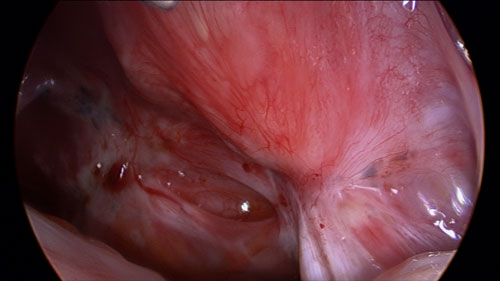
Endometriosis is defined as the presence of endometrial-like tissue outside the uterus. Deposits are commonly distributed on the ovaries, uterosacral ligaments, pouch of Douglas (see figure 1), rectum and sigmoid colon, bladder and ureter. Rarely more distant deposits are found.
Endometriotic deposits are hormone responsive. The hormone changes in the menstrual cycle induce bleeding, chronic inflammation and scarring. Endometriosis is common affecting 10% of the female adult population and up to 50% of women with infertility.1,2
Studies suggest that there is a four to ten year delay between presentation and diagnosis. Delay in diagnosis leads to increased suffering, more prolonged ill health and a disease state that is more difficult to treat. Many patients with endometriosis feel that delays are caused by doctors failing to recognise the importance of their symptoms.3 Patient self-help groups report that diagnosis is often delayed because endometriosis has not been considered as a diagnostic possibility early on.
Risk factors
Risk factors for endometriosis include:
• Early menarche
• Late menopause
• Delayed childbearing
• Vaginal outflow obstruction
(e.g. imperforate hymen)
• First-degree relative affected
The exact aetiology of endometriosis remains unclear, however, it is rare before the menarche or after the menopause.
Presentation
Women commonly present to their GP with pelvic pain, painful intercourse (deep dyspareunia) or subfertility.
The symptoms experienced reflect the location of the endometriosis and relate to the menstrual cycle with the pattern repeating each cycle.
Classical symptoms include:
• Chronic pelvic pain typically from menarche
• Dysmenorrhoea
• Deep dyspareunia (there can be a specific area indicating the location of endometriosis)
• Dyschezia – rectal pain classically in the days before or during a period
• Pain passing urine (which is different from the dysuria of infection) and rarely haematuria
• Difficulty conceiving
• Fatigue
• Cyclical bloating, diarrhoea or constipation but always associated with the menstrual cycle
Classically the pain starts several days before the period. The period itself is extremely painful and may necessitate time off work or attendance at A&E. After the period, symptoms tend to improve until mid-cycle when the pattern repeats again.
Occasional discomfort on intercourse is normal but deep dyspareunia on most occasions is not nor is deep rectal pain with a bowel movement. Women with endometriosis also complain of fatigue, as living with chronic pain is exhausting.
If women have to change the way they dress, miss work or school, stay in bed, stop exercising or are planning their lives around their periods, then the periods are not normal.
A large retrospective analysis of the UK General Practice research database was undertaken in 2008 to assess the prevalence of symptoms up to three years prior to a diagnosis of endometriosis, see table 1.
Risk factors for a subsequent diagnosis of endometriosis included: a history of ovarian cysts odds ratio (OR) 7.3 (95% CI:5.7-9.4), pelvic inflammatory disease OR 3.0 (95% CI:2.5-3.6) and irritable bowel syndrome OR 1.6 (95% CI:1.3-1.8).4
Examination
Abdominal palpation, bimanual and speculum examination are important to identify signs of endometriosis, but also to exclude alternative diagnoses such as a fibroid uterus, infection or pregnancy. A normal examination does not exclude a diagnosis of endometriosis.
Typical examination findings associated with endometriosis include:
• Tenderness, induration or nodules in the posterior vaginal fornix
• A tender adnexal mass (ovarian endometrioma)
• A retroverted and fixed uterus
GPs should send swabs to exclude chlamydia and consider treating empirically for IBS.
Differential diagnoses
Pelvic pain can be secondary to a wide range of gynaecological, urological or gastrointestinal causes. These are outlined in figure 2. A history of the nature of the pain, frequency, pattern, severity and relationship to the menstrual cycle is key in identifying endometriosis.
Investigations
Serum CA125 can be raised in endometriosis, but is not specific or sensitive for the condition and is therefore not recommended as a screening test. No other blood tests have been identified to aid diagnosis.5
A transvaginal ultrasound scan (TVS) can be used to identify a haemorrhagic ovarian cyst. This may represent a haemorrhagic corpus luteal cyst related to ovulation, which will disappear on subsequent scan, but persistence indicates an ovarian endometrioma. It is important to be aware that a normal pelvic ultrasound scan does not exclude a diagnosis of endometriosis. Other imaging modalities have not been found to improve diagnostic accuracy.6
Management in general practice
The gold standard investigation for endometriosis is laparoscopy and biopsy with histological confirmation. If symptoms suggest endometriosis, then medical treatment may obviate the need for this surgery. If symptoms do not improve and continue to impact significantly, then referral at that stage would be appropriate.
Analgesia
There is good evidence that NSAIDs improve pain in primary dysmenorrhoea.6
The contraceptive pill
In general, any contraception that improves periods, either stopping them altogether or making them shorter and lighter, is good for endometriosis.
The UK Medical Eligibility Criteria provide guidance for prescription of hormones for contraception, but criteria are relaxed where the pill is being used to treat symptoms, rather than for contraception alone.
A Cochrane review in 2007 concluded that the combined oral contraceptive pill (COCP) reduces endometriosis-associated dysmenorrhoea, dyspareunia and non-menstrual pain. One included study looked at continuous COCP use. After two years of use 80% of women were satisfied or very satisfied with the results.
If women experience prolonged breakthrough bleeding, they should be advised to take a seven-day break from the pill before restarting. If this pill-free interval is associated with severe pain, then this can be reduced to just four days.7
Other combined hormonal contraceptives such as the transdermal patch or the vaginal ring have also been shown to provide symptomatic benefit in endometriosis, but less than that demonstrated in studies of the COCP.8
Progestagens and anti-progestagens
A variety of progestagens and anti-progestagens have been assessed for symptomatic benefit in endometriosis including oral, implantable and injectable. A Cochrane review in 2012 concluded that there was only limited evidence of benefit with oral and injectable regimens to suggest their use as an option for the management of endometriosis-associated pain.9 Depot injection did not offer further benefit over oral regimens.
Side-effect profiles have been noted to limit the acceptability of both oral and injectable methods when compared with combined hormonal contraceptives. However, the European Society of Human Reproduction and Embryology (ESHRE) guideline still recommends them as an option for management of endometriosis-associated pain.6
In particular, ESHRE notes that a number of studies have demonstrated a significant reduction in pain with a levonorgestrel-IUS coil and in view of the better side-effect profile it is a very effective treatment for endometriosis.
Referral
There are two main indications for referral to gynaecology. The first is a suspected diagnosis of endometriosis in a woman who is actively trying to conceive, as hormonal management is not appropriate. If pain is not controlled with simple analgesia then further management is limited to surgery. Laparoscopic treatment of endometriosis has been shown to improve fertility and address pain.
Early referral should be considered in women with abnormal examination findings or ultrasound results.
An ovarian endometrioma is predictive of more extensive endometriosis.10
When initiating treatment in the primary care setting, it is important to explain that treatment has been started on the basis that the symptoms suggest endometriosis. If there is not significant improvement, then the next step is referral to secondary care, see figure 3.
Secondary care management
Management in secondary care will typically involve diagnostic laparoscopy with primary treatment of visible endometriosis with diathermy or excision and ovarian cystectomy for ovarian endometrioma.
Surgery for deep infiltrating disease may be carried out as a second operation, to allow for careful consideration of the risks and benefits. This is usually undertaken in specialist endometriosis centres and often in collaboration with colorectal surgical colleagues as excision of deeply infiltrating endometriotic deposits may involve excision of bowel and temporary stoma formation.
Further medical management options in secondary care include gonadotrophin-releasing hormone (GnRH) agonists. The addition of add-back hormonal replacement treatment (continuous combined oestrogen and progestagen) reduces hypo-oestrogenic symptoms and bone loss without reducing the efficacy. Treatment is licensed for six months.
Endometriosis can recur after medical and surgical treatment with symptoms typically returning one to five years after treatment.
Hysterectomy will not necessarily cure endometriosis pain. Because hysterectomy only removes the uterus and not the endometriosis implants, pain between periods, pain during intercourse, rectal and bladder pain may continue.
Surgical oophorectomy combined with hysterectomy may provide a permanent solution. Six months’ treatment with one of the GnRH agonists and additional add-back HRT will mimic the hormone state after surgical oophorectomy to test if the pain will improve and that the menopausal symptoms are manageable.
There is a theoretical risk of inducing neoplastic changes in endometriotic implants, so after hysterectomy and oophorectomy, continuous combined oestrogen and progestagen HRT is recommended until the age of 50.
Prognosis
Endometriosis is a chronic condition with no known cure. For the majority of women symptoms can be controlled with hormonal treatment. The progression of symptoms is variable with some improving, some stabilising and some deteriorating over time. The menopause typically induces significant symptomatic improvement.
There is no evidence that endometriosis causes cancer or increases the overall incidence of cancer. There is a slight increase in the rate of some ovarian cancers and non-Hodgkin’s lymphoma in endometriosis sufferers, however absolute numbers are small.6
For women with severe endometriosis a multidisciplinary team approach is essential for management and tertiary endometriosis centres can combine the necessary expertise to facilitate this. This should include the GP, specialist nurses and gynaecologists and for those women who continue to experience chronic pain, the pain management team.
REFERENCES
1 Eskenazi B, Warner ML. Epidemiology of endometriosis. Obstet Gynecol Clin North Am 1997;24:235-58
2 Meuleman C, Vandenabeele B, Fieuws S et al. High prevalence of endometriosis in infertile women with normal ovulation and normospermic partners. Fertil Steril 2009;92:68-74
3 Overton C, Park C. Endometriosis – More on the missed disease. BMJ 2010;340:c2168
4 Ballard KD, Seaman HE, de Vries CS, Wright JT. Can symptomatology help in the diagnosis of endometriosis? Findings from a national case-control study—Part 1. BJOG 2008;115:1382-91
5 Mol BW, Bayram N, Lijmer JG et al. The performance of CA-125 measurement in the detection of endometriosis: a meta-analysis. Fertil Steril 1998;70:1101-08
6 Dunselman GA, Vermeulen N, Becker C et al. ESHRE guideline: management of women with endometriosis. Hum Reprod 2014;29(3):400-12
7 Davis L, Kennedy SS, Moore J, Prentice A. Modern combined oral contraceptives for pain associated with endometriosis. Cochrane Database Syst Rev 2007:CD001019
8 Vercellini P, Barbara G, Somigliana E et al. Comparison of contraceptive ring and patch for the treatment of symptomatic endometriosis. Fertil Steril 2010; 93:2150-61
9 Brown J, Kives S, Akhtar M. Progestagens and anti-progestagens for pain associated with endometriosis. Cochrane Database Syst Rev 2012;3:CD002122
10 Redwine DB. Ovarian endometriosis: a marker for more extensive pelvic and intestinal disease. Fertil Steril 1999;72:310–15
ARTICLE IN PDF
 Download this article in PDF format
PRESET SEARCHES
Immediate CPD prompts
These handy templates* prompt immediate drafting of personal learning, reflection and planning. Save your record straight into your personal development folder on your device or Cloud storage system.
*Adobe reader needed for iPad
EXTERNAL WEBLINKS
For healthcare professionals
ESHRE guideline: management of women with endometriosis
For patients
PubMed
Premature menopause hormone replacement
NICE Evidence
British National Formulary
Treatment of vaginal and vulval conditions
Current evidence - Ovarian cancer
US NCI
PDQ® (Physician Data Query) is NCI's cancer database of peer-reviewed, regularly updated evidence-based, referenced summaries
Ovarian
PubMed
UK NICE
Ovarian
UK Risk Assessment Tools
QCancer
Qcancer women
UK Early diagnosis programmes
UK NCAT
Macmillan - early diagnosis
US NCI
PDQ® (Physician Data Query) is NCI's cancer database of peer-reviewed, regularly updated evidence-based, referenced summaries
Women
Breast
Ovarian
Endometrial screening
Endometrial
Cervical
Preset searches from key journals
British Journal of General Practice
Contraception
HRT
LARC
IUD
British Medical Journal
Contraception
LARC
IUD
HRT
Journal of family planning and reproductive health
LARC
IUD
HRT
New England Journal of Medicine
Contraception
HRT