SEARCH

Howie R, Duncan WC. Tailor treatment to the patient in polycystic ovary syndrome. Mar 2020;264(1835):11-14
Tailor treatment to the patient in polycystic ovary syndrome
24 Mar 2020
AUTHORS
Dr Ruth Howie MBChB MRCOG, Sub-specialty Trainee in Reproductive Medicine, Edinburgh Fertility and Reproductive Endocrine Centre, Royal Infirmary of Edinburgh, Edinburgh, UK
Professor W. Colin Duncan BSc MBChB MD FRCOG, Professor of Reproductive Medicine and Science, Edinburgh Fertility and Reproductive Endocrine Centre, Royal Infirmary of Edinburgh, and MRC Centre for Reproductive Health, The University of Edinburgh, Edinburgh, UK
Competing interests
Professor W. Colin Duncan has received research funding from Galvani and spoken at a symposium supported by Guerbe. Dr Ruth Howie has no competing interests.
Article
Polycystic ovary syndrome (PCOS) is a condition characterised by hyperandrogenism, multifollicular ovaries and ovulatory dysfunction. It affects 8-13% of women of reproductive age and is associated with insulin resistance, hyperlipidaemia and obesity. Although it runs in families there is no clear genotype. The Rotterdam consensus criteria are most widely used internationally to diagnose PCOS. Two out of the following three criteria are required to make a diagnosis of PCOS (when other diagnoses have been excluded): • Clinical or biochemical signs of hyperandrogenism; • Irregular menstrual cycles and ovulatory dysfunction suggested by oligomenorrhoea (< 21 or > 35 days) or amenorrhoea (absent menses for > 6 months); • Polycystic ovaries on ultrasound.A detailed history will highlight the issues affecting the patient, determine the presence of irregular menstrual cycles and help exclude alternative diagnoses. Baseline measurements should include blood pressure and BMI. Clinical signs of hyperandrogenism including hirsutism, acne and androgenic alopecia should be assessed. A hormone profile should be done during days 1-5 of the menstrual cycle or as a random sample when there is amenorrhoea. The profile should include FSH, LH, oestradiol, prolactin, total testosterone, sex hormone binding globulin, free androgen index and thyroid function tests. The presence of polycystic ovaries on transvaginal ultrasound is defined as ovaries with ≥ 12 follicles measuring 2-9 mm or an ovarian volume ≥ 10 cm3. Only one ovary needs to meet this criterion.
Polycystic ovary syndrome (PCOS) is characterised by hyperandrogenism, multifollicular ovaries and ovulatory dysfunction. It is associated with insulin resistance, hyperlipidaemia and obesity. It affects 8-13% of women of reproductive age1 and although it runs in families there is no clear genotype. PCOS is associated with comorbidities and should be considered a long-term condition requiring regular follow-up.
Presenting symptoms and diagnosis
Women with PCOS present with a range of symptoms of varying severity. Common signs and symptoms include oligomenorrhoea or amenorrhoea, hirsutism, male pattern hair loss, acne, problems with weight management and infertility. Symptoms may change throughout a woman’s life in response to fluctuations in weight and use of contraceptives. Management is focused on the priorities of the individual.
The Rotterdam consensus criteria2are most widely used internationally to diagnose PCOS. The diagnosis can be made based on these criteria when alternative diagnoses have been excluded. Women must have two of the following three criteria to meet the diagnosis of PCOS:
• Clinical or biochemical signs of hyperandrogenism
• Irregular menstrual cycles and ovulatory dysfunction suggested by oligomenorrhoea (< 21 or > 35 days) or amenorrhoea (absent menses for > 6 months)
• Polycystic ovaries on ultrasound
Diagnosing PCOS at the extremes of reproductive life (adolescence and menopause) is complicated by the fact that irregular cycles with ovulatory dysfunction are normal.1 PCOS can manifest in adolescence,3 and require symptomatic management, although the diagnosis may not be certain until eight years post menarche.
Examination and investigations
A detailed history will highlight the issues affecting the patient, determine the presence of irregular menstrual cycles and help exclude alternative diagnoses. Baseline measurements should include blood pressure and calculation of body mass index (BMI).
Clinical signs of hyperandrogenism including hirsutism, acne and androgenic alopecia should be assessed. Hirsutism can be formally assessed using the modified Ferriman-Gallwey tool scoring hair growth in nine predominantly male pattern areas.4 However, often women have undertaken cosmetic treatments making the severity of hirsutism difficult to assess.
These symptoms are usually mild to moderate, with severe or rapid onset suggesting another diagnosis.1 There is no similar assessment tool for acne and mild acne, particularly in adolescents, can be normal.
A hormone profile should be done during days 1-5 of menses. However, in the presence of amenorrhoea this can be a random sample. It should include follicle stimulating hormone (FSH), luteinising hormone (LH), oestradiol, prolactin, total testosterone, sex hormone binding globulin (SHBG), free androgen index (FAI) and thyroid function tests. If PCOS is suspected despite regular menstruation, 21 day progesterone should be measured to determine ovulatory status.1
Classically women with PCOS have an increased LH:FSH ratio and normal oestradiol. Prolactin can be mildly raised (although it is usually < 800 mIU/L) as unopposed oestrogen stimulates prolactin production. In true hyperprolactinaemia the LH level is lower than the FSH level but this is not the case in PCOS. Total testosterone may be mildly elevated but is often within the normal range. The amount of metabolically active free testosterone is measured by the FAI and this is increased when SHBG levels are reduced.2 Reduced SHBG production from the liver is seen in hyperinsulinaemia and obesity.
Assessment of biochemical hyperandrogenism is inaccurate when women are using hormonal contraception. Therefore, if it is essential to make a diagnosis of PCOS, cessation of hormonal contraception and use of barrier contraception for at least three months is required for accurate results.
Testosterone concentrations significantly higher than laboratory reference ranges (generally > 4 nmol/L) warrant referral for exclusion of other causes such as late onset congenital adrenal hyperplasia, androgen-secreting tumours or Cushing’s syndrome.1 Referral is also indicated if there are signs of virilisation or if hirsutism is rapidly progressive.6
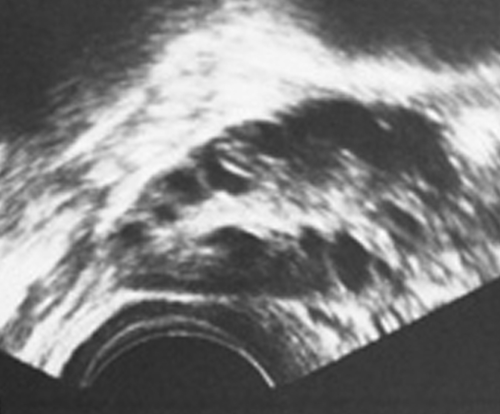
The presence of polycystic ovaries on transvaginal ultrasound (see figure 1) is defined as ovaries with ≥ 12 follicles measuring 2-9 mm or an ovarian volume ≥ 10 cm3.2 Only one ovary needs to meet this criterion. More recent guidance suggests ≥ 20 follicles1 are required for diagnosis but follicle numbers are often not reported on scans.
It is important to remember that polycystic ovaries are found in 20% of women and additional features are required to diagnose PCOS.5 It is particularly common in adolescents reflecting normal ovulatory dysfunction. If the diagnosis has already been made by the presence of hyperandrogenism and ovulatory dysfunction, ultrasound is not required unless other pelvic pathology is suspected.1
Long-term complications PCOS is associated with a range of long-term conditions including diabetes mellitus, cardiovascular disease (CVD) and endometrial cancer.6 These risks are present in lean women with PCOS but they are lower than in obese women without PCOS. However, in PCOS the risks of obesity are augmented, particularly in women of South Asian ethnicity.1 Up to 80% of women with PCOS are overweight or obese.
In northern European women with PCOS around 40% are obese7 while in the USA and Australia the rate of obesity is approximately 70%.8
Insulin resistance is thought to affect 95% of overweight and 75% of lean women with PCOS.1 As well as increasing the risk of diabetes, it worsens PCOS, reduces fertility and increases the risk of CVD.6 Long-term monitoring and information and advice about lifestyle changes to reduce the impact of modifiable risk factors should be offered.
An oral glucose tolerance test is generally considered the most reliable screening tool for impaired glucose tolerance and diabetes. It is recommended in women with PCOS in the presence of additional risk factors including BMI ≥ 25 kg/m2, South Asian ethnicity or a family history of diabetes.1 As women with PCOS and a normal glucose tolerance have a 16% conversion rate per year to impaired glucose tolerance9 it is suggested that screening should be repeated every three years.1
Although women with PCOS have risk factors for CVD, the link between PCOS and CVD is not entirely clear.6 However, all women with PCOS should be assessed for CVD risk by assessing individual risk factors (obesity, lack of physical activity, smoking, family history of diabetes, high cholesterol and hypertension).6
Women with PCOS are at increased risk of obstructive sleep apnoea, which in turn increases insulin resistance.10 Women should be asked about snoring and daytime tiredness with treatment guided by the severity of symptoms. However, it is unclear if treatment benefits CVD and metabolic risks.1
PCOS is associated with an increased risk of endometrial hyperplasia that over time can progress to cancer. Although the absolute risk remains low, PCOS is associated with a 2-6 fold increased risk of endometrial cancer.1,6
Circulating unopposed oestrogen causes endometrial proliferation and in the context of irregular or no periods hyperplastic changes may occur.
This is likely to be further exacerbated by insulin resistance and obesity. Abnormal bleeding or a thickened endometrium on ultrasound may warrant referral for further investigation to exclude hyperplasia or malignancy.
Ovulatory dysfunction is a key feature of PCOS, leading to delayed conception and infertility. Obesity worsens infertility and reduces the efficacy of ovulation induction treatments as well as increasing the risk of pregnancy complications.9 During pregnancy, women with PCOS have increased complications such as gestational diabetes and preeclampsia.1
It is well recognised that PCOS is associated with reduced quality of life as well as increased levels of anxiety and depression.1 This is exacerbated by delayed diagnosis and sometimes a perceived lack of information and emotional support from healthcare professionals. It is important to screen for these symptoms and treat as per standard guidance.
Management
Weight
Women are born with a tendency to PCOS and there is no cure. Clinical management depends on the individual patient’s concerns and priorities.
All symptoms are exacerbated by being overweight or obese and thus weight management is key.
A reduction in body weight of 5-10% improves the metabolic, reproductive and psychological effects of PCOS.1,11 However, women with PCOS find weight loss difficult as they have a weight-independent deficit in adaptive energy expenditure.12
Lifestyle advice should include healthy eating, with regular small meals, avoiding eating later in the evening and taking more of their daily calorific intake at breakfast time. They should restrict their intake of sugar and refined carbohydrate.13
Exercise is of benefit in PCOS in the absence of weight loss14 and women should be advised to take regular exercise without dietary reward.
The overarching aim of lifestyle counselling is to empower women to make positive changes. Depression, low self-esteem and body image issues are associated with obesity and, in a vicious cycle, can be barriers to losing weight.
The role of anti-obesity drugs in the management of obese women with PCOS is unclear.1
Hirsutism can be managed with a combination of cosmetic hair removal techniques and pharmacological treatments to reduce hair growth.
Some women manage their symptoms using electrolysis, laser hair removal or waxing and shaving. In primary care, eflornithine, a topical skin preparation which slows the rate of hair growth, may be useful.
Androgenic symptoms
All combined oral contraceptive pills (COCs) reduce ovarian androgen production improving androgenic symptoms. One of the most effective is a combination of ethinyloestradiol and, the antiandrogen cyproterone acetate (co-cyprindiol). However, it is only recommended as first line for the treatment of moderate to severe hirsutism or acne given that there may be safer alternative COCs for contraception and management of cycle irregularity.
Although women with PCOS may not be using COCs for contraception it is good practice to prescribe them in accordance with the UK medical eligibility criteria for contraceptive use.15
For hirsutism not responding to first-line hormonal management referral to secondary care for consideration of antiandrogen drugs such as cyproterone acetate, spironolactone or finasteride and/or laser hair removal is appropriate.
Antiandrogens should be combined with effective contraception and usage for 6-12 months is necessary to see initial clinical benefits.1
Metabolic features
Metformin can be prescribed alone or in addition to COCs to manage metabolic features when the COC and lifestyle interventions have been ineffective.1
Not all women benefit from metformin and many discontinue it because of gastrointestinal side effects. Those who benefit report increased energy levels and improved menstrual regularity.
Metformin does not cause weight loss16 but some women report that it normalises their response to diet and exercise. There is limited evidence of the efficacy of slow release preparations so generally treatment is titrated up slowly to doses of either 850 mg BD or 500 mg TDS. The use of metformin is generally off label and healthcare professionals need to inform women and discuss the evidence, possible concerns and side effects. This means that generally treatment is initiated in secondary care.
There is some suggestion that dietary supplementation with inositol can improve insulin sensitivity and menstrual cyclicity17 but high-quality evidence is lacking.
Menstrual disturbance
Endometrial protection to counteract the effects of unopposed oestrogen can be achieved with the COC or progestogenic contraception. Alternatively, if there are no contraceptive requirements, withdrawal bleeds can be induced with cyclical gestogens (e.g. medroxyprogesterone acetate 10 mg BD for seven days) at least four times per year.
Fertility
Women with PCOS will ovulate intermittently and if pregnancy is not desired contraception is required even in the context of oligomenorrhoea or amenorrhoea. Women may conceive spontaneously but if they require medical treatment to conceive there is a good chance of achieving a pregnancy. Women who have been trying to conceive should be given general lifestyle advice. In those who are obese, weight loss can help restore regular menstrual cycles and spontaneous ovulation and allow access to ovulation induction treatments.
In women who are struggling to conceive baseline investigations should be performed and referral to secondary care arranged without delay.18
In secondary care, antioestrogens (clomiphene citrate) or aromatase inhibitors (letrozole) are used to induce ovulation.2 These increase FSH concentrations stimulating follicular growth by blocking negative feedback from oestrogen. As oestrogen is needed for normal endometrial thickening and to promote ovulation these are only given for the first five days of the cycle. Letrozole has been shown to increase ovulation and live birth rate when compared with clomiphene citrate, particularly in obese women.19
Both require initial ultrasound monitoring to ensure an effective dose and minimise the risk of multiple pregnancy.18 Metformin can be used in addition to clomiphene citrate in patients who are treatment resistant.18
If oral treatment for ovulation induction fails, gonadotrophin injections can be used but this requires close ultrasound monitoring to prevent multifollicular growth. Gonadotrophin therapy increases cumulative pregnancy and live birth rates but is associated with increased costs and intensive monitoring.
If gonadotrophins are unavailable, some centres use laparoscopic ovarian drilling which can temporarily improve ovulation rates in PCOS.20 In women who have not conceived after ovulation induction in vitro fertilisation can be considered.
Conclusion
PCOS is a common condition associated with a range of symptoms that can cause significant distress. Timely diagnosis and holistic management are essential to help support women and improve long-term health. Management varies depending on the priorities of the individual and should be tailored to the patient.
Advice and information is crucial to help women feel empowered and they should be signposted to further patient centred resources and support (see External links).
REFERENCES
1 International evidence-based guideline for the assessment and management of polycystic ovary syndrome. Monash University. Melbourne, Australia. 2018.
2 The Rotterdam ESHRE/ASRM-sponsored PCOS consensus workshop group. Revised 2003 consensus on diagnostic criteria and long-term health risks related to polycystic ovary syndrome (PCOS). Hum Reprod 2004;19:41-47
3 Ibáñez L, Oberfield SE, Witchel S et al. An international consortium update: Pathophysiology, diagnosis, and treatment of polycystic ovarian syndrome in adolescence. Horm Res Paediatr 2017;88:371-95
4 Franks S. The investigation and management of hirsutism. J Fam Plann Reprod Health Care 2012;38:182-86
5 Polson DW, Adams J, Wadsworth J et al. Polycystic ovaries – a common finding in normal women. Lancet 1988;1:870-72
6 Royal College of Obstetricians and Gynaecologists. Long-term consequences of polycystic ovary syndrome. RCOG. London. 2014
7 Ollila M-ME, Piltonen T, Puukka K et al. Weight gain and dyslipidemia in early adulthood associated with polycystic ovary syndrome: prospective cohort study. J Clin Endocrinol Metab 2016;101:739-47
8 Fauser BC, Tarlatzis BC, Rebar RW et al. Consensus on women’s health aspects of polycystic ovary syndrome (PCOS): the Amsterdam ESHRE/ASRM-Sponsored 3rd PCOS Consensus Workshop Group. Fertil Steril 2012;97:28-38
9 Legro RS, Gnatuk CL, Kunselman AR, Dunaif A. Changes in glucose tolerance over time in women with polycystic ovary syndrome. J Clin Endocrinol Metab 2005;90:3236-42
10 Duncan WC. A guide to understanding polycystic ovary syndrome (PCOS). J Fam Plann Reprod Health Care 2014;40:217-25
11 Norman RJ, Noakes M, Wu R et al. Improving reproductive performance in overweight/obese women with effective weight management. Hum Reprod Update 2004;10:267-80
12 Robinson S, Chan SP, Spacey S et al. Postprandial thermogenesis is reduced in polycystic ovary syndrome and is associated with increased insulin resistance. Clin Endocrinol 1992;36:537-43
13 Jakubowicz D, Barnea M, Wainstein J, Froy O. Effects of caloric intake timing on insulin resistance and hyperandrogenism in lean women with polycystic ovary syndrome. Clin Sci (Lond) 2013;125:423-32
14 Harrison CL, Lombard CB, Moran LJ et al. Exercise therapy in polycystic ovary syndrome: a systematic review. Hum Reprod Update 2011;17:171-83
15 Faculty of Sexual and Reproductive Health (2016) UK Medical Eligibility Criteria for Contraceptive Use. FSRH. London, 2016. Amended September 2019 www.fsrh.org/ukmec/
16 Moll E, van der Veen F, van Wely M. The role of metformin in polycystic ovary syndrome: a systematic review. Hum Reprod Update 2007;13:527-37
17 Pundir J, Charles D, Sabatini L et al. Overview of systematic reviews of non-pharmacological interventions in women with polycystic ovary syndrome. Hum Reprod Update 2019;25:243-56
18 National Institute for Health and Care Excellence. CG156. Fertility problems: assessment and treatment. NICE. London. 2013. Updated September 2017 www.nice.org.uk/guidance/cg156
19 Legro RS, Brzyski RG, Diamond MP et al. Letrozole versus clomiphene for infertility in the polycystic ovary syndrome. N Engl J Med 2014;371:119-29. Erratum in: N Engl J Med 371:1465
20 Balen AH. Ovulation induction in the management of anovulatory polycystic ovary syndrome. Mol Cell Endocrinol 2013;373:77-82
ARTICLE IN PDF
 Download this article in PDF format
EXTERNAL WEBLINKS
Self-help group for women with polycystic ovary syndrome
Royal College of Obstetricians & Gynaecologists
Guidance and patient information
US based organisation with a website for patients