SEARCH

Preset searches
PubMed -Respiratory medicine
Obstructive sleep apnoea hypopnoea
Tuberculosis primary care review
Upper respiratory tract infections
Lower respiratory tract infections
The Practitioner 2009; 253 (1723): 17-20
Obstructive sleep apnoea increases risk of CVD
15 Nov 2009
Article
Charles Dickens introduced the character of Joe the fat boy who consumed vast amounts of food with the consequence of falling asleep throughout the day in The Posthumous Papers of the Pickwick Club published in 1837.1
Dickens' description had for a long time been used to represent the phenotype of a typical adult male considered to suffer from obstructive sleep apnoea (OSA) overlapping with pulmonary hypertension, a fact noted by Sir William Osler when he coined the term Pickwickian syndrome. However, research over the past three decades has debunked myths about the typical phenotype and symptom complex. It has not only demonstrated the wider prevalence of OSA but has also confirmed several inflammatory hypotheses explaining the causative link with cardiovascular disease.
In OSA, the patient suffers repeated episodes of apnoea caused by narrowing or closure of the pharyngeal airway during sleep.2 The degree of closure of the airway leads to periods of either apnoea (complete obstruction) or hypopnoea (partial obstruction). Population-based surveys estimate that 2-4% of the middle-aged population have OSA,3 which is similar to the prevalence of diabetes and asthma.4, 5 Risk factors for OSA are listed in table 1. Although understanding of the condition has improved considerably, it is estimated that 85-90% of sufferers still remain undiagnosed.4
OSA-related morbidity
OSA is not only a cause of excessive daytime somnolence leading to an increased risk of accidents on the road and poor work performance, but also a major cause of social dysfunction and reduced quality of life related to poor health, mood disorders and many other problems, such as marital disharmony, nocturia, impotence, irritability and poor memory.6,7
With better understanding of the pathophysiology of OSA, we are gaining more evidence about long-term associations and links with a variety of long-term conditions (see table 2, above). Prospective findings from follow-up studies, up to 15 years, indicate that untreated OSA predicts a substantially increased risk of hypertension, cardiovascular disease, cerebrovascular disease, depression, and mortality.8 Recent studies have demonstrated strong relationships with end-stage renal disease,9 diabetes mellitus, memory disorders and Alzheimer's disease.10
Timely diagnosis, appropriate treatment and good patient compliance have been shown to reduce blood pressure to an extent whereby cardiac risk may decrease by 20% and risk of stroke by 40% over a 5-10 year period.7, 11
Risk of accidents
OSA is a contributory factor in one in three road traffic accidents (RTAs). In 1996, a study showed that patients suffering from untreated OSA performed worse in driving simulations than those with blood alcohol exceeding the legal driving limit.12 This is coupled with data that shows that OSA sufferers are 7-12 times more likely to be involved in RTAs than non-sufferers.13 However, this risk can be reduced by 83% by effective therapy.13
It has been estimated that diagnosing and treating sleep apnoea could save up to £432 million a year in the UK.14
Diagnosis
Many sufferers will be oblivious to their problem, with symptoms of snoring, apnoeic episodes and excessive daytime sleepiness regularly first noted by a spouse or partner. It is therefore important wherever possible to take a clinical history from both patient and partner (see table 3).
Wherever OSA is considered, the following questions should be asked: 15
- Is this patient falling asleep regularly against their will?
- Is this patient often sleepy while driving?
- Is this patient experiencing difficulty at work because of excessive sleepiness?
- Is sleep refreshing?
- Is surgery for snoring being considered (OSA should be excluded first)?
These questions should be supplemented by assessing the patient on the Epworth Sleepiness Scale. This is a well validated, self-reported questionnaire quantifying the daytime sleepiness experienced by patients during different common activities and relates closely to nocturnal sleep disturbance.16 The clinical history should include a review of other respiratory symptoms, nocturnal choking, and all past medical problems.
All the patient's medications, including those bought over the counter, should be reviewed to exclude sedatives or respiratory depressants as a cause.
Finally, the patient should also be questioned about smoking and alcohol intake and their occupation. Patients who do shift work should be encouraged to keep a sleep diary, this is particularly important where excessive sleepiness is the predominant symptom.
Blood sugar, blood pressure and urinary protein should be measured as should obesity parameters (BMI, neck circumference and waist size), see table 4. NHS statistics have shown that the percentage of the population who are obese (BMI > 30kg/m2) has increased from 13% in 1993 to 23% in 2005 in men and from 16% to 25% in women.17 A simple ENT examination should be performed to look for any possible alternative causes for airway obstruction.
Investigations
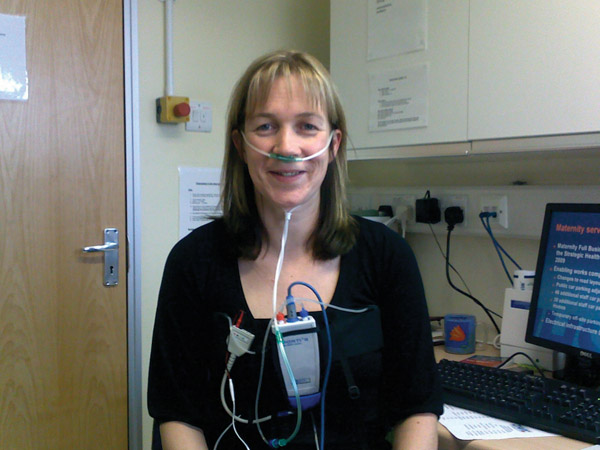
The gold standard for investigation of OSA is polysomnography. The polysomnogram records multiple types of information simultaneously including:
- electroencephalogram
- electromyogram
- electro-oculogram
- airflow
- heart rate and rhythm
- arterial oxygen saturation
- chest wall and upper abdominal wall movements
The analysis is undertaken by a specialist sleep physician or technician and the information gained enables the diagnosis, and classification of the severity, of OSA as well as providing information on other causes of sleep disturbance including narcolepsy, restless legs syndrome and parasomnias.
Apnoea is defined as a complete or near-complete cessation of airflow for at least 10 seconds followed by either an arousal or an oxygen desaturation of 3%. Hypopnoeic episodes are characterised by a 50% (30-70%) decrease in airflow for at least 10 seconds again followed by arousal and/or a 3% oxygen desaturation.
The severity of OSA is graded by the apnoea hypopnoea index (AHI), this records the number of episodes of apnoea and hypopnoea per hour. 11 Normal sleep can feature up to five episodes of apnoea per hour.
AHI Severity of OSA
5-15 mild
15-30 moderate
>30 severe
The full polysomnogram is only available in a small number of tertiary centres in the UK, but it is possible to diagnose almost 90% of OSA patients from limited sleep studies often conducted on a domiciliary basis with portable diagnostic equipment at substantially lower costs. This option is provided by the majority of hospitals in the UK.
Management
All patients with proven OSA should be under the care of a physician specialising in sleep medicine. In the UK, OSA is usually managed by respiratory physicians with special training in sleep disorders. Management will need to be planned on a case-by-case basis with individual patient factors, as well as investigation findings pivotal to delivering optimal care. All patients should be encouraged to make lifestyle changes in order to help with their treatment. Weight loss, discontinuing any sedative medications and cutting out alcohol should be part of any treatment plan.11
Treatment options for OSA are listed in table 5, above. Symptomatic mild and moderate OSA is usually treated in the first instance with mandibular advancement splinting (MAS) devices.18 These splints are individually fitted requiring the support and input from specialist dentists or maxillofacial surgeons/technicians. They function by holding the lower jaw and tongue forward, thus opening the upper airways. It is usual to repeat the sleep studies following the fitting of the MAS to ensure the patient is achieving a desirable improvement with treatment.
In cases of moderate to severe OSA, continuous positive airway pressure (CPAP) therapy is recommended.2,11 The CPAP machine delivers a continuous stream of compressed air to the patient which splints the airway open so preventing obstruction. Either a full-face or nasal mask is used to deliver the treatment. These masks are tight fitting and strapped to the face with head straps preventing any air leaks which would negate the benefits of the treatment. This form of treatment for OSA was first used by
Dr Colin Sullivan19 and associates in Sydney, Australia in 1981 and revolutionised management outcomes.
When a patient is commenced on CPAP therapy, titration studies20 are performed where the CPAP machine measures pressures and adjusts these as required. These pressures are then set on the patient's own machine for use at home. CPAP machines now record information about when they are used and for how many hours each night. This information is important when following up and reviewing patients who are not improving with treatment and for complying with driving regulations, which require demonstration of adequate compliance and normalisation of daytime somnolence with the ESS returning to normal. These regulations are currently under review and may be tightened with EU-wide legislation.
Surgery is used in specific cases where anatomical abnormalities or obstructions are present in the nose or airways. Options include tonsillectomy, adenoidectomy, laser uvuloplasty, laser uvulopalatoplasty and less invasive measures offered as day surgery.21
Conclusion
OSA is a common condition with not only a significant impact on personal physical and mental health but also on society through the raised risk of RTAs, poor productivity and increased healthcare costs. The fact that the majority of patients are unaware of their condition and therefore a vast majority are likely to remain undetected for a long time increases the risks and burden. OSA is now increasingly recognised as a significant risk factor for the development of vascular diseases affecting almost all major organs including the brain, heart, and kidneys and therefore multiplying mortality risk.
Increased awareness and a low threshold for detection and appropriate referral from primary care may help to improve outcomes from relatively inexpensive and widely available treatment options.
Key points selected by
Dr Peter Saul,GP, Wrexham and associate GP Dean for North Wales
In OSA, the patient suffers repeated episodes of apnoea caused by narrowing or closure of the pharyngeal airway during sleep. The degree of closure of the airway leads to periods of either apnoea (complete) or hypopnoea (partial) obstruction. Population-based surveys estimate that 2-4% of the middle-aged population have OSA, which is similar to the prevalence of diabetes and asthma. Although understanding of the condition has improved considerably, it is estimated that 85-90% of sufferers still remain undiagnosed.
OSA is not only a cause of excessive daytime somnolence leading to an increased risk of accidents on the road and poor work performance, but also a major cause of social dysfunction, reduced quality of life related to poor health, and mood disorders. Untreated OSA predicts a substantially increased risk of hypertension, cardiovascular disease, cerebrovascular disease, depression, and mortality.
Wherever OSA is considered, the following questions should be asked: Is this patient falling asleep regularly against their will? Is this patient often sleepy while driving? Is this patient experiencing difficulty at work because of excessive sleepiness? Is sleep refreshing? Is surgery for snoring being considered (OSA should be excluded first)? The clinical history should then include a review of other respiratory symptoms, nocturnal choking, and full past medical problems including a review of all medications. Finally, the patient should also be questioned about smoking and alcohol history and their occupation. Patients who do shift work should be encouraged to keep a sleep diary.
The gold standard for investigation of OSA is polysomnography. The polysomnogram records multiple types of information simultaneously including electroencephalogram, electromyogram, electro-oculogram, airflow, heart rate and rhythm, arterial oxygen saturations and chest wall and upper abdominal wall movements. It is possible to diagnose almost 90% of OSA patients from limited sleep studies often conducted on a domiciliary basis with portable diagnostic equipment.
Symptomatic mild and moderate OSA is usually treated in the first instance with mandibular advancement splinting (MAS) devices. In cases of moderate to severe OSA, treatment is in the form of continuous positive airway pressure (CPAP) therapy. Surgery is used in specific cases where anatomical abnormalities or obstructions are present in the nose or airways. Options include tonsillectomy, adenoidectomy, laser uvuloplasty, laser uvulopalatoplasty and less invasive measures offered as day surgery.
REFERENCES
1 Dickens C. The Posthumous Papers of the Pickwick Club. Chapman and Hall, London. 1837
2 National Institute for Health and Clinical Excellence. Continuous positive airway pressure for the treatment of obstructive sleep apnoea/hypopnoea syndrome. Health Technology Appraisal TA139 NICE. London. 2008
3 Jennum P, Riha RL. Epidemiology of sleep apnoea/hypopnoea syndrome and sleep-disordered breathing. ERJ 2009; 33: 907-14
4 Young, T, et al. Epidemiology of obstructive sleep apnoea: a population health perspective. Am J Respir Crit Care Med 2002; 165: 1217-1239
5 Kapur MD, Vishesh et al. The medical costs of undiagnosed sleep apnoea. Sleep 1999; 22(6): 749-755
6 Chakravorty I, Cayton RM, Szczepura A. Health utilities in evaluating intervention in the sleep apnoea/hypopnoea syndrome. Eur Respir J 2002; 20:1233-1238
7 El-Ad B and Lavie P. Effect of sleep apnea on cognition and mood. Inter J Psych 2005; 17(4): 277-282
8 Young T, Palta M, Dempsey J et al. Burden of sleep apnoea: rationale, design, and major findings of the Wisconsin Sleep Cohort Study. WMJ 2009; 108(5): 246-9
9 Chakravorty I, Shastry M, Farrington, K. Sleep apnoea in end-stage renal disease: a short review of mechanisms and potential benefit from its treatment. Nephr Dial Transplant doi:10.1093/ndt/gfl582
10 Reynolds, Charles F et al. Sleep apnea in Alzheimer's dementia: Correlation with mental deterioration. J Clin Psychiat 1985; 46(7): 257-261
11 Scottish Intercollegiate Guidelines Network. Management of Obstructive Sleep Apnoea/Hypopnoea Syndrome in Adults. SIGN. Edinburgh. 2003
12 George CF, Boudreae AC, Smiley A. Simulated driving performance in patients with obstructive sleep apnoea. Am J Respir Crit Care Med 1996; 154(1): 175-81
13 Findley LJ, Unverzagt ME, Suratt PM et al. Automobile accidents involving patients with obstructive sleep apnoea. Am Rev Respir Dis 1988; 138: 337-340
14 AlGhanim N, Comondore VR, Fleetham J et al. The economic impact of obstructive sleep apnea. Lung 2008; 186: 7-12
15 Davies RJ, Ali NJ, Stradling JR. Neck circumference and other clinical features in the diagnosis of the obstructive sleep apnoea syndrome. Thorax 1992; 47:101-105
16 Johns MW. Daytime sleepiness, snoring, and obstructive sleep apnea. The Epworth Sleepiness Scale. Chest 1993; 103(1):30-36
17 NHS Information Centre Statistics- http://www.ic.nhs.uk/statistics-and-data-collections/health-and-lifestyles/obesity/statistics-on-obesity-physical-activity-and-diet-england-2006
18 O'Sullivan RA, Hillman DR, Mateljan R et al. Mandibular advancement splint: an appliance to treat snoring and obstructive sleep apnea. Am J Respir Crit Care Med 1995; 151(1): 194-198
19 Issa FG, Sullivan CE. Reversal of central sleep apnea using nasal CPAP. Chest 1986; 90(2): 165-71
20 Lloberes P, Ballester E, Montserrat JM et al. Comparison of manual and automatic CPAP titration in patients with sleep apnea/hypopnea syndrome. Am J Respir Crit Care Med 1996; 154 (6): 1755-1758
21 Riley R, Powell N, Li K et al. Surgery and obstructive sleep apnea: Long-term clinical outcomes. OtolaryngolHead and Neck Surg 2000; 122 (3): 415-421USEFUL INFORMATION
The Sleep Apnoea Trust
http://www.sleep-apnoea-trust.org/
The British Snoring and Sleep Apnoea Association
http://www.britishsnoring.co.uk/
ARTICLE IN PDF
 Download this article in PDF format