SEARCH

Shields J, Maxwell AP. Acute pyelonephritis can have serious complications. Practitioner 2010;254 (1728): 19-24
Acute pyelonephritis can have serious complications
15 Apr 2010
AUTHORS
Dr Joanne Shields
MBBCh MRCP
Specialist registrar in nephrology
Professor Alexander P. Maxwell
MD PhD FRCP
Consultant nephrologist
Regional Nephrology Unit, Belfast City Hospital
Article
Urinary tract infection (UTI) is common with up to 11% of women reporting a UTI in any given year.1 Infection may predominantly involve the lower urinary tract i.e. acute cystitis or upper urinary tract consisting of the renal pelvis and kidney i.e. acute pyelonephritis.2The incidence of acute pyelonephritis is higher in young women than in men3 but the incidence in men over 65 years of age is similar to that in older women. Women have up to a 10% risk of recurrent acute pyelonephritis in the year following a first acute episode, the equivalent risk in men is lower at 6%.3
Acute pyelonephritis may be uncomplicated and resolve without serious sequelae. However, a minority of episodes may be complicated by acute kidney injury, papillary necrosis, renal or perinephric abscess or the development of emphysematous pyelonephritis (caused by gas forming uropathogens in the upper tract).
Common causes
Acute pyelonephritis is generally caused by microorganisms ascending from the urethra via the bladder into the upper urinary tract. Rarely the kidney may be seeded by blood-borne infection. E. coli is the most common uropathogen causing pyelonephritis accounting for 70-90% of infections.4 Species of Enterococci, Klebsiella, Pseudomonas, Proteus and Staphylococci are responsible for the remaining infections.3,4 There is also a rising incidence in the community of UTI with bacteria that produce extended spectrum beta-lactamase (ESBL) enzymes. These ESBL bacteria have developed resistance to antibiotics such as penicillin, cephalosporins and increasingly to quinolones. ESBL enzymes are most commonly produced by E. coli and Klebsiella organisms. Acute pyelonephritis secondary to an ESBL infection is associated with higher mortality rates and inpatient admission is advisable for those with systemic symptoms.
Risk factors for uncomplicated acute pyelonephritis include recent sexual intercourse, acute cystitis, stress incontinence and diabetes (see table 1).5
Acute pyelonephritis may be complicated by septicaemia, papillary necrosis and development of a renal or perinephric abscess. Risk factors for complicated acute pyelonephritis include pregnancy, diabetes, anatomical abnormalities of the urinary tract and renal calculi (see table 2).
In contrast, chronic pyelonephritis is a less common condition that reflects irreversible pathological damage to the kidney from more insidious infection and/or inflammation.
Chronic pyelonephritis is caused by urinary tract abnormalities such as vesico-ureteric reflux in childhood or chronic urinary tract obstruction. There is often a family history of vesico-ureteric reflux and chronic pyelonephritis which is consistent with an inherited susceptibility to this condition.6
Chronic pyelonephritis is associated with scarring of kidney parenchyma which can lead to the development of secondary hypertension, proteinuria and in a minority of patients to chronic renal failure.
Symptoms
Acute pyelonephritis usually has a rapid onset with symptoms developing within hours to one or two days at most. The patient may complain of unilateral or bilateral loin pain, back pain and pelvic pain. Fever is usual and the patient may develop rigors. Nausea, vomiting, anorexia and occasionally diarrhoea are associated clinical features. Lower urinary tract symptoms of frequency, dysuria and visible haematuria may also be present. There may be a recent history of acute cystitis.
On examination, a patient with acute pyelonephritis typically looks unwell, has a fever, tachycardia and may have unilateral or bilateral loin tenderness associated with suprapubic tenderness. An ill patient, with severe systemic symptoms, who has a high temperature, tachycardia and low blood pressure should be admitted to hospital.
In contrast, acute pyelonephritis in children and elderly people can present with few specific symptoms and is therefore more challenging to diagnose accurately. Elderly people may have fever alone, complain of back or loin pain without fever or present with symptoms of lethargy and confusion.7
Diagnosis
Acute pyelonephritis is diagnosed in a patient with confirmed UTI who has loin pain and/or fever. Typically the urine will be cloudy with an offensive smell. One caveat is that acute pyelonephritis affecting an obstructed urinary tract may not have abnormalities in the urine because the infected urine is not draining.
Dipstick urinalysis
If the dipstick is positive for nitrites +/- leucocytes then a UTI is very likely. Haematuria and proteinuria may also be detected. If the dipstick is negative for leucocytes and nitrites then alternative diagnoses should be considered.8
Urine culture
Microscopy and culture of a mid-stream specimen of urine (MSU) is recommended. Urine cultures are positive in up to 90% of patients with acute pyelonephritis.8 If a patient is already catheterised or has a nephrostomy tube in place then urine from these drainage devices should be sent although the interpretation of catheter specimens of urine is difficult as almost all patients with indwelling catheters have asymptomatic bacteriuria.
A bacterial colony count of > 105 organisms/ml is the conventional threshold for diagnosis of infection but lower bacterial colony counts may be relevant in the presence of typical symptoms in a patient with risk factors for pyelonephritis e.g. pregnancy, diabetes or immunosuppression.
Inflammatory markers
A raised C-reactive protein and erythrocyte sedimentation rate are typically found in acute pyelonephritis. An elevated white cell count may be present.
Blood cultures
A positive blood culture is found in up to 25% of patients in association with acute pyelonephritis.
Imaging
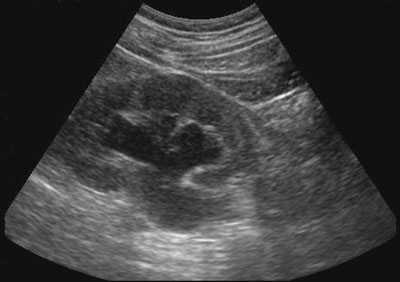
Radiological investigations are not usually necessary for acute uncomplicated pyelonephritis. Further imaging by ultrasound or CT scan permits diagnosis of obstructed renal tracts or renal calculi and is helpful in further assessment of complicated acute pyelonephritis.
Potential Complications
Complicated acute pyelonephritis can result in septicaemia, hypotension and acute kidney injury secondary to sepsis. Persisting fever, loin pain or pyuria despite antibiotic treatment may be secondary to a renal or perinephric abscess. Abscess formation is more likely if there is a foreign body in the urinary tract e.g. a renal calculus.
Papillary necrosis (sloughing of the tip of the renal medullary pyramid) can further complicate acute pyelonephritis as the necrotic papilla can cause urinary tract obstruction. Patients with diabetes and sickle cell anaemia are more prone to developing papillary necrosis.
One uncommon but potentially life-threatening complication is the development of emphysematous pyelonephritis which is caused by gas forming uropathogens such as E. coli or Klebsiella pneumoniae. Risk factors for emphysematous pyelonephritis are diabetes and urinary tract obstruction.
Treatment
General measures include adequate fluid intake, rest and analgesia. Paracetamol is the preferred drug to ease pain and reduce fever. NSAIDs should be avoided as they may contribute to acute kidney injury in an ill patient with pyelonephritis. Previously healthy patients with uncomplicated acute pyelonephritis can be managed at home provided they are responding quickly to oral antibiotics and clinical review confirms that symptoms and signs of infection are resolving.
Hospital admission is generally recommended for pregnant women since acute pyelonephritis may act as a trigger for preterm labour or acute kidney injury. Inpatient management is advisable for patients with persistent vomiting, dehydration, severe pain and signs of sepsis (tachycardia, hypotension and tachypnoea), see table 3, above.9 It is also safer to admit patients who are frail and elderly or those who have known comorbid medical problems e.g. diabetes, immune deficiency, renal transplant. Suspected urinary tract obstruction, oliguria or anuria are reasons for prompt admission. Ill patients will typically require intravenous fluids and parenteral antibiotics during the initial phase of hospital management.
Antibiotics
Empirical antibiotic treatment can be started while awaiting the results of urine culture and sensitivities. Local prescribing guidelines will reflect the prevailing antibiotic resistance patterns but in general oral administration of ciprofloxacin 500 mg twice daily for 7 days or co-amoxiclav 500 mg/125 mg for 14 days are reasonable initial treatments.10 Other antibiotics such as trimethoprim, co-trimoxazole and amoxicillin are not recommended for empirical treatment.Quinolone antibiotics are contraindicated in pregnancy and women who are breastfeeding.
A majority of patients with uncomplicated acute pyelonephritis will respond to these antimicrobial regimens.11 Failure to respond to antibiotic treatment at home within 24 hours should prompt consideration of an alternative diagnosis or the development of complications secondary to acute pyelonephritis. Hospital admission is advisable for all such patients who fail to respond.
Referral for investigation
An underlying abnormality of the renal tract should be suspected in men following a first episode of pyelonephritis and in women after two or more episodes. Pyelonephritis caused by Proteus species is suggestive of underlying renal calculi. An ultrasound scan of kidneys, renal tracts and bladder is a useful initial investigation to assess if a ureter is obstructed or a large renal calculus is present. More detailed radiological examination e.g. CT urogram may be necessary to identify smaller renal calculi or subtler anatomical abnormalities of the renal tracts such as a duplex ureter.
Prevention
Patients who are at risk of, or have had, an episode of acute pyelonephritis should be advised that preventative measures can be taken. There is evidence that increasing fluid intake, the use of intravaginal oestrogen in postmenopausal women and intravaginal lactobacillus can be effective. Cranberry juice prevents the fimbriae of E. coli from attaching to the urinary tract and so can reduce incidence of re-infection with this organism.
There is less evidence for regular bladder voiding, either post-coital or before bedtime, avoiding bubble baths and soaps and the use of oral lactobacillus.
Conclusion
Acute pyelonephritis is a serious infection of the upper urinary tract requiring prompt and thorough clinical assessment. If the history and examination suggest the episode is uncomplicated then a trial of empirical antibiotic therapy at home with ciprofloxacin or co-amoxiclav is a reasonable management plan after a urine specimen is sent for culture.
Hospital admission is indicated for persons who fail to respond promptly to antibiotic treatment.
Pregnant women and those persons with risk factors for complicated acute pyelonephritis should be admitted for antibiotic treatment and further assessment.
REFERENCES
1 Foxman B, Barlow R, D'Arcy H et al. Urinary tract infection: self-reported incidence and associated costs. Ann Epidemiol 2000;10(8):509-15
2 Nicolle LE. Uncomplicated urinary tract infection in adults including uncomplicated pyelonephritis. Urol Clin North Am 2008; 35(1):1-12
3 Czaja CA, Scholes D, Hooton TM et al. Population-based epidemiologic analysis of acute pyelonephritis. Clin Infect Dis 2007;45(3):273-80
4 Ronald A. The etiology of urinary tract infection: traditional and emerging pathogens. Am J Med 2002; 113 Suppl 1A:14S-19S
5 Scholes D, Hooton TM, Roberts PL et al. Risk factors associated with acute pyelonephritis in healthy women. Ann Intern Med 2005;142(1):20-7
6 Murawski IJ, Gupta IR. Gene discovery and vesicoureteric reflux. Pediatr Nephrol 2008; 23(7): 1021-7
7 O'Donnell JA, Hofmann MT. Urinary tract infections. How to manage nursing home patients with and without chronic catheterization. Geriatrics 2002; 57(5): 45-56
8 Ramakrishnan K, Scheid DC. Diagnosis and management of acute pyelonephritis in adults. Am Fam Phys 2005; 71(5): 933-94
9 Neumann I, Fernanda Rojas M, Moore P. (2008) Pyelonephritis (acute) in non-pregnant women. Clinical Evidence. BMJ Publishing Ltd. www.clinicalevidence.com
10 HPA and Association of Medical Microbiologists (2008) Management of infection guidance for primary care for consultation and local adaptation. Health Protection Agency. www.hpa.org.uk www.hpa.org.uk/web/HPAwebFile/HPAweb_C/1194947340160
11 Fihn SD. Acute uncomplicated urinary tract infection in women. N Engl J Med 2003; 349: 259-66
USEFUL INFORMATION
NHS Clinical Knowledge Summaries Acute pyelonephritis
www.cks.nhs.uk/pyelonephritis_acute
COMPASS (2007)
COMPASS therapeutic notes on the management of bacterial urinary tract infections in adults in primary care. Central Services Agency, Northern Ireland
www.centralservicesagency.com/files/compass_therapeutic_notes/file/Infections.pdf
The British Kidney Patient Association
Provides information for patients on UTI and pyelonephritis
ARTICLE IN PDF
 Download this article in PDF format