SEARCH

Scott S, Bailey C. Managing disruptive behaviour disorders in children. Practitioner 2013; 257 (1761):19-21
Managing disruptive behaviour disorders in children
23 May 2013
AUTHORS
Professor Stephen Scott FRCP FRCPsych, Professor of Child Health and Behaviour, Institute of Psychiatry and Consultant Psychiatrist, Maudsley Hospital, London, UK
Dr Clare Bailey, BSc DCH MRCGP, GP, Burnham Health Centre, Bucks, UK, Parenting Specialist and Director of Parenting Matters
Article
An exhausted mother brings her six-year-old child to the surgery. She complains that he is constantly arguing with her and refuses her requests to get dressed, get ready for school, tidy his room, eat nicely, go to bed and so on. Not infrequently he has screaming tantrums. During the consultation you note that he is pulling out several of your patient information leaflets and dropping them on the floor. The mother’s attempts to stop this are ineffective.
Is this just a stage the child is going through, or does it signal serious trouble ahead? This article provides some pointers on assessment and treatment in light of the NICE guideline on antisocial behaviour and conduct disorders, launched in March 2013.1
Oppositional defiant disorder
The age at which individuals are most physically aggressive is 22 months.2 However, some children fail to inhibit this normal aggression and by the time they are three or four are showing signs of oppositional defiant disorder.3 The criteria for diagnosis are set out in table 1. In the Office for National Statistics survey published in 2005,4 5% of children met these criteria, so it is a common disorder.
Conduct disorder
In older children persistent antisocial behaviour is classified as conduct disorder. This includes more serious antisocial behaviours such as those listed in table 2. Three of the features listed are needed to establish the diagnosis.
At any age, antisocial behaviour is on a continuum, and while the most severe 5% or so will meet diagnostic criteria, those falling short are often described as having conduct problems.
Will younger children grow out of their behaviour? The answer is that many will not, and epidemiological follow-up surveys repeatedly show that the risk of poor outcomes in antisocial children is very high. Taking the worst 5% aged seven, by the time they are in their mid-20s, they will have grossly elevated risk (between five- and ten-fold) of:
• Serious drug misuse
• Repeated offending
• Violence to partner
• Teenage pregnancy
• Leaving school with no qualifications
• Living on state benefits 5
Looking back, 90% of recidivist young offenders showed persistent antisocial behaviour in early childhood.6 The long-term financial costs are also high. Such children cost society ten times more than children without behavioural difficulties,7 estimated at up to £1 million by their mid-30s.8
Causes
The causes are multiple, but two sets of factors stand out. First, genetic predisposition. Even children adopted away from violent or criminal parents have three or four times the rate of antisocial behaviour;9 characterised by more irritable temperament, poorer attention span and lower IQ.10
Second, poor parenting, characterised by inconsistent, angry outbursts and a lack of warmth or involvement by the parent in social activities with the child.11 Indeed by ignoring the child when behaving well, and giving attention through angry interchanges when behaving badly or by letting them have their own way, parents are inadvertently rewarding their children for being antisocial.11 Such children are also more likely to be insecurely attached to their parents.12
Assessment
Watching and waiting is a reasonable strategy if the antisocial behaviour is not very severe, for example:
• Events only occurring two or three days a week
• Insignificant harm to others
• Short lived (two or three months)
• Confined to one context (at home or school)
• Not seriously impairing the child’s life (makes friends, satisfactory at school)
• Not seriously disrupting harmony in the family
• The parent is reasonably positive towards the child and can set limits sensibly
Asking about recent changes in the child’s life may reveal triggers, such as a mother returning to work, a sibling falling seriously ill, parents splitting up.
If the parent wants specific advice, a self-help book on parenting with proven techniques is effective for some,13,14 as is advice from local voluntary sector parenting organisations.
Worrying signs
It is important to be vigilant for the following signs:
• Severe tantrums or aggression occurring almost every day, that lead to damage or hurt others and that have been going on for more than six months
• Harsh, rough, or inconsistent parenting by parents who have antisocial tendencies, mental health problems such as alcohol or drug misuse or depression, argue a lot, or where there is domestic violence
• The child may have coexistent attention deficit hyperactivity disorder (ADHD) characterised by a short attention span and distractibility, inability to sit still or constant fidgeting and restlessness, and inability to inhibit responses, e.g. frequently blurting words out of turn, unable to wait in line, etc.3 A general or specific learning disability such as dyslexia may be present. Ask how the child is doing at school. Antisocial behaviour does not automatically mean the child will be near the bottom of the class, or even be on the autistic spectrum.
Referral
If severity is moderate, referral to an evidence-based parenting group (such as the Incredible Years13 or Triple) would be a good first move. However, if this fails to make things better, or if there are comorbid conditions in the child, such as ADHD, or the parent, such as depression or substance misuse, then referral to a child and adolescent mental health service (CAMHS) is indicated.
If abuse, domestic violence or neglect are suspected, then social services must be informed.15
Treatment
The first-line treatment is an evidence-based parenting programme delivered in a group format. This should not be just any parenting programme delivered locally, but one that has NICE approved components. It should be based on social learning theory, with a published manual, including the teaching of both positive parenting strategies and calm limits setting, reinforced by plentiful role play and practice. The programme should be delivered by practitioners who have attended training in the evidence-based programme and who receive supervision at least monthly from an expert.1
Discovering whether a parenting programme has these components is easy by consulting the Department for Education hosted website where all parenting programmes being offered in England are evaluated:
www.education.gov.uk/commissioning-toolkit
The recent NICE guideline confirms that there is ample evidence from more than 60 randomised, controlled trials that such programmes are very effective, with an average effect sizeof 0.6 standard deviations.1
Such groups are becoming increasingly available, following the training of 4,000 practitioners by the National Academy for Parenting Practitioners from 2007 to 2010,16 and now training of CAMHS staff by the new Children and Young Persons’ Increasing Access to Psychological Therapies initiative (CY-IAPT).17
For older children, aged 10 to 17, there are effective interventions such as anger management CBT and parenting groups for adolescents.1 At present these programmes are much less widely available.
At any age there is no convincing evidence that medication is a suitable treatment for antisocial behaviour.
In exceptional circumstances, after everything else has been tried, under specialist supervision low doses of antipsychotics such as risperidone may be given for short periods. However, there are serious side-effects such as metabolic changes and marked weight gain.1
Where there is coexistent ADHD, stimulants often not only improve the ADHD symptoms but also improve the antisocial behaviour. This is not true in the absence of ADHD.1
New developments
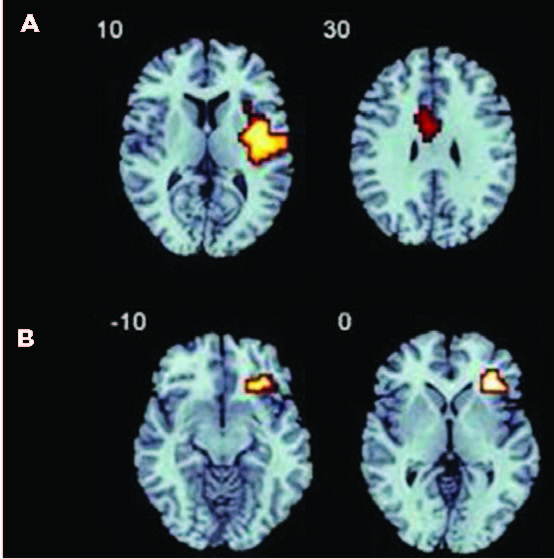
There is increasing evidence that in addition to promoting antisocial behaviour, harsh and inconsistent parenting leads to epigenetic changes, cortisol dysregulation, raised inflammatory markers such as C-reactive protein through to adulthood, and brain changes.18
The latest edition of the American system for diagnosing psychiatric disorders, the Diagnostic and Statistical Manual fifth edition (DSM 5),3 launched in May 2013, controversially includes a new diagnosis, disruptive mood dysregulation disorder. This refers to severe tantrums which many would see as part of common or garden conduct problems, but in the United States have sometimes been misdiagnosed as juvenile bipolar disorder and the children given heavy antipsychotic medication.
The CY-IAPT initiative17 is training CAMHS staff in individual parenting programmes, where the parent is coached live in the presence of the child. This is particularly helpful in more severe cases and for parents who do not like groups; it can be delivered in the home.
The NICE guideline on antisocial behaviour and conduct disorders also recommends early prevention through social and emotional educational programmes, and reviews evidence showing the effectiveness of training teachers to use similar behavioural management techniques to reduce disruptive behaviour in the classroom.1
Parents and teachers can find out whether or not a child is likely to be suffering from a significant antisocial behaviour problem by filling in the widely validated Strengths and Difficulties Questionnaire online at the Youth in Mind website:
http://www.%20youthinmind.info
The Government is experimenting with free vouchers for parenting programmes for all parents of under-fives in three areas of England, Camden in London, High Peak in Derbyshire, and Middlesbrough.19
As part of this, the authors are developing an English online parenting programme which should become universally available in the autumn and provide a resource for parents whose children have mild behaviour problems, or who just want to hone their relationship skills.
REFERENCES
Further reading
Moffitt T and Scott S. Conduct Disorders. In M Rutter, D Bishop, D Pine et al. (Eds) Rutter’s Child and Adolescent Psychiatry (fifth edition). Blackwell. Oxford. 2008
Goodman R and Scott S. Child Psychiatry (third edition) Wiley Blackwell. Oxford. 2012
Scott S. Parenting programmes for attachment and conduct problems. Psychiatry 2008;7:367-37
References
1 National Institute for Health and Clinical Excellence. CG158. Antisocial behaviour and conduct disorders in children and young people: Recognition, intervention and management. NICE. London. 2013
2 Tremblay RE. The development of aggressive behaviour during childhood: What have we learned in the past century? Int J Behav Dev 2000;24:129–141
3 American Psychiatric Association. Diagnostic and Statistical Manual of Mental Disorders (DSM-5). American Psychiatric Association. Washington DC. 2013
4 Green H, McGinnity A, Meltzer H et al. Mental health of children and young people in Great Britain. TSO. London. 2005
5 Fergusson D, Horwood L, Ridder E. Show me the child at seven: the consequences of conduct problems in childhood for psychosocial functioning in adulthood.
J Child Psychol Psychiatry 2005;46:837–849
6 Piquero AR, Farrington DP, Fontaine NM et al. Childhood risk, offending trajectories, and psychopathy at age 48 years in the Cambridge Study in Delinquent Development. Psychology, Public Policy Law 2012;18:577-598
7 Scott S, Knapp M, Henderson J, Maughan B. Financial cost of social exclusion: follow up study of antisocial children into adulthood. BMJ 2001;323:191-194
8 Cohen M, Piquero A. New evidence on the monetary value of saving a high risk youth. J Quant Criminol 2009;25:25–49
9 Keenan K, Shaw DS. Starting at the beginning: Exploring the etiology of antisocial behaviour in the first years of life (pp 153-181). In B Lahey, TE Moffitt, and
A Caspi (Eds). Causes of conduct disorder and delinquency. Guilford Press. New York. 2003
10 Lynam DR, Henry W. The role of neuropsychological deficits in conduct disorders. In J Hill and B Maughan (Eds). Conduct Disorders in Childhood and Adolescence. Cambridge University Press. Cambridge. 2001
11 Patterson GR. Coercive Family Process. Castalia Publishing Company. Eugene, Oregon. 1982
12 Futh A, O’Connor TG, Matias C et al. Attachment narratives and behavioural and emotional symptoms in an ethnically diverse, at-risk sample. J Am Acad Child Adolesc Psychiatry 2008;47: 709-718
13 Webster-Stratton C. The Incredible Years. A trouble shooting guide for parents of children aged 2 to 8 years of age. Umbrella Press. Ontario. 2006
14 Sanders M. Every Parent. A positive approach to children’s behaviour. Viking Press. Sydney. 2004
15 Department for Education. Working together to safeguard children. A guide to inter-agency working to safeguard and promote the welfare of children. Department for Education. London. 2013
16 Scott S. National dissemination of effective parenting programmes to improve child outcomes. Br J Psychiatry 2010;196: 1-3 20
17 www.iapt.nhs.uk/cyp-iapt
18 Scott S. Parenting quality and children’s mental health: biological mechanisms and psychological interventions. Curr Opin Psychiatry 2012;25:301–306
19 www.canparent.org.uk
ARTICLE IN PDF
 Download this article in PDF format
EXTERNAL WEBLINKS
PubMed
NICE Evidence
NICE
Different versions of the NICE guideline on antisocial behaviour and conduct disorders (CG158) including one for carers www.nice.org.uk
Textbook of Child and Adolescent Mental Health
Free and fairly comprehensive textbook, including chapters on oppositional defiant disorder and conduct disorder
National Parenting Strategy (Scotland)