SEARCH

Petrides C, Marrs T, Fitzsimons R. Improving outcomes in allergic rhinitis in children. Practitioner June 2019;263(1827):11-15
Improving outcomes in allergic rhinitis in children
24 Jun 2019
AUTHORS
Dr Constantinos Petrides1,2 BSc MBBS MRCPCH, Paediatric Registrar and Allergy Education Fellow
Dr Tom Marrs1,2 PhD FRCPCH, Consultant Paediatric Allergist
Ms Roisin Fitzsimons1RN BSc MSc DipHE Nurse Consultant
Dr Adam T Fox1,2 MD FRCPCH, Consultant Paediatric Allergist
1 Department of Children’s Allergies, Guy’s and St Thomas’ Hospital, London, UK
2 Department of Paediatric Allergy, King’s College London, London, UK
Competing interests
Dr Adam Fox and Ms Roisin Fitzsimons have received research funding from ALK-Abello.
Dr Adam Fox has received consultancy fees from ALK-Abello, Stallergenes and Mylan.
All authors have been partly employed by the KCL Allergy Academy which receives corporate sponsorship from ALK-Abello, Stallergenes, Mylan and Allergy Therapeutics
Article
Abstract
Allergic rhinitis is defined clinically by the presence of symptoms caused by an IgE-mediated inflammation of the nasal mucosa on exposure to airborne allergens. Symptoms include sneezing, rhinorrhoea, nasal obstruction and pruritus. It typically develops in older children or early adulthood. Allergic rhinitis can affect a child’s physical health, reduce their quality of life, sleep and concentration, and impact on school performance. Common comorbidities include asthma; conjunctivitis; rhinosinusitis; middle ear effusion; eustachian dysfunction and adenoidal hypertrophy. It is important to ask about asthma symptoms in patients with allergic rhinitis and vice versa. Children with allergic rhinitis are at increased risk of developing asthma. Around 85% of those with asthma have allergic rhinitis, which can complicate diagnosis and management and also increase the risk of hospitalisation for asthma exacerbations. However, appropriate management of allergic rhinitis can improve asthma control. There are two distinct groups of allergic rhinitis: perennial and seasonal. Perennial allergens include house dust mite, pet dander and mould spores, and seasonal allergens include grass and tree pollen. Some children may be affected by both groups of allergens and present with acute on chronic exacerbations during spring and summer. The diagnosis of allergic rhinitis can usually be made on the basis of the patient’s history and examination alone. A holistic approach is necessary to manage allergic rhinitis effectively. This involves education, preventative measures, accurate diagnosis, pharmacological treatment and, when appropriate, desensitisation which may require referral to an allergy centre.
Allergic rhinitis is defined clinically by the presence of symptoms caused by an IgE-mediated inflammation of the nasal mucosa on exposure to airborne allergens. Symptoms include sneezing, rhinorrhoea, nasal obstruction and pruritus.1
It is a multifactorial immunological condition with both genetic and environmental factors influencing disease development. Risk factors include: an atopic background; a family history of rhinitis; microbe exposure; allergen exposure and being a firstborn child. Common triggers include: house dust mite; animal dander; tree and grass pollen.
Allergic rhinitis typically develops in older children or early adulthood. According to the International Study of Asthma and Allergies in Childhood (ISAAC) survey, the average prevalence of allergic rhinitis symptoms among 6 to 7 year olds was 8.5% (10.1% in the UK) and among 13 to 14 year olds 14.6% (14.9% in the UK).2 The prevalence of symptoms among adults in the UK was 26%.3
Allergic rhinitis can affect a child’s physical health, reduce their quality of life, sleep and concentration, and impact on their school performance. Adolescents with seasonal allergic rhinitis perform significantly worse than their unaffected peers in their summer exams compared with their winter mock exams. This is more evident in children treated with sedating antihistamines.4
Common comorbidities include asthma; conjunctivitis; rhinosinusitis; middle ear effusion; eustachian dysfunction and adenoidal hypertrophy.
Children with allergic rhinitis are at increased risk of developing asthma. Around 85% of those with asthma have allergic rhinitis, which can complicate diagnosis and management and also raise the risk of hospitalisation for asthma exacerbations.5 However, appropriate management of allergic rhinitis can improve asthma control.6
Pathophysiology
Allergic rhinitis involves the production of the allergen specific antibody IgE which binds the specific epitopes of environmental allergens. When there is subsequent allergen exposure this causes mast cell degranulation leading to the acute symptoms of sneezing, runny nose and itching.
The late phase of the inflammatory response leads to eosinophilic infiltration and chronic symptoms of nasal obstruction and post nasal mucous discharge.
Symptoms
It is important to ask about asthma symptoms in patients with allergic rhinitis and vice versa. The Allergic Rhinitis and its Impact on Asthma (ARIA) guidelines recommend algorithms to categorise patients’ symptoms, see table 1, below.7
There are two distinct groups of allergic rhinitis, perennial and seasonal, see table 2, below. Perennial allergens include house dust mite, pet dander and mould spores, and seasonal allergens include grass and tree pollen. Some children may be affected by both groups of allergens and present with acute on chronic exacerbations during spring and summer.
‘It is important to ask about asthma symptoms in patients with allergic rhinitis and vice versa’
Some patients with seasonal allergic rhinitis can develop pollen food syndrome (also known as oral allergy syndrome) due to the cross-reactivity of protein components in pollen with certain fruits and nuts. Patients typically have symptoms such as oral tingling and itching when they eat raw fruit but they are able to tolerate cooked/baked food.
The symptoms of allergic rhinitis may overlap with other conditions. Upper respiratory symptoms can be commonly associated with infective and obstructive causes. It is important to assess what form of treatment has been trialled and the resulting response.
Persistent mucopurulent discharge suggests infectious rhinosinusitis. Rhinitis symptoms which are not responsive to treatment or explained by infectious causes should be further investigated. Possible causes include hormonal, neurogenic or vasomotor dysfunction or may be secondary to triggers such as irritant exposure (e.g. smoking) or gastro-oesophageal reflux.
Diagnosis
Current guidelines state that the diagnosis of allergic rhinitis can usually be made on the basis of the patient’s history and examination alone. Further details about symptoms, and the influence of seasonal variation, indoor or outdoor location and geographical location can also help inform diagnosis. Questions should be asked regarding timing and severity of symptoms, alleviating factors and other symptoms of atopy (e.g. asthma).
Software for mobile devices which patients can directly interact with is currently in development and may aid assessment, diagnosis and management of rhinitis in the future. Such software will also embed data on air pollution and pollen count.8
'Skin prick tests and serum immunoassay are not necessary in order to make a clinical diagnosis in primary care'
Examination and investigations
There are several signs that can support the diagnosis of allergic rhinitis:
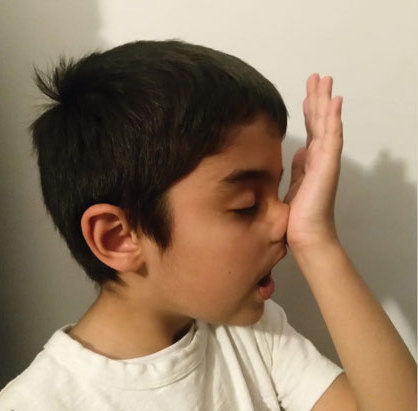
• Allergic salute gesture, i.e. wiping the nose upwards with palms/fingers, see figure 1
• A horizontal nasal crease formed by frequent rubbing of the nose
• Mouth breathing
• Allergic shiners – darker lower eyelids caused by chronic congestion
• Impaired nasal airflow – assessed by observing unequal misting over a cold metal spatula placed under the nostrils
• Normal or bulky and pale inferior or middle turbinates
Anterior rhinoscopy will enable examination of part of the endonasal cavity.
Skin prick tests (SPTs) and serum immunoassay are useful in identifying the allergen-specific IgE but are not necessary in a primary care setting to make a clinical diagnosis. SPTs are useful in the context of the clinical history to help determine if the symptoms of rhinitis are allergic or non-allergic and when to target pharmacotherapy.
Around 15% of people with positive SPT results do not develop symptoms on exposure to the tested allergen9 but SPTs have a high negative predictive value. Some studies in children have shown that there is a small group where SPT tests are negative despite a strong clinical history of seasonal allergic rhinitis. However, nasal provocation tests were positive for the suspected allergen in these cases.10,11
Management
A holistic approach is necessary to manage allergic rhinitis effectively.
This involves education, preventative measures, accurate diagnosis, pharmacological treatment and, when appropriate, desensitisation which may require referral to an allergy centre.
The key to any management plan is patient education. The patient and parents should understand the importance of symptom control as adherence is pivotal. (For helpful online resources see the External websites)
Avoidance
Outdoor allergens such as pollens are difficult to avoid but avoidance of indoor allergens is easier. There are a number of strategies to reduce exposure, see table 3.
Pharmacotherapy
Overall, allergen avoidance is difficult and symptoms can persist despite best efforts. It is important to follow a stepwise approach to treatment to help alleviate symptoms and strict adherence is advised, see table 4.
The following therapies are used in the management of allergic rhinitis:12
Antihistamines: Oral antihistamines are considered as first-line treatment. They can significantly improve quality of life and rhinitis symptom scores.12
Topical eye-drop preparations such as olopatadine can be helpful in persistent eye symptoms.
It is preferable to avoid first-generation antihistamines (e.g. chlorphenamine) because of their sedative effect.13 Long-acting, non-sedating antihistamines such as cetirizine and loratadine should be considered in the first instance. Generally, it is important to emphasise that children should take their antihistamines regularly in order to prevent exacerbation of allergic rhinitis. However, in less persistent cases they can be taken as required.
Intranasal corticosteroids: These are effective and safe. Corticosteroids may take a couple of days to start having an effect, around two weeks to achieve optimum efficacy, and require appropriate administration and continuous use. To obtain maximum benefit in children with established seasonal symptoms it is important to commence intranasal steroids 2-4 weeks before the pollen season.
Beclomethasone intranasal spray is generally avoided as there is 44% systemic absorption and a potential impact on growth rate.12
No growth retardation has been observed in children treated with fluticasone or mometasone, both of which have 0.5% systemic absorption and they are generally well tolerated.14 There are combination nasal sprays containing a steroid and an antihistamine (fluticasone propionate and azelastine hydrochloride), licensed for use in 12 year olds, which have improved response rates.15 Nose bleeds are a common side effect of nasal spray administration and a small percentage of children complain of a bad taste. It is important that children and parents are taught the appropriate nasal spray technique to ensure optimum drug delivery.
An illustrated guide on good nasal spray technique can be found at: www.bsaci.org/Guidelines/SOPs
Oral leukotriene antagonists: Oral leukotriene antagonists (e.g. montelukast) can be effective but are not superior to intranasal steroids. They may work well in a small percentage of patients with asthma. Montelukast is licensed in children who have seasonal allergic rhinitis and asthma.
Nasal decongestants: These agents relieve a blocked nose through vasoconstriction. Evidence shows optimal benefit when used with antihistamines. Treatment with nasal decongestants should always be limited to a few days owing to a risk of rebound congestion referred to as rhinitis medicamentosa.
Cromones: Cromones are mast cell stabilisers. Topical application to the nose and eyes can be effective but frequent application is required throughout the day.
Nasal anticholinergics: Although useful in controlling rhinorrhoea in older patients they not commonly prescribed in children.
Nasal saline douching (NSD): This is a cheap, safe and easy to use therapy. There is a misconception among parents and physicians that children may not tolerate it; however, around 86% of children, regardless of age, find NSD tolerable.16 It can reduce symptoms if used daily and can be used alongside other medications.
Immunotherapy: In cases where allergic symptoms remain poorly controlled despite optimal pharmacotherapy, consideration should be given to allergen immunotherapy (AIT). AIT is an allergen-specific, disease-modifying treatment that requires commitment from the child and family. The recommended treatment period is at least 3 years. There are two forms of the treatment currently available, subcutaneous immunotherapy (SCIT) and sublingual immunotherapy (SLIT).
Patients receiving SCIT are required to attend hospital to receive regular injections of the allergenic extract, as there is a significant risk of severe allergic reactions. In the SLIT group, patients will administer either a liquid or a tablet form of the allergenic extract under their tongue. SLIT needs to be given daily to achieve optimum efficacy but can be administered at home as it has an excellent safety profile.
Studies have shown that both SCIT and SLIT can produce a clinically significant improvement in symptom scores, quality of life, and reduction in medication use.17 Longitudinal studies of children receiving grass SCIT and SLIT have demonstrated that it may prevent the development of asthma.18,19 The effect on symptoms has been shown to persist beyond the end of a 3-year course of treatment.20
The aim of AIT is to bring about a reduced reactive response when exposed to the allergen. This is achieved by regularly exposing the child’s immune system to a high dose of the causative allergen.
Immunotherapy works by downregulating the inappropriate immune response towards the allergen to a level similar to that of a non-allergic individual. The mechanisms of immunotherapy are complex and are still under investigation.
AIT can affect the inflammatory cell population, the cytokine expressions and the allergen-specific antibody responses, leading to a reduction in the early and late phase inflammatory response.21
Conclusion
Allergic rhinitis is a common, chronic health problem that adversely impacts on children’s quality of life and education. It is underdiagnosed and is linked with other allergic diseases such as asthma. Diagnosis is usually straightforward with appropriate history taking to exclude other differential diagnoses of nasal symptoms.
Symptom control can be achieved with allergen avoidance and where appropriate, regular nasal irrigation and medication, such as non-sedating antihistamines. Additional nasal steroids should be considered if symptoms persist. Appropriate education, adherence and correct nasal spray technique are vital.
‘GPs should consider referral to an allergy clinic if symptoms continue to interfere with sleep or lifestyle activities’
GPs should consider referral to an allergy clinic if symptoms continue to interfere with sleep or lifestyle activities, where a wider diagnosis or referral for immunotherapy can be duly considered.
REFERENCES
1 Brozek JL, Bousquet J, Agache I et al. Allergic Rhinitis and its Impact on Asthma (ARIA) guidelines-2016 revision. J Allergy Clin Immunol 2017;140(4):950-58
2 Pearce N, Ait-Khaled N, Beasley R et al. Worldwide trends in the prevalence of asthma symptoms: phase III of the International Study of Asthma and Allergies in Childhood (ISAAC). Thorax 2007;62(9):758-66
3 Bauchau V, Durham SR. Prevalence and rate of diagnosis of allergic rhinitis in Europe. Eur Resp J 2004;24(5):758-64
4 Walker S, Khan-Wasti S, Fletcher M et al. Seasonal allergic rhinitis is associated with a detrimental effect on examination performance in United Kingdom teenagers: case-control study. J Allergy Clin Immunol 2007;120(2):381-87
5 Erbas B, Akram M, Dharmage SC et al. The role of seasonal grass pollen on childhood asthma emergency department presentations. Clin Exp Allergy 2012;42(5):799-805
6 Corren J, Manning BE, Thompson SF et al. Rhinitis therapy and the prevention of hospital care for asthma: a case-control study. J Allergy Clin Immunol 2004;113(3):415-19
7 Bousquet J, Khaltaev N, Cruz AA et al. Allergic Rhinitis and its Impact on Asthma (ARIA) 2008 update (in collaboration with the World Health Organization, GA(2)LEN and AllerGen). Allergy 2008;63:Suppl 86:8-60
8 Bousquet J, Hellings PW, Agache I et al. Allergic Rhinitis and its Impact on Asthma (ARIA) Phase 4 (2018): Change management in allergic rhinitis and asthma multimorbidity using mobile technology. J Allergy Clin Immunol 2019;143(3):864-79
9 Droste JH, Kerhof M, de Monchy JG et al. Association of skin test reactivity, specific IgE, total IgE, and eosinophils with nasal symptoms in a community-based population study. The Dutch ECRHS Group. J Allergy Clin Immunol 1996;97(4):922-32
10 Tsilochristou O, Kyriakakou M, Manolaraki I et al. Detection of local allergic rhinitis in children with chronic, difficult-to-treat, non-allergic rhinitis using multiple nasal provocation tests. Pediatric Allergy Immunol 27 January 2019 https://doi.org/10.1111/pai.13021
11 Krajewska-Wojtys A, Jarzab J, Gawlik R, Bozek A. Local allergic rhinitis to pollens is underdiagnosed in young patients. Am J Rhinol Allergy 2016;30(6):198-201
12 Scadding GK, Kariyawasam HH, Scadding G et al. BSACI guideline for the diagnosis and management of allergic and non-allergic rhinitis (Revised edition 2017) Clin Exper Allergy 2017;47(7):856-89
13 Church MK, Maurer M, Simons FE et al. Risk of first-generation H(1)-antihistamines: a GA(2)LEN position paper. Allergy 2010;65(4):459-66
14 Roberts G, Xatzipsalti M, Borrego LM et al. Paediatric rhinitis: position paper of the European Academy of Allergy and Clinical Immunology. Allergy 2013;68(9): 1102-16
15 Carr W, Bernstein J, Liberman P. A novel intranasal therapy of azelastine with fluticasone for the treatment of allergic rhinitis. J Allergy Clin Immunol 2012;129(5): 1282-89
16 Jeffe JS, Bhushan B, Schroeder JW Jr. Nasal saline irrigation in children: a study of compliance and tolerance. Int J Pediatr Otorhinolaryngology 2012;76(3):409e413
17 Dhami S, Nurmatov U, Arasi S et al. Allergen immunotherapy for allergic rhinoconjunctivitis: A systematic review and meta-analysis. Allergy 2017;72(11):1597-1631
18 Zielen S, Devillier P, Heinrich J et al. Sublingual immunotherapy provides long-term relief in allergic rhinitis and reduces the risk of asthma: a retrospective, real-world database analysis. Allergy 2018;73(1):165-77
19 Niggemann B, Jacobsen L, Dreborg S et al. Five‐year follow‐up on the PAT study: specific immunotherapy and long‐term prevention of asthma in children. Allergy 2006;61:855-59
20 Penagos M, Eifan AO, Durham SR, Scadding GW. Duration of allergen immunotherapy for long-term efficacy in allergic rhinoconjunctivitis. Curr Treat Options Allergy 2018;5 (3):275-90
21 Renand A, Shamji MH, Harris KM et al. Synchronous immune alterations mirror clinical response during allergen immunotherapy. J Allergy Clin Immunol 2018;141(5):1760.e1
ARTICLE IN PDF
 Download this article in PDF format
EXTERNAL WEBLINKS
British Society for Allergy & Clinical Immunology
Clinical guidelines and other professional resources including an illustrated guide on good nasal spray technique
An illustrated guide on good nasal spray technique
For patients
Information and advice