SEARCH

Tyrrell P, Martin S, Rudd A. Rapid diagnosis of TIA reduces risk of subsequent stroke. Practitioner 2012;256 (1754):17-20
Rapid diagnosis of TIA reduces risk of subsequent stroke
19 Sep 2012
AUTHORS
Professor Pippa Tyrrell MD FRCP, Professor of Stroke Medicine, University of Manchester and Salford, Royal Foundation Trust, UK
Ms Sarah Martin BSc, Stroke Guideline Coordinator, Royal College of Physicians, London, UK
Professor Anthony Rudd MD FRCP, Professor of Stroke Medicine, King’s College London, London, UK and Director, Royal College of Physicians Stroke Programme
Article
A transient ischaemic attack (TIA) is defined as a stroke that recovers completely within 24 hours of onset. TIA and stroke are the same disease and both need to be treated with equal urgency.
Patients with ongoing symptoms and signs at the time of assessment, however early after onset and even if improving, need to be treated as stroke with rapid transfer to an inpatient stroke service.
If symptoms have resolved, immediate diagnosis and management of TIA reduces the likelihood of subsequent stroke, giving first responders a vital role to play in stroke prevention in these high-risk patients.1
The ACT-FAST campaign (FAST: Face, Arm, Speech, Time to dial 999), see box 1, has raised awareness among the public and healthcare professionals of the importance of rapid response to stroke symptoms, even if they start to resolve.
Because of the importance of urgent stroke management (for example, thrombolysis for acute ischaemic stroke) there can be no room for delay in accessing specialist stroke treatment while trying to make judgements about whether stroke symptoms may or may not be transient. National guidance is clear that anyone with symptoms suggestive of acute stroke should have an ambulance called and be transported to a hospital with facilities for acute stroke management.
If symptoms resolve prior to urgent treatment initial management of the TIA is undertaken by the hospital stroke team. In some places paramedics may review people with complete resolution of symptoms and have been trained to triage those with suspected TIA appropriately. However, GPs may well see patients with possible TIA who have not accessed emergency services.
Assessment
The assessment of TIA requires taking a careful history to determine the onset of symptoms:
• Are the neurological symptoms focal?
• Are the neurological symptoms negative rather than positive?
• Was the onset of the focal neurological symptoms sudden?
• Were the focal neurological symptoms maximal at onset rather than progressing over a period?
If the answer to all four questions is yes the symptoms are likely to be vascular in origin. It is also important to ask:
• Was there a witness? (Did the patient have other symptoms that might suggest an alternative diagnosis e.g. loss of consciousness, pallor, signs suggestive of seizure?)
• How long did the symptoms last? Are there any residual symptoms?
• Was it an isolated event or has there been a recurrence?
• Does the patient have any other symptoms or past history of vascular disease?
• Does the patient have other vascular risk factors — hypertension, smoking, hyperlipidaemia, diabetes, renovascular disease, atrial fibrillation (AF)?
The patient needs a full neurological examination to ascertain that there are no residual signs suggestive of stroke, and a vascular examination including pulse rate and rhythm, blood pressure, presence/absence of carotid bruit, heart murmurs and peripheral pulses.
Risk assessment
The overall risk of stroke following TIA is 2.1% (95% CI: 2-4.1%) at two days and 5.2% (95% CI: 3.9-6.5%) at seven days.2 Patients at higher risk of subsequent stroke include those with:
• motor symptoms
• high blood pressure
• longer duration of symptoms
• diabetes
Ideally, all patients should be seen and investigated within 24 hours of symptom onset, without the need for triage, but where this is not possible risk scoring systems can be used to ensure the most appropriate use of urgent clinic resources. The ABCD2 score is recommended to differentiate between high-risk TIAs that need specialist assessment and investigation within
24 hours of symptom onset and low-risk TIAs that need assessment within one week. Patients with ABCD2 ≥ 4 should be seen in a specialist clinic and investigated within 24 hours, those with a lower score must be seen within a week.
Commissioners must ensure that they provide rapid access specialist clinics with appropriate imaging to ensure that all patients with possible TIA are managed appropriately. These clinics are likely to be in secondary care run by consultants in stroke medicine with immediate access to imaging.
Driving
Patients should always be advised that they must not drive for 28 days following a TIA, need to see a doctor before resuming driving and inform their insurance company. A useful fact sheet on driving after stroke and TIA is available on the Stroke Association website (www.stroke.org.uk).
Confirming diagnosis
It is important to diagnose TIA accurately to ensure that patients receive appropriate management to prevent stroke, but also to avoid missing alternative diagnoses which may need treatment.
Around 50% of people referred to specialist TIA clinics have the diagnosis confirmed. The differential diagnosis includes:
• migraine
• seizure
• syncope
• cardiac events including Stokes-Adams attacks
• hypoglycaemia
• tumour
Usually, the diagnosis of TIA is clear following a careful history and examination, but brain imaging is sometimes required to confirm the diagnosis and to rule out alternatives.
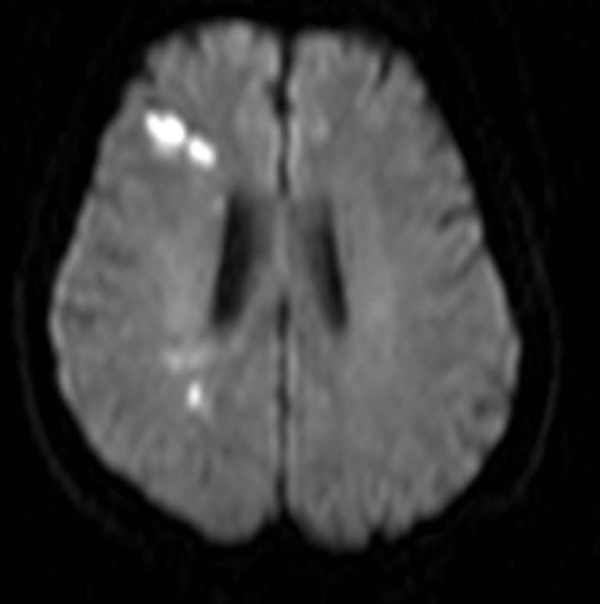
CT head scan is rarely of value in a patient without neurological symptoms or signs but MR brain scan, including diffusion weighted imaging (DWI), can be helpful immediately after suspected TIA in confirming the presence or absence of an ischaemic lesion, see figure 1.
Management
The new National Clinical Guideline for Stroke,3 published in September 2012 by the Royal College of Physicians, contains an algorithm for the management of patients with suspected TIA, see figure 2.
Immediate management of suspected TIA (sudden onset of acute focal neurological disturbance that has completely resolved by the time the patient is first assessed) made by front line staff before referral to a specialist clinic will include assessment of other vascular risk factors.
The new Royal College of Physicians guideline3 recommends a loading dose of an antiplatelet agent (aspirin 300 mg or clopidogrel 300 mg) followed by aspirin or clopidogrel 75 mg od. This antiplatelet advice differs from the NICE technology appraisal (TA210) published in 2010, 4 which recommends a combination of aspirin and dipyridamole for long-term treatment in TIA, and clopidogrel for secondary prevention in stroke. (This advice is based on the fact that NICE cannot recommend a treatment that is not licensed.)
A statin (usually simvastatin 40 mg) should be started at the same time. The ABCD2 scoring will allow appropriate triage to either a specialist clinic within
24 hours or within seven days, although any patient in AF, on anticoagulants or with two or more TIAs in a week (crescendo TIA) should be referred for urgent assessment, whatever their ABCD2 score. Patients should receive lifestyle advice (smoking, diet, exercise) and risk factor assessment (e.g. blood pressure).
Following confirmation of the diagnosis in the TIA clinic, any patient in AF where brain haemorrhage has been excluded and there are no other contraindications should be anticoagulated with an agent that has a rapid onset. Practitioners should consider the use of treatment dose low molecular weight heparin while establishing patients on warfarin, or consider the use of one of the new anticoagulant drugs which have more rapid onset than warfarin.
Individual risk factor assessment will include review of fasting lipid and glucose results, blood pressure and resting ECG. There is good evidence that the longer patients are monitored the better the diagnostic yield for AF, so Holter monitoring for 24 hours or longer is of value in excluding paroxysmal AF.
Carotid imaging is essential for any patient with anterior circulation symptoms who would potentially benefit from carotid endarterectomy.
If it is not clear from the symptoms whether the lesion is due to anterior or posterior circulation disease, a DWI MR scan may be of value in determining the site of the lesion.
Carotid imaging is usually by carotid Doppler ultrasound but CT angiography or MR angiography may also be used.
Carotid imaging should be performed so that if necessary, carotid endarterectomy can be undertaken within seven days of symptom onset. Patients with less than 50% stenosis, using the North American Symptomatic Carotid Endarterectomy Trials (NASCET) criteria, should be offered best medical management, while those with 50-99% stenosis should receive best medical management together with an urgent referral for carotid endarterectomy within seven days of symptom onset.
Conclusion
Accurate, timely diagnosis of TIA by front line staff including GPs allows immediate commencement of treatment (antiplatelet agent and a statin) prior to rapid specialist assessment in a TIA clinic. This saves lives by significantly reducing the risk of subsequent stroke.1
GPs have a vital role to play. They need to ensure that specialist rapid access TIA clinics and supporting clinical pathways to treatment are commissioned and monitored; and that individual patients with a diagnosis of possible or probable TIA are managed and referred appropriately. All patients will need secondary prevention, follow up and monitoring in primary care for life.
Acknowledgement
The authors would like to thank the members of the Intercollegiate Stroke Working Party for their contribution to this article.
REFERENCES
1 Rothwell PM, Giles MF, Chandratheva A et al. Effect of urgent treatment of transient ischaemic attack and minor stroke on early recurrent stroke (EXPRESS study): a prospective population-based sequential comparison. Lancet 2007; 370:1432–42
2 Giles MF, Rothwell PM. Risk of stroke early after transient ischaemic attack: a systematic review and meta-analysis. Lancet Neurol 2007;6(12):1063–72
3 Intercollegiate Stroke Working Party (National Clinical Guideline for Stroke) 4th edition. Royal College of Physicians. London. 2012
4 National Institute for Health and Clinical Excellence TA210. Clopidogrel and modified-release dipyridamole for the prevention of occlusive vascular events (review of technology appraisal guidance 90). NICE. London. 2010 (www.nice.org.uk/guidance/TA210)
USEFUL INFORMATION
National Clinical Guideline for Stroke
Useful information for both patients and healthcare professionals is available in an easy access version online www.rcplondon.ac.uk
The Stroke Association
Provides fact sheets on TIA and on stroke prevention as well as all aspects of stroke
www.stroke.org.uk
Cardiac and Stroke Networks
Provide advice to commissioners and clinicians about the provision of services
www.improvement.nhs.uk/stroke/StrokeNetworks.aspx
The Atrial Fibrillation Association
www.atrialfibrillation.org.uk
Blood Pressure UK
http://www.bloodpressureuk.org/
ARTICLE IN PDF
 Download this article in PDF format