SEARCH

Leschziner G. Identifying neurological causes of daytime sleepiness. Practitioner 2017 Sept;261(1807):11-15
Identifying neurological causes of daytime sleepiness
22 Sep 2017
AUTHORS
Dr Guy Leschziner MA PhD FRCP, Consultant Neurologist, Sleep Disorders Centre and Department of Neurology, Guy’s and St Thomas’ NHS Foundation Trust, and Reader in Neurology, Institute of Psychiatry, Psychology and Neuroscience, King’s College London, UK
Competing interests: None
Article
Abstract
The prevalence of sleep complaints in adults in a primary care setting is > 10%. The most frequently seen condition by far is that of primary insomnia, which affects 10% of adults on a chronic basis. In contrast to primary insomnia, in which most patients report tiredness and fatigue during the day but are unable to sleep during the day either, the second most frequent sleep disorder encountered, obstructive sleep apnoea, is typified by excessive daytime sleepiness. Patients with primary insomnia or fatigue syndromes typically will score low on the Epworth Sleepiness Scale (ESS < 3) whereas those with organic sleep pathologies or sleep restriction will score higher. A score > 10 is seen as ‘pathological’, with a mean ESS in the population of 5-6. The most common cause of sleepiness in adults is behaviourally induced insufficient sleep syndrome, affecting up to one third of adults. This can be severe enough to mimic a condition such as narcolepsy both clinically and on diagnostic testing. Restless legs syndrome affects 5-15% of the adult population as well as some children. The syndrome is characterised by the urge to move the legs, or other body parts (such as the arms, trunk, face and even genitals) usually accompanied by a range of unpleasant sensations. These features are typically worse in the evening or night. In addition to the motor restlessness, 80-90% of sufferers also experience frank leg movements, which usually arise in sleep but can also occur in wakefulness. Narcolepsy has a prevalence of 1 in 3,000. Peak onset is in the mid-teens and mid-thirties, although it can occur at any age, and the diagnosis is lifelong. The major and only mandatory diagnostic feature is of excessive daytime sleepiness, which can manifest as persistent sleepiness, or discrete sleep attacks. It is important to remember to counsel these patients regarding driving, and they have a legal duty to inform the DVLA about this diagnosis.
Sleep disorders are extremely common in general practice, with the prevalence of sleep complaints in adults in a primary care setting greater than 10%1 with some estimates as high as 60%.2 The most frequently seen condition by far is that of primary insomnia, which affects 10% of adults on a chronic basis,3,4 and is usually easily recognised, if not so easily treated.
In contrast to primary insomnia, in which most patients report tiredness and fatigue during the day but are unable to sleep during the day either, the second most frequent sleep disorder encountered, obstructive sleep apnoea, is typified by excessive daytime sleepiness. This is usually accompanied by reports of loud snoring, witnessed apnoeas, nocturnal frequency, and other symptoms such as a dry mouth or sore throat on waking.
GPs will be very familiar with these disorders, but there remains a range of other conditions, some very common and some rarer, that influence sleep quality, daytime levels of wakefulness or otherwise impact on the sleep of the patient or their partner. The aim of this article is to discuss the diagnosis and management of a variety of neurological sleep disorders that may present to the GP, and should be considered within the differential of the patient complaining of sleepiness.
There are several diagnostic challenges in the identification of patients with these disorders. The first is that the term sleepiness is often used interchangeably with complaints of fatigue or tiredness. Sleepiness is defined as the inability to maintain wakefulness or alertness during daytime wake periods. Indeed, a degree of overlap in some cases between sleepiness and other symptoms, and ascertaining the presence of true sleepiness can be a significant problem. There is no foolproof way of ascertaining sleepiness in an outpatient setting, or for that matter utilising inpatient diagnostic tests, but validated tools such as the Epworth Sleepiness Scale (ESS) can help.5 Patients with primary insomnia or fatigue syndromes typically will score low on the ESS (< 3) whereas those with organic sleep pathologies or sleep restriction will score higher, ≥ 10 is seen as ‘pathological’, with the mean ESS in the general population of 5-6.
The second challenge is that the patient will often be unable to provide a full history by definition, since the pathology occurs in sleep. Even with the benefit of a corroborative history from the partner, this can be problematic, since the partner is often half asleep as well, or the signs of any disorder often occur in the dark. However, once true sleepiness has been established, obstructive sleep apnoea has been ruled out, or there are clear features from the history to point in the direction of a neurological sleep disorder, then the conditions below should be considered.
The sleepy patient
The most common cause of sleepiness in the adult population is that of behaviourally induced insufficient sleep syndrome, affecting up to one third of adults.6 This can be severe enough to mimic a condition such as narcolepsy both clinically and on diagnostic testing.7 Individual sleep requirements vary significantly and are thought to be to some extent genetically driven, but certainly anyone with a sleep opportunity of less than seven hours per night, or undertaking shift work, should be given sleep hygiene advice to optimise sleep duration, before other potential causes are investigated, unless there are clear pointers. The second most common condition is that of obstructive sleep apnoea which is beyond the scope of this article.
Other potential causes to be considered are sleepiness related to sedating medication and that caused by psychiatric illness such as severe depression. Where these diagnoses have been excluded, usually on a clinical basis although sometimes with home diagnostic testing for sleep apnoea, the diagnoses listed below should be considered.
Restless legs syndrome
Restless legs syndrome may be frequently encountered in general practice and affects 5-15% of the adult population as well as some children.8 The prevalence of clinically significant restless legs syndrome is lower.
The syndrome is characterised by the urge to move the legs, or indeed other body parts, such as the arms, trunk, face or even genitals, usually accompanied by a range of unpleasant sensations. These features are typically worse in the evening or night, are transiently or partially relieved by movement, and are worsened by immobility (see box 1 for diagnostic criteria).
Restless legs syndrome is a common cause of insomnia, problems getting to sleep and staying asleep, unrefreshing sleep and excessive daytime sleepiness. Despite its frequency, it is often unrecognised or misdiagnosed, in part due to lack of awareness of the condition, but also as a result of a wide spectrum of symptoms and signs. However, prompt diagnosis and management has a large impact on morbidity and quality of life.
The nature of the sensory symptoms varies greatly. In some individuals, it presents with a non-specific discomfort, although patients may use a variety of terms to describe their sensations: a sensation of pulling, jittering, worms or insects moving, tingling, itching, aching, bubbling, fidgeting, electric shock, tightness, and throbbing.9 In others, the symptoms can be extremely painful.
In addition to the motor restlessness, 80-90% of sufferers also experience frank leg movements, which usually arise in sleep but can also occur in wakefulness.10 These leg movements are involuntary, and typically involve periodic flexion of the hip and knee, dorsiflexion of the foot and extension of the hallux, although these movements are often more subtle, and may simply manifest as minimal extension of the hallux. These movements may be unilateral, alternating or bilateral, and occur at intervals of between 5 and 90 seconds. The duration of individual leg movements is longer than in myoclonus, of the order of 0.5-5 seconds.
These movements, if arising in sleep, may result in frequent arousal from sleep, causing unrefreshing sleep, or complete awakening, leading to fragmented sleep and sleep maintenance issues. They may also impact on the sleep of the partner. In fact, these movements, termed periodic limb movements of sleep, may occur in isolation, in the absence of symptoms of restless legs syndrome, in which case patients may simply present with daytime sleepiness and unrefreshing sleep. In the absence of a partner reporting leg movements or personal reports of restless legs syndrome, isolated periodic limb movements of sleep can prove difficult to diagnose without an inpatient sleep study.
Mimics of restless legs syndrome include the sensory symptoms associated with peripheral neuropathy, cramps, positional discomfort, akathisia (a feeling of motor restlessness associated with dopamine receptor-blocking neuroleptic agents), parkinsonism with sensory symptoms or drug-induced dyskinesias, arthritis, hypnic jerks, fibromyalgia and varicose veins.9 These obviously need to be excluded prior to a diagnosis of restless legs syndrome being made.
In the majority of cases, restless legs syndrome is primary, and is thought to have a genetic basis, with a family history of the condition frequently reported.11 However, restless legs syndrome may arise secondary to iron deficiency, uraemia, pregnancy, and a range of other neurological conditions. Restless legs syndrome may also be triggered or worsened by a number of medications that are commonly prescribed or available over the counter, see box 2. In fact, only a minority of patients require specific drug treatments for restless legs syndrome.
The initial focus in restless legs syndrome should be on identifying and treating underlying causes. Patients should be screened for uraemia and iron deficiency. Recent guidelines suggest that patients with a ferritin
A medication history should be reviewed for any prescribed or non-prescribed agents that may exacerbate symptoms. Of all antidepressant drugs, bupropion is the agent least likely to exacerbate restless legs syndrome, and indeed is thought to be a potential treatment option due to its dopaminergic activity. Alcohol, nicotine and caffeine are also frequent culprits for worsening symptoms. Sleep deprivation or other sleep disorders such as sleep apnoea should be addressed, as these may also exacerbate restless legs syndrome.
For those patients who do require drug treatment (i.e. those in whom restless legs syndrome is significantly impacting on quality of life or quality
of sleep and have not responded to non-pharmacological therapies) licensed agents in the UK include the dopaminergic agents ropinirole, pramipexole and rotigotine, as well as prolonged release oxycodone/naloxone for severe refractory restless legs syndrome.
Dopaminergic agents have long been established as first-line agents for restless legs syndrome, but their use is complicated by two major issues.
The first is the phenomenon of augmentation, the worsening of restless legs syndrome beyond what would be expected from the natural history of the condition. Augmenting patients may describe an earlier time of onset during the day, a worsening of symptom intensity, spread to other body parts not previously involved, such as the arms or face, a shorter latency between rest/immobility and symptom onset, a lessening of the period of relief of symptoms after movement, a shorter duration of treatment effect, and a worsening of periodic limb movements of sleep or wakefulness.
Augmentation rates increase with higher doses of dopaminergic agents, and so care should be taken to maintain dosages as low as possible (to a maximum of 2 mg daily for ropinirole, 500 mcg daily pramipexole and 4 mg/24 hr rotigotine).
The dopaminergic agents also exhibit another class-specific side effect impulse control disorders e.g. compulsive gambling, compulsive eating, problem shopping and hypersexuality related to dopaminergic dysregulation of the brain reward system. Patients need to be warned of the possibility of these side effects.
For these reasons, there is a slow move away from these agents as first line, to non-licensed drugs such as gabapentin or pregabalin, usually given at night alone (typical doses required are 300-900 mg gabapentin nocte or 75-300 mg pregabalin nocte).13
Other agents that may be helpful include clonazepam and opiates (prolonged release oxycodone/naloxone is the only licensed opiate in the UK, but tramadol and codeine are also accepted treatments).
Narcolepsy and other central hypersomnias
Narcolepsy is the best known neurological sleep disorder, and has a prevalence of 1 in 3,000.14 Peak of onset is typically in the mid-teens and mid-thirties, although it can occur at any age, and the diagnosis is lifelong.
Our understanding of the pathophysiology of this condition has dramatically changed in the past few years.14 The condition is caused by a loss of a small number of neurones in the lateral hypothalamus that produce a neurotransmitter hypocretin (also called orexin) that acts as a stabiliser of neural mechanisms mediating wake and sleep, and rapid eye movement (REM) and non-REM sleep. Damage is thought to be mediated by an autoimmune process, with an underlying genetic predisposition triggered by an environmental antigen such as the H1N1 swine flu virus or vaccine. The instability of these mechanisms explains many of the clinical features.
The major and only mandatory diagnostic feature is of excessive daytime sleepiness, which can manifest as persistent sleepiness, or discrete sleep attacks. Daytime sleep episodes are usually brief and often refreshing, and in contrast to episodes experienced by normal individuals will often be associated with dreaming.
Other features include phenomena associated with abnormalities of control of REM or dreaming sleep, such as hypnagogic or hypnopompic hallucinations or sleep paralysis – inappropriate onset or offset of dreaming results in dream mentation in wakefulness, and persistence of muscle paralysis that is a normal feature of REM sleep into wakefulness.
The most dramatic feature of narcolepsy is cataplexy, the sudden loss of muscle tone, sometimes spontaneously but usually precipitated by strong emotions such as laughter, surprise, anger or fear. In contrast to drop attacks, cataplexy usually lasts for seconds to minutes, and often has a juddery or jerky component to the weakness. These episodes can result in complete collapse, always in full consciousness, but may be segmental, only affecting part of the body such as the arms, neck or face, and usually last for seconds or a few minutes.
Other features of narcolepsy include fragmented night-time sleep and REM sleep behaviour disorder, the acting out of dreams at night due to failure to generate full muscle paralysis in REM sleep.
In recent years, narcolepsy has been classified into type 1, characterised by the presence of cataplexy or the demonstration of a deficiency of hypocretin on cerebrospinal fluid (CSF) examination by lumbar puncture, and type 2, where there is no cataplexy and CSF has either not been examined or the CSF hypocretin level is normal.
This reflects our limited understanding of the nature of type 2 narcolepsy, in contrast to type 1 narcolepsy, in which the pathophysiological basis is well understood. Patients with a diagnosis of type 2 narcolepsy are a heterogeneous group. Some are likely to have a mild or early form of type 1 narcolepsy, others probably have unrecognised sleep restriction,15 and others have an overlap with another neurological disorder, idiopathic hypersomnia (see below).
While CSF hypocretin examination constitutes a diagnostic procedure for narcolepsy, in practice the diagnosis depends on the history and assessment through sleep studies. For type 2 narcolepsy, sleep restriction needs to be ruled out, through history, a sleep diary and ideally with actigraphy (a wrist-worn accelerometer that tracks movement and gives a rough indication of sleep-wake patterns, usually worn for two weeks).
Blood tests are generally unhelpful. HLA typing has a role in casting doubt on a diagnosis of type 1 narcolepsy (the HLA DQB1*0602 type is positive in > 98% of individuals with type 1 narcolepsy).16 This HLA type is only positive in 40-60% of those with type 2 narcolepsy, and in any case is present in about one third of the normal population.16
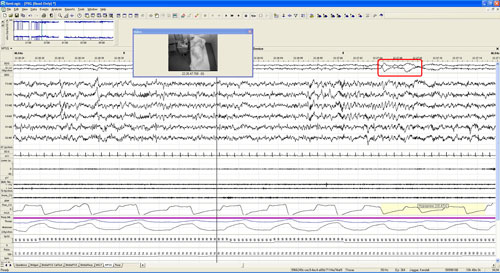
The standard diagnostic test for narcolepsy is the polysomnogram, see figure 1, and multiple sleep latency test. The polysomnogram is an overnight assessment of sleep, and is undertaken to exclude other sleep disorders and to ensure adequate sleep during the multiple sleep latency test. The multiple sleep latency test involves the opportunity for the patient to fall asleep four or five times during the day after the polysomnogram, at two-hour intervals. The mean sleep latency is assessed across these naps, as well as the presence of REM sleep.
A positive diagnostic test is defined by a mean sleep latency of less than eight minutes, and REM sleep in two or more naps, although early REM in the overnight polysomnogram can count towards this. If the multiple sleep latency test is negative, it has good negative predictive value, i.e. it is helpful in excluding narcolepsy. However, a positive multiple sleep latency test needs to be interpreted with caution, as sleep deprivation and drug rebound effects can produce a result apparently diagnostic of narcolepsy.7 In the presence of cataplexy, usually no further investigations are required, but in the absence of cataplexy a lumbar puncture may be helpful in certain cases.
Management of narcolepsy involves lifestyle modifications and drug treatment, as there is currently no cure. Patients often benefit from sleep hygiene advice to optimise night-time sleep, and planned daytime naps are usually very helpful to stave off irresistible sleep episodes. The general advice is for two or three brief planned naps, up to 20 minutes, to avoid deep sleep, as longer naps can result in significant grogginess on waking and worsen night-time sleep.
Drug treatment needs to be tailored to the individual. For cataplexy, drugs such as clomipramine at night, or fluoxetine or prolonged release venlafaxine during the day can be very effective. For daytime sleepiness, standard treatments are stimulant drugs such as modafinil, methylphenidate and dexamphetamine, usually in isolation although occasionally modafinil can be given in combination with amphetamine-based drugs.
Sodium oxybate is a drug that is very restricted in the NHS, partly because of the cost, but also because of its side-effect profile – it can be fatal when combined with other sedating agents or alcohol.17 However, it is usually very effective in severe refractory narcolepsy and can be life changing.
For selected individuals treating fragmented night-time sleep with sedating agents such as tricyclics, pregabalin, clonazepam or Z drugs such as zopiclone may have a role. Newer agents such as pitolisant, a histamine antagonist/inverse agonist that acts as a stimulant, are becoming available.
It is important to remember to counsel these patients regarding driving, and they have a legal duty to inform the DVLA about this diagnosis.
A related condition is idiopathic hypersomnia a rarer neurological disorder with a prevalence of about one tenth that of narcolepsy. Patients will experience unrefreshing sleep, and long sleep times.
The typical picture is of someone who will sleep for eleven or more hours per night of deep unbroken sleep, but will find it very difficult to wake up despite multiple alarms. They will wake up with so-called sleep drunkenness, feeling very groggy, unsteady and confused, often with a headache. Despite a long sleep duration, the patient will remain sleepy during the day, and will often sleep for hours rather than the briefer naps seen in narcolepsy, waking unrefreshed.
The underlying aetiology remains uncertain, but in recent years there has been increasing evidence of an endogenous substance that potentiates GABA on the GABAA receptor. This has led to the proposed use of flumazenil as a lozenge or transdermal preparation, which is reported to work in about one third of patients with refractory hypersomnolence.18 More traditional management involves the use of stimulant drugs as in narcolepsy. Mimics of this condition include hypersomnia induced by medications and psychiatric hypersomnolence i.e. in the context of severe depression.
Rarer still is episodic hypersomnia or Kleine-Levin syndrome, with an estimated prevalence of 1-5 per million.19 This condition usually manifests in teenagers, and results in bouts of hypersomnia associated with marked behavioural change such as confusion, paranoia, excessive eating, disinhibited behaviour and amnesia. These bouts usually last for days or weeks and in between bouts sufferers are normal, although more recent evidence points towards some cognitive and mood problems between bouts.
The condition is poorly understood, treatments are limited, and often the condition goes into spontaneous remission after several years.
Standard treatments include lithium and carbamazepine, which in some individuals reduce the frequency, duration and intensity of bouts.
Other neurological causes
A range of other neurological disorders may manifest as sleepiness as part of the condition. Migraine with brainstem aura may result in marked sleepiness, in the context of more obvious migrainous features such as headache, visual dysfunction and disequilibrium.
Patients with non-REM parasomnias such as sleepwalking or night terrors may complain of daytime sleepiness.
Sleepiness is a common feature of Parkinson’s disease, and may reflect neurodegenerative changes in brain centres influencing sleep or can be precipitated by dopaminergic agents.
A sleep study should be undertaken in these patients to rule out periodic limb movements in sleep or other causes of sleep fragmentation.
Sleepiness is a feature of myotonic dystrophy, and is usually treated with modafinil. Patients with epilepsy may exhibit sleepiness due to side effects of antiepileptic drugs, or more rarely because of clinical or even sub-clinical seizures in sleep.
Conclusion
Patients reporting sleepiness should be evaluated clinically to confirm that what is being described is sleepiness rather than fatigue or tiredness. Important factors to exclude are sleep restriction, psychiatric illness, medications causing sedation and obstructive sleep apnoea. More unusual neurological causes should then be considered. Some, such as restless legs syndrome, can be diagnosed clinically, but many patients will require formal assessment in a sleep centre.
REFERENCES
1 Sandlund C, Westman J, Hetta J. Factors associated with self-reported need for treatment of sleeping difficulties: a survey of the general Swedish population. Sleep Medicine 2016;22:65-74
2 Kushida CA, Nichols DA, Simon RD. Symptom-based prevalence of sleep disorders in an adult primary care population. Sleep Breath 2000;4(1):9-14
3 Ohayon MM. Epidemiology of insomnia: what we know and what we still need to learn. Sleep Med Rev 2002;6(2):97-111
4 Ohayon MM. Observation of the natural evolution of insomnia in the American general population cohort. Sleep Med Clin 2009;4(1):87-92
5 Johns MW. A new method for measuring daytime sleepiness: The Epworth sleepiness scale. Sleep 1991;14(6):540-545
6 CDC. National Health and Nutrition Examination Survey [Internet]. Hyattsville, MD: US Department of Health and Human Services, CDC, National Center for Health Statistics; 2007–2010 www.cdc.gov/nchs/nhanes.htm
7 Drakatos P, Leschziner GD. Update on hypersomnias of central origin. Curr Opin Pulm Med 2014;20(6):572-580
8 Leschziner G, Gringras P. Restless legs syndrome. BMJ 2012;344:e3056
9 Garcia-Borreguero D, Stillman P, Benes H et al. Algorithms for the diagnosis and treatment of restless legs syndrome in primary care. BMC Neurol 2011;11:28
10 Montplaisir J, Boucher S, Poirier G et al. Clinical, polysomnographic, and genetic characteristics of restless legs syndrome: A study of 133 patients diagnosed with new standard criteria. Mov Disord 1997;12(1):61-65
11 Winkelmann J, Schormair B, Xiong L et al. Genetics of restless legs syndrome. Sleep Med 2017;31:18-22
12 Winkelman JW, Armstrong MJ, Allen RP et al. Practice guideline summary: Treatment of restless legs syndrome in adults: Report of the guideline development, dissemination, and implementation subcommittee of the American Academy of Neurology. Neurology 2016;87(24):2585-93
13 Garcia-Borreguero D, Cano-Pumarega I. New concepts in the management of restless legs syndrome. BMJ 2017;356:j104
14 Leschziner G. Narcolepsy: A clinical review. Pract Neurol 2014;14(5):323-31
15 Marti I, Valko PO, Khatami R et al. Multiple sleep latency measures in narcolepsy and behaviourally induced insufficient sleep syndrome. Sleep Med 2009;10(10):1146-50
16 Mahlios J, De la Herrán-Arita AK, Mignot E. The autoimmune basis of narcolepsy. Curr Opin Neurobiol 2013;23(5):767-73
17 Drakatos P, Lykouras D, D'Ancona G et al. Safety and efficacy of long-term use of sodium oxybate for narcolepsy with cataplexy in routine clinical practice. Sleep Med 2017;35:80-84
18 Trotti LM, Saini P, Koola C et al. Flumazenil for the treatment of refractory hypersomnolence: clinical experience with 153 patients. J Clin Sleep Med 2016;12(10):1389-94
19 Miglis MG, Guilleminault C. Kleine-Levin syndrome. Curr Neurol Neurosci Rep 2016;16(6):60
ARTICLE IN PDF
 Download this article in PDF format