SEARCH

Practitioner 2011; 255 (1739):15-19
Improving lower urinary tract symptoms in BPH
19 Apr 2011
AUTHORS
Professor Roger Kirby MA MD FRCS
Director, The Prostate Centre, London
Article
Benign prostatic hyperplasia (BPH) is one of the most common diseases to affect older men.Histological (microscopic) BPH, which is characterised by both stromal and glandular hyperplasia, is present in more than 60% of men beyond their sixties.1 More than 40% of men in this age group have lower urinary tract symptoms (LUTS) and about half this group have impaired quality of life.2 The prevalence increases with age, and the overall number of patients affected is rising worldwide as populations age.
At current intervention rates, about one-fifth of patients with symptomatic disease who present to a doctor will eventually be treated surgically, although this may be falling. The remainder will often be managed initially by active surveillance i.e. watchful waiting. However, the majority of these individuals suffer gradual progression of symptoms and the bother associated with them, and increasingly require treatment either with medication or surgery.
Diagnosis
BPH is characterised by a spectrum of obstructive and irritative symptoms, known collectively as LUTS. Poor urinary flow and the sensation of incomplete bladder emptying are the two symptoms that correlate most closely with the eventual need for prostate surgery. Dribbling after micturition is usually caused by pooling of urine in the bulbar urethra rather than obstruction. The history should focus on the urinary tract and general health, as well as fitness for surgery.
The following conditions cause similar urinary symptoms and should be excluded:
- Parkinson's disease
- stroke
- diabetes or congestive heart failure (polyuria)
- history of urethral strictures
- drug treatment e.g. anticholinergics or antidepressants
LUTS have been shown to constitute an independent risk factor for sexual dysfunction in older men. Since sexual dysfunction is associated with impaired quality of life and is readily treatable, men presenting with BPH should be specifically asked about the presence or absence of this problem. Untreated, a significant number of men with this condition will eventually develop acute urinary retention (AUR).
Assessment
A decision pathway for the management of LUTS is shown in box 1, opposite. The diagnosis and management of patients with LUTS secondary to BPH has recently been the subject of a guideline from NICE.3 Symptoms can be assessed quantitatively by means of the International Prostate Symptom Score (IPSS) see table 1, below. This score consists of seven questions relating to the severity of symptoms. The maximum score is 35; scores of 0-8 are generally regarded as mild, 9-19 as moderate, and 20 or above as severe.
An additional question enquiring how the individual would feel if he had to live the rest of his life with the current level of symptoms provides an estimate of the degree of bother (i.e. quality of life impairment) caused by the symptoms.
The IPSS is used to measure symptom severity only, and is not a diagnostic test to determine whether symptoms are caused by BPH.
In addition to symptom assessment, physical examination by digital rectal examination can provide an estimate of prostate volume and exclude a palpable nodule suggestive of prostate cancer. Prostate specific antigen (PSA) determination provides additional information about the risk of prostate cancer being present - the greater the PSA the greater the possibility. PSA is a valuable surrogate for prostate volume.
Other investigations, which can easily be undertaken in a primary care setting, include flowmetry and ultrasonic estimation of the post-void residual volume. If the dipstick urine test is positive urine should be sent for culture and cytology to exclude urinary tract infection and carcinoma in situ of the bladder.
Medical treatment
The two principal evidence-based approaches to the medical management of BPH are treatment with alpha1-blockers and 5α-reductase inhibitors (5-ARIs).
Medical management of BPH is suitable for most patients with moderate symptoms; however, several studies have confirmed that severely symptomatic patients (IPSS > 20) may also respond to these drugs. Patients with mild symptoms (IPSS ≤ 8) and little associated bother should usually be managed by active surveillance.
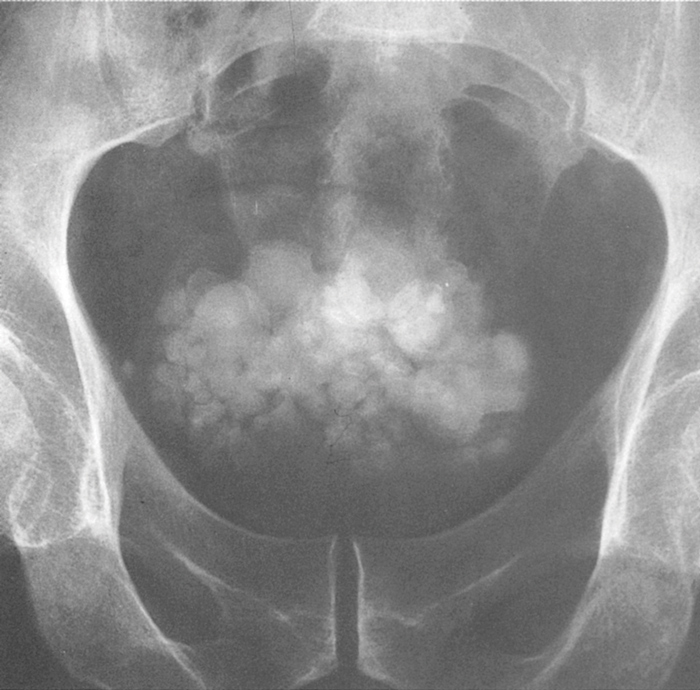
Contraindications to medical management include recurrent urinary retention and complications of BPH such as renal insufficiency, bladder stones (see figure 1, p15) or recurrent haematuria. Patients with these conditions need to be referred for specialist care.
Alpha1-blockers
Selective alpha1-blockers, such as doxazosin, slow-release alfuzosin and the alpha1A-selective compound tamsulosin, have all been shown to increase peak urine flow rate and improve symptoms in about 60% of patients with symptomatic BPH.4
They are of limited value in patients with complete inability to urinate, although a recent study suggests that alpha-blockers may increase the chances of a successful trial without catheter after an episode of acute retention.
Alpha1-blockers act by blocking alpha1-adrenoceptors in prostatic smooth muscle and in the bladder neck, thus reducing outflow obstruction, without adversely affecting bladder contractility.
The main side effects of alpha1-blockers result from the cardiovascular and cerebral effects of alpha1-receptor blockade. The most common side effects are tiredness, dizziness and headache, occurring in up to 15% of patients. Postural hypotension occurs in only 2-6% of patients, and this may be minimised by using newer slower-release agents, persisting with therapy and perhaps taking the medication at night.
5α-reductase inhibitors
5-ARIs act by inhibiting the enzyme 5α-reductase, which occurs in two forms, type 1 and 2, and converts testosterone to DHT. As DHT plays a key role in controlling prostate growth, inhibition of these enzymes causes the hyperplasia to regress. Thus, unlike alpha1-blockers, 5-ARIs can reverse the progress of pathological BPH by causing prostate shrinkage and preventing further growth.
Finasteride inhibits type 2 5 α-reductase and thereby reduces prostate volume by approximately 20%, improving both symptom scores and peak urine flow rate. The main clinical effects of finasteride may take 3-6 months to become apparent, and patients who benefit most tend to be those with enlarged prostates and serum PSA values > 1.6 ng/ml. The changes in symptom scores and flow rates have been shown to be maintained for at least five years.
Finasteride is very well tolerated. The main side effects are reduced libido and erectile dysfunction, each of which occurs in 3-5% of patients. These appear to be reversible on stopping treatment. Some patients may notice a reduction in the volume of ejaculate, and they should be counselled about this. About 1% of men may develop breast tenderness and some gynaecomastia.
Unlike alpha1-blockers, finasteride appears capable of preventing the progression of BPH. The most significant reductions in acute urinary retention (AUR) and surgery are seen in men with higher serum PSA levels and larger prostate volumes.
The dual inhibition of types 1 and 2 5α-reductase by dutasteride produces greater suppression of DHT than that achieved with the selective 5α-reductase type 2 inhibitor finasteride. In a two-year placebo-controlled study, dutasteride significantly improved symptoms and flow.
The magnitude of the improvement could be correlated with the prostate volume; men with larger prostates benefited most. Dutasteride also lowers the risk of acute retention and surgery related to BPH by 48-57%.
The incidence of impotence, decreased libido and ejaculatory disorders is similar to that with finasteride. Gynaecomastia and nipple tenderness are seen in 1-1.9% of patients. Overall, dutasteride produced a 57% reduction in the risk of AUR and a 48% reduction in the need for BPH-related surgery.5
There is now also some evidence that dutasteride may have a chemopreventative effect on prostate cancer, but it does not have a license for this indication at this time.
Combination therapy
As in asthma, where a combination of a bronchodilator for acute relief together with a steroid aerosol to prevent attacks, is employed, combination therapy for BPH with an alpha1-blocker and a 5-ARI appears attractive. Such an approach has been evaluated in several four-arm randomised placebo-controlled studies.7, 8 The conclusion was that combination was more effective than either form of monotherapy, not only in terms of symptom relief, but also prevention of disease progression in terms of the incidence of AUR and the need for surgery.
Surgery
TURP
More than 90% of surgical procedures for BPH are still carried out by transurethral resection of the prostate (TURP). A resectoscope with a diathermy loop is introduced via the urethra, and chips of hyperplastic prostate tissue are excised and removed through the resectoscope sheath. The operation can be performed under spinal epidural or light general anaesthesia; a urethral catheter is retained for 36-48 hours postoperatively.
Symptoms are improved in about 70-90% of patients, and peak urine flow rates of well over 15-20 ml/s can be achieved reliably.
The main drawback of TURP is the risk of bleeding, either during the operation or afterwards. If this is heavy and prolonged, transfusion may become necessary. If clots form within the bladder a washout may be needed. Urethral strictures can also occur as a result of the passage of a sizeable instrument up the urethra.
Newer techniques
These disadvantages have provided the stimulus for the development of newer techniques, including holmium laser enucleation of the prostate (HoLEP). This procedure is reported to produce good results in the literature,9 however there is a steep learning curve for surgeons with HoLEP and thus it is performed only in centres which specialise in the technique.
For smaller prostates an alternative surgical procedure is transurethral incision of the prostate (TUIP), also known as a bladder neck incision and for larger prostates open prostatectomy is still sometimes required.
A technique known as green light laser (GLL) prostate vaporisation is becoming popular, partly because it is easier to learn than HoLEP. Several studies have shown that GLL is a safe and effective alternative to TURP, producing similar improvement in symptoms but with fewer complications and shorter duration of catheterisation and hospital stay.10, 11
Minimally invasive techniques such as microwave therapy (TUMT) or needle ablation (TUNA) are not recommended because of high failure and re-operation rates, which greatly decrease cost-effectiveness.12
Conclusion
The management of men with LUTS resulting from BPH is shifting from secondary to primary care. The recent move towards GP commissioning seems only likely to promote this trend. There is no question that the majority of men with uncomplicated BPH can be managed perfectly well in the GP setting, especially by a team with a special interest in men's health.13
Those who fail to respond to first-line medical therapy, or who are developing complications of the condition, will need to be referred for specialist care.
Unquestionably there are very many men who are troubled by LUTS resulting from BPH, but who are untreated. Better care for these men in the community has the potential, not only to improve their quality of life, but also to reduce the economic burden of the disease14 by, for example, reducing the number of emergency admissions for AUR.15
REFERENCES
1 Berry SJ, Coffey DS, Walsh PC et al. The development of human benign prostatic hyperplasia with age.
J Urol 1984;132:474-9
2 Garraway WM, Kirby RS. Benign prostatic hyperplasia: effects on quality of life and impact on treatment decisions. Urology 1994;44:629-36
3 National Institute for Health and Clinical Excellence. CG 97. The management of lower urinary tract symptoms in men. NICE. London. 2010
4 Kaplan S. Current role of alpha-blockers in the treatment of benign prostatic hyperplasia. BJU Int 2008;102 Suppl 2:3-7
5 Roehrborn CG, Marks LS, Fenter T et al. Efficacy and safety of dutasteride in the four-year treatment of men with benign prostatic hyperplasia. Urology 2004;63:709-715
6 Andriole GL, Bostwick DG Brawley OW et al. Effect of dutasteride on the development of prostate cancer.
N Engl J Med 2010; 362:1192-1202
7 Roehrborn C, Siami P, Barkin J et al. The effects of dutasteride, tamsulosin and combination therapy on lower urinary tract symptoms in men with benign prostatic hyperplasia and prostatic enlargement: 2-year results from the CombAT study. J Urol 2008:616-621
8 McConnell JD, Roehrborn CG, Bautista OM et al. The long-term effect of doxazosin, finasteride, and combination therapy on the clinical progression of benign prostatic hyperplasia. N Engl J Med 2003; 349:2387-98
9 Gilling P. Holmium laser enucleation of the prostate (HoLEP). BJU Int 2008;101:131-42
10 Bouchier-Hayes DM, Van Appledorn S, Bugeja P et al. A randomized trial of photoselective vaporization of the prostate using the 80-W potassium-titanyl-phosphate laser vs transurethral prostatectomy, with a 1-year follow-up. BJU Int 2009.doi:10.1111/j1464-410X.2009.08961.x
11 Al-Ansari A, Younes N, Sampige VS et al. GreenLight HPS 120-W laser vaporization versus transurethral resection of the prostate for treatment of benign prostatic hyperplasia: a randomized clinical trial with midterm follow-up. Eur Urol (2010), doi:10.1016/j.eururo.2010.05.026
12 Hoekstra RJ, van Melick HH, Kok ET et al. A 10-year follow-up after transurethral resection of the prostate, contact laser prostatectomy and electrovaporization in men with benign prostatic hyperplasia: long-term results of a randomised controlled trial. BJU Int 2010;106:822-6
13 Speakman MJ, Kirby RS, Joyce A et al. Guideline for the primary care management of male lower urinary tract symptoms. BJU Int 2004;93: 985-90
14 Drummond MF, McGuire AJ, Black NA et al. Economic burden of treated benign prostatic hyperplasia in the United Kingdom. Br J Urol 1993;71:290-6
15 Kirby RS, Kirby M, Fitzpatrick JM. Benign prostatic hyperplasia: counting the cost of its management. BJU Int 2010;105: 901-2
Further reading
Kirby R S and Gilling P. Fast Facts BPH. 7th Edition. Health Press. Abingdon. 2009
USEFUL INFORMATION
ARTICLE IN PDF
 Download this article in PDF format
EXTERNAL WEBLINKS
For healthcare professionals and patients
Guidelines
NICE Clinical Guideline 97. The management of lower urinary tract symptoms in men
The British Association of Urological Surgeons has published its own guideline specifically aimed at primary care practitioners
A number of other guidelines have been produced for the diagnosis and management of the lower urinary tract symptoms that result from BPH. These can be accessed at:
www.auanet.org/content/guidelines-and-quality-care/clinical-guidelines.cfm