SEARCH

Practitioner 2010;254 (1726): 25-29
Diagnosing urological disorders in ageing men
14 Feb 2010
AUTHORS
Mr Amit Mevcha MBBS MRCS Clinical research fellow
Mr Dev Mohan Gulur MB BS MRCS Specialist registrar
Mr David Gillatt MB ChB ChM FRCS
Consultant urological surgeon
Southmead Hospital, Bristol
Article
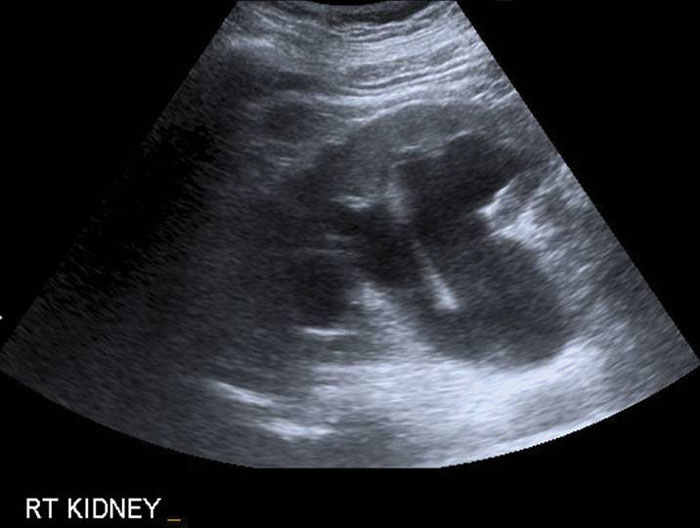
Increasing life expectancy over the past decade has resulted in more age-related health problems presenting to clinicians. Conditions such as ischaemic heart disease, cerebrovascular disease and cancer are increasing in incidence. Similarly, urology practice includes large numbers of ageing men presenting with urinary symptoms, haematuria, urogenital cancer and sexual dysfunction. As with women, hormonal changes in men may be associated with significant health-related problems. Often symptoms are misleading in older patients and may be related to different pathology. For example, high-pressure chronic retention (see figure 1, above) may present with nocturnal enuresis. Patients who present with nocturnal polyuria may have underlying congestive cardiac failure or sleep apnoea syndrome.
Erectile dysfunction
Erectile dysfunction (ED) is the most common type of sexual dysfunction and its prevalence increases with age. ED has organic aetiologies and is associated with other clinical comorbidities.
Men with ED are more likely to have:
- cardiac disease
- diabetes
- hypercholesterolaemia
- angina
- hypertension
- prostate disease
- depression
Similarly, men with these conditions are more likely to have ED.1 The cause may be neurogenic, vasculogenic, endocrine related, anatomic, psychogenic or drug related in origin.
ED link with coronary artery disease
It is believed that vasculogenic ED shares a common aetiology with coronary artery disease, including hyperlipidaemia, diabetes and hypertension. Oxidative stress related endothelial damage is thought to be the underlying common link. Furthermore, ED and coronary artery disease have a parallel incidence and age of onset. Because of the increased risk of subsequent cardiac events and the correlation between ED and coronary disease, men with ED are now considered at risk of cardiac disease.2
Smoking, pelvic or perineal trauma and irradiation can all compromise vascular supply and lead to ED. Long-distance cycling has also been shown to be a risk factor for neurogenic or vasculogenic ED.3 In a review article by Huang and colleagues, cycling more than 3 hours per week was an independent risk factor for moderate to severe ED (RR = 1.72).
A detailed medical and sexual history and clinical examination play an essential role in the management of ED. Taking a careful history of onset, duration and associated symptoms may reveal possible causes of ED. Furthermore, past medical history, disease control, trauma and medication use can also provide vital information. Modifiable risk factors such as smoking, alcohol consumption and use of recreational drugs should be identified. Thorough cardiovascular and abdominal examination should be done to rule out any hidden pathology. Further investigations may be required to identify risk factors6 such as hypercholesterolaemia and diabetes.
Lifestyle changes
Definitive treatment for ED will depend upon the aetiology. However, lifestyle changes and non-pharmacological treatments can have beneficial effects. As physical activity is inversely associated with the development of ED, patients with a sedentary lifestyle should be encouraged to undertake an exercise programme. In obese men, weight loss of 10% or more by increasing physical activity or reducing calorie intake can improve the IIEF (International Index of Erectile Function) score.4 Lifestyle measures such as regular exercise, healthy diet, smoking cessation, limiting alcohol intake and avoiding recreational drugs can reduce the risk of, or improve, ED. Furthermore, lowering cholesterol levels in men with hypercholesterolaemia may improve erectile capacity.5
Perineal compression on penile arteries from long-distance cycling may also represent a modifiable risk factor and changing riding practices or the bicycle seat often improves erectile function.
Changes in medication may be required in some patients. Thiazide diuretics are associated with higher rates of ED. Switching patients to alpha adrenoceptor blockers, calcium channel blockers or ACE-inhibitors may reverse ED.
Nocturia
Nocturia is a common disabling symptom in older men. It is very important to differentiate between patients suffering from nocturnal frequency, enuresis or nocturnal polyuria as the causes and treatments for each of these conditions are very different.
Nocturnal frequency may be caused by:
- increased intake of fluids in the evening
- consumption of alcohol and/or caffeine
- an overactive bladder
- disturbance of the circadian rhythm
- benign prostatic enlargement (BPE)
Initial assessment should include a detailed history with particular emphasis on bothersome symptoms, general physical examination, abdominal examination including DRE and neurological assessment. Patients should fill in a frequency volume chart or a voiding diary to ascertain the volume and frequency of micturition.
A causal relationship between nocturia and benign prostatic enlargement (BPE) has been suggested as medical or surgical treatment of BPE does decrease nocturia.6 An improvement in nocturia and nocturia bother score have been demonstrated following administration of 2 mg of oral melatonin. Melatonin, a hormone secreted by the pineal gland predominantly at night, maintains the circadian rhythm.7 Melatonin secretion decreases with age.
Management
Simple lifestyle measures such as reducing fluid intake after 6 pm and avoiding alcohol and/or caffeine at night may reduce nocturnal voiding. Anticholinergics can be prescribed to decrease the overactivity of the bladder. Patients should be warned about the potential side effects i.e. dry mouth, drowsiness, constipation and blurred vision and the medication may need to be stopped if the side effects are troublesome.
Nocturnal enuresis
Nocturnal enuresis can often be the only symptom of high pressure chronic retention which is prevalent in older men.8 These patients invariably have a grossly distended bladder with back pressure on the kidneys with resultant impairment of renal function. It is important to recognise this condition as treatment can prevent further renal impairment.9
Catheterisation
Catheterisation, preferably in a hospital setting, is very important to ensure that the bladder is empty. These patients are at risk of diuresing significantly after catheterisation. They need daily monitoring of: renal function; blood pressure in the lying and standing postures to detect postural drop secondary to diuresis and dehydration; fluid balance and body weight in the first few days which necessitates hospitalisation. The treatment options are either long-term catheterisation or transurethral resection of the prostate (TURP). Either urethral or suprapubic catheters can be used long term. TURP requires spinal or general anaesthesia. Rarely patients may opt for intermittent self-catheterisation.
Nocturnal polyuria
In nocturnal polyuria the urine output at night is more than a third of the total daily urine output. The causes include:
- increased intake of fluids in the evening
- congestive cardiac failure
- nocturnal sleep apnoea syndrome
- reduced secretion of ADH
Conservative measures
If the fluid input chart shows increased fluid intake in the evenings, patients can be advised to reduce their intake of fluids and food with a high water content such as fruit, vegetables and pasta after 6 pm.
Taking a nap in the afternoon with the feet up, at least to the level of the heart, can increase the venous return which in turn increases urine output.
If these conservative measures are not successful, in the absence of heart failure, a low-dose diuretic in the afternoon can help the kidneys get rid of the fluid before bedtime.
Benign prostatic obstruction
The main cause of bladder outlet obstruction in men is benign prostatic enlargement. Less common causes are: urethral stricture; bladder neck stenosis; and malignant enlargement of the prostate.
Although the prevalence of histological benign prostatic hyperplasia (BPH) is high, clinical evidence of disease occurs less commonly. The aetiology and risk factors for the development of BPH are not clearly understood.
Management of BPH
The history, examination and assessment of the severity of urinary symptoms using the International Prostate Symptom Score (IPSS) are essential in the management of BPH.
The score measures both the severity of the symptoms and how bothersome they are to the patient (see figure 2, left). If the patient has severe symptoms i.e a high score but these are not bothersome, there is no indication for treatment. However, treatment is indicated for a low symptom score where the symptoms are bothersome.
Men may seek treatment for bothersome urinary symptoms or concern about prostate cancer and urinary retention. However, no particular urinary symptoms are specific for prostate cancer.
Furthermore, the risk of retention in the 40-49 year age group, with no to mild or moderate to severe symptoms is 3/1,000 person-years. In the 70-79 year age group, the risk is 9/1,000 person-years for men with no to mild symptoms and 35/1,000 person-years for men with moderate to severe symptoms.10
Patients can be started on medical therapy (alpha blockers or 5 alpha reductase inhibitors) either as monotherapy or in combination. If the patient has not been started on treatment then appropriate advice should be given on fluid management and self-monitoring of symptoms.
The MTOPS (medical therapy of prostatic symptoms) study found that combination therapy with doxazosin and finasteride reduced the risk of overall clinical progression of BPH significantly more than either treatment alone.11 The use of 5 alpha reductase inhibitors provides additional benefit in reducing frequency of haematuria due to BPH by shrinking the vascular prostate. Patients should be warned about the potential side effects of medical treatment such as postural hypotension, retrograde ejaculation, dizziness, loss of libido and impotence. Failure to improve symptoms or progression (retention) despite medical treatment should be managed surgically i.e. by TURP or open prostatectomy.
Renal and ureteric stones
Sudden onset of loin pain in older patients needs prompt investigation as the causes could include: musculoskeletal injury; renal or ureteric calculi; diverticulitis or abdominal aortic aneurysm. Ureteric stones with an obstructed kidney can lead to fulminant urosepsis necessitating emergency decompression of the kidney with the insertion of a nephrostomy tube or a retrograde stent. These patients need urgent hospital admission, sometimes into intensive care and high dependency units, for systemic antibiotics and fluid resuscitation.
Lifestyle measures to prevent stone formation are mainly optimal fluid intake of more than 1.5 - 2l every day unless contraindicated by other medical conditions.
Overactive bladder
Urgency and urge incontinence are also severely disabling symptoms, more so in women partly because of their shorter urethra. The predominant cause is an overactive bladder. Frequency volume charts are needed to establish the frequency and the voided volumes. Invasive investigations i.e. urodynamics are generally not needed.
Treatment is predominantly conservative with avoidance of caffeine and nicotine which irritate the bladder. Patients should be advised to switch to decaffeinated drinks. Bladder training and timed voiding just before the bladder is filled with enough urine to irritate the bladder can be tried. If these measures fail, anticholinergics need to be prescribed and, as stated earlier, patients need to be warned about the side effects.
Conclusion
Urological symptoms in older men require careful systemic evaluation. Assessment of bothersome urinary symptoms and quality of life using a standardised scoring system should be included as part of the management protocol in conjunction with the history and clinical examination. Conservative approaches including lifestyle changes and fluid management may be sufficient in some patients. However, medical and/or surgical treatment may be required in refractory cases. Treatment should be aimed at improving bothersome symptoms rather than the severity of symptoms.
REFERENCES
1 Rosen RC, Fisher WA, Eardley I et al. The multinational Men's Attitudes to Life Events and Sexuality (MALES) study: I. Prevalence of erectile dysfunction and related health concerns in the general population. Curr Med Res Opin 2004;20(5):607-617
2 Thompson IM, Tangen CM, Goodman PJ et al. Erectile dysfunction and subsequent cardiovascular disease. JAMA 2005;294(23):2996-3002
3 Huang V, Munarriz R, Goldstein I. Bicycle riding and erectile dysfunction: an increase in interest (and concern). J Sex Med 2005;2(5):596-604
4 Esposito K, Giugliano F, Di PC et al. Effect of lifestyle changes on erectile dysfunction in obese men: a randomized controlled trial. JAMA 2004;291(24):2978-2984
5 Saltzman EA, Guay AT, Jacobson J. Improvement in erectile function in men with organic erectile dysfunction by correction of elevated cholesterol levels: a clinical observation. J Urol 2004; 172 (1): 255-8
6 Homma Y, Yamaguchi T, Kondo Y et al. Significance of nocturia in the International Prostate Symptom Score for benign prostatic hyperplasia. J Urol 2002;167(1):172-176
7 Drake MJ, Mills IW, Noble JG. Melatonin pharmacotherapy for nocturia in men with benign prostatic enlargement. J Urol 2004;171(3):1199-1202
8 George NJ, O'Reilly PH, Barnard RJ et al. Practical management of patients with dilated upper tracts and chronic retention of urine. Br J Urol 1984;56(1):9-12
9 Ravanan R, Tomson CR. Natural history of postobstructive nephropathy: a single center retrospective study. Nephron Clin Pract 2007;105(4):c165-c170
10 Jacobsen SJ, Jacobson DJ, Girman CJ et al. Natural history of prostatism: risk factors for acute urinary retention. J Urol 1997;158:481-87
11 McConnell JD, Roehrborn CG, Bautista OM et al. The long-term effect of doxazosin, finasteride, and combination therapy on the clinical progression of benign prostatic hyperplasia. N Engl J Med 2003;349:2387-98
 Download this article in PDF format