SEARCH

Corsetti M, Whorwell PJ. Managing irritable bowel syndrome in primary care. 2015; 259 (1783):21-24
Managing irritable bowel syndrome in primary care
22 Jun 2015
AUTHORS
Dr Maura Corsetti MD PhD, Research Fellow in Gastroenterology, Department of Clinical and Experimental Medicine, Translational Research Center for Gastrointestinal Disorders (TARGID), University of Leuven, Leuven, Belgium
Professor Peter J Whorwell MD PhD FRCP, Professor of Medicine and Gastroenterology, University of Manchester, Manchester, UK
Article
It is very unlikely that there will be a diagnostic test for irritable bowel syndrome (IBS) in the foreseeable future. However, this does not mean that a confident clinical diagnosis cannot be established in the majority of cases. NICE has recently updated its guidelines on IBS in primary care which should help improve diagnosis and management.1 The prevalence of IBS is between 10 and 15% with more women than men affected in a ratio of approximately 2:1.2
Clinical presentation
The classic symptoms of IBS are abdominal pain, abdominal bloating and some form of bowel dysfunction. In addition, many patients suffer from a range of non-colonic symptoms which are discussed later.
Abdominal pain
The pain is typically colicky in nature and can occur at any site although most commonly it is on the left side.
When it occurs elsewhere, such as the right hypochondrium or the right iliac fossa, the gallbladder or appendix can come under suspicion.
Pelvic pain is also relatively common in IBS and can lead to the possibility of gynaecological pathology being considered,3,4 especially if there are coincidental heavy periods or dyspareunia, which is also quite common in IBS.5 In addition, it is not uncommon for IBS symptoms to get worse with menstruation.
All these alternative causes of pain can usually be excluded by taking a careful history and undertaking a few basic investigations.
It is critically important that the pain of IBS is not mistaken for another cause as this can lead to inappropriate treatment or even unnecessary surgical intervention, with the latter often making symptoms worse, sometimes irreversibly.
Abdominal bloating
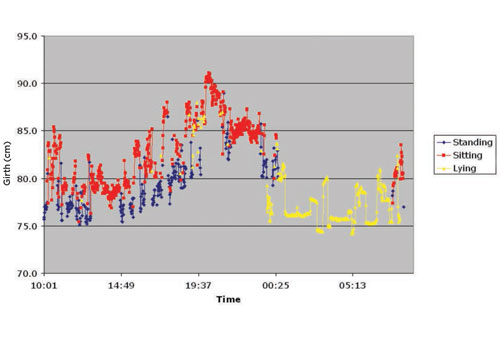
Bloating is an extremely important feature of IBS as not only is it diagnostically useful but also because patients can find it extremely intrusive. Characteristically, the abdomen feels flat in the morning and then gradually becomes more bloated as the day progresses reaching a peak by late afternoon or evening. It then subsides again over night.
In some patients this sensation of bloating is accompanied by an actual increase in girth to the extent that the patient can become so distended that they may be mistaken for being pregnant, see figure 1. Distension such as this is practically diagnostic of IBS. However, if it does not exhibit diurnal variation it should be considered a red flag for problems such as ovarian pathology or ascites.
Red flags for urgent referral are listed in box 1.
Bowel dysfunction
Traditionally IBS is divided into diarrhoea, constipation or alternating subtypes. The constipation subtype is often associated with straining whereas those with diarrhoea often suffer from considerable urgency.
Most patients will also complain of a sensation of incomplete evacuation after defecation as a result of rectal hypersensitivity, which is a common pathophysiological abnormality in IBS.
It is important that this symptom is explained to the patient in order to prevent frequent fruitless visits to the toilet and straining which can then make the hypersensitivity worse.
Faecal incontinence is not uncommon in the more severe forms of IBS6 and can even occur in the constipation subtype sometimes, but not always, as a result of laxatives. Many patients will not disclose the problem of faecal incontinence unless they are specifically asked.
Non-colonic symptoms
IBS patients frequently complain of one or more non-colonic symptoms which can be as intrusive as the primary symptoms of the condition. These include constant lethargy, low backache, nausea, bladder symptoms suggestive of an irritable bladder, chest pain and dyspareunia in women.5,7 When these features are prominent patients can find themselves referred to gynaecology, urology, cardiac and orthopaedic clinics where investigation is usually negative and outcome unsatisfactory.
Recognition of these features is important in the prevention of inappropriate referral but also because their presence, especially when there are multiple symptoms, strongly supports the diagnosis of IBS.8
Psychological symptoms
The traditional view that IBS is a largely psychological condition is no longer tenable, although psychological factors obviously contribute to the overall clinical picture. The typical IBS patient does tend to be a worrier with an anxious personality but overt depression is surprisingly unusual even in the tertiary care setting.
Consequently, if the patient’s concerns about their symptoms can be addressed, this is often all that needs to be done from a psychological point of view in milder cases.
History
Most patients with IBS will usually specify that they have had their symptoms for a particular period of time, for instance, five years. However, if pressed they will frequently admit that they have always had a ‘sensitive stomach’ or a tendency to a loose or constipated bowel habit. When this information is forthcoming it makes the diagnosis of IBS far more secure. For example, if they have always had a propensity to mild right hypochondrial pain, right iliac fossa pain, or pelvic pain then this makes alternative causes for the pain much less likely.
Consequently, it seems that IBS can often exist in a forme fruste until a triggering event which can be an episode of gastroenteritis, food poisoning, excessive antibiotic usage or a stressful life event. From then on the condition becomes more severe and persistent.
Many older patients will have been investigated and found to have diverticular disease and this subsequently attracts the diagnosis of diverticulitis.
As a consequence, they are frequently given antibiotics which only serve to perpetuate the condition. Therefore, antibiotics should usually be withheld unless the clinical picture is typical of acute diverticulitis or the patient has shown an obvious response to antibiotics in the past.
Diagnosis and investigation
As already emphasised, the diagnosis of IBS is very likely if the patient has had typical symptoms for several years, especially when they are accompanied by non-colonic symptoms and there are no red flags.
Another diagnostically useful feature is that the symptoms of IBS, both pain and bowel dysfunction, are often made worse by eating. It is recommended that a coeliac screening test is undertaken, as it is a good opportunity to rule out this condition which effects up to one in a hundred of the population.
Other routine tests should include inflammatory markers in the form of CRP or ESR. The diarrhoea predominant form of IBS causes more diagnostic uncertainty especially with respect to the possibility of inflammatory bowel disease. The introduction of testing for faecal calprotectin should improve this. Calprotectin is a marker for leukocytes in the stools and, therefore, detects gastrointestinal inflammation.
A negative test almost certainly rules out inflammatory bowel disease, especially in conjunction with a normal CRP,9 although there is still some uncertainty about what constitutes a positive result as drugs such as PPIs or NSAIDs can lead to a modest elevation.10
While stools are being collected for calprotectin it seems a good idea to send some for occult blood testing in older patients, 45 or above, who are not yet old enough to be eligible for the National Bowel Cancer Screening Programme.
An ultrasound scan of the abdomen is worth considering, especially if there are concerns about gynaecological problems and this can be complemented by a CA125 test.
Management
Patient education
Patient education is a critically important component of management as sufferers need to understand that all their symptoms, even the non-colonic features, can be explained by IBS.
In addition, it should be made clear that although it is not curable, IBS can usually be managed but this may be a process of trial and error.
Furthermore, it is sometimes useful to give patients some tips about day to day activities. For instance, the gastrocolonic response (needing to open one’s bowels following eating) is at its height in the morning. Consequently, a patient with constipation should always try to have breakfast in order to have the best chance of having a bowel opening.
Conversely, this response is exaggerated in patients with the diarrhoea subtype and persists throughout the day. This explains why they are often worse in the morning but continue to experience problems after subsequent meals. This problem is sometimes alleviated to some extent by taking smaller meals but on a more frequent basis rather than infrequent large meals.
In addition, fatty foods can exaggerate the symptoms of IBS leading to the gallbladder sometimes coming under unnecessary suspicion and this information is also useful to help patients manage their symptoms.
Diet
Much can be achieved by dietary manipulation. Insoluble fibre such as that contained in some cereals can be particularly troublesome.11 Consequently, when advising on an increase in fibre, soluble forms such as that derived from ispaghula are preferable.
It is also now recognised that fermentable carbohydrates can have a detrimental effect on IBS and this has led to the introduction of the low FODMAP (fermentable oligo-, di-, mono-saccharides and polyols) diet.12 There is no doubt that reducing fruit and vegetables that are high in FODMAPs can quite often significantly reduce symptoms, particularly loose bowels, bloating and wind.
There are currently no other diets that have an evidence base in IBS, although if patients feel that a particular food item consistently affects them adversely, then it is best not to challenge this assumption.
Pharmacological treatment
The key to managing constipation is to use a laxative such as macrogol on a regular low-dose basis rather than intermittent larger doses which can often lead to a much more unpredictable bowel habit. There is no evidence that the long-term use of laxatives damages the bowel in any way so this approach is best unless the constipation is intermittent.
Recently, two new drugs linaclotide13 and lubiprostone,14 have been introduced for use in IBS with constipation, although so far only linaclotide has been approved by NICE.1 These drugs are indicated when laxatives have failed to control the situation and have the advantage over laxatives that they can improve both pain and bloating.
Loperamide is the preferred drug for diarrhoea and, in a similar manner to laxatives, can be used on a continuous low-dose basis. There is no evidence of long-term damage and patients should be reassured that it can be used pre-emptively for situations where they need to feel secure. Occasionally patients will experience bloating and discomfort with excessive doses but this soon clears with a reduced dose or its discontinuation.
For pain, antispasmodics are the drugs of choice but the response varies from person to person, so it is worth experimenting and then leaving the patient to choose whichever one proves most effective. If the pain is intermittent then their use should be on an as necessary basis. Antimuscarinics (e.g. dicycloverine) can be combined with direct acting smooth muscle relaxants (e.g. mebeverine) to obtain a synergistic effect.
If a patient is still failing to respond, antidepressants need to be considered.15 Low-dose tricyclics (10-30 mg) seem to be more effective than SSRIs even in the constipation subtype, although in this latter group, a laxative may have to be co-prescribed.
Patients will be far happier to take their medication if it is pointed out that it is not being used for depression but for specific activity on the gut. This can be emphasised by explaining that the dose is too low for an antidepressant effect, although this argument cannot be used in the case of SSRIs, which have to be used at antidepressant doses.
If a patient fails to respond to the above measures, then a referral to secondary care is probably warranted.
In this setting further investigation may be necessary and behavioural treatments such as CBT or hypnotherapy can be considered.16
Conclusion
Most cases of IBS can be diagnosed by taking a careful history in combination with routine blood tests. Testing stools for faecal calprotectin as well as occult blood in the older patient, can add security to the diagnosis and in some cases an ultrasound of the abdomen may be worth considering.
Management involves education, dietary manipulation and pharmacological measures, which have to be tailored to the individual. Patients do really appreciate occasional monitoring of their progress.
REFERENCES
1 National Institute for Health and Care Excellence. CG61. Irritable bowel syndrome in adults: diagnosis and management of irritable bowel syndrome in primary care. NICE. London. 2015
2 Wilson S, Roberts L, Roalfe A et al. Prevalence of irritable bowel syndrome: a community survey. Br J Gen Pract 2004;54(504):495-502
3 Prior A, Whorwell PJ. Gynaecological consultation in patients with the irritable bowel syndrome. Gut 1989;30(7):996-8
4 Prior A, Wilson K, Whorwell PJ, Faragher EB. Irritable bowel syndrome in the gynecological clinic. Survey of 798 new referrals. Dig Dis Sci 1989;34(12):1820-4
5 Whorwell PJ, McCallum M, Creed FH, Roberts CT. Non-colonic features of irritable bowel syndrome. Gut 1986;27(1):37-40
6 Atarodi S, Rafieian S, Whorwell PJ. Faecal incontinence - the hidden scourge of irritable bowel syndrome: a cross sectional study. BMJ Open Gastroenterology 2014;1:1-6
7 Francis CY, Duffy JN, Whorwell PJ, Morris J. High prevalence of irritable bowel syndrome in patients attending urological outpatient departments. Dig Dis Sci 1997;42(2):404-7
8 Maxton DG, Morris J, Whorwell PJ. More accurate diagnosis of irritable bowel syndrome by the use of 'non-colonic' symptomatology. Gut 1991;32(7):784-6
9 Menees SB, Powell C, Kurlander J et al. A meta-analysis of the utility of C-reactive protein, erythrocyte sedimentation rate, fecal calprotectin, and fecal lactoferrin to exclude inflammatory bowel disease in adults with IBS. Am J Gastroenterol 2015;110(3):444-54
10 Whorwell PJ. IBS in 2014: Developments in pathophysiology, diagnosis and management. Nat Rev Gastroenterol Hepatol 2015;12(2):72-4
11 Francis CY, Whorwell PJ. Bran and irritable bowel syndrome: time for reappraisal. Lancet 1994;344(8914): 39-40
12 Halmos EP, Power VA, Shepherd SJ et al. A diet low in FODMAPs reduces symptoms of irritable bowel syndrome. Gastroenterology 2014;146(1):67-75
13 Yu SW, Rao SS. Advances in the management of constipation-predominant irritable bowel syndrome: the role of linaclotide. Therap Adv Gastroenterol 2014;7(5): 193-205
14 Chey WD, Drossman DA, Johanson JF et al. Safety and patient outcomes with lubiprostone for up to 52 weeks in patients with irritable bowel syndrome with constipation. Aliment Pharmacol Ther 2012;35(5):587-99
15 Spiller R, Aziz Q, Creed F et al. Guidelines on the irritable bowel syndrome: mechanisms and practical management. Gut 2007;56(12):1770-98
16 Ford AC, Quigley EM, Lacy BE et al. Effect of antidepressants and psychological therapies, including hypnotherapy, in irritable bowel syndrome: systematic review and meta-analysis. Am J Gastroenterol 2014;109(9):1350-65; quiz 66
ARTICLE IN PDF
 Download this article in PDF format
PRESET SEARCHES
Immediate CPD prompts
These handy templates* prompt immediate drafting of personal learning, reflection and planning. Save your record straight into your personal development folder on your device or Cloud storage system.
*Adobe reader needed for iPad
EXTERNAL WEBLINKS
NICE CG61
Irritable bowel syndrome in adults: diagnosis and management of irritable bowel syndrome in primary care
British Society of Gastroenterology
Guidelines on the irritable bowel syndrome: mechanisms and practical management