SEARCH

Practitioner 2011; 255 (1742):21-25
Diagnosing and managing pancreatic cancer
07 Aug 2011
AUTHORS
Dr Matthew T Huggett BSc (Hons) BM MRCP
Clinical Research Fellow
Dr Stephen P Pereira BSc (Hons) PhD FRCP
Reader in Hepatology & Gastroenterology
Department of Gastroenterology, University College Hospital, and UCL Institute of Hepatology, Royal Free Hospital, London
Article
Adenocarcinoma of the pancreas is one of the top ten leading causes of cancer deaths and in the UK approximately 8,000 people are diagnosed with the disease each year.1,2 The incidence is similar in men and women and rises with age. Rates increase significantly in people aged 45 years and over and around three-quarters of patients diagnosed with pancreatic cancer are over the age of 65.
Treatment options include resectional surgery, which is the only chance of cure from the disease; and palliative stenting, chemotherapy and radiotherapy. Overall, the long-term prognosis of the disease is poor with a one-year survival rate of approximately 10-20%.3,4 For non-metastatic disease, median survival is six to ten months, although for those with metastatic disease at presentation median survival is only three to six months. Both one- and five-year survival rates for pancreatic cancer in the UK are lower than the European average.4 Despite improvements in imaging, surgical techniques and chemotherapy, overall survival has not improved appreciably in the past few decades.
Presentation
The presenting symptoms of pancreatic cancer are largely dependent on tumour location. Approximately half of patients are diagnosed with a tumour within the head of the pancreas and many of these will present with jaundice, as the intrapancreatic portion of the bile duct becomes obstructed by the mass.
Although the classical teaching is that this obstructive jaundice is painless, around half of patients with carcinoma of the head of pancreas will present with abdominal or back pain, which itself is an independent predictor of poor outcome.5 Patients with tumours within the body or tail of the pancreas tend to present primarily with abdominal or back pain but without jaundice. Rapid unintentional weight loss should raise clinical suspicion and is associated with shorter survival; and recent onset diabetes may serve as a warning sign.6,7
Risk factors
Individuals with two or more first-degree relatives with pancreatic cancer are at increased risk, even if no gene defect is identified.8 There are also a number of familial cancer syndromes which, although rare, carry a significantly higher risk. Examples are Li-Fraumeni syndrome (P53 mutation), Lynch syndrome (microsatellite instability), familial adenomatous polyposis (APC mutation), and BRCA2 mutations. These individuals may be eligible for screening as part of the pan-European EUROPAC study.8 In addition, patients who have hereditary pancreatitis with mutations on the cationic trypsinogen (PRSS1) gene carry a lifetime risk of approximately 40-55%.9,10 Patients with chronic pancreatitis from any aetiology have an approximately 15-fold higher risk than the general population, while diabetes mellitus, smoking and obesity have relative risks of around 2, see table 1.11-14
Referral
In the UK, patients over the age of 40 with presenting symptoms of unexplained weight loss in combination with upper abdominal or back pain or late onset diabetes, in whom pancreatic cancer is suspected, should be referred for an urgent pancreatic protocol contrast-enhanced computed tomography (CT) scan as a first-line investigation.
While ultrasound can be useful in the exclusion of other causes of symptoms, such as choledocholithiasis, a negative ultrasound does not exclude pancreatic cancer.
GPs who do not have direct access to CT imaging should refer to a gastroenterologist or surgeon in line with the two-week cancer target wait. Patients presenting with new onset of jaundice may require urgent hospital admission, particularly those with cholangitis.
Diagnosis and assessment
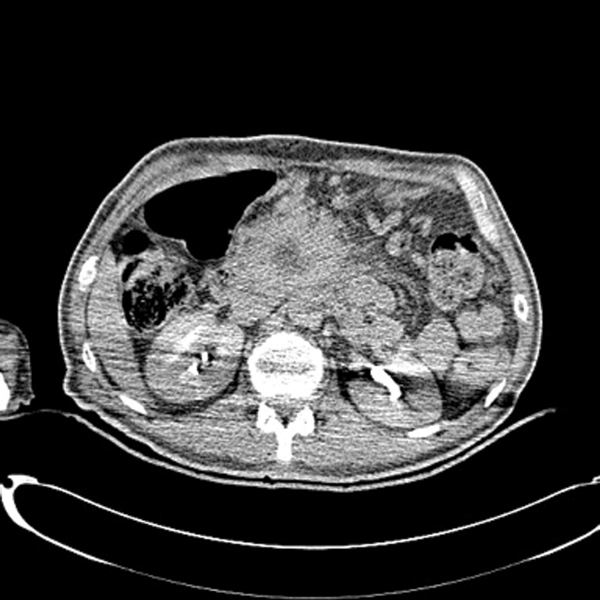
CT imaging of the chest, abdomen and pelvis provides information on the location of the tumour, its relationship to vascular and other adjacent structures, and the presence or absence of extra-pancreatic disease, see figure 1.
In the UK, all patients with suspected pancreatic cancer are discussed at a local hepatopancreaticobiliary (HPB) multidisciplinary meeting for treatment planning decisions, see figure 2.
Tumour staging
The staging of the disease is crucial as it guides further management. Criteria for surgical operability are defined in table 2. Modern multislice CT accurately predicts resectability in 80-90% of patients.15 If surgery is contemplated then additional staging methods are sometimes used, such as laparoscopy, endoscopic ultrasonography (EUS), or positron emission tomography-CT (PET-CT, which is currently under investigation in the national PET PANC study). Locally advanced disease is defined as that which is inoperable but has not progressed to distant metastases.
Differential diagnoses
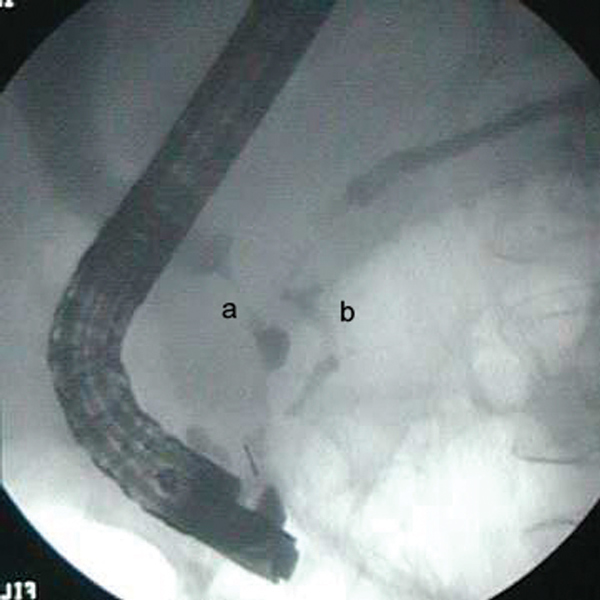
Tissue diagnosis of a pancreatic mass is usually indicated to confirm adenocarcinoma, although this should not delay surgical resection.7 This may be achieved by biliary brushings taken at the time of endoscopic retrograde cholangiopancreatography (ERCP) see figure 3, EUS-guided fine needle aspiration (EUS-FNA), or by percutaneous biopsy. There are a number of other cancers that can affect the pancreas, such as neuroendocrine tumours and lymphoma. Pancreatic cystic lesions may be malignant or benign and require careful investigation. Chronic pancreatitis and autoimmune pancreatitis can mimic malignant lesions.16
Management
Resection surgery
In series from specialised centres, more than 10% of patients may have resectable disease at presentation, but in larger population-based studies the number undergoing resection with curative intent may be as low as 3%.17, 18 Even after resection, median survival is only 10 to 20 months and no more than 5-20% of resected patients survive five years.19 The surgical management depends on the location of the tumour. A Whipple's pancreatoduodenectomy, with or without pylorus preservation, is usually offered for operable pancreatic head lesions but this is a major undertaking and so patient selection is crucial.
This operation is usually done via laparotomy but laparoscopic techniques are in development.20 Pancreatic tail lesions are rarely resectable but if appropriate a left pancreatectomy is offered. The spleen is usually removed so splenic vascular involvement is not a contraindication. There is considerable evidence that regional HPB centres performing high volumes of resections have better outcomes with respect to patient mortality than low volume centres.15 As such, HPB surgery has become more centralised in the UK, since the introduction of the National Cancer Plan in 2000.
Chemotherapy
Palliative chemotherapy has been shown to improve both quality of life and survival in advanced pancreatic cancer, when compared with best supportive care.21 In both the US and Europe, gemcitabine is the most commonly used agent, having shown improved efficacy over 5-fluorouracil.22 The UK GemCap study, a phase III multicentre, randomised clinical trial comparing gemcitabine alone or in combination with capecitabine for the treatment of 533 patients with advanced pancreatic cancer, showed a trend towards improved survival benefit with combination therapy (median 7.1 vs 6.2 months).23
Very recently, the French randomised study of FOLFIRINOX (fluorouracil, leucovorin, irinotecan and oxaliplatin) versus gemcitabine chemotherapy, showed a significantly improved survival in the FOLFIRINOX group (median 11.1 vs 6.8 months).24 Further studies into combination regimens are needed.
Trials of biological agents such as VEGF inhibitors in advanced disease have been largely unsatisfactory.25 However, the Canadian phase III trial of gemcitabine with erlotinib (a small molecule EGFR inhibitor) compared with gemcitabine alone, showed a significantly improved overall survival in the combination arm, albeit with a median survival of only 6.2 vs 5.9 months.26
Currently, the addition of radiotherapy in advanced disease is controversial but further studies are ongoing and it has a role for treatment of symptomatic metastatic bone lesions.27
Finally, there is evidence that adjuvant chemotherapy following surgery significantly improves survival but there is no benefit of using chemoradiation.28
Biliary drainage
In patients with potentially resectable disease, preoperative biliary stenting via ERCP is now not usually indicated, unless the patient is severely jaundiced or has cholangitis, or there is diagnostic uncertainty.
In a Dutch study of 196 patients randomised to either early surgery or preoperative biliary drainage followed by surgery, the rates of serious complications were 39% in the early surgery group and 74% in the biliary drainage group; p29
In patients with locally advanced or metastatic disease, endoscopic stenting is currently the accepted initial treatment for the palliation of jaundiced patients, with a lower complication rate than percutaneous drainage or surgical bypass; although there is a risk of stent occlusion and need for repeat procedures. Exceptions include patients undergoing laparotomy in whom curative resection is found to be impossible, who are likely best served with concomitant bypass surgery.30
Most patients are initially managed with endoscopic placement of a plastic stent at first presentation, although there is developing interest in the use of fully covered self-expanding metal stents (SEMS), which can be removed later if necessary.
Gastric outlet obstruction
Pancreatic cancer commonly causes gastric outlet obstruction, with an incidence of 10-20% in published studies.31 Relief of this complication can be achieved either by surgical bypass (laparoscopic or via open laparotomy) or by endoscopic insertion of SEMS. In general, patients with locally advanced disease and a good performance status are candidates for surgical bypass, while frail patients with widespread metastatic disease are best palliated with endoscopic stenting to minimise short-term complications, time to restoration of oral intake and hospital stay.30
Pain control, nutrition and end of life care
Patients with pancreatic cancer are best managed in a multidisciplinary environment with close collaboration between GPs, hospital physicians, palliative care consultants and allied health professionals such as dietitians, and specialist and practice nurses.
Severe intractable abdominal or back pain is common and such patients may need increasing analgesia as defined by the WHO analgesic ladder and access to palliative care services.7 In those whose pain is not controlled by standard nonopiate and opiate analgesia, coeliac plexus block, either percutaneously or via EUS, plays an occasional role.
Patients with malignant pancreatic duct obstruction often lose weight rapidly and require pancreatic enzyme replacement in addition to nutritional supplementation. In a randomised double blind placebo-controlled trial of pancreatic enzyme treatment, patients on pancreatic enzymes gained 1.2% (0.7 kg) bodyweight whereas patients on placebo lost 3.7% (2.2 kg), p=0.02.32 The study group received 25,000 unit pancreatin capsules and used two capsules during main meals and one capsule during snacks. Involvement with the local dietetics service should be encouraged.
Depression is extremely common in pancreatic cancer and may require specific treatment. Patients and their families can benefit from psychological support.7,33
Conclusion
Pancreatic cancer has a dismal prognosis and its diagnosis can be difficult. While rapid weight loss and jaundice clearly require urgent investigation, late onset diabetes and abdominal or back pain in an elderly patient may also be presenting features.
CT is a first-line investigation and if a pancreatic mass is found, multidisciplinary team involvement is mandatory for treatment planning.
A minority of patients will be eligible for resectional surgery and require careful assessment.
In patients with advanced disease, there are a number of treatments which can prolong life and improve symptoms but close collaboration between primary, secondary and hospice care is needed to support patients and their families.
REFERENCES
1 Parkin DM, Pisani P, Ferlay J. Global cancer statistics. CA Cancer J Clin 1999;49(1):33-64
2 Jemal A, Thomas A, Murray T et al. Cancer statistics, 2002. CA Cancer J Clin 2002;52:23-47
3 Hawes RH, Xiong Q, Waxman I et al. A multispecialty approach to the diagnosis and management of pancreatic cancer. Am J Gastroenterol 2000;95(1):17-31
4 Sant M, Allemani C, Santaquilani M et al. EUROCARE-4. Survival of cancer patients diagnosed in 1995-1999. Results and commentary. Eur J Cancer 2009;45(6):931-91
5 Watanabe I, Satoshi Sasaki MD, Masaru Konishi et al. Onset symptoms and tumor locations as prognostic factors of pancreatic cancer. Pancreas 2004;28(2):160-5
6 Papadoniou N, Kosmas C, Gennatas K et al. Prognostic factors in patients with locally advanced (unresectable) or metastatic pancreatic adenocarcinoma: a retrospective analysis. Anticancer Research 2008;28:543-50
7 Pancreatic Section of the British Society of Gastroenterology, Pancreatic Society of Great Britain and Ireland, Association of Upper Gastrointestinal Surgeons of Great Britain and Ireland, Royal College of Pathologists, Special Interest Group for Gastro-Intestinal Radiology. Guidelines for the management of patients with pancreatic cancer periampullary and ampullary carcinomas.Gut 2005;54(Suppl V):v1-v16
8 Grocock CJ, Vitone LJ, Harcus MJ et al. Familial pancreatic cancer: a review and latest advances. Adv Med Sci 2007;52:37-49
9 Lowenfels AB, Maisonneuve P, Cavallini G et al. Hereditary pancreatitis and the risk of pancreatic cancer. J Nat Cancer Inst 1997;89(6):442-6
10 Rebours V, Boutron-Ruault M-C, MatthieuSchnee M et al. Risk of pancreatic adenocarcinoma in patients with hereditary pancreatitis: a national exhaustive series. Am J Gastroenterol 2008;103:111-9
11 Lowenfels AB, Maisonneuve P, DiMagno EP et al. Pancreatitis and the risk of pancreatic cancer. N Engl J Med 1993;328(20):1433-7
12 Ben Q, Xu M, Ning X et al. Diabetes mellitus and risk of pancreatic cancer: a meta-analysis of cohort studies. Eur J Cancer 2011; Mar 31 [Epub ahead of print]
13 Ghadirian P, Lynch HT, Krewski D. Epidemiology of pancreatic cancer: an overview. Cancer Detect Prev 2003;27:87-93
14 Patel AV, Rodriguez C, Bernstein L et al. Obesity, recreational physical activity, and risk of pancreatic cancer in a large U.S. cohort. Cancer Epidemiol Biomarkers Prev 2005;14:459-466
15 Alexakis N, Halloran C, Raraty M et al. Current standards of surgery for pancreatic cancer. Br J Surg 2004;91:1410-27
16 de Castro SMM, de Nes LCF, Nio CY et al. Sclerosing pancreatitis in patients scheduled to undergo a pancreatoduodenectomy. HPB 2010;12:15-21
17 Warshaw AL and Fernandez-del Castillo C. Pancreatic carcinoma. N Engl J Med 1992:326(7);455-65
18 Bramhall SR and Neoptolemos JP. Advances in diagnosis and treatment of pancreatic cancer. Gastroenterologist 1995;3(4):301-10
19 Stojadinovic A, Brooks A, Hoos A et al. An evidence-based approach to the surgical management of resectable pancreatic adenocarcinoma. J Am Coll Surg 2003;196(6):954-64
20 Gagner M and Palermo M. Laparoscopic whipple procedure: review of the literature. J Hepatobil Pancreat Surg 2009;16(6):726-30
21 Glimelius B, Hoffman K, Sjoden P-O et al. Chemotherapy improves survival and quality of life in advanced pancreatic and biliary cancer. Ann Oncol 1996;7:593-600
22 Burris HA, Moore MJ, Andersen J et al. Improvements in survival and clinical benefit with gemcitabine as first-line therapy for patients with advanced pancreas cancer: a randomized trial. J Clin Oncol 1997;15:2403-13
23 Cunningham D, Chau I, Stocken DD et al. Phase III randomised comparison of gemcitabine versus gemcitabine plus capecitabine in patients with advanced pancreatic cancer. J Clin Oncol 2009;27(33):5513-8
24 Conroy T, Desseigne F, Ychou M et al. FOLFIRINOX versus gemcitabine for metastatic pancreatic cancer.
N Engl J Med 2011;364(19):1817-25
25 Kindler HL, Niedzwiecki D, Hollis D et al. Gemcitabine plus bevacizumab compared with gemcitabine plus placebo in patients with advanced pancreatic cancer: phase III trial of the Cancer and Leukemia Group B (CALGB 80303). J Clin Oncol 2010;28(22):3617-22
26 Moore MJ, Goldstein D, Hamm J et al. Erlotinib plus gemcitabine compared with gemcitabine alone in patients with advanced pancreatic cancer: a phase III trial of the National Cancer Institute of Canada Clinical Trials Group. J Clin Oncol 2007;25(15):1960-6
27 Von Wichert G, Seufferlein T, Adler G. Palliative treatment of pancreatic cancer. J Digest Dis 2008;9;1-7
28 Thomas A, Dajani K, Neoptolemos JP et al. Adjuvant therapy in pancreatic cancer. Dig Dis 2010;28(4-5):684-92
29 van der Gaag NA, Rauws EAJ, Casper HJ et al. Preoperative biliary drainage for cancer of the head of the pancreas. N Engl J Med 2010;362:129-37
30 Huggett MT, Ghaneh P, Pereira SP. Drainage and bypass procedures for palliation of malignant diseases of the upper gastrointestinal tract. Clin Oncol (R Coll Radiol) 2010;22(9):755-63
31 Jeurnink SM, Steyerberg EW, van Hooft JE et al. Surgical gastrojejunostomy or endoscopic stent placement for the palliation of malignant gastric outlet obstruction (SUSTENT study): a multicenter randomized trial. Gastrointest Endosc 2010;71:490-9
32 Bruno MJ, Haverkort EB, Tijssen GP et al. Placebo controlled trial of enteric coated pancreatin microsphere treatment in patients with unresectable cancer of the pancreatic head region. Gut 1998;42:92-96
33 Holland JC, Korzun AH, Tross S et al. Comparative psychological disturbance in patients with pancreatic and gastric cancer. Am J Psychiatry 1986;143(8):982-6
34 Callery MP, Chang KJ, Fishman EK et al. Pretreatment assessment of resectable and borderline resectable pancreatic cancer: expert consensus statement. Ann Surg Oncol 2009;16:1727-33
ARTICLE IN PDF
 Download this article in PDF format
EXTERNAL WEBLINKS
US National Cancer Institute
Supportive and palliative care
UK NICE