SEARCH

Be vigilant for patients with coeliac disease. PRACTITIONER 2009;253(1722):19-22
Be vigilant for patients with coeliac disease
01 Oct 2009
AUTHORS
Dr Kate E Evans
MRCP
Clinical research fellow
Dr John S Leeds
MRCP
Specialist registrar in gastroenterology
Dr David S Sanders
MD, FRCP, FACG Consultant gastroenterologist
Gastroenterology & Liver Unit,
Royal Hallamshire Hospital,
Sheffield
Article
Coeliac disease is defined as a state of heightened immunological responsiveness to ingested gluten in genetically susceptible individuals.1 Historically it has been considered an uncommon, paediatric condition presenting with diarrhoea, weight loss, and failure to thrive. However, recent population studies show that coeliac disease is a common condition affecting around 1 in 100 people.2 The estimated ratio of diagnosed to undiagnosed individuals is 1:8,3 and the average delay in diagnosis is reported to be 11 years.4
The presentations are protean and patients are increasingly diagnosed later in life. The contemporary coeliac patient is diagnosed between the ages of 40 and 60, has a normal or even high BMI, and subtle symptoms.5,6
Presentation
Recognition of the coeliac iceberg has improved understanding and detection of coeliac disease (see figure 2, attached).7 This concept demonstrates the clinical variability of coeliac disease and helps us to understand its systemic nature.
The highest stratum of the iceberg (above the waterline) describes patients with typical gastrointestinal (GI) symptoms such as diarrhoea and weight loss. These patients usually seek medical advice and present to GI services where the diagnosis may be made.
The subsequent stratum (just under the water) contains those patients considered to have atypical presentations. They may have vague, non-specific GI symptoms such as bloating, or conditions associated with coeliac disease such as iron deficiency anaemia, osteoporosis and persistently abnormal liver function tests.4,8,9 Patients are often identified in screening groups which would include those with:
• type 1 diabetes
• autoimmune thyroid disease
• a first-degree relative with coeliac disease
There are further, deeper layers of the iceberg. Latent coeliac disease describes two groups of patients. First, those who have at some stage had a normal duodenal biopsy while on a regular diet, and then develop villous atrophy later in life. Second, and much more rarely, patients may have histological features of villous atrophy but continue on a gluten-containing diet and at re-biopsy revert to normal duodenal mucosa. Latent coeliac disease is rare, management is contentious, and specialist gastroenterological advice should be sought.
The fourth stratum of the iceberg describes individuals with positive serological testing - tissue transglutaminase (TTG) or endomysial antibody (EMA) - but normal histology on duodenal biopsy. These findings are often seen in first-degree relatives of patients with coeliac disease,10 as well as those with autoimmune diseases such as hypothyroidism. These patients should be counselled that they do not have coeliac disease but may develop it in the future.
Diagnosis
Recent NICE guidelines aim to improve recognition and diagnostic rates in coeliac disease.11 They identify patient groups who should be offered testing. These are summarised in table 1, attached. They also identify associated conditions (table 2, attached) and these patients should be considered for serological testing for coeliac disease.
A high index of suspicion and an aggressive case-finding strategy appears to have the most cost-effective detection rates.
The coeliac iceberg demonstrates that the presence of relevant symptoms is not essential for a diagnosis of coeliac disease. Additionally, positive serological testing alone is not sufficient to confirm the diagnosis. EMA and TTG have a combined sensitivity and specificity of over 90% when used in combination in selected populations such as those identified in tables 1 and 2.12 However, false positives occur in conditions such as inflammatory bowel disease, and autoimmune disease. Conversely antibody-negative disease accounts for about 9% of cases.13 Causes of antibody-negative coeliac disease are listed in table 3, opposite. IgA deficiency is a cause of false negatives and IgA levels should be checked at the same time as EMA and TTG. Anti-gliadin antibodies have no role in contemporary diagnosis of coeliac disease.
It is important that patients consume a gluten-containing diet for six weeks before serological testing and biopsy if necessary. A gluten-free diet (GFD) renders both blood tests and biopsy inaccurate for the purpose of diagnosis. If a patient is unwilling or unable to follow a gluten-containing diet, they should be referred to a gastroenterologist for further discussion.
All those with positive serological tests, and those for whom clinical suspicion is high even if seronegative, should be referred to a gastroenterologist for a duodenal biopsy to confirm or exclude coeliac disease.
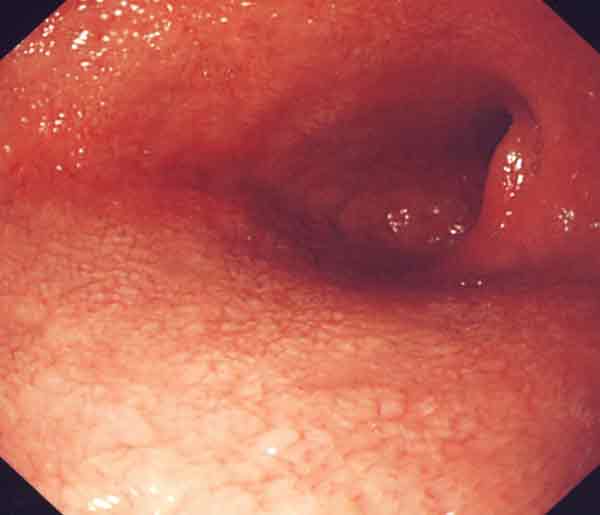
Diagnosis of coeliac disease requires the demonstration of villous atrophy in the small bowel which improves when gluten is withdrawn. There are two main causes of diagnostic uncertainty; first, not all villous atrophy is coeliac, and second, different degrees of histological change may be present.
Alternative causes of villous atrophy include:
• Crohn’s disease
• Allergies to proteins other than gluten e.g. chicken, soya or cow’s milk
• Whipple’s disease14
Histological variability occurs between individuals and within the individual.15 Increased intraepithelial lymphocytes and crypt hyperplasia are histological changes which fall short of the required villous atrophy. It is particularly important in these cases to gather supportive evidence that the patient may have coeliac disease such as:
• a positive family history
• functional hyposplenism and
• typical human leucocyte antigen status (DQ2 or DQ8).
When diagnostic uncertainty exists one strategy is to repeat biopsies following a period of gluten challenge (at least four slices of bread per day for four to six weeks) or consider jejunal biopsies via enteroscopy.16
HLA haplotyping should not be used for the initial diagnosis of coeliac disease but its high negative predictive value can be useful for the gastroenterologist. Around 95% of patients with coeliac disease carry the HLA – DQ2 allele with the rest usually being HLA – DQ8 positive.1 Despite
15 - 20% of Caucasians carrying the HLA – DQ2 haplotype, the absence of this haplotype virtually excludes coeliac disease.
Referral
Any patient with a positive EMA or TTG should be referred to a gastroenterologist for a small bowel biopsy. Seronegative patients with a high clinical suspicion such as a positive family history (attributable risk 10% in first-degree relatives) should be referred. Patients with signs or symptoms suggestive of coeliac disease who are on a GFD and are unable to reintroduce gluten should also be referred. This last group should be made particularly aware that a GFD can make it difficult to confirm a diagnosis of coeliac disease and this may have implications for their access to prescribed gluten-free foods.
Long-term consequences of undiagnosed disease
Patients with coeliac disease are advised to follow a GFD to reduce symptoms and complications. Evidence is emerging that the risks of symptomatically overt and silent disease may be different.
Malignancy
Contemporary population studies of coeliac disease show only a modest risk of malignancy and death. The overall hazard ratio for death in coeliac disease is reported to be as low as 1.3 with most of the excess risk occurring in the year after diagnosis.17 Another study with a 20 year follow-up found no increased risk of malignancy in seropositive individuals (who did not have a confirmatory biopsy but are likely to have untreated coeliac disease) on a gluten-containing diet.18 There is evidence for an increased risk of non-Hodgkin’s lymphoma and small bowel cancer.19 While the risk of small bowel cancer may be 40 times that of the general population, it remains a very rare cancer and absolute risk is low. Intriguingly, patients with coeliac disease may have lower rates of breast cancer and hypertension.17,20
Reduced bone mineral density
Coeliac disease is known to be associated with reduced bone mineral density (both osteopaenia and osteoporosis). The prevalence of abnormal bone mineral density is reported to be around 40% and may lead to an increased fracture risk.21 This increased risk is small, and bone mineral density usually improves or stabilises once gluten has been excluded from the diet. The excess fracture risk is small overall, adjusted odds ratio (OR) 1.3, even when considering elderly patients where the risk is highest.22 It has been calculated to be two to three additional hip fractures per ten years of follow-up.
Reproductive problems
Infertility, reduced fertility and an increased risk of an adverse outcome during pregnancy have all been attributed to undiagnosed coeliac disease. In one study, women with undiagnosed coeliac disease had increased risk of intrauterine growth retardation (OR 1.62), low birthweight (OR 2.13), and preterm birth (OR 1.71).23
However, another large study showed no difference between those with undiagnosed coeliac disease and healthy individuals.24
Management
Coeliac disease is treated by lifelong adherence to a GFD. Only 50-70% of patients adhere to a GFD because of cost, poor palatability, and social difficulties.25 Weight gain, depression, and anxieties about socialising with friends are common complaints about the diet. Women perceive greater disease burden than men, reporting significantly poorer subjective health and quality of life.26 Symptomatic patients can improve rapidly on a GFD. Those with screen-detected disease may consider themselves healthy with a quality of life similar to that of the general population. In these cases, a GFD is less obviously beneficial and adherence may be worse.27, 28
Provision of practical advice and support from the primary care team is known to improve adherence to a GFD, and the patient’s experience.
As well as prescribing and giving advice on gluten-free food, GPs have an important role in discussing familial risk and advising on vaccination against influenza and pneumococcus.
Practice nurses are well placed to encourage exercise, smoking cessation, and moderation in (gluten-free) alcohol intake to improve osteoporosis risk.
National guidelines recommend the involvement of a dietitian to provide education about the GFD and prevent dietary imbalance.16 Dietitians can review GFD adherence, provide information about Coeliac UK’s gluten-free food and drink directory, and encourage contact with this and other support groups.
Follow up
The primary care team need to be alert to the complications of coeliac disease and other associated conditions.
Patients with coeliac disease should be followed up on an annual basis to allow assessment of adherence with the diet, manage complications and detect any micronutrient deficiencies.16
REFERENCES
1 American Gastroenterological Association. American Gastroenterological Association medical position statement: Coeliac sprue. Gastroenterology 2001; 120: 1522-5
2 Sanders DS, Patel D, Stephenson TJ, et al. A primary care cross-sectional study of undiagnosed adult coeliac disease. Eur J Gastroenterol Hepatol 2003; 4: 407-13
3 van Heel DA, West J. Recent advances in coeliac disease. Gut 2006; 55(7): 1037-46
4 Green P, Stavropoulos S, Panagi S et al. Characteristics of adult celiac disease in the USA: results of a national survey. Am J Gastroenterol 2001; 96: 126-31
5 West J, Logan RF, Hill PG et al. Seroprevalence, correlates, and characteristics of undetected coeliac disease in England. Gut 2003; 52(7): 960-5
6 Dickey W, Bodkin S. Prospective study of body mass index in patients with coeliac disease. BMJ 1998; 317(7168): 1290
7 Fasano A, Catassi C. Current approaches to diagnosis and treatment of celiac disease: an evolving spectrum. Gastroenterology 2001: 120: 636-651
8 Sanders DS, Carter MJ, Hurlstone DP et al. Association of adult coeliac disease with irritable bowel syndrome: a case-control study in patients fulfilling the ROME 2 criteria referred to secondary care. Lancet 2001; 358: 1504-8
9 Sanders DS, Hurlstone DP, Stokes RO et al. The changing face of coeliac disease: Experience of a single University Hospital in South Yorkshire. Postgrad Med J 2002; 78: 31-33
10 Fasano A, Berti I, Geraduzzi T et al. Prevalence of coeliac disease in at-risk and not-at-risk groups in the United States. Arch Intern Med 2003; 163: 286-92
11 National Institute for Health and Clinical Excellence. Coeliac disease: recognition and assessment of coeliac disease. NICE clinical guideline 86. London. NICE. 2009
12 Hopper AD, Cross SS, Hurlstone DP etal. Pre-endoscopy serological testing for coeliac disease: evaluation of a clinical decision tool. BMJ 2007;334:729
13 Salmi TT, Collin P, Korponay-Szabo IR et al. Endomysial antibody-negative coeliac disease: clinical characteristics and intestinal autoantibody deposits. Gut 2006; 55(12): 1746-53
14 Evans KE, Sanders DS. Joint BAPEN and British Society of Gastroenterology Symposium on ‘Coeliac disease: basics and controversies’. Coeliac disease: optimising the management of patients with persisting symptoms? Pro Nutr Soc 2009; 68(3), 242-8
15 Hopper AD, Cross SS, Sanders DS. Patchy villous atrophy in adult patients with suspected gluten-sensitive enteropathy: is a multiple duodenal biopsy strategy appropriate? Endoscopy 2008; 40(3): 219-24.
16 Ciclitira P. Interim Guidelines for the Management of Patients with Coeliac Disease. British Society of Gastroenterology 2002; www.bsg.org.uk/clinical_prac/guidelines/coeliac.htm
17 West J, Logan RFA, Smith CJ et al. Malignancy and mortality in people with coeliac disease: population based cohort study. BMJ 2004;329:716-9
18 Lohi S, Maki M, Montonen J et al. Malignancies in cases with screening-identified evidence of coeliac disease: a long-term population-based cohort study. Gut 2009;58:643-7
19 Card TR, West J, Holmes GKT. Risk of malignancy in diagnosed coeliac disease: a 24-year prospective, population- based, cohort study. Aliment Pharmacol Ther 2004; 20: 769-75
20 Solaymani-Dodaran M, West J, Logan RFA. Long-term mortality in people with celiac disease diagnosed in childhood compared with adulthood: a population-based cohort study. Am J Gastroenterol 2007; 102: 864-870.
21 Pistorius LR, Sweidan WH, Purdie DW, et al. Coeliac disease and bone mineral density in adult female patients. Gut 1995; 47: 639-642
22 West J, Logan RF, Card TR et al. Fracture risk in people with celiac disease: a population based cohort study. Gastroenterology 2003; 125: 429-43
23 Ludvigsson JF, Montgomery SM, Ekbom A. Celiac disease and risk of adverse fetal outcome: a population-based cohort study. Gastroenterology 2005 129: 454-63
24 Greco L, Veneziano A, Di Donato L et al. Undiagnosed coeliac disease does not appear to be assoiated with unfavourable outcome of pregnancy. Gut 2004 53: 149-51
25 Leffler DA, Edwards-George J, Dennis M et al. Factors that influence adherence to a gluten-free diet in adults with celiac disease. Dig Dis Sci 2008;53:1573-81
26 Hallert C, Grännö C, Hultén S et al. Living with coeliac disease: controlled study of the burden of illness. Scand J Gastroenterol 2002;37:39-42
27 Nachman F, Maurino E, Vazquez H et al. Quality of life in celiac patients: prospective analysis on the importance of clinical severity at diagnosis and the impact of treatment. Dig Liver Dis 2009;41:15-25
28 Fabiani E, Taccari LM, Ratsch IM et al Compliance with gluten-free diet in adolescents with screening-detected celiac disease: a 5-year follow-up study. J Pediatr 2000;136:841-3.
USEFUL INFORMATION
Coeliac uk
www.coeliac.org.uk
British Society of Gastroenterology
www.bsg.org.uk
Primary Care Society for Gastroenterology
www.pcsg.org.uk
 Download this article in PDF format