SEARCH

Maini A, O’Brien A. Managing cardiovascular risk key in non-alcoholic fatty liver disease. Practitioner July/Aug 2022;266(1860):11-15
Managing cardiovascular risk key in non-alcoholic fatty liver disease
27 Jul 2022
AUTHORS
Dr Alexander Maini MA MBBS PhD MRCP, ST4 in Gastroenterology, North West Thames Region, UK
Professor Alastair O’Brien BSc MBBS PhD FRCP, Professor of Experimental Hepatology and Consultant Hepatologist, UCL Institute for Liver and Digestive Health, London, UK
Competing interests: None
Article
Non-alcoholic fatty liver disease (NAFLD) is estimated to affect up to one in five people in the UK. Between 10 and 30% of NAFLD patients will develop non-alcoholic steatohepatitis (NASH) and some will progress to cirrhosis. Most people living with NAFLD are thought to remain undiagnosed and many are asymptomatic. Obesity, hypertension, type 2 diabetes and hyperlipidaemia are risk factors for NAFLD, and NAFLD is considered to be the liver component of metabolic syndrome. NASH is associated with a more than 10-fold increased risk of liver-related death and a doubling of cardiovascular risk. The liver fibrosis stage is the key predictor for NAFLD progression and poor outcomes. At diagnosis up to a third of patients with NASH will have advanced fibrosis which in some cases will have progressed to cirrhosis. In patients with NASH and fibrosis at presentation although approximately 21% of patients will have some regression of fibrosis, 38% will progress over five years’ follow-up. NAFLD is a risk factor for type 2 diabetes, hypertension and chronic kidney disease, atrial fibrillation, MI, ischaemic stroke and death from cardiovascular causes. Cardiovascular risk should be stratified for all NAFLD patients and any cardiovascular risk factors managed aggressively. Patients should be given lifestyle advice aimed at weight loss and increased physical activity. Weight loss of 5% is associated with improvement in liver fat and liver enzymes, and weight loss ≥ 7%, and particularly ≥ 10%, is associated with NASH resolution and improvement in fibrosis.
Non-alcoholic fatty liver disease (NAFLD) is estimated to affect up to one in five people in the UK.1
Rates of NAFLD are increasing in children as well as adults and the worldwide prevalence is projected to continue to rise alongside the obesity epidemic beginning in childhood.2
Between 10 and 30% of individuals with NAFLD will develop non-alcoholic steatohepatitis (NASH) and some will progress to cirrhosis.3 Disease course prediction is imprecise.
Most people living with NAFLD are thought to remain undiagnosed and many are asymptomatic. Although the estimated global prevalence of NAFLD is approximately 25%, a study from four European primary care databases including more than 18 million patients found 0.7% of patients had a recorded diagnosis of either NAFLD or NASH strongly suggesting that this condition is underdiagnosed.4
Risk factors for NAFLD include obesity, hypertension, type 2 diabetes and hyperlipidaemia, and NAFLD is considered to be the liver component of metabolic syndrome.5 Recognising this close association with metabolic risk, an international consensus has proposed the term metabolic-associated fatty liver disease (MAFLD)6 to describe the presence of hepatic steatosis plus one or more of the following: overweight/obesity, type 2 diabetes or evidence of two or more features of metabolic dysfunction. Estimates for a genetic predisposition range from 20 to 70%.7
The risk of liver-related death is more than ten times higher in patients with NASH compared with those who do not have the condition, 2.8% vs 0.2%, and cardiovascular risk is doubled.3
Up to a third of patients with NASH will have advanced fibrosis, which in some cases will have progressed to cirrhosis, at diagnosis. In those with advanced fibrosis at presentation, complications of cirrhosis are the third most common cause of death, following cardiovascular events and non-hepatic malignancies.
In patients with NASH and fibrosis at presentation, although around 21% of patients will have some regression of fibrosis, 38% of patients will progress over five years’ follow-up.5
NAFLD is often detected on routine abdominal ultrasound examination or blood testing carried out for other reasons which may show mild increases in serum aminotransferases (with ALT greater than AST) and/or γ-GT. It is worth noting that in around half of patients with NAFLD, liver function tests will be within normal limits.
Hepatomegaly is not usually detectable clinically. However, obesity or type 2 diabetes are commonly associated findings and NAFLD should be considered in patients with these conditions.
NAFLD can impact on quality of life. Fatigue and excessive daytime sleepiness are associated with worse health-related quality of life in some patients.8
Diagnosis
NAFLD is formally defined by the presence of steatosis in > 5% of hepatocytes according to histological analysis or by a proton density fat fraction (providing a rough estimation of the volume fraction of fatty material in the liver), > 5.6% assessed by proton magnetic resonance spectroscopy or quantitative fat/water selective magnetic resonance imaging. This can be approximated using elastography. Although some patients have more than one liver condition, a diagnosis of NAFLD also requires the exclusion of other causes of liver disease.9
In cases of suspected or confirmed NAFLD the history, clinical examination and investigations should focus on features of metabolic syndrome e.g. hypertension, type 2 diabetes and hyperlipidaemia.
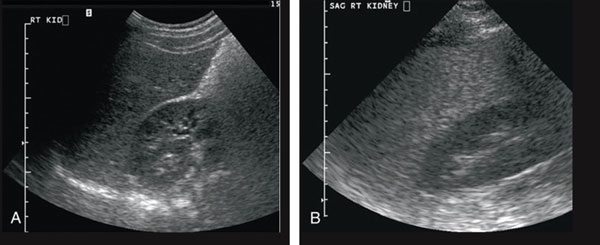
Although an alcohol history is mandatory to exclude alcohol-related liver disease, many patients will have a combination of alcohol and non-alcohol related risk factors. Screening blood tests should be carried out to exclude other causes of liver disease such as hepatitis B and C and autoimmune causes. An abdominal ultrasound examination should also be performed, see figure 1.
The presence or absence of fibrosis at diagnosis or the development of fibrosis following diagnosis are the key determinants of progression in NAFLD.10 Routine liver blood tests may assist diagnosis of advanced liver fibrosis in patients with NAFLD e.g. low platelet count, elevated AST: ALT ratio, and Fibrosis-4 score.11 However, blood test results should be interpreted with caution if clinical suspicion is high as the efficacy of many non-invasive fibrosis investigations in unselected populations with low prevalence of advanced fibrosis, such as primary care, is uncertain.12
Assessing fibrosis
As the liver fibrosis stage is the key predictor for NAFLD progression and poor outcomes identification of significant fibrosis is the most important part of initial assessment.13
The enhanced liver fibrosis (ELF) blood test in patients diagnosed with NAFLD can be used to detect advanced liver fibrosis in primary care.14 It uses a biomarker-based algorithm based on levels of hyaluronic acid, procollagen III amino terminal propeptide and tissue inhibitor of metalloproteinase I, combined. Although the ELF test has a high sensitivity and specificity for the detection or absence of advanced fibrosis it is less effective at detecting intermediate levels of fibrosis.
In patients referred to secondary or tertiary care, assessment of hepatic stiffness may be carried out using transient elastography, such as FibroScan. Using an ultrasound transducer, a vibration of low frequency and amplitude is passed through the liver, the velocity of which correlates with hepatic stiffness. Liver stiffness increases with worsening liver fibrosis (with a sensitivity and specificity of 80-95% depending on aetiology, when compared with liver biopsy and histological analysis as the gold standard test).15
Elastography can exclude cirrhosis but is less effective for determining lesser degrees of fibrosis. Furthermore, it cannot be used in patients with ascites or morbid obesity. It is also affected by the presence of inflammatory tissue or congestion.16
Meta-analysis has shown that validated non-invasive tests for liver fibrosis consistently detect otherwise unrecognised liver disease in the general population.12 Reliance on abnormal liver function tests will miss many patients with significant liver injury. The future stratification of chronic liver disease is likely to progress towards the use of non-invasive markers of liver fibrosis in the general population setting.
The Camden and Islington NAFLD Pathway uses two tests sequentially; Fibrosis-4 followed by ELF (for patients in the indeterminate range) to help GPs to triage referrals from primary care to specialist hepatology services.17
In a prospective study, this reduced the proportion of referrals for patients with stages 0-2 fibrosis (without significant liver disease) by 82%, increased referrals of advanced fibrosis and cirrhosis five fold and increased detection of cirrhosis three fold. A similar approach using blood test-based scores and transient elastography is recommended by European guidelines.9
Follow-up
Most patients will have little fibrosis and are also at low risk of progression. Adults with NAFLD are recommended to have repeat fibrosis assessment every three years and those under 18 every two years.9 Advice about lifestyle changes is imperative and any cardiovascular risk factors must be managed aggressively, see below.
Patients with an ELF score ≥ 10.51,18 or a transient elastography score ≥ 9, must be referred to a specialist in hepatology as they have a high likelihood of significant/advanced fibrosis. These tests will also be used in tertiary care to follow up those with advanced fibrosis.
Management
Cardiovascular risk
NAFLD is a risk factor for type 2 diabetes, hypertension, chronic kidney disease, atrial fibrillation, myocardial infarction, and ischaemic stroke as well as death from cardiovascular causes. Therefore, cardiovascular risk should be stratified for all NAFLD patients using tools such as QRISK3. Routine monitoring is required in patients with NAFLD treated with statins; only consider stopping treatment if liver enzyme levels double within three months of commencement (including patients with abnormal liver blood results at baseline).
Patients with NASH treated with atorvastatin have shown improvement in both liver enzyme levels and radiological steatosis. However, these improvements have not been seen in patients on simvastatin. There is very limited evidence that ACE inhibitors may improve fibrosis.19,20
Although omega-3 fatty acids may improve radiographic steatosis they are not recommended for treatment of NASH.21 They can be used to treat hypertriglyceridaemia in patients with NAFLD.22
Lifestyle changes
Lifestyle advice should target weight loss, increasing physical activity, and addressing cardiovascular risk factors, see table 1.
Weight loss of 5% is associated with improvement in liver fat and liver enzymes,23 and weight loss ≥ 7%, and particularly ≥ 10%, is associated with NASH resolution and improvement in fibrosis.24 Weight management programmes should include behaviour change strategies to increase physical activity levels, improve eating behaviour, the quality of the diet, and reduce energy intake. Calorie restriction is recommended (600 kcal/day deficit), aimed at losing 0.5-1.0 kg per week until the target weight is achieved.
Dietary changes should ensure a balanced diet that is tailored to the patient. Improving diet should always be encouraged as even in the absence of weight loss, there are other health benefits. Fructose consumption is a risk factor for the development of NAFLD and should be minimised.25
A recent systematic review and meta-analysis of randomised controlled trials (RCTs) of dietary interventions without prescribed or increased exercise or physical activity found that a Mediterranean diet reduced liver fat in NAFLD, even without calorie restriction.26 It also found that a hypocaloric diet favouring unsaturated fatty acids reduced liver transaminases.
A recent RCT compared intermittent calorie restriction (5:2 diet) and a low-carbohydrate high-fat diet (LCHF) with generalised lifestyle advice and found that both diets were superior to lifestyle advice alone in reducing steatosis and body weight (−7.4 kg and −7.3 kg, respectively, vs −2.5 kg).27 Liver stiffness improved on the 5:2 diet, but not the LCHF diet, and the 5:2 diet was associated with reduced low-density lipoprotein (LDL) levels and was better tolerated.
Very low calorie diets should only be considered, as part of a multicomponent weight management strategy, for those who are obese and who have a clinically assessed need to lose weight rapidly e.g. before joint replacement surgery.
Because of the multiplicative, rather than additive, nature of liver damage, the importance of staying within the national recommended limits for alcohol consumption of no more than 14 units a week on a regular basis, is vital.
Adults should complete at least 30 minutes of moderate or greater intensity physical activity on five or more days a week. People should be encouraged to increase their level of physical activity even if they do not lose weight as a result, because of other potential health benefits e.g. reduced risk of type 2 diabetes, cardiovascular disease and reduced liver fat content. Meta-analyses have shown that physical activity reduces intrahepatic lipid content and markers of hepatocellular injury, even in the absence of weight loss.28,29 Studies have not found differences in benefit between aerobic and resistance exercise.30
To prevent obesity, many individuals may need to do 45-60 minutes of moderate intensity activity a day, particularly if they do not reduce their energy intake, and if they have been obese and have lost weight 60-90 minutes of activity a day to avoid regaining weight.31 A managed approach with agreed goals that incorporate activities into everyday life and discourage inactivity is the most effective strategy.
Pharmacotherapy
Even in a clinical trial setting, fewer than 50% of patients are able to achieve ≥ 7% weight loss.32 Currently there are no drugs licensed for NASH and some clinicians in secondary or tertiary care may consider off-licence treatment with vitamin E or pioglitazone,33,34 see table 2.
Clinical trials
Many drugs are in the development pipeline and patients may wish to participate in clinical trials. For later stage clinical trials, regulators have mandated histological inclusion criteria and endpoints (resolution of NASH with no worsening of fibrosis and/or improvement in fibrosis by one stage or more with no worsening of NASH) usually after 12-18 months’ treatment, with longer term clinical endpoints needed for full registration.
Several drugs are currently in phase III trials. Obeticholic acid, a farnesoid X receptor agonist, demonstrated an improvement in fibrosis in patients with NASH and significant fibrosis.35 However, 51% of patients reported pruritus, in 28% this was of severe intensity, and raised LDL cholesterol, with many patients starting statins. Lanifibranor, a pan-peroxisome proliferator-activated receptor (pan-PPAR) agonist, led to an improvement of NASH.36 Semaglutide, a glucagon-like peptide-1 (GLP-1) receptor agonist demonstrated 12.5% weight loss at the highest dose compared with < 1% weight loss in the placebo group, which corresponded to 59% vs 17% resolution of NASH, but without any significant improvement in fibrosis.37
Bariatric surgery
Weight loss following bariatric surgery leads to reduced steatosis, steatohepatitis and fibrosis. There have been several uncontrolled studies demonstrating potential benefit, however the lack of RCTs precluded a Cochrane review concluding this is a validated strategy (though studies are ongoing).38
The optimum technique is still unknown and there remains a lack of long-term data. Early concerns about worsening fibrosis do not appear to have been borne out. Bariatric surgery should not be carried out in patients with advanced cirrhosis and portal hypertension. Gastric bypass and sleeve gastrectomy have led to weight loss and improvement in obesity-related comorbidities in Child-Pugh A cirrhosis.39
Conclusions
NAFLD has a substantial interpatient variability in prognosis with most patients never developing clinically significant liver disease. Careful management of cardiovascular risk is key as cardiovascular disease remains the primary cause of death in NAFLD. Diet and lifestyle modification to aid sustained weight loss is the mainstay of therapy.
Bariatric surgery appears to improve NASH, but RCT evidence is lacking. There are no drugs licensed for NASH, although several drugs are currently in advanced phase trials. Effective therapies are thus a research priority to reduce the anticipated burden of liver disease.
REFERENCES
1 www.britishlivertrust.org.uk
2 Cotter TG, Rinella M. Nonalcoholic fatty liver disease 2020: the state of the disease. Gastroenterology 2020;158(7):1851-64
3 Ekstedt M, Franzen LE, Mathiesen UL et al. Long-term follow-up of patients with NAFLD and elevated liver enzymes. Hepatology 2006;44:865-73
4 Alexander M, Loomis AK, van der Lei J et al. Risks and clinical predictors of cirrhosis and hepatocellular carcinoma diagnoses in adults with diagnosed NAFLD: real-world study of 18 million patients in four European cohorts. BMC Med 2019;17:95
5 Argo CK, Caldwell SH. Epidemiology and natural history of non-alcoholic steatohepatitis. Clin Liver Dis 2009;13:511-31
6 Eslam M, Sanyal AJ, George J, International Consensus Panel. MAFLD: a consensus-driven proposed nomenclature for metabolic associated fatty liver disease. Gastroenterology 2020;158:1999-2014. e1991
7 Eslam M, George J. Genetic contributions to NAFLD: leveraging shared genetics to uncover systems biology. Nat Rev Gastroenterol Hepatol 2020;17:40-52
8 Li W, Kadler BK, Brindley JH et al. The contribution of daytime sleepiness to impaired quality of life in NAFLD in an ethnically diverse population. Sci Rep 2022;12:5123
9 European Association for the Study of the Liver , European Association for the Study of Diabetes, European Association for the Study of Obesity. EASL-EASD-EASO Clinical Practice Guidelines for the management of non-alcoholic fatty liver disease. J Hepatol 2016;64:1388-1402
10 McPherson S, Hardy T, Henderson E et al. Evidence of NAFLD progression from steatosis to fibrosing-steatohepatitis using paired biopsies: implications for prognosis and clinical management. J Hepatol 2015;62:1148-55
11 Kaswala DH, Lai M, Afdhal NH. Fibrosis sssessment in nonalcoholic fatty liver disease (NAFLD) in 2016. Dig Dis Sci 2016;61:1356-64
12 Hagstrom H, Talback M, Andreasson A et al. Ability of noninvasive scoring systems to identify individuals in the population at risk for severe liver disease. Gastroenterology 2020;158:200-14
13 Hagstrom H, Nasr P, Ekstedt M et al. Fibrosis stage but not NASH predicts mortality and time to development of severe liver disease in biopsy-proven NAFLD. J Hepatol 2017;67:1265-73
14 Fagan KJ, Pretorius CJ, Horsfall LU et al. ELF score ≥ 9.8 indicates advanced hepatic fibrosis and is influenced by age, steatosis and histological activity. Liver Int 2015;35: 1673-81
15 Foucher J, Chanteloup E, Vergniol J et al. Diagnosis of cirrhosis by transient elastography (FibroScan): a prospective study. Gut 2006;55:403-08
16 Pavlov CS, Casazza G, Nikolova D et al. Transient elastography for diagnosis of stages of hepatic fibrosis and cirrhosis in people with alcoholic liver disease. Cochrane Database Syst Rev 2015;1:CD010542
17 Srivastava A, Gailer R, Tanwar S et al. Prospective evaluation of a primary care referral pathway for patients with non-alcoholic fatty liver disease. J Hepatol 2019;71: 371-78
18 Poynard T, Lassailly G, Diaz E et al. Performance of biomarkers FibroTest, ActiTest, SteatoTest, and NashTest in patients with severe obesity: meta analysis of individual patient data. PLoS One 2012;7:e30325
19 Nelson A, Torres DM, Morgan AE et al. A pilot study using simvastatin in the treatment of nonalcoholic steatohepatitis: A randomized placebo-controlled trial. J Clin Gastroenterol 2009;43:990-94
20 Yokohama S, Yoneda M, Haneda M et al. Therapeutic efficacy of an angiotensin II receptor antagonist in patients with nonalcoholic steatohepatitis. Hepatology 2004;40:1222-25
21 Argo CK, Patrie JT, Lackner C et al. Effects of n-3 fish oil on metabolic and histological parameters in NASH: a double-blind, randomized, placebo-controlled trial. J Hepatol 2015;62:190-97
22 Hardy T, Anstee QM, Day CP. Nonalcoholic fatty liver disease: new treatments. Curr Opin Gastroenterol 2015;31:175-83
23 Romero-Gomez M, Zelber-Sagi S, Trenell M. Treatment of NAFLD with diet, physical activity and exercise. J Hepatol 2017;67:829-46
24 Vilar-Gomez E, Martinez-Perez Y, Calzadilla-Bertot L et al. Weight loss through lifestyle modification significantly reduces features of nonalcoholic steatohepatitis. Gastroenterology 2015;149:367-78 e365
25 Ouyang X, Cirillo P, Sautin Y et al. Fructose consumption as a risk factor for non-alcoholic fatty liver disease. J Hepatol 2008;48:993-99
26 Houttu V, Csader S, Nieuwdorp M et al. Dietary interventions in patients with non-alcoholic fatty liver disease: a systematic review and meta-analysis. Front Nutr 2021;8:716783
27 Holmer M, Lindqvist C, Petersson S et al. Treatment of NAFLD with intermittent calorie restriction or low-carb high-fat diet - a randomised controlled trial. JHEP Rep 2021;3:100256
28 Katsagoni CN, Georgoulis M, Papatheodoridis GV et al. Effects of lifestyle interventions on clinical characteristics of patients with non-alcoholic fatty liver disease: a meta-analysis. Metabolism 2017;68:119-32
29 Orci LA, Gariani K, Oldani G et al. Exercise-based Interventions for nonalcoholic fatty liver disease: a meta-analysis and meta-regression. Clin Gastroenterol Hepatol 2016;14:1398-1411
30 Golabi P, Locklear CT, Austin P et al. Effectiveness of exercise in hepatic fat mobilization in non-alcoholic fatty liver disease: systematic review. World J Gastroenterol 2016;22:6318-27
31 National Institute for Health and Care Excellence. CG 189. Obesity: identification, assessment and management of overweight and obesity in children, young people and adults. NICE. London. 2014
32 Bray GA, Fruhbeck G, Ryan DH, Wilding JP. Management of obesity. Lancet 2016;387:1947-56
33 National Institute for Health and Care Excellence. NG49. Non-alcoholic fatty liver disease (NAFLD): assessment and management NICE. London. 2016
34 Sanyal AJ, Chalasani N, Kowdley KV et al. Pioglitazone, vitamin E, or placebo for nonalcoholic steatohepatitis. N Engl J Med 2010;362:1675-85
35 Younossi ZM, Ratziu V, Loomba R et al. Obeticholic acid for the treatment of non-alcoholic steatohepatitis: interim analysis from a multicentre, randomised, placebo-controlled phase 3 trial. Lancet 2019;394:2184-96
36 Francque SM, Bedossa P, Ratziu V et al. A randomized, controlled trial of the pan-PPAR agonist lanifibranor in NASH. N Engl J Med 2021;385:1547-1558l
37 Newsome PN, Buchholtz K, Cusi K et al. A placebo-controlled trial of subcutaneous semaglutide in nonalcoholic steatohepatitis. N Engl J Med 2021;384:1113-24
38 Chavez-Tapia NC, Tellez-Avila FI, Barrientos-Gutierrez T et al. Bariatric surgery for non-alcoholic steatohepatitis in obese patients. Cochrane Database Syst Rev 2010:CD007340
39 Taitano AA, Markow M, Finan JE et al. Bariatric surgery improves histological features of nonalcoholic fatty liver disease and liver fibrosis. J Gastrointest Surg 2015;19:429-36; discussion 436-27
ARTICLE IN PDF
 Download this article in PDF format
EXTERNAL WEBLINKS
For healthcare professionals
European Association for the Study of the Liver
Clinical practice guidelines
For patients
Support groups and information for patients