SEARCH

Mulay A, El Menabawey T, Johnson GJ. Multidisciplinary care is key in chronic pancreatitis. Practitioner July/August 2021;265(1850):11-15
Multidisciplinary care is key in chronic pancreatitis
26 Jul 2021
AUTHORS
Dr Akhilesh Mulay MBChB MA, Academic Foundation Year 2 Doctor
Dr Tareq El Menabawey MBBS MSc, Pancreatobiliary Senior Clinical Fellow
Dr Gavin J Johnson MSc MD FRCP, Consultant Gastroenterologist
Department of Gastroenterology, University College Hospitals NHS Foundation Trust, London, UK
Competing interests
Dr Gavin Johnson has undertaken consultancy work for Boston Scientific, Olympus, Pentax and Cook Medical. The other authors have no competing interests
Article
In chronic pancreatitis chronic inflammation of the pancreas results in irreversible injury and fibrosis. This leads to local and systemic complications. Mortality rates in patients with chronic pancreatitis are five-fold greater than in the general population. The most common causal factor is excess alcohol consumption, estimated to be responsible for 45-84% of cases. Smoking is an independent risk factor. Gene mutations can lead to hereditary chronic pancreatitis and idiopathic disease, where no clear cause can be identified, accounts for 20-30% of cases. The typical presenting symptom is intermittent or continuous upper abdominal pain which may radiate to the back. The pain is commonly triggered or exacerbated by eating or alcohol consumption. Distal bile duct strictures may cause biliary obstruction and jaundice. Disruption of the pancreatic duct from previous episodes of pancreatitis can lead to pseudocyst formation. NICE recommends urgent referral to gastroenterology if the patient presents with a complication of chronic pancreatitis such as biliary obstruction. Otherwise, a routine referral is appropriate; while awaiting specialist input, GPs can conduct initial blood tests and request an abdominal ultrasound to rule out differential diagnoses. Alcohol abstinence and smoking cessation are essential to reduce progression of the disease. Weight-bearing exercise reduces the risk of osteoporosis. Patients should have 6 monthly diabetes screening and yearly DEXA scans. NICE recommends initial pain management with paracetamol or ibuprofen, with progression to codeine if pain persists. Tricyclic antidepressants and neuropathic pain medication may be prescribed in secondary care.
In chronic pancreatitis chronic inflammation of the pancreas results in irreversible injury and fibrosis. This can lead to local and systemic complications.
The annual incidence of chronic pancreatitis in Europe, based on estimates published in 2010, is 6 to 7 per 100,000 population per annum,1 while NHS Hospital Episode Statistics data in England indicate that there are 8.6 hospital admissions per 100,000 population due to the condition.2 In the UK, there are approximately 12,000 admissions due to chronic pancreatitis per year.3 Mortality rates in patients with chronic pancreatitis are five-fold greater than in the general population.4
Chronic pancreatitis can be difficult to recognise as its clinical features overlap with other gastroenterological disorders, and ineffective management can have significant effects on quality of life.5
The presenting features, diagnostic investigations and evidence-based management strategies for chronic pancreatitis have been detailed in recent NICE6,7 and international guidelines,8,9,10 to aid early recognition, prompt referral and appropriate follow-up in primary care.
Causes and risk factors
The diverse range of aetiologies and risk factors for chronic pancreatitis are summarised by the TIGAR-O classification system (see table 1). For most of these aetiologies, the common pathological pathway is increased trypsin activation in the pancreas leading to inflammation, fibrosis and obstruction of pancreatic ducts.
The most common causal factor in chronic pancreatitis is excess alcohol consumption. In western populations, studies indicate it is a causal factor in 45-82% of cases.11,12 However, only 10% of those dependent on alcohol develop chronic pancreatitis,12 highlighting the complex interplay between alcohol and other genetic and environmental risk factors in disease development. NICE cautions against assuming chronic pancreatitis is alcohol-related in patients ‘just because they drink alcohol.’ Tobacco smoking is an independent risk factor for chronic pancreatitis.12
Genetic mutations, in the PRSS1, SPINK1 and CFTR (as part of cystic fibrosis) genes can lead to hereditary chronic pancreatitis, which is inherited in a Mendelian manner. Idiopathic disease, where no clear associated cause can be identified, accounts for 20-30% of cases.13
Clinical presentation
The typical presenting feature is upper abdominal pain which may radiate to the back.6 Pain can be continuous with acute flares or episodic. The pain is commonly triggered or exacerbated by eating or alcohol consumption.
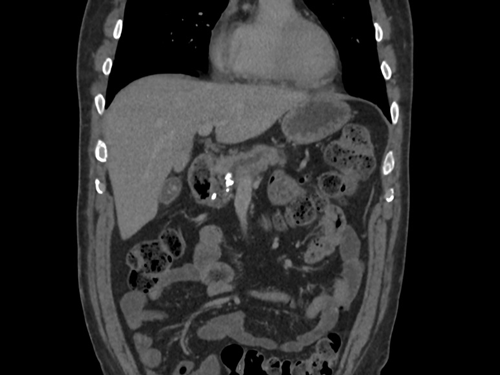
The pain is caused by pancreatic inflammation and pancreatic duct obstruction due to strictures and stone formation (see figure 1). Patients may also present with relapsing acute pancreatitis.
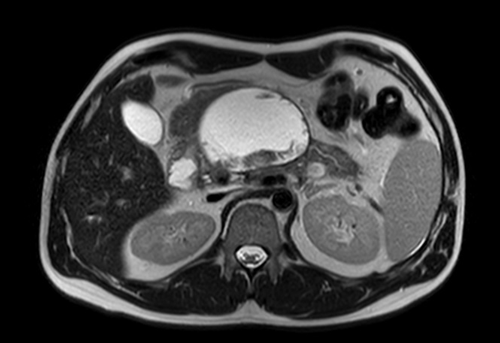
Inflammation of the pancreas can also lead to distal bile duct strictures resulting in biliary obstruction with jaundice. Disruption of the pancreatic duct from previous episodes of pancreatitis can lead to pseudocyst formation (see figure 2), which may be asymptomatic but can result in pain, infection or gastric outlet obstruction. Pancreatic pseudocysts are fluid-filled sacs surrounded by granulation tissue which can bleed, rupture, become infected or cause obstruction of the biliary tree or duodenum.
Chronic pancreatitis is also a common incidental finding on routine imaging of the abdomen, and even with advanced radiological features of chronic pancreatitis the patient may be entirely asymptomatic.
Symptoms resulting from pancreatic exocrine insufficiency (PEI) include weight loss and steatorrhoea, and patients may have other clinical signs of malnutrition. Steatorrhoea indicates a significant loss of exocrine function as it occurs only when lipase secretion is reduced by more than 90-95%.15 Endocrine insufficiency will lead to diabetes mellitus and its associated symptoms.
On examination, patients may have signs of chronic liver disease (suggestive of excess alcohol consumption), upper abdominal tenderness or abdominal distention due to a pseudocyst.6
The presenting features of chronic pancreatitis are non-specific and overlap with other gastrointestinal conditions leading to a wide differential diagnosis (see table 2).
A medical history including a thorough account of alcohol consumption, tobacco smoking, previous hospital admissions with abdominal pain and family history is invaluable in determining the index of suspicion for chronic pancreatitis.
Pancreatic cancer is difficult to distinguish clinically from chronic pancreatitis as there are overlapping features such as weight loss, change in bowel habit and jaundice. Chronic pancreatitis is also a risk factor for pancreatic cancer.
Patients aged 40 and over with jaundice and those aged 60 and over with weight loss and one other specified symptom related to pancreatic cancer should be referred along a suspected cancer referral pathway for investigation of pancreatic cancer.16
In those not meeting the criteria for referral along a suspected cancer pathway, but with evidence of a complication of chronic pancreatitis (e.g. biliary obstruction or malabsorption leading to weight loss and diarrhoea) NICE advises urgent referral to gastroenterology. This will facilitate timely investigation and help exclude malignancy promptly.6
Investigations and diagnosis
In patients with suspected chronic pancreatitis, the aims of investigations are to confirm the diagnosis, demonstrate any sequelae and to determine the underlying cause.
Biopsy is almost never undertaken owing to the risk of precipitating pancreatitis so imaging is used instead to provide evidence of characteristic features such as calcification, atrophy or pancreatic duct dilation.
CT is the first-line imaging modality for chronic pancreatitis.8 It has similar diagnostic accuracy to MRI and endoscopic ultrasound (EUS), with a sensitivity of 75% and specificity of 91%,17 and has the advantage of quantifying the presence of pancreatic calculi (which are usually calcified unlike gallstones), and parenchymal calcification.
MRCP (magnetic resonance cholangiopancreatography) has an advantage over CT in elucidating the pancreatic ductal anatomy in much greater detail than CT, which is useful in determining if there is pancreatic obstruction and anatomical anomalies such as pancreas divisum. Abdominal ultrasound can only diagnose chronic pancreatitis at an advanced stage9 but can be useful to rule out differential diagnoses as well as eliciting the presence of gallbladder gallstones as a potential precipitant for previous acute pancreatitis.
PEI should be looked for in all patients using a stool sample for faecal elastase-1 (FEL-1) and by performing a nutritional assessment, measuring body mass index (BMI), prothrombin time, albumin, haematinics, calcium, phosphate, magnesium and fat-soluble vitamins (A,D, E and K).8,9 Screening for diabetes mellitus should be considered in all patients and should include both HbA1c and a fasting glucose measurement as a normal HbA1c does not exclude diabetes in this patient group.9 Pancreatic enzymes may be only mildly elevated or normal in chronic pancreatitis and so serum amylase is not a useful measurement in these patients.6
In cases where the aetiology is not clear from the history, calcium and triglyceride levels should be measured and serum IgG4 to check for autoimmune pancreatitis.9 In patients under 35 years of age, clinical and genetic testing for hereditary causes including cystic fibrosis, PRSS1 and SPINK1 mutations should be carried out.8
NICE recommends urgent referral to gastroenterology if the patient presents with a complication of chronic pancreatitis (e.g. biliary obstruction). Otherwise, a routine referral is appropriate and GPs can conduct initial blood tests (e.g. liver function tests) and an abdominal ultrasound to rule out differential diagnoses while awaiting specialist input.6 This may present an opportunity for GPs to perform the biochemical investigations for functional abnormalities, as above, and identify patients requiring input from diabetologists or dietitians.
Complications
The complications of chronic pancreatitis can be divided into local and systemic (see table 3). The risk of pancreatic cancer in chronic pancreatitis has been shown to be 4% at 20 years after diagnosis.18 This risk is higher in those with a ≥ 60 pack-year smoking history, in those who are older at age of diagnosis and is much higher in those with hereditary pancreatitis.19,20
Pseudocysts < 4 cm in size are likely to regress spontaneously while larger ones are more likely to lead to further complications, as described earlier.21
Chronic pancreatitis leads to type 3c diabetes mellitus which is present in 5-10% of patients with the condition8 and is difficult to control, often requiring insulin.22
Almost two-thirds of patients with chronic pancreatitis have osteoporosis or osteopenia and therefore this patient group has a high risk of fragility fractures.23
Management
The management of chronic pancreatitis requires a multidisciplinary team (MDT) approach involving GPs, gastroenterologists, surgeons, radiologists, dietitians and diabetologists. Treatment approaches aim to control pain, manage complications and target the underlying cause.
Pain has a significant impact on the quality of life of chronic pancreatitis patients.24 NICE recommends initial treatment in primary care with paracetamol or ibuprofen, with progression to codeine if pain persists.6 Additionally, abstinence from alcohol has beneficial effects on pain symptoms.25 If these initial measures are unsuccessful referral to gastroenterology, pancreatobiliary surgery or a specialist pain clinic is required.6
Tricyclic antidepressants (e.g. amitriptyline) and neuropathic painkillers (e.g. pregabalin) can be started as further medical management in secondary care.
Psychiatric comorbidities in patients with chronic pancreatitis affect their level of pain and their quality of life.
A recent study showed the prevalence of anxiety and depression (defined as a HADS score ≥ 7) among chronic pancreatitis patients to be 47% and 39% respectively.26
Patients with these psychiatric comorbidities had significantly higher pain prevalence and pain severity and lower quality of life scores. Early recognition and management of comorbid anxiety and depression can improve pain management and quality of life in these patients.
Endoscopic or surgical approaches are used to treat pain resulting from pancreatic duct obstruction.
For uncomplicated chronic pancreatitis with an obstructed main pancreatic duct, most commonly due to stones or pancreatic duct strictures, endoscopic retrograde cholangiopancreatography (ERCP) is recommended.10
Extracorporeal shock-wave lithotripsy (ESWL), or more recently direct pancreatoscopy and electrohydraulic lithotripsy, is recommended for calculi within the distal pancreatic duct where endoscopic extraction therapy has failed.10
EUS-guided coeliac plexus block can be used but its efficacy is short-lived with the majority of patients experiencing recurrent pain after 24 weeks.27 Surgical options including decompression and resection can be undertaken for pain relief and have been shown to be superior to endoscopic therapy for long-term pain relief.28 NICE guidance suggests surgery as a first-line treatment in painful chronic pancreatitis with obstruction of the main pancreatic duct.7 However, comorbidities and surgical and anaesthetic risk need to be weighed up before a decision is made on surgery.
Chronic pancreatitis related pseudocysts should be treated if they are symptomatic or present with complications. Endoscopic drainage is used in preference to surgery for uncomplicated chronic pancreatitis related pseudocysts that are within endoscopic reach.10
For patients with chronic pain or symptomatic pseudocysts from chronic pancreatitis it is recommended that the imaging is reviewed in a hepatobiliary MDT meeting to determine the best strategy for management of pancreatic calculi and strictures: conservative management, endoscopic approaches or surgery.
Patients with PEI and clinical or laboratory evidence of malabsorption should be treated with pancreatic enzyme replacement therapy (PERT).29 Oral PPIs can be used to improve PERT efficacy.29 NICE suggests considering assessment by a dietitian for all patients with chronic pancreatitis,7 which can help improve patients’ nutritional status and highlight patients requiring enteral tube feeding.9 Guidelines have recently been published on PEI with useful advice on how PERT should be taken.30 Diabetes in chronic pancreatitis is difficult to manage; up to 25% of patients have ‘brittle diabetes’ requiring specialist input.6,9
Abstinence from alcohol and smoking cessation are vital to reduce progression of the disease and these measures should be advised in primary care, alongside weight-bearing exercise to reduce the risk of osteoporosis.6 These patients may require specialist alcohol or smoking services.
Metabolic disorders should be treated while drugs and other toxins should be removed as appropriate. Autoimmune pancreatitis is managed by a specialist hepatobiliary team with steroids or other immunomodulatory drugs.
Follow-up
In primary care, patients should have an annual review with blood tests to asses liver function and markers of malnutrition.8 Because of the high risk of osteoporosis in chronic pancreatitis, patients should have a bone density assessment by dual-energy X-ray absorptiometry (DEXA) at diagnosis followed by yearly follow-up DEXA scans.6,8 If patients have no evidence of PEI at diagnosis, a FEL-1 can be repeated if symptoms attributable to PEI occur.9 Patients with no endocrine dysfunction at diagnosis should have a HbA1c repeated every 6 months.7 Pancreatic cancer screening should be considered only in those with hereditary pancreatitis and should occur annually with a pancreas protocol CT scan.30
Conclusion
Chronic pancreatitis is a disease with a diverse range of causes, of which alcohol is the most common. Patients present primarily with abdominal pain and may have features of PEI or diabetes mellitus.
Diagnosis is achieved primarily with cross-sectional imaging and screening for complications should occur simultaneously.
Management of chronic pancreatitis requires a multidisciplinary approach to monitor and treat the complex range of problems that develop in these patients. Early recognition and referral to a hepatobiliary MDT is a priority in primary care.
REFERENCES
1 Jupp J, Fine D, Johnson CD. The epidemiology and socioeconomic impact of chronic pancreatitis. Best Pract Res Clin Gastroenterol 2010;24:219-31
2 Tinto A, Lloyd DAJ, Kang JY et al. Acute and chronic pancreatitis - diseases on the rise: a study of hospital admissions in England 1989/90-1999/2000. Aliment Pharmacol Ther 2002;16:2097-2105
3 Hall TC, Garcea G, Webb MA et al. The socio-economic impact of chronic pancreatitis: a systematic review. J Eval Clin Pract 2014;20:203-07
4 Bang UC, Benfield T, Hyldstrup L et al. Mortality, cancer, and comorbidities associated with chronic pancreatitis: a Danish nationwide matched-cohort study. Gastroenterology 2014;146:989-94.e1
5 Gardner TB, Kennedy AT, Gelrud A et al. Chronic pancreatitis and its effect on employment and health care experience: results of a prospective American multicenter study. Pancreas 2010;39:498-501
6 National Institute for Health and Care Excellence. Clinical knowledge summaries. Pancreatitis - chronic. https://cks.nice.org.uk/topics/pancreatitis-chronic/ [Last accessed 11 June 2021]
7 National Institute for Health and Care Excellence. NG104. Pancreatitis. NICE. London. 2018 Updated 2020 www.nice.org.uk/guidance/ng104 [Last accessed 15 June 2021]
8 Jalal M, Campbell JA, Hopper AD. Practical guide to the management of chronic pancreatitis. Frontline Gastroenterol 2019;10:253-60
9 Löhr JM, Dominguez-Munoz E, Rosendahl J et al. United European Gastroenterology evidence-based guidelines for the diagnosis and therapy of chronic pancreatitis (HaPanEU). United Eur Gastroenterol J 2017;5:153-99
10 Dumonceau JM, Delhaye M, Tringali A et al. Endoscopic treatment of chronic pancreatitis: European Society of Gastrointestinal Endoscopy (ESGE) Guideline Updated August 2018. Endoscopy 2019;51:179-93
11 Lévy P, Barthet M, Mollard BR et al. Estimation of the prevalence and incidence of chronic pancreatitis and its complications: a prospective survey in adults attending gastroenterologists in France. Gastroenterol Clin Biol 2006;30:838-44
12 Coté GA, Yadav D, Slivka A et al. Alcohol and smoking as risk factors in an epidemiology study of patients with chronic pancreatitis. Clin Gastroenterol Hepatol 2011;9:266-73
13 Brock C, Nielsen LM, Lelic D, Drewes AM. Pathophysiology of chronic pancreatitis. World J Gastroenterol 2013;19:7231-40
14 Whitcomb DC. Pancreatitis: TIGAR-O version 2 risk/etiology checklist with topic reviews, updates, and use primers. Clin Transl Gastroenterol 2019;10:1-14
15 Mayerle J, Hoffmeister A, Werner J et al. Chronic pancreatitis - definition, etiology, investigation and treatment. Dtsch Arztebl Int 2013;110:387-93
16 National Institute for Health and Care Excellence. NG85. Pancreatic cancer in adults: diagnosis and management. NICE. London. 2018 www.nice.org.uk/guidance/ng85 [Last accessed 15 June 2021)
17 Issa Y, Kempeneers MA, van Santvoort HC et al. Diagnostic performance of imaging modalities in chronic pancreatitis: a systematic review and meta-analysis. Eur Radiol 2017;27:3820-44
18 Lowenfels AB, Maisonneuve P, Cavallini G et al. Pancreatitis and the risk of pancreatic cancer. N Engl J Med 1993;328:1433-37
19 Hao L, Zeng XP, Xin L et al. Incidence of and risk factors for pancreatic cancer in chronic pancreatitis: a cohort of 1656 patients. Dig Liver Dis 2017;49:1249-56
20 Lowenfels AB, Maisonneuve P, DiMagno EP et al. Hereditary pancreatitis and the risk of pancreatic cancer. J Natl Cancer Inst 1997;89:442-46
21 Lerch MM, Stier A, Wahnschaffe U, Mayerle J. Pankreaspseudozysten: abwarten, endoskopisch drainieren, resezieren? Dtsch Arztebl 2009;106:614-21
22 Kleeff J, Whitcomb DC, Shimosegawa T et al. Chronic pancreatitis. Nat Rev Dis Prim 2017;3
23 Duggan SN, Smyth ND, Murphy A et al. High prevalence of osteoporosis in patients with chronic pancreatitis: a systematic review and meta-analysis. Clin Gastroenterol Hepatol 2014;12:219-28
24 Olesen SS, Juel J, Nielsen AK et al. Pain severity reduces life quality in chronic pancreatitis: Implications for design of future outcome trials. Pancreatology 2014;14:497-502
25 Strum WB. Abstinence in alcoholic chronic pancreatitis: effect on pain and outcome. J Clin Gastroenterol 1995;20:37-41
26 Phillips AE, Faghih M, Drewes AM et al. Psychiatric comorbidity in patients with chronic pancreatitis associates with pain and reduced quality of life. Am J Gastroenterol 2020;115:2077-85
27 Santosh D, Lakhtakia S, Gupta R et al. Clinical trial: a randomized trial comparing fluoroscopy guided percutaneous technique vs. endoscopic ultrasound guided technique of coeliac plexus block for treatment of pain in chronic pancreatitis. Aliment Pharmacol Ther 2009;29:979-84
28 Díte P, Ružicka M, Zboril V, Novotný I. A prospective, randomized trial comparing endoscopic and surgical therapy for chronic pancreatitis. Endoscopy 2003;35:553-58
29 De La Iglesia-García D, Huang W, Szatmary P et al. Efficacy of pancreatic enzyme replacement therapy in chronic pancreatitis: systematic review and meta-analysis. Gut 2017;66:1474-86
30 Phillips ME, Hopper AD, Leeds JS et al. Consensus for the management of pancreatic exocrine insufficiency: UK practical guidelines. BMJ Open Gastroenterol 2021;8:1-17
 Download this article in PDF format