SEARCH

Savill P. Early diagnosis of peripheral arterial disease can save limbs. Practitioner 2012;256 (1755):19-21
Early diagnosis of peripheral arterial disease can save limbs
24 Oct 2012
AUTHORS
Dr Peter Savill BSc MB BS PGDipCard, GP Watercress Medical, Medstead, GPwSI Cardiology, Southampton
Article
Peripheral arterial disease is an important component of the constellation of cardiovascular disease but is often the poor relation of coronary artery and cerebrovascular disease.
The prompt identification and management of patients with peripheral arterial disease can improve quality of life, save limbs and reduce cardiovascular events. It can affect both upper and lower limbs and encompass both aortic and renovascular pathology.
In August 2012, NICE published a clinical guideline on lower limb peripheral arterial disease which should raise the profile of this condition. It aims to improve diagnosis and management and raise standards of care.1
Presentation
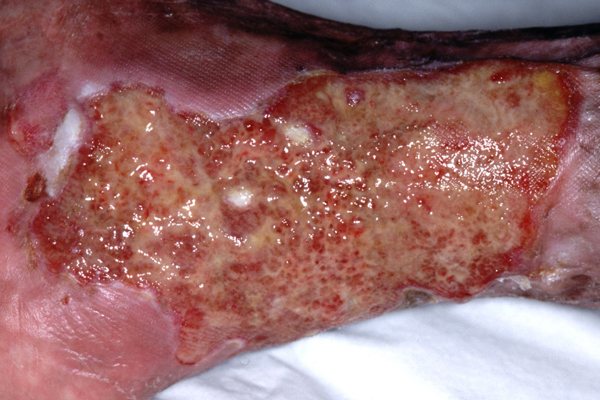
The most common initial symptom of peripheral arterial disease is leg pain on exertion or intermittent claudication. More severe or critical limb ischaemia can present with pain at rest, ulceration, tissue loss and/or gangrene.
In most patients the symptoms remain stable, but approximately 20% will develop increasingly severe symptoms with the development of limb threatening critical limb ischaemia.
However, some patients may be asymptomatic but will still be at increased risk of vascular events.
As such the NICE guidance suggests assessment for peripheral arterial disease in the following cases:
• Symptoms suggestive of peripheral arterial disease
• Diabetes
• Non-healing wounds on the legs
or feet
• Unexplained leg pain
• Patients being considered for interventions to the leg or foot
• Patients who need to wear compression hosiery
The incidence of peripheral arterial disease increases with age and it is estimated that up to 20% of people aged over 60 years are affected to some degree. As one would expect the incidence is also high in smokers, diabetes patients and those with established coronary disease.
Examination and assessment
A focused history should identify the presence and severity of intermittent claudication and any critical limb ischaemia. The history should also look to exclude other potential causes of lower limb pain such as lumbar spine degeneration and spinal stenosis.
A subsequent examination should concentrate on the palpation of lower limb arterial pulses i.e. femoral, popliteal, dorsalis pedis and posterior tibial. It is important to look for signs of critical ischaemia such as ulceration.
The key primary care investigation in patients with suspected peripheral arterial disease is measurement of the ankle brachial pressure index (ABPI).
This task is often delegated to the practice nurse and as such GPs should be confident that their nursing teams are following the standardised method of measurement recommended by the NICE guidance, see box 1.
Peripheral arterial disease is likely if the ABPI is < 0.95; rest pain likely if < 0.5 and ulceration and gangrene if < 0.2. However, the ABPI can be falsely elevated if the arteries are calcified; a value > 1.3 is suggestive of this and depending on the clinical picture may be as indicative of significant peripheral arterial disease as a low ABPI.
Management
NICE recommends that patients with mild symptoms can be managed in primary care with referral to secondary care in cases where symptoms do not resolve or deteriorate.
The prevention, diagnosis and management of high blood pressure and diabetes are vital.
Pharmacological therapy should always include an antiplatelet agent and statin.
Lifestyle interventions are a key component of management as they are in any cardiovascular disease. Patients should be given advice on:
• Smoking cessation
• Diet, weight management and exercise
NICE recommends that a supervised exercise programme is offered to all patients with intermittent claudication. It should include two hours of supervised exercise a week for a three-month period; patients should be encouraged to exercise to the point of maximal pain.
Vasoactive drugs such as naftidrofuryl oxalate should be considered for symptom control in intermittent claudication when supervised exercise has not led to a satisfactory improvement and the patient prefers not to be referred for revascularisation. Treatment should start with the least costly preparation. Response should be reviewed at three to six months and the drug stopped if there has been no improvement in symptom control.
Referral
Patients with severe and inadequately controlled symptoms should be referred to secondary care services with a view to further imaging to assess the appropriateness of revascularisation either by endovascular treatment (angioplasty or stenting) or bypass surgery.
In patients where revascularisation is not considered a viable option, specialist pain management services should be considered and/or limb amputation.
NICE recommends that contrast-enhanced magnetic resonance angiography (MRA) should be available to patients who need further imaging after duplex ultrasound before revascularisation is considered.
CT angiography should be used if contrast-enhanced MRA is contraindicated or not tolerated.
Furthermore, the guidance recommends that all patients with critical limb ischaemia should be assessed by a vascular multidisciplinary team before treatment decisions are made and in particular before revascularisation is abandoned and amputation considered.
NICE makes very specific recommendations for revascularisation (see box 2) and pain interventions, see below.
Pain control
Patients with critical limb ischaemic pain should be offered paracetamol, and either weak or strong opioids, depending on the severity of pain. Laxatives and antiemetics should be given to manage the adverse effects of strong opioids.
Patients should be referred to a specialist pain management service if:
• their pain is not adequately controlled and revascularisation is inappropriate
or impossible
• they require ongoing high doses of opioids for pain control
• pain persists after revascularisation or amputation
NICE states that chemical sympathectomy should not be offered to patients with critical limb ischaemic pain, unless they are taking part in a clinical trial.
Conclusion
This guidance is to be welcomed as it should raise the profile of peripheral arterial disease and encourage the use of lifestyle interventions and supervised exercise as well as established pharmacological treatment such as antiplatelet agents and statins in this group of patients.
Clinical commissioning groups should look to improve primary care access to structured exercise programmes for these patients and undoubtedly primary care is already well placed to implement other lifestyle and pharmacological interventions.
The early identification and management of milder disease in primary care could potentially reduce the burden on specialist vascular services creating resources to manage those patients with advanced disease.
REFERENCES
1 National Institute for Health and Clinical Excellence. CG147. Lower limb peripheral arterial disease: diagnosis and management. NICE. London. 2012
USEFUL INFORMATION
The Circulation Foundation
Information for healthcare professionals and patients
www.circulationfoundation.org.uk
ARTICLE IN PDF
 Download this article in PDF format