SEARCH

Hammond P. Improving the detection and management of type 1 diabetes. Practitioner 2016;260(1789):21-26
Improving the detection and management of type 1 diabetes
25 Jan 2016
AUTHORS
Dr Peter Hammond BM BCh MA MD FRCP, Consultant Diabetologist, Harrogate District Hospital, Harrogate, UK
Article
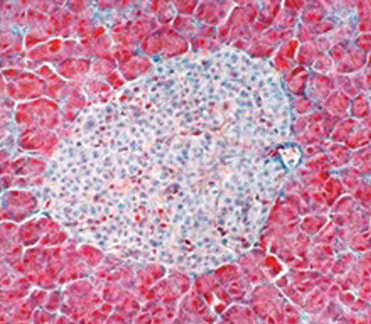
Despite the common endpoint of hyperglycaemia, type 1 diabetes is a very different condition from type 2 diabetes. In type 1 diabetes there is a lack of beta cell insulin secretion as a result of autoimmune destruction of the beta cells. However, patients are not affected by insulin resistance, and so do not routinely experience the features of metabolic syndrome, such as hypertension and dyslipidaemia, that occur in those with type 2 diabetes.
It is therefore important to classify the type of diabetes correctly and to recognise that type 1 diabetes is a condition with its own management requirements. These are comprehensively detailed in the updated guideline from NICE published in August 2015.1
Diagnosis
Type 1 diabetes is a clinical diagnosis. Greater awareness means that fewer people now present with diabetic ketoacidosis, but typically those affected present with one or more of:
• Ketosis
• Rapid weight loss
• Age of onset < 50 years
• Body mass index (BMI) < 25 kg/m2
• Personal and/or family history of autoimmune disease
Those presenting with weight loss, polyuria and polydipsia and/or blurred vision, should be assessed for ketosis, by measurement of urine or blood ketones. A positive test for ketones in association with significant hyperglycaemia makes a diagnosis of type 1 diabetes highly likely. However, it is important not to overlook a diagnosis of type 1 diabetes in those over 50, or with a BMI ≥ 25 kg/m2, particularly when the patient presents with acute onset of symptoms.
In the vast majority of cases the diagnosis of type 1 diabetes is clear cut. Where doubt exists additional tests may be helpful. Disease-specific autoantibodies are usually positive at the time of diagnosis, but are less likely to be positive the longer the time since diagnosis, almost always being negative within five years.
C-peptide is co-secreted with insulin from the beta cells and a lack of urine C-peptide is therefore a marker for beta cell failure. This test is a better discriminator the longer the duration of diabetes.
NICE recommends considering further investigation with autoantibody testing or measurement of C-peptide when:
• Type 1 diabetes is suspected but the clinical presentation includes some atypical features (e.g. age ≥ 50 years, BMI ≥ 25 kg/m2, slow evolution of hyperglycaemia or long prodrome)
• Type 1 diabetes has been diagnosed and treatment started but there is a clinical suspicion that the patient may have a monogenic form of diabetes, and C-peptide and/or autoantibody testing may guide the use of genetic testing
• Classification is uncertain, and confirming type 1 diabetes would have implications for therapy (e.g. continuous subcutaneous insulin infusion [CSII or insulin pump] therapy)
Where autoantibody testing is carried out, NICE recommends testing for two disease specific antibodies to reduce false-negative rates, with at least one positive antibody making type 1 diabetes highly likely.
In practice it is usual to test for glutamic acid decarboxylase (GAD) and islet cell antibodies (ICA) although insulinoma associated autoantibody (IA-2) may also be tested for. Testing for urine C-peptide:creatinine, not only to distinguish type 1 and type 2 diabetes but also to assist in the diagnosis of a monogenic form of diabetes, is available through the diabetes research department at Exeter University (www.diabetesgenes.org).
Assessment
At initial presentation a full medical assessment should be carried out to:
• Confirm the diagnosis of type 1 diabetes
• Ensure appropriate acute care is provided when necessary
• Identify comorbidities, particularly where the condition or its treatment may itself have implications for glycaemia (e.g. pancreatitis or steroid therapy) and confound the classification of diabetes
• Detect adverse vascular risk factors
The aim of the initial assessment is to formulate an early care plan, taking a holistic view of the patient’s needs in coming to terms with the diagnosis and ensuring that management principles are firmly established to allow them to manage their diabetes optimally in the long term. Crucial to formulating this plan is an understanding of the patient’s social, home and work circumstances; their cultural and educational background; and their emotional state, as this will determine the pace of initial education.
The NICE guideline provides a comprehensive list of the aspects which need assessing at this initial stage and the components of the care plan, see table 1. This initial phase of education should be followed by structured education.
Structured education programmes
Structured education is the cornerstone of the care package for patients with type 1 diabetes, providing tools to allow effective self-management.
The expectation is that following a new diagnosis of type 1 diabetes structured education should be offered within 12 months. However, existing patients with type 1 diabetes who have never had the opportunity to undertake structured education should still be offered it. Group education may not be acceptable to everyone so an alternative equivalent education package should be offered to these individuals.
Evidence of benefit, in terms of HbA1c reduction, has been found with the DAFNE and PRIMAS education programmes. PRIMAS is a recently developed German education programme, so the NICE guideline gives DAFNE (dose adjustment for normal eating) as the exemplar. DAFNE has been shown to reduce HbA1c by 11 mmol/mol (1.0%), without increasing frequency of hypoglycaemia, and to improve quality of life.
The characteristics of the DAFNE education programme which should be demonstrated by alternative programmes are:
• Evidence based, and meeting the needs of that individual
• Specific aims and learning objectives, and supports the patient, family and carers in acquiring the knowledge and skills for self management of diabetes
• A structured curriculum that is theory driven, evidence based and resource effective, has supporting materials, and is written down
• Delivered by trained educators who have an understanding of educational theory appropriate to the age and needs of the patient, and who are trained and competent to deliver the principles and content of the programme
• Quality assured, and reviewed by trained, competent, independent assessors who measure it against criteria that ensure consistency
• Outcomes are regularly audited
All adults with type 1 diabetes should be offered carbohydrate counting as part of a structured education programme for self-management.
NICE recommends that a stand-alone carbohydrate counting course should be considered if there is likely to be a significant wait for a place on a structured education programme, or the patient is unable to take part in a full group structured education course.
An annual review of learning needs is recommended. Ongoing and refresher education is an important consideration for all those with type 1 diabetes, but as yet there is no definitive evidence as to how best to deliver this.
On the basis of clinical trial evidence the BGAT (Blood Glucose Awareness Training) programme is recommended for those adults with type 1 diabetes suffering recurrent hypoglycaemia, but this is not currently offered by any centre in the UK.
Insulin therapy
Structured education allows the individual with type 1 diabetes to use insulin effectively. There are several options available in terms of the type of insulin and the type of regimen that can be used.
It has been common practice to commence insulin therapy with a twice daily regimen using a mixed insulin given at mealtimes. NICE advises that newly diagnosed patients should be offered a regimen including a basal (long-acting) insulin with bolus (rapid-acting) insulin given at mealtimes. While patients may go through a honeymoon phase, where residual beta cell function temporarily improves, meaning that they may need only basal insulin, or even no insulin at all for a time, the principles of the basal-bolus regimen are established – it is just that the bolus dose may reduce to zero.
Rapid-acting insulin analogues (aspart, lispro, glulisine) have been established for some time as the bolus insulin of choice, and these should be injected before meals.
There has been less certainty about the optimal basal insulin. The NICE review included a network meta-analysis of randomised controlled trials which have compared basal analogue and isophane insulins in basal-bolus regimens. Using twice daily isophane (NPH) insulin as the standard, twice daily insulin detemir was superior to all other basal insulin regimens (including once daily insulin glargine), with a better HbA1c reduction (1.8 mmol/mol, 0.16%) and less likelihood of hypoglycaemia (relative risk 0.96). This analysis included the new ultralong-acting insulin analogue degludec.
Therefore the optimal insulin regimen for an adult with type 1 diabetes, which should be offered from diagnosis, is a combination of twice daily insulin detemir and a rapid acting analogue given at mealtimes. However, where glycaemic control is already optimised, in terms of both HbA1c and hypoglycaemia frequency, on an alternative insulin regimen this should not be discontinued. Furthermore, regimens based on once daily insulin glargine or insulin detemir should be used if twice daily basal insulin injection is not acceptable to the patient; or based on once daily insulin glargine if insulin detemir is not tolerated.
The alternative to injection regimens is insulin pump therapy. If acceptable glycaemic control is not achieved on the optimal basal-bolus insulin regimen, multiple daily injections (MDIs),
then insulin pump therapy should be offered when:2
• Attempts to achieve target HbA1c levels with MDIs result in disabling hypoglycaemia (defined as the repeated and unpredictable occurrence of hypoglycaemia that results in persistent anxiety about recurrence and is associated with a significant adverse effect on quality of life) or
• HbA1clevels have remained high (> 8.5% [69 mmol/mol] ) on MDI therapy (including, if appropriate, the use of long-acting insulin analogues) despite a high level of care.
There is limited evidence with regard to the use of adjunctive therapies, although there are ongoing clinical trials with agents including metformin, GLP1 agonists and SGLT2 inhibitors.
On the basis of existing evidence NICE suggests considering adding metformin to insulin therapy if an adult with type 1 diabetes and BMI ≥ 25 kg/m2 (≥ 23 kg/m2 for patients from South Asian and related minority ethnic groups) wants to improve their blood glucose control while minimising their effective insulin dose.
Blood glucose management
Self-monitoring of blood glucose is necessary to allow effective implementation of the principles of structured education. The Type 1 Diabetes Exchange, supported by the Helmsley Charitable Trust, has provided a network for people with type 1 diabetes to share information about how they manage their condition.
Data from 8,914 patients in the registry, reported by Miller and colleagues,3 confirms the relationship between an increased frequency of self-monitoring and a lower HbA1c level.
Hence NICE recommends adults with type 1 diabetes should test their blood glucose at least four times per day, testing should be carried out before each meal and before going to bed. However support should be given to test up to ten times per day if:
• The desired target for blood glucose control, measured by HbA1c level, is not achieved
• Frequency of hypoglycaemic episodes increases
• There is a legal requirement to do so (such as before driving in line with the DVLA guidance)
• During periods of illness
• Before, during and after sport
• When planning pregnancy, during pregnancy and while breastfeeding
• There is a need to know blood glucose levels more than four times a day for other reasons (e.g. impaired awareness of hypoglycaemia, high risk activities)
Testing more than ten times per day should be offered if this is necessitated by the individual’s lifestyle (e.g. driving for a long period, undertaking high risk activity or occupation, travel) or if the patient has impaired awareness of hypoglycaemia.
Glycaemic targets should be individualised taking into account factors such as daily activities, aspirations, likelihood of complications, comorbidities, occupation and history of hypoglycaemia. This is particularly important with respect to the HbA1c level that the individual aims to achieve. Evidence from large epidemiological studies in type 1 diabetes, such as the Wisconsin Epidemiology Study of Retinopathy, and long-term follow-up data from the DCCT,4 have shown that a lower HbA1c is associated with a reduced risk of both microvascular and macrovascular complications.
In the DCCT, an HbA1c< 58 mmol/mol (7.5%) was associated with an increased risk of severe hypoglycaemia, but advances in insulins, education and technology mean this risk can now be significantly mitigated. NICE therefore concluded that an HbA1c target of 48 mmol/mol (6.5%) should be recommended, as this level is associated with minimising the risk of retinopathy. The expectation is that if this is the target set then the majority of people should achieve an HbA1c < 53 mmol/mol (7.0%), which is the outcome level recommended for audit purposes.
To achieve this HbA1c target the recommended blood glucose targets are 5-7 mmol/L on waking, 4-7 mmol/L before other meals, and 5-9 mmol/L at least 90 minutes after meals.
The pre-bedtime target will depend on when the last meal was eaten and the glucose target on waking.
Continuous blood glucose monitoring should only be considered for those with problematic hypoglycaemia; or an HbA1c > 75 mmol/mol (9.0%) despite testing blood glucose levels at least ten times per day, in which case continuous blood glucose monitoring can be continued if the fall in HbA1c associated with its use is 2.5% (27 mmol/mol) and a level of < 53 mmol/mol (7.0%) is maintained, see figure 2.
Monitoring and follow-up in primary care
It is likely that type 1 diabetes patients will be managed on a shared care basis with secondary care. NICE advises that insulin pump therapy, continuous glucose monitoring, structured education and the care of those with problematic hypoglycaemia should be delivered in centres with specialist expertise. However, in most cases primary care is likely to take the lead on monitoring and surveillance.
HbA1c should be checked three to six monthly. An annual review should be undertaken at which vascular risk factors such as blood pressure, lipids and microalbuminuria should be assessed, and appropriate management instituted. Attendance at retinal screening should be checked. The care plan, educational needs, injection sites and blood glucose self-monitoring skills of the patient should be reviewed. Thyroid function should be measured.
An important new recommendation is that the annual review should include screening for hypoglycaemia awareness. This should be with the Gold5 or Clarke6 scoring system. The Gold score involves asking the patient to rate their hypoglycaemia awareness on a scale from 1 to 7, where 1 = always aware and 7 = never aware. A score of 4 or more indicates impaired awareness of hypoglycaemia. The Clarke scoring system is shown in table 2, p25. If hypoglycaemia awareness is identified then glycaemic control should not be relaxed, but referral to a specialist centre may be required.
GPs may also be well placed to identify psychological problems, including eating disorders, which are more common in those with type 1 diabetes, but often overlooked.
REFERENCES
1 National Institute for Health and Care Excellence. NG17. Type 1 diabetes in adults: Diagnosis and management. NICE. London. 2015. www.nice.org.uk/guidance/ng17
2 National Institute for Health and Care Excellence. NG3. Diabetes in pregnancy: Management from preconception to the postnatal period. NICE. London. 2015 www.nice.org.uk/guidance/ng3
3 National Institute for Health and Care Excellence. TA151. Continuous subcutaneous insulin infusion for the treatment of diabetes mellitus. NICE. London. 2008 www.nice.org.uk/guidance/ta151
4 Miller KM, Beck RW, Bergenstad RM et al. Evidence of a strong association between the frequency of selfmonitoring of blood glucose and haemoglobin A1c levels in type 1 diabetes exchange participants. Diabetes Care 2013;36(7):2009-14
5 Nathan DM and for the DCCT/EDIC Research Group. The diabetes control and complications trial/epidemiology of diabetes interventions and complications study at 30 years: overview. Diabetes Care 2014;37(1):9-16
6 Gold AE, MacLeod KM, Frier BM. Frequency of severe hypoglycemia in patients with type I diabetes with impaired awareness of hypoglycemia. Diabetes Care 1994;17(7):697-703
7 Clarke WL, Cox DJ, Gonder-Frederick LA et al. Reduced awareness of hypoglycemia in adults with IDDM. A prospective study of hypoglycemic frequency and associated symptoms. Diabetes Care 1995;18(4):517-522
ARTICLE IN PDF
 Download this article in PDF format
PRESET SEARCHES
PubMed
NICE evidence search
Immediate CPD prompts and frameworks
These handy templates* prompt immediate drafting of personal learning, reflection and planning. Save your record straight into you personal development folder on your device or Cloud storage system.
*Adobe reader needed for iPad
EXTERNAL WEBLINKS
NICE
NICE has produced a range of guidance on type 1 diabetes including information for the public. The full guideline contains detailed management algorithms www.nice.org.uk
Diabetes UK
Information for healthcare professionals and patients
JDRF
The Juvenile Diabetes Research Foundation (JDRF), the type 1 diabetes charity, has information for patients
We welcome your feedback
If you would like to comment on this article or have a question for the author, write to: [email protected]