SEARCH

Almerie MQ, Simpson J. Diagnosing and treating diverticular disease. Practitioner 2015; 259 (1785):29-33
Diagnosing and treating diverticular disease
24 Sep 2015
AUTHORS
Mr Muhammad Qutayba Almerie MSc MRCS, Surgical Trainee Year 4 (ST4) General Surgery
Mr John Simpson PhD FRCS, Consultant General Surgeon, Department of General Surgery, Harrogate District Hospital, Harrogate, UK
Article
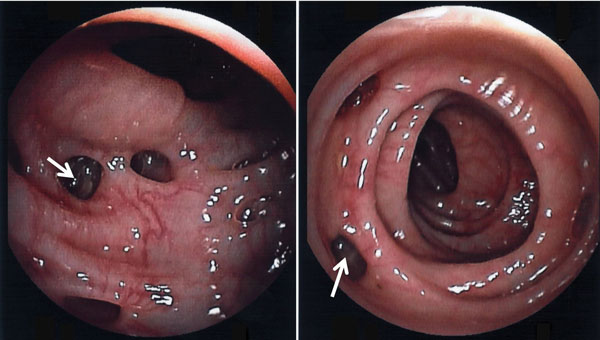
Colonic diverticula are mucosal outpouchings through weak points in the colonic muscle, see figure 1.
The pathophysiology is complex but is thought to be secondary to an interaction between multiple factors including low dietary fibre, high intraluminal pressure, and genetic influences.1
There is a substantial healthcare burden inflicted by diverticular disease. In England alone, it accounts for almost 56,000 hospital admissions per year. The national admission rate increased from 0.56 to 1.20 per 1,000 population per year between 1996 and 2006.2
It is important to distinguish between diverticulosis, the presence of asymptomatic diverticula, and diverticular disease which refers to symptomatic cases which can present with acute or chronic symptoms.
Chronic symptoms range from mild intermittent abdominal cramps to the more severe picture of chronic abdominal pain and occasional rectal bleeding. In contrast, acute diverticulitis refers to acute inflammation in the diverticula.
Patients typically present with severe unremitting abdominal pain, pyrexia and signs of peritonitis. Potential complications of diverticulitis include perforation of the bowel or formation of abscesses or fistulae.3
Between 50 and 70% of patients treated for a first episode of diverticulitis will recover and have no further clinical problems while 20% will develop recurrent symptoms. Of these, only 1-2% will require hospitalisation and 0.5% will need surgery.4
Risk factors
Low dietary fibre intake is reported to increase the risk of diverticular disease.5 This could partially explain the worldwide variability of the disease. Diverticular disease is very rare in rural Africa and Asia (prevalence < 0.2%).6 The highest incidence rates are reported in the United States, Europe and Australia, this is thought to be related to the western diet which is typically low in fibre.5
Population studies show no apparent sex predilection.7 However, the risk clearly increases with age.8 In the UK, the prevalence rises from around 5% of people in their 40s to almost 50% of those above the age of 80.9
In western countries, diverticular disease predominantly affects the sigmoid colon. Whereas, there is an increasing incidence of diverticular disease affecting the right side of the colon in patients of Asian origin, and this is thought to be related to genetic factors.9
Presentation
As patients with diverticulosis are asymptomatic, most of them remain undiagnosed. It is estimated that 20% of these patients will develop symptoms at some point in their lifetime.4 Patients with uncomplicated diverticular disease usually present to primary care with intermittent pain in the lower abdomen particularly the left lower quadrant. Approximately 15% of patients with diverticula will develop bleeding from the bowel wall at some point and present with rectal bleeding.10
Other reported symptoms include nausea, episodic diarrhoea, constipation and bloating.11 Some of these symptoms are, indeed, similar to those reported in patients suffering from irritable bowel syndrome which is also quite a common condition in developed countries
(6-17%).12 Therefore, there may be diagnostic difficulty in distinguishing symptoms directly related to diverticular disease from those attributed to irritable bowel syndrome although the latter tends to affect a younger age group.13
In contrast, patients with acute diverticulitis usually present with symptoms of left lower abdominal pain and signs including fever and localised guarding.
Occasionally, the pain might present on the right side or suprapubically, caused either by right-side diverticulosis or a redundant sigmoid loop lying towards the right side, which may mimic appendicitis.
Diagnosis
Clinical suspicion of diverticular disease can be confirmed either radiologically (barium enema, CT colonography) or endoscopically (colonoscopy). Clearly, diverticular disease symptoms are non-specific, and thus alternative causes of these symptoms need to be considered and excluded while carrying out investigations.
Guidance produced by the Royal College of Surgeons advises that referral of patients with symptomatic diverticular disease to secondary care is not indicated unless:10
• The symptoms affect quality of life
• The pain is not controlled by paracetamol
• New symptoms, such as a change in bowel habit, develop which require further investigation
• The patient or doctor is concerned about the possibility of an alternative diagnosis
• The patient develops red flag symptoms
Red flag symptoms
Many patients with diverticular disease first present with symptoms at the age when colorectal cancer is increasingly common.
As symptoms of these two conditions can overlap, caution needs to be taken before diagnosing the patient with diverticular disease. Colonoscopy is often the preferred method of investigating large bowel symptoms as it allows direct visualisation of the mucosa and biopsies of any suspicious areas.
Even in patients with established diverticulosis, a change in the clinical picture with development of red flag symptoms14 (see table 1) warrants urgent referral to rule out lower gastrointestinal malignancy.
Acute diverticulitis
Patients with suspected uncomplicated acute diverticulitis should be assessed according to their level of pain and associated systemic features of sepsis. In those where pain is controlled and there are no signs of systemic sepsis or multiple comorbidities, the patient may be treated in primary care.15 A recent systematic review of evidence showed that the vast majority of these patients could be managed in the outpatient setting without the need for admission later in the course and without complications.16 After 48 hours or sooner if needed, patients should be reassessed.
If symptoms persist or there is suspicion of complicated disease, arrangements should be made to admit the patient to hospital.
Colonic diverticula
An algorithm for the management of colonic diverticula is shown in figure 2.
Treatment
The following treatments have been recommended by NICE. 17
Fibre: For asymptomatic and symptomatic patients a high-fibre diet is recommended, if tolerated. While the average fibre intake in a western diet is only 14-15 g/day, the generally recommended intake is 25-38 g/day.18 The diet should be balanced and contain whole grains and fruit.5
It is advisable to increase fibre intake gradually to reduce the risk of flatulence and bloating. Adequate fluid intake is particularly important with a high-fibre diet.17
Bulk-forming laxatives: NICE advises using bulk-forming laxatives such as methylcellulose, ispaghula husk or sterculia in patients who cannot tolerate a high-fibre diet, or if constipation or diarrhoea are present.17 Osmotic laxatives, e.g. lactulose are not recommended in diverticular disease.17
Paracetamol: If required, paracetamol is recommended for pain relief.17 There is evidence of increased diverticular complications (perforation and diverticular bleeding) with NSAIDs, aspirin and opioids and therefore they should be avoided.19
Other treatments
Below are some of the treatment modalities which have shown some benefit in patients with diverticular disease. However, none of these modalities is yet recommended by NICE as the evidence is thought to be still insufficient to support their wider clinical use.17
Probiotics: Probiotics contain viable ‘friendly’ microorganisms aiming to re-establish the normal bacterial flora which might be altered in diverticular disease patients as a result of the slow colonic transit time. Probiotics were found to prolong remission and provide symptomatic relief in patients with uncomplicated diverticular disease in comparison with controls.20
Mesalazine: Mesalazine is an anti-inflammatory drug that is typically used in patients with inflammatory bowel disease. Its use in diverticular disease is based on the hypothesis that the symptoms might be caused by chronic mucosal inflammation. Tursi and colleagues reported that cyclic mesalazine and probiotics are better than placebo to maintain remission of symptomatic uncomplicated diverticular disease, particularly if given together.21
Rifaximin: Cyclic administration of rifaximin, a poorly absorbed antibiotic, was found to have a synergistic effect when added to a high-fibre diet in symptomatic treatment of patients with uncomplicated diverticular disease.22 It is suggested that rifaximin reduces proliferation of gut microflora with an expansion in faecal mass through decreased bacterial degradation of fibre, thus reducing pain.23
In a meta-analysis by Bianchi and colleagues, 64% of patients treated with rifaximin plus standard supplements of dietary fibre were symptom-free at one year follow-up in comparison with 35% of those treated with a fibre supplement, risk reduction 29%, number needed to treat = 3.22 Despite the encouraging symptomatic relief of adding rifaximin, further research is needed to determine whether it can prevent complications or modify the clinical course of the disease.
Uncomplicated diverticular disease
For patients who can be treated in the community, figure 2, summarises the management plan recommended by NICE.10
Although NICE still recommends using antibiotics for uncomplicated diverticulitis treated in the community, administration of antibiotics for uncomplicated diverticulitis is losing its momentum after decades of routine use. The role of antibiotics was originally based on the assumption that diverticulitis has an infectious aetiology.
More recent reports have proposed that the aetiology may be inflammatory rather than infectious and new evidence supporting use of an antibiotic-free strategy is mounting. In a recent Cochrane review of three randomised controlled trials, no differences were found between the antibiotic and control groups for uncomplicated diverticulitis.24
A European multicentre randomised control trial (the DIABOLO study) is currently underway to clarify the role of antibiotics.25
Follow-up
Asymptomatic diverticulosis that is identified incidentally does not require further diagnostic evaluation or any further follow-up. Repeating colonoscopy for patients diagnosed with diverticular disease is not indicated unless there is a change in the clinical picture or development of red flag symptoms.
Patients with recurrent diverticulitis may benefit from an elective colectomy. There is, however, a lack of data from randomised controlled trials on the optimal timing for colectomy. While some studies recommend elective sigmoid resection after two episodes of diverticulitis, others favour a more conservative approach.
This topic remains controversial in the absence of clear evidence, and the decision to recommend elective colectomy for recurrent diverticulitis should be made on a case by case basis.26
REFERENCES
1 Simpson J, Scholefield JH, Spiller RC. Pathogenesis of colonic diverticula. Br J Surg 2002;89(5):546-54
2 Jeyarajah S, Faiz O, Bottle A et al. Diverticular disease hospital admissions are increasing, with poor outcomes in the elderly and emergency admissions. Aliment Pharmacol Ther 2009;30(11-12):1171-82
3 Kohler L, Sauerland S, Neugebauer E. Diagnosis and treatment of diverticular disease: results of a consensus development conference. The Scientific Committee of the European Association for Endoscopic Surgery. Surg Endosc 1999;13(4):430-6
4 Ludeman L, Shepherd NA. What is diverticular colitis? Pathology 2002;34(6):568-72
5 Crowe FL, Balkwill A, Cairns BJ et al. Source of dietary fibre and diverticular disease incidence: a prospective study of UK women. Gut 2014;63(9):1450-6
6 Painter NS, Burkitt DP. Diverticular disease of the colon, a 20th century problem. Clin Gastroenterol 1975;4(1):3-21
7 Stollman NH, Raskin JB. Diagnosis and management of diverticular disease of the colon in adults. Ad Hoc Practice Parameters Committee of the American College of Gastroenterology. Am J Gastroenterol 1999;94(11):3110-21
8 Painter NS, Burkitt DP. Diverticular disease of the colon: a deficiency disease of Western civilization. Br Med J 1971; 2(5759):450-4
9 Schoetz DJ, Jr. Diverticular disease of the colon: a century-old problem. Dis Colon Rectum 1999;42(6):703-9
10 Royal College of Surgeons. Commissioning guide: colonic diverticular disease. RCS. London. 2014
11 Petruzziello L, Iacopini F, Bulajic M et al. Review article: uncomplicated diverticular disease of the colon. Aliment Pharmacol Ther 2006;23(10):1379-91
12 Jones J, Boorman J, Cann P et al. British Society of Gastroenterology guidelines for the management of the irritable bowel syndrome. Gut 2000;47 Suppl 2:ii1-19
13 Simpson J, Scholefield JH, Spiller RC. Origin of symptoms in diverticular disease. Br J Surg 2003;90(8):899-908
14 National Institute for Health and Care Excellence. NG12. Suspected cancer: recognition and referral. NICE. London. 2015
15 Humes DJ. Diagnosing and managing acute diverticulitis. Practitioner 2012;256(1753):21-3
16 Jackson JD, Hammond T. Systematic review: outpatient management of acute uncomplicated diverticulitis. Int J Colorectal Dis 2014;29(7):775-81
17 National Institute for Health and Care Excellence. Clinical Knowledge Summaries: Diverticular Disease. NICE. London. 2013
18 Slavin JL. Position of the American Dietetic Association: health implications of dietary fiber. J Am Diet Assoc 2008;108(10):1716-31
19 Kvasnovsky CL, Papagrigoriadis S, Bjarnason I. Increased diverticular complications with nonsteroidal anti-inflammatory drugs and other medications: a systematic review and meta-analysis. Colorectal Dis 2014;16(6):0189-96
20 Fric P, Zavoral M. The effect of non-pathogenic Escherichia coli in symptomatic uncomplicated diverticular disease of the colon. Eur J Gastroenterol Hepatol 2003;15(3):313-5
21 Tursi A, Brandimarte G, Elisei W et al. Randomised clinical trial: mesalazine and/or probiotics in maintaining remission of symptomatic uncomplicated diverticular disease--a double-blind, randomised, placebo-controlled study. Aliment Pharmacol Ther 2013;38(7):741-51
22 Bianchi M, Festa V, Moretti A et al. Meta-analysis: long-term therapy with rifaximin in the management of uncomplicated diverticular disease. Aliment Pharmacol Ther 2011;33(8):902-10
23 Di Stefano M, Malservisi S, Veneto G et al. Rifaximin versus chlortetracycline in the short-term treatment of small intestinal bacterial overgrowth. Aliment Pharmacol Ther 2000;14(5):551-6
24 Shabanzadeh DM, Wille-Jorgensen P. Antibiotics for uncomplicated diverticulitis. Cochrane Database Syst Rev 2012;11:CD009092
25 Unlu C, de Korte N, Daniels L et al. A multicenter randomized clinical trial investigating the cost-effectiveness of treatment strategies with or without antibiotics for uncomplicated acute diverticulitis (DIABOLO trial). BMC Surg 2010;10:23
26 Fozard JB, Armitage NC, Schofield JB, Jones OM. ACPGBI position statement on elective resection for diverticulitis. Colorectal Dis 2011;13 Suppl 3:1-11
ARTICLE IN PDF
 Download this article in PDF format
PRESET SEARCHES
Immediate CPD prompts and frameworks
These handy templates* prompt immediate drafting of personal learning, reflection and planning. Save your record straight into your personal development folder on your device or Cloud storage system.
*Adobe reader needed for iPad
EXTERNAL WEBLINKS
Diverticular disease