SEARCH

Hopper AD. Improving the diagnosis and management of GORD in adults. Practitioner 2015;259(1781)27-32
Improving the diagnosis and management of GORD in adults
23 Apr 2015
AUTHORS
Dr Andrew D Hopper MD FRCP, Gastroenterology Consultant, Department of Gastroenterology, Royal Hallamshire Hospital, Sheffield, UK
Article
The prevalence of gastro-oesophageal reflux disease (GORD) is increasing worldwide. It is classically characterised by symptoms produced by the abnormal reflux of gastric contents into the oesophagus causing mucosal damage.
Typical symptoms include heartburn and acid regurgitation that respond to therapy, however, they are now recognised as only a part of the disease spectrum. There are increasing numbers of atypical presentations of GORD and patients with proton pump inhibitor (PPI) treatment failure.
These factors, and an increase in the recognised conditions associated with GORD, especially the rise in oesophageal adenocarcinoma, have led to new recommendations in practice for what is now considered to be a complex medical problem.
Presentation
Significant GORD symptoms are becoming more common and occur at least once a week in 8.8-26% of Europeans, which is 50% higher than studies before 1995, with equal prevalence of symptoms in men and women.1 Patients may present with classical symptoms, atypical symptoms or conditions associated with GORD, see table 1.
The accepted definitive definition of GORD is 'a condition which develops when the reflux of stomach contents causes troublesome symptoms and/or complications.’2 Some reflux of air and a small amount of gastric contents is part of the normal physiology of the gut. However, patients can be symptomatic even when normal reflux levels are found and there is an absence of mucosal damage. The definition also takes into account the reverse with many patients with GORD complications such as oesophagitis, and up to a third of patients with Barrett's oesophagus having no reflux or heartburn symptoms.3
Oesophageal GORD presentations
The classic presenting symptom of GORD is heartburn which gives the familiar burning sensation, rising from the epigastrium upwards. It is worse lying flat, at night and after eating large meals. However, these symptoms have a poor sensitivity for oesophagitis, when endoscopy is performed mucosal damage is found in only 55%.4 The frequency and severity of symptoms do not accurately predict the degree of oesophageal damage. If patients with GORD also describe symptoms of dyspepsia (localised burning pain in the epigastrium) this should be considered first with Helicobacter pylori testing or direct referral for gastroscopy if the patient is over 55 given the risk of gastric cancer in these patients.5
Chest pains secondary to oesophageal spasm and dysmotility from GORD can present as a symptom. Studies have shown that in patients where objective tests demonstrate GORD, chest pains improve, but not resolve, with PPI therapy, whereas without GORD there is little or no response.6 Non-objective testing using a history of heartburn with chest pain was not predictive of a response.
Oesophageal complications of GORD can present with dysphagia from peptic stricture and cancer development or even odynophagia which can be associated with medication-related oesophagitis. Waterbrash can sometimes be confused with reflux coming into the mouth but is a local saliva production response to reflux.
Lastly, there are a significant number of patients who do not have symptoms of GORD and undergo gastroscopy for other reasons when Barrett's oesophagus or oesophagitis is found. Despite the lack of symptoms, treatment and follow-up is still required.
Extra-oesophageal presentations
Laryngo-pharyngeal reflux (LPR) disease defines GORD beyond the oesophagus up to the laryngeal and pharyngeal level, thus causing extra-oesophageal damage and includes asthma, chronic cough, laryngeal inflammation (hoarse voice), chronic sinusitis, otitis media, and dental erosions.7
Oesophageal disease can account for up to 20% of cases of chronic cough.8,9 Guidelines on chronic cough suggest use of empirical treatment for GORD including a therapeutic trial of three to six months of treatment for GORD.10 Use of a PPI to treat cough associated with GORD has some effect in some adults, number needed to treat = 5.11
GORD symptoms occur in more than 45% of patients with asthma, and erosive oesophagitis on endoscopy has a 50% higher likelihood of a diagnosis of asthma. Therefore asthma patients should be reviewed with GORD in mind as medical and surgical treatment for reflux improved wheezing and coughing in 69% of patients.12,13 Studies that assess whether GORD precedes asthma concluded that the analysis indicated a significant association between GORD and asthma, but there is a lack of data to determine direction of causality.14 Both sinusitis and otitis media secondary to GORD have been described separately but remain a very uncommon cause.
Potential complications
Health-related quality of life
About one-third of patients, and their doctors, classify GORD symptoms as disruptive as opposed to inconvenient. Patients with disruptive GORD have reduced physical and mental health, and 2.4 times higher levels of work absenteeism than those with non-disruptive GORD (2.8 hours vs 1.2 hours per week).15 Individuals with nocturnal GORD symptoms have been shown to have lower SF-36 summary scores for mental health than patients with type 2 diabetes, congestive heart failure and angina.16
Peptic strictures
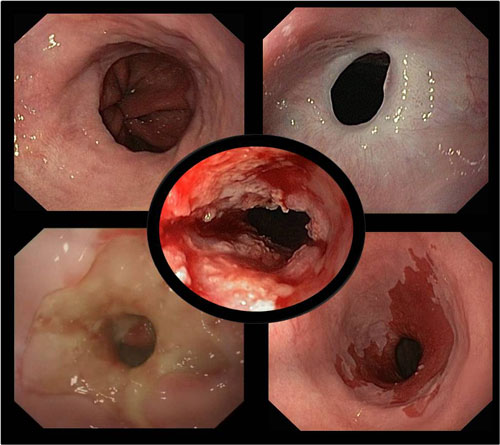
Peptic strictures are now much rarer, prevalence has fallen from 1% to 0.1% with the introduction of PPIs.17 Strictures develop from untreated erosive oesophagitis and present with dysphagia usually without weight loss. They are more common in men as an increased proportion of men develop erosive oesophagitis (60%) despite the male:female ratio of GORD symptoms being equal.
The mechanism for this shift is unknown but is amplified further when the complications of Barrett’s oesophagus (70% male) and oesophageal adenocarcinoma (80% male) develop. Thus, male gender is a major risk factor for oesophageal complications of reflux in addition to Caucasian ethnicity and obesity.18,19
Barrett's oesophagus and oesophageal cancer
GORD is a risk factor for both Barrett's oesophagus and oesophageal adenocarcinoma.20 The risk increases with duration, severity and frequency.20 Barrett’s oesophagus is a change in the epithelium of the oesophagus from squamous to columnar mucosa known as intestinal metaplasia. This is caused by injury and inflammation related to GORD. Barrett’s oesophagus affects about 1.6% of the population21 and is found in 15-19% of people undergoing endoscopy for reflux symptoms.22,23
Barrett's oesophagus is a precursor and risk factor for adenocarcinoma with a recently revised lower risk of 0.1-0.33% per year.24,25 Therefore a diagnosis is generally followed by endoscopic surveillance to identify cancer at an early stage, when treatment gives longer survival.26
Performing endoscopy on patients with GORD solely as an indicator to check for Barrett's oesophagus or adenocarcinoma is now considered very inefficient. GORD accounts for 30% of referrals for gastroscopy.27 However, less than 5% of patients with oesophageal adenocarcinoma have a previous diagnosis of Barrett's oesophagus28 and more than one-third of patients with adenocarcinoma have no history of reflux disease.20
Management
NICE has recently produced guidance on the investigation and management of dyspepsia and GORD.29 The key recommendations are summarised in table 2.
Endoscopy
Endoscopy should not be routinely offered at initial presentation unless the patient has dysphagia or other symptoms suggestive of upper gastrointestinal cancer, see table 3, below. This is because GORD symptoms have a low predictive value for oesophagitis and Barrett's oesophagus, especially in patients under the age of 50. However, as detailed above discussion regarding risks for Barrett's oesophagus including duration and frequency of symptoms, obesity, male gender and age should be considered.
Lifestyle and self-help
Weight loss advice is a standard part of GORD management. The effect has been shown to be reversible with a dose-dependent relationship between weight reduction and improvement in reflux symptoms, as well as increased treatment success rates.30, 31 However, there have been some studies that have shown no benefit with weight loss even after bariatric surgery.32 Abdominal obesity causes GORD by elevating intra-abdominal pressure, which promotes reflux and the development of hiatus hernia. Central obesity, localised to the abdomen, is increasing in most regions affected by the increase in GORD. Obesity is more common in men than women and abdominal obesity is also more likely in men than women.33
GORD symptoms are increased by 70% among daily smokers who have been smoking for more than 20 years.34 The effect is reversible as stopping or reducing smoking results in an almost two-fold improvement in severe symptoms, compared with those who continue to smoke.30
Although changing dietary constituents such as fatty foods, alcohol, chocolate and citrus products has been shown to affect oesophageal pH in trials the effect seems not to be great enough to change patients’ symptoms.35 Other interventions such as small meals, early meals and elevation of the head of the bed and sleeping on the left side may be difficult. However, there is some evidence regarding their efficacy and these measures should be advised if patients are willing to try them.36
Most over the counter medication is effective and fast acting with ranitidine and alginates showing a 40-60% symptom benefit over placebo. However, antacids only show a small benefit of 11%.37
PPI treatment trial
If there is a clear history of GORD then empirical treatment with full dose PPI therapy for 4-8 weeks is recommended. If symptoms return a PPI is then restarted at the lowest dose possible to control symptoms.38 It is important to note the possibility of a 2 week phase of rebound hyperacidity in some patients upon cessation or reduction of PPI before increasing dosages.39 Although PPIs are generally safe the lower dose minimises any long-term side effects including a two-fold increased risk of Clostridium difficile in hospitalised patients.40
Patients with oesophageal complications of peptic stricture or Barrett's oesophagus require long-term PPI therapy to prevent recurrence or reduce cancer progression risk.
Specific GORD presentations
For LPR disease symptoms the clinical response is slower for respiratory symptoms than for symptoms typical of reflux and high doses of PPIs for long periods, up to eight weeks, are often required.41 Affected patients may not have typical reflux symptoms or mucosal injury on endoscopy because the pharynx and larynx are exquisitely sensitive to acid and heal slowly.
Given the significant effect GORD has on quality of life and that exposure to PPI therapy during pregnancy seems to predispose the fetus to minimal risk, PPI use is felt to be acceptable if symptomatically necessary during pregnancy.42
Refractory GORD
Patients with no response to PPIs should be referred for further investigation of alternative causes other than GORD, see table 4. However, a partial response to PPI therapy can be improved in a number of ways. Given the short action of PPIs, increasing the dose is beneficial if given twice a day with, or up to 60 minutes before, meals (at the time of acid production). Compliance with this regimen has been shown to be difficult (46% optimal compliance) and should be addressed before further changes are made.43
Switching to an alternative PPI is an evidence-based step in the NICE recommendations, although specific PPIs are not mentioned the evidence supports esomeprazole.44,45 If there are nocturnal symptoms additional H2-receptor antagonists at night (ranitidine 300 mg or famotidine 40 mg) have been shown to be beneficial in more than 70% of patients. However, tolerance has been reported in a minority of cases, therefore it might be advisable to recommend use on an as required basis.46
Prokinetics improve oesophageal peristalsis but although there is some benefit to quality of life there is no benefit to symptoms.47, 48 Therefore, with the recent safety concerns addition of domperidone or metoclopramide to PPI treatment is not recommended.
H. pylori eradication
Helicobacter pylori may inhibit or make GORD symptoms worse depending on how the infection affects the stomach. However, there has been either little or no overall effect on GORD shown from H. pylori eradication.49,50 Given the overlap in symptoms of GORD and dyspepsia and the association with peptic ulceration and gastric cancer current guidelines recommend H. pylori testing and eradication.51
Anti-reflux surgery
Only carefully selected patients should undergo fundoplication for reflux disease. Laparoscopic Nissen fundoplication is currently considered the standard procedure. The procedure involves wrapping the gastric fundus around the lower end of the oesophagus and stitching it in place, reinforcing the lower oesophageal sphincter and preventing the stomach slipping up through the diaphragm so reducing the hiatus hernia.
Comparisons of surgery with PPI therapy have found that dysphagia and flatulence were more common in the surgical group but prevalence and severity of symptoms were lower with surgery e.g. heartburn (16% PPI vs 8% surgery) and regurgitation (13% PPI vs 2% surgery).52
Complications of fundoplication include dysphagia which usually resolves within 3 months but persists in 5% of cases, which may require dilation or, rarely, revision surgery. Early satiety, weight loss, discomfort with large meals, hiccups and difficulty burping or vomiting can also occur.
GORD symptoms can recur in 10% of patients 5-10 years after surgery and as many as 50% of patients who undergo anti-reflux surgery may become PPI users 10-15 years after surgery.53 This emerging data has now shifted the cost-benefit model back in favour of medical treatment.54 Therefore, careful surgical selection is required.
NICE recommends referral for patients with symptom control with PPIs, but who do not wish to continue with this therapy long term, or those who are unable to tolerate PPIs because of side effects such as diarrhoea or cough. The patients that benefit most are those with proven oesophagitis, some but incomplete response to PPIs or anatomical defects such as a hiatus hernia.
Chronic cough and extra-oesophageal complications of GORD can be treated with fundoplication. A response to medical therapy is a predictor of surgical response which has been shown to be complete in 51% of patients with chronic cough55 and also successful as a treatment for asthma.56
A complete lack of response to acid inhibition should raise doubts about the diagnosis of GORD and surgery is unlikely to be of benefit and may even worsen pre-existing symptoms. Full assessment with oesophageal pH monitoring and symptom correlation is required in nearly all patients where a surgical option is considered.
Studies have shown no change in the prevalence of Barrett’s oesophagus or in the incidence of adenocarcinoma when patients treated surgically were compared with patients treated with medical therapy. Therefore on its own cancer protection is not an indication for fundoplication.57
The increase in obesity prevalence is considered a major factor in the increased prevalence of GORD therefore bariatric surgery, particularly gastric bypass, should be considered in appropriate patients as it can effectively reduce GORD symptoms.58
Future directions
New treatment modalities are gaining evidence and being developed. There are a number of endoscopic procedures using radiofrequency energy to the gastro-oesophageal junction, injection of bulking agents, or implantation of a bioprosthesis into the lower oesophageal sphincter, and suturing of the proximal gastric folds. Variations in fundoplication surgical techniques are also being developed along with laparoscopic implantable rings of magnets around the gastro-oesophageal junction which has shown successful long-term data but is without a comparative trial.59
The prevalence of GORD is increasing and is likely to be a further burden to healthcare caused by the rise in obesity. There are many ways to treat it successfully but this does not seem to be slowing the rise in oesophageal adenocarcinoma. Endoscopy referral in all patients with higher risk should be considered.
REFERENCES
1 Boeckxstaens G, El-Serag HB, Smout AJ, Kahrilas PJ. Symptomatic reflux disease: the present, the past and the future. Gut 2014;63:1185-93
2 Vakil N, van Zanten SV, Kahrilas P et al. The Montreal definition and classification of gastroesophageal reflux disease: a global evidence-based consensus. Am J Gastroenterol 2006;101:1900-20;quiz 43
3 Johnson DA, Winters C, Spurling TJ et al. Esophageal acid sensitivity in Barrett's esophagus. J Clin Gastroenterol 1987;9:23-7
4 Moayyedi P, Talley NJ, Fennerty MB, Vakil N. Can the clinical history distinguish between organic and functional dyspepsia? JAMA 2006;295:1566-76
5 National Institute for Health and Clinical Excellence. CG27. Referral guidelines for suspected cancer. NICE. London. 2005. www.nice.org.uk/guidance/cg027
6 Kahrilas PJ, Hughes N, Howden CW. Response of unexplained chest pain to proton pump inhibitor treatment in patients with and without objective evidence of gastro-oesophageal reflux disease. Gut 2011;60:1473-8
7 Ciorba A, Bianchini C, Zuolo M, Feo CV. Upper aerodigestive tract disorders and gastro-oesophageal reflux disease. World J Clin Cases 2015;3:102-11
8 Morice AH, Fontana GA, Sovijarvi AR et al. The diagnosis and management of chronic cough. Eur Respir J 2004;24:481-92
9 Morice A. Chronic cough: epidemiology. Chron Respir Dis 2008;5:43-7
10 Irwin RS, Boulet LP, Cloutier MM et al. Managing cough as a defense mechanism and as a symptom.
A consensus panel report of the American College of Chest Physicians. Chest 1998;114:133S-81S
11 Chang AB, Lasserson TJ, Kiljander TO et al. Systematic review and meta-analysis of randomised controlled trials of gastro-oesophageal reflux interventions for chronic cough associated with gastro-oesophageal reflux. BMJ 2006;332:11-7
12 Field SK, Sutherland LR. Does medical antireflux therapy improve asthma in asthmatics with gastroesophageal reflux?: a critical review of the literature. Chest 1998;114:275-83
13 el-Serag HB, Sonnenberg A. Comorbid occurrence of laryngeal or pulmonary disease with esophagitis in United States military veterans. Gastroenterology 1997;113:755-60
14 Havemann BD, Henderson CA, El-Serag HB. The association between gastro-oesophageal reflux disease and asthma: a systematic review. Gut 2007;56:1654-64
15 Tack J, Becher A, Mulligan C, Johnson DA. Systematic review: the burden of disruptive gastro-oesophageal reflux disease on health-related quality of life. Aliment Pharmacol Ther 2012;35:1257-66
16 Farup C, Kleinman L, Sloan S et al. The impact of nocturnal symptoms associated with gastroesophageal reflux disease on health-related quality of life. Arch Intern Med 2001;161:45-52
17 Ruigomez A, Garcia Rodriguez LA, Wallander MA et al. Esophageal stricture: incidence, treatment patterns, and recurrence rate. Am J Gastroenterol 2006;101:2685-92
18 Ford AC, Forman D, Reynolds PD et al. Ethnicity, gender, and socioeconomic status as risk factors for esophagitis and Barrett's esophagus. Am J Epidemiol 2005;162:454-60
19 Cook MB, Chow WH, Devesa SS. Oesophageal cancer incidence in the United States by race, sex, and histologic type, 1977-2005. Br J Cancer 2009;101:855-9
20 Lagergren J, Bergstrom R, Lindgren A, Nyren O. Symptomatic gastroesophageal reflux as a risk factor for esophageal adenocarcinoma. N Engl J Med 1999;340:825-31
21 Ronkainen J, Aro P, Storskrubb T et al. Prevalence of Barrett's esophagus in the general population: an endoscopic study. Gastroenterology 2005;129:1825-31
22 Connor MJ, Weston AP, Mayo MS, Sharma P. The prevalence of Barrett's esophagus and erosive esophagitis in patients undergoing upper endoscopy for dyspepsia in a VA population. Dig Dis Sci 2004;49:920-4
23 Gerson LB, Edson R, Lavori PW, Triadafilopoulos G. Use of a simple symptom questionnaire to predict Barrett's esophagus in patients with symptoms of gastroesophageal reflux. Am J Gastroenterol 2001;96:2005-12
24 Bhat S, Coleman HG, Yousef F et al. Risk of malignant progression in Barrett's esophagus patients: results from a large population-based study. J Natl Cancer Inst 2011;103:1049-57
25 Hvid-Jensen F, Pedersen L, Drewes AM et al. Incidence of adenocarcinoma among patients with Barrett's esophagus. N Engl J Med 2011;365:1375-83
26 Fitzgerald RC, di Pietro M, Ragunath K et al. British Society of Gastroenterology guidelines on the diagnosis and management of Barrett's oesophagus. Gut 2014;63:7-42
27 Kramer JR, Shakhatreh MH, Naik AD et al. Use and yield of endoscopy in patients with uncomplicated gastroesophageal reflux disorder. JAMA Intern Med 2014;174:462-5
28 Eloubeidi MA, Provenzale D. Clinical and demographic predictors of Barrett's esophagus among patients with gastroesophageal reflux disease: a multivariable analysis in veterans. J Clin Gastroenterol 2001;33:306-9
29 Fock KM. Review article: the epidemiology and prevention of gastric cancer. Aliment Pharmacol Ther 2014;40(3):250-60
30 Ness-Jensen E, Lindam A, Lagergren J, Hveem K. Weight loss and reduction in gastroesophageal reflux. A prospective population-based cohort study: the HUNT study. Am J Gastroenterol 2013;108:376-82
31 Fraser-Moodie CA, Norton B, Gornall C et al. Weight loss has an independent beneficial effect on symptoms of gastro-oesophageal reflux in patients who are overweight. Scand J Gastroenterol 1999;34:337-40
32 Kjellin A, Ramel S, Rossner S, Thor K. Gastroesophageal reflux in obese patients is not reduced by weight reduction. Scand J Gastroenterol 1996;31:1047-51
33 El-Serag HB, Hashmi A, Garcia J et al. Visceral abdominal obesity measured by CT scan is associated with an increased risk of Barrett's oesophagus: a case-control study. Gut 2014;63:220-9
34 Nilsson M, Johnsen R, Ye W et al. Lifestyle related risk factors in the aetiology of gastro-oesophageal reflux. Gut 2004;53:1730-5
35 Kaltenbach T, Crockett S, Gerson LB. Are lifestyle measures effective in patients with gastroesophageal reflux disease? An evidence-based approach. Arch Intern Med 2006;166:965-71
36 Kang JH, Kang JY. Lifestyle measures in the management of gastro-oesophageal reflux disease: clinical and pathophysiological considerations. Ther Adv Chronic Dis 2015;6:51-64
37 Tran T, Lowry AM, El-Serag HB. Meta-analysis: the efficacy of over-the-counter gastro-oesophageal reflux disease therapies. Aliment Pharmacol Ther 2007;25:143-53
38 National Institute for Health and Care Excellence. CG184. Dyspepsia and gastro-oeosophageal reflux disease. Investigation and management of dyspepsia, symptoms suggestive of gastro-oesophgeal reflux disease, or both. NICE. London. 2014. www.nice.org.uk/cg184
39 Heidelbaugh JJ, Kim AH, Chang R, Walker PC. Overutilization of proton-pump inhibitors: what the clinician needs to know. Therap Adv Gastroenterol 2012;5:219-32
40 Niklasson A, Lindstrom L, Simren M et al. Dyspeptic symptom development after discontinuation of a proton pump inhibitor: a double-blind placebo-controlled trial. Am J Gastroenterol 2010;105:1531-7
41 Poelmans J, Tack J. Extraoesophageal manifestations of gastro-oesophageal reflux. Gut 2005;54:1492-9
42 Majithia R, Johnson DA. Are proton pump inhibitors safe during pregnancy and lactation? Evidence to date. Drugs 2012;72:171-9
43 Gunaratnam NT, Jessup TP, Inadomi J, Lascewski DP. Sub-optimal proton pump inhibitor dosing is prevalent in patients with poorly controlled gastro-oesophageal reflux disease. Aliment Pharmacol Ther 2006;23:1473-7
44 Fass R, Sontag SJ, Traxler B, Sostek M. Treatment of patients with persistent heartburn symptoms: a double-blind, randomized trial. Clin Gastroenterol Hepatol 2006;4:50-6
45 Moayyedi P, Armstrong D, Hunt RH et al. The gain in quality-adjusted life months by switching to esomeprazole in those with continued reflux symptoms in primary care: EncomPASS-a cluster randomized trial. Am J Gastroenterol 2010;105:2341-6
46 Rackoff A, Agrawal A, Hila A et al. Histamine-2 receptor antagonists at night improve gastroesophageal reflux disease symptoms for patients on proton pump inhibitor therapy. Dis Esophagus 2005;18:370-3
47 Ren LH, Chen WX, Qian LJ et al. Addition of prokinetics to PPI therapy in gastroesophageal reflux disease: a meta-analysis. World J Gastroenterol 2014;20:2412-9
48 Shaheen NJ, Adler J, Dedrie S, et al. Randomised clinical trial: the 5-HT4 agonist revexepride in patients with gastro-oesophageal reflux disease who have persistent symptoms despite PPI therapy. Aliment Pharmacol Ther 2015;41:649-61
49 Moayyedi P, Bardhan C, Young L et al. Helicobacter pylori eradication does not exacerbate reflux symptoms in gastroesophageal reflux disease. Gastroenterology 2001;121:1120-6
50 Schwizer W, Thumshirn M, Dent J et al. Helicobacter pylori and symptomatic relapse of gastro-oesophageal reflux disease: a randomised controlled trial. Lancet 2001;357:1738-42
51 Ford AC, Forman D, Hunt RH et al. Helicobacter pylori eradication therapy to prevent gastric cancer in healthy asymptomatic infected individuals: systematic review and meta-analysis of randomised controlled trials. BMJ 2014;348:g3174.
52 Galmiche JP, Hatlebakk J, Attwood S, et al. Laparoscopic antireflux surgery vs esomeprazole treatment for chronic GERD: the LOTUS randomized clinical trial. JAMA 2011;305:1969-77
53 Lodrup A, Pottegard A, Hallas J, Bytzer P. Use of proton pump inhibitors after antireflux surgery: a nationwide register-based follow-up study. Gut 2014;63:1544-9
54 Arguedas MR, Heudebert GR, Klapow JC et al. Re-examination of the cost-effectiveness of surgical versus medical therapy in patients with gastroesophageal reflux disease: the value of long-term data collection. Am J Gastroenterol 2004;99:1023-8
55 Allen CJ, Anvari M. Gastro-oesophageal reflux related cough and its response to laparoscopic fundoplication. Thorax 1998;53:963-8
56 Sontag SJ, O'Connell S, Khandelwal S et al. Asthmatics with gastroesophageal reflux: long term results of a randomized trial of medical and surgical antireflux therapies. Am J Gastroenterol 2003;98:987-99
57 Ye W, Chow WH, Lagergren J et al. Risk of adenocarcinomas of the esophagus and gastric cardia in patients with gastroesophageal reflux diseases and after antireflux surgery. Gastroenterology 2001;121:1286-93
58 Ikramuddin S. Surgical management of gastroesophageal reflux disease in obesity. Dig Dis Sci 2008;53:2318-29
59 Subramanian CR, Triadafilopoulos G. Refractory gastroesophageal reflux disease. Gastroenterol Rep (Oxf) 2015;3:41-53
ARTICLE IN PDF
 Download this article in PDF format
PRESET SEARCHES
PubMed
NICE Evidence search
Immediate CPD prompts
These handy templates* prompt immediate drafting of personal learning, reflection and planning. Save your record straight into your personal development folder on your device or Cloud storage system.
*Adobe reader needed for iPad
EXTERNAL WEBLINKS
NICE CG184. Dyspepsia and gastro-oeosophageal reflux disease
BSG guidelines on the diagnosis and management of Barrett’s oesophagus
LETTERS TO THE EDITOR
If you would like to comment on this article for publication or have a question for the authors, write to: