SEARCH

Pugh D. Time to encourage patients to take more exercise. Practitioner 2012;256 (1754):25-28
Time to encourage patients to take more exercise
20 Sep 2012
AUTHORS
Dr David Pugh MBChB DRCOG FFSEM(UK) DipSEM, GP and Sport and Exercise Medicine Practitioner, Honorary Senior Lecturer in General Practice, University of Glasgow, Glasgow, UK, Honorary Senior Lecturer, in Sport and Exercise Medicine, Cardiff Metropolitan University, Cardiff, UK
Article
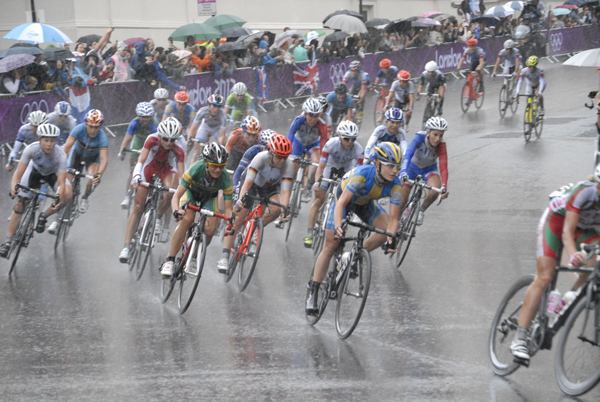
London has just played host to possibly the greatest ever Olympic and Paralympic Games. I enjoyed my small part as a medical volunteer at the Olympic football tournament.
Numerous public figures have talked about the potential legacy promoting sport and exercise to the population. This could also be the greatest opportunity for GPs and sport and exercise medicine specialists in the UK to combine forces to deliver our strongest ever campaign to promote physical activity and improve the nation’s health.
Therapeutic benefits
Exercise can, and should, play a major role in the health of our nation. Former Chief Medical Officer (CMO) Professor Sir Liam Donaldson has stated that regular physical activity of moderate intensity can bring about major health benefits as well as significant cost savings for the NHS.
Evidence suggests that regular exercise can produce up to a 30% reduction in all cause mortality 1 with a 35% lower risk of cardiovascular disease, coronary heart disease (CHD)2,3 and stroke. There is evidence to show that 37% of CHD deaths can be attributed to physical inactivity compared with 19% and 13% for smoking and hypertension respectively.1 In addition a 40% reduction in the risk of metabolic syndrome and type 2 diabetes has been reported with moderate physical activity.4
There is convincing evidence that aerobic physical activity has a consistent effect on weight maintenance and a positive effect on weight reduction along with dietary intervention.5,6 There are also benefits for mental health including improvements in depressive illness.7
Musculoskeletal benefits have also been demonstrated with significant reductions in hip fractures and osteoarthritis, as well as pain relief. Exercise can have major benefits for our growing elderly population, including falls reduction 8,9 and fracture prevention,10 among many other health gains. Cancer risks can also be reduced, with up to a 50% reduction in colonic carcinoma and a 20% reduction in breast carcinoma.11,12
Physical activity targets
The current guidelines from the CMO 13,14,15 for adults (19-64 years) recommend:
• 150 minutes of moderate intensity aerobic exercise per week such as fast walking or cycling plus muscle strengthening activities on 2 or more days a week that work all muscle groups (legs, hips, back, abdomen, chest, shoulders and arms) OR
• 75 minutes of vigorous intensity aerobic activity such as running or singles tennis plus the same muscle strengthening regimen OR
• An equivalent mix of the two: e.g. 2 x 30 minutes running and 30 minutes fast walking plus the muscle strengthening exercises for 2 or more days per week
These guidelines are based on an extensive body of research collated by the World Health Organization.
The figures, in table 1, suggest that many adults in the UK are not reaching the target levels of physical activity. Such statistics highlight the pressing need to get the population more active and closer to meeting the recommended guidelines for physical activity.
GPs are among the best advocates to promote physical activity through their close daily contact with the target audience. The average patient attends their GP four times per year and 78% of patients will be seen in any one year.16 Furthermore, a study in 20065 suggested that one in four people would become more active if advised to do so by a doctor or nurse.
One way GPs can increase their patients’ physical activity levels could be via an individualised tailored care pathway aiming to motivate individuals to make long-term health changes. These types of interventions for mild to moderate medical conditions are being trialled in certain primary care trusts. Such initiatives include ‘Let’s Get Moving’ a new physical activity care pathway for the NHS.17 This pathway has been designed to motivate patients to set their own physical activity goals drawing upon community-based physical activities and encouraging people to take gradual steps to become more active. It is hoped that physical activity will then become a natural part of everyday life.
Exercise referral schemes already exist in many parts of the UK.18 However, GPs could also take a proactive approach in motivating patients to exercise in the same way that they tackle smoking, alcohol consumption and overweight.
Physical activity questionnaires
Evidence suggests that the risks associated with physical activity at a level to promote health are low and that the health benefits outweigh the risks.19
GPs already measure numerous parameters such as height, weight, BMI and blood pressure. They also use questionnaires for measuring anxiety/depression (HADS/PHQ-9) and alcohol intake (CAGE) so it would be relatively straightforward to use physical activity questionnaires such as the General Practice Physical Activity Questionnaire (GPPAQ),20 see figure 1, to add to the growing body of data.
Once these have been completed GPs could advise on possible interventions based on the risk, counsel for behaviour change, and involve others such as counsellors, physiotherapists and practice nurses. Patients could be encouraged to identify their own physical activity strategies and make use of exercise referral schemes.
The 5 As system (Ask, Assess, Advise, Assist and Arrange) which is sometimes used in smoking cessation can be adapted for physical activity.21
• Ask about the patient’s current levels of physical activity using GPPAQ
• Assess their fitness and capabilities
• Advise about appropriate exercise and the risks involved
• Assist in locating places to get involved, e.g. initiatives such as ‘Let’s Get Moving’ and exercise referral schemes where available
• Arrange any necessary referrals
Sport and exercise medicine
More widely within the NHS, the specialty of sport and exercise medicine, which was established as a London 2012 legacy bid commitment, can help ensure a long-term, broad-based Olympic health legacy.
The Faculty of Sport and Exercise Medicine hopes to see greater numbers of sport and exercise medicine consultants in the wider NHS, to help address the UK’s physical activity levels. These practitioners can help do so through the provision of physical activity advice and prescription, behavioural change interventions and the management of sports-related injuries and illnesses. The Royal College of Physicians publication Exercise for Life 1 states that there is a clear opportunity to ensure a health legacy from the 2012 Olympics through the development of pilot projects based on pathways with a network of exercise providers and healthcare workers supported by sport and exercise medicine consultants at PCT level.
Most recently, the House of Lords Committee on Science and Technology Report on Sport and Exercise Science and Medicine22 highlighted the importance of public understanding of the health benefits of exercise, and urged joined up thinking in encouraging participation in sport to tackle sedentary lifestyles as part of the Games legacy.
The Olympic legacy promises to help the nation be healthier, happier and more active. This is a unique time for the various medical specialties to work together supporting Department of Health initiatives to encourage the population of the UK to participate in regular physical activity. The time is ripe to develop a national physical activity plan establishing a national strategy and an exercise medicine care pathway model.
REFERENCES
1 Royal College of Physicians. Exercise for Life: Physical activity in health and disease. Recommendations of the Sport and Exercise Medicine Committee. Working Party of the Royal College of Physicians. RCP. London. 2012
2 Morris JN. Exercise in the prevention of coronary heart disease: today's best buy in public health. Med Sci Sports Exerc 1994; 26(7):807-14
3 Tanescu M, Leitzman MF, Rumm EB. The dose-response relationship between exercise and heart disease in men. JAMA 2002;288:1994-2000
4 Nagi D, Gallen I. ABCD position statement on physical activity and exercise in diabetes. Practical Diabetes International 2010;27(4)158-163a
5 Department of Health. Health Survey for England 2006: CVD and risk factors adults, obesity and risk factors children. The Information Centre. London. 2008
6 WHO Obesity and overweight. Factsheet. WHO. Geneva. 2007
7 Saxena S, Van Ommeren M, Tang KC, Armstrong TP. Mental health benefits of physical activity. J Ment Health 2005;14(5):445-51
8 Province MA, Hadley EC, Hornbrook MC et al. The effects of exercise on falls in elderly patients. A preplanned meta-analysis of the FICSIT trials. JAMA 1995; 273(17):1341-1347
9 National Institutes of Health Consensus Development Panel on Osteoporosis Prevention Diagnosis and Therapy. Osteoporosis prevention, diagnosis and therapy. JAMA 2001; 285(6):785-795
10 Tinetti ME, Baker DI, McAvay G et al. A multifactorial intervention to reduce the risk of falling among elderly people living in the community. N Eng J Med 1994;331(13):821-827
11 World Cancer Research Fund/American Institute of Cancer Research. Food, nutrition, physical activity and the prevention of cancer: A global perspective. WCRF/AICR. Washington, DC. 2007
12 Woin KY, Yan Y, Colditz GP, Lee I-M. Physical activity and colon cancer prevention: a meta-analysis Br J Cancer 2009;100(4):611-616
13 www.nhs.uk/news/2011/07July/pages/new-exercise-activity-uk-guidelines-from-cmo.aspx
14 Department of Health. At least five a week - evidence on the impact of physical activity and its relationship to health. A report from the Chief Medical Officer. DH. London. 2004
15 Department of Health. Be active, be healthy: a plan for getting the nation moving. DH. London. 2009
17 Department of Health. Let’s Get Moving - a new physical activity care pathway for the NHS: commissioning guidance. DH. London. 2009
18 Dugdill L, Graham R, McNair F. Exercise referral: the public health panacea for physical activity prevention: a critical perspective of exercise referral schemes; their development and evaluation. Ergonomics 2005; 48:1390-1410
19 Royal College of Physicians. Medical aspects of exercise: benefits and risks. RCP. London. 2009
20 Department of Health. The General Practice Physical Activity Questionnaire (GPPAQ). DH. London. 2006
21 Huang N. Motivating patients to move. Austr Fam Physician 2005;34 (6)
22 Parliament.uk. House of Lords Science and Technology Committee; July 2012. Available from: www.publications.parliament.uk/pa/ld201213/ldselect/ldsctech/33/33.pdf
USEFUL INFORMATION
The Faculty of Sport and Exercise Medicine
www.fsem.co.uk
The British Association of Sport and Exercise Medicine
www.basem.co.uk
Patient UK
www.patient.co.uk/directory/exercise-physical-activity-fitness-advice
ARTICLE IN PDF
 Download this article in PDF format