SEARCH

Practitioner 2011; 255 (1739):25-28
Increasing uptake of HIV tests in men who have sex with men
09 May 2011
AUTHORS
Dr Hayley Wood BSc MB BCh MRCP (UK) dip GUM, Specialist registrar, University Hospitals of Leicester
Dr Helen Colver BSc MB BS MRCP (UK), Specialist registrar, University Hospitals of Leicester
Dr Ewen Stewart MRCGPGP in Edinburgh and Chair of the RCGP Sex, Drugs and HIV group
Dr Adrian Palfreeman FRCP, Consultant physician, University Hospitals of Leicester
Article
The term men who have sex with men (MSM) encompasses a diverse group of men of all ages, ethnicities and cultural backgrounds. Their sexual behaviour is equally diverse: while some MSM have exclusively male partners, others have partners of both genders or identify themselves as heterosexual but have occasional casual sexual encounters with men. MSM may be involved in the commercial gay scene, may visit cruising environments in public places or may be in monogamous sexual relationships.
There were an estimated 415,600 MSM aged 15-44 in the UK in 2007.1 The estimated prevalence of HIV in this group was 5.2%. Of 60,050 people aware of their HIV-positive diagnosis in the UK, 26,050 (43%) were MSM.
A further 9,000 MSM in the UK are estimated to be infected with HIV but unaware of their diagnosis.2
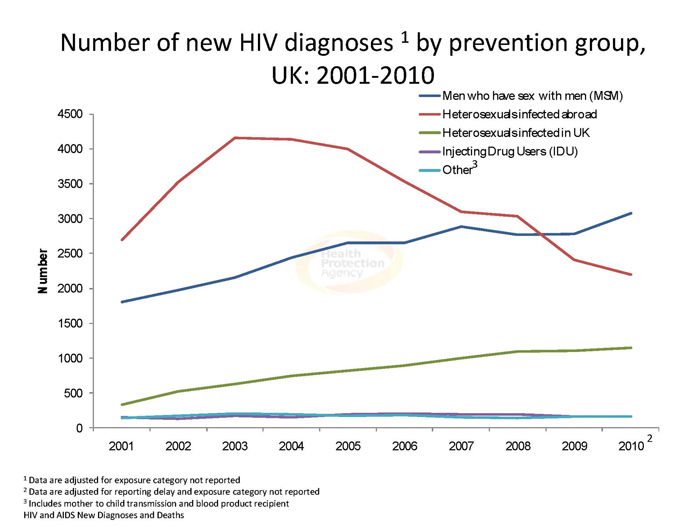
In 2010, just under half of new HIV diagnoses were in MSM (see figure 1, above). Rates of diagnosis among MSM remain high.2 MSM are the group most at risk of acquiring and transmitting HIV in the UK.3 In March of this year, NICE published guidance aimed specifically at increasing uptake of HIV testing in this group.4 Many of the recommendations in the guidance pertain directly to primary care.
Up to 1 in 6 newly diagnosed MSM in 2009 were thought to have acquired HIV in the previous 4-5 months compared with 1 in 16 heterosexuals. It is estimated that 83% of MSM acquired their infection in the UK.2 Public health strategies aimed at MSM have not made a significant impact on the proportion who engage in risky behaviour such as unprotected anal intercourse with a partner of positive or unknown HIV status (26% of men surveyed for Sigma research 2009).5
Guidelines, issued jointly by the British HIV Association, the British Association of Sexual Health and HIV and the British Infection Society were published in 20086 with the aim of normalising HIV testing in the general population. Routine HIV testing is currently recommended in areas where more than 2 adults per 1,000 population have been diagnosed with HIV.6 The estimated HIV prevalence in MSM living in the UK far exceeds this threshold.
The need for specific guidance with regards to testing in this population was felt necessary because of the high levels of infection, high levels of recent acquisition of HIV infection and continued high-risk behaviour.
It was recognised that stigma can be a barrier to testing for, or seeking information concerning, HIV.7, 8 The NICE guidance aims to address and reduce this stigma.
Late diagnosis
Delayed diagnosis of HIV confers a poor prognosis:9 73% of the 516 patients with HIV who died in 2009 had been diagnosed late.2 An estimated 39% of MSM in 2009 were diagnosed when their immune system was below the threshold at which antiretroviral treatment should be commenced.10 Many of these men had seen their own GP with signs and symptoms of HIV and the opportunity to make the diagnosis had been missed.
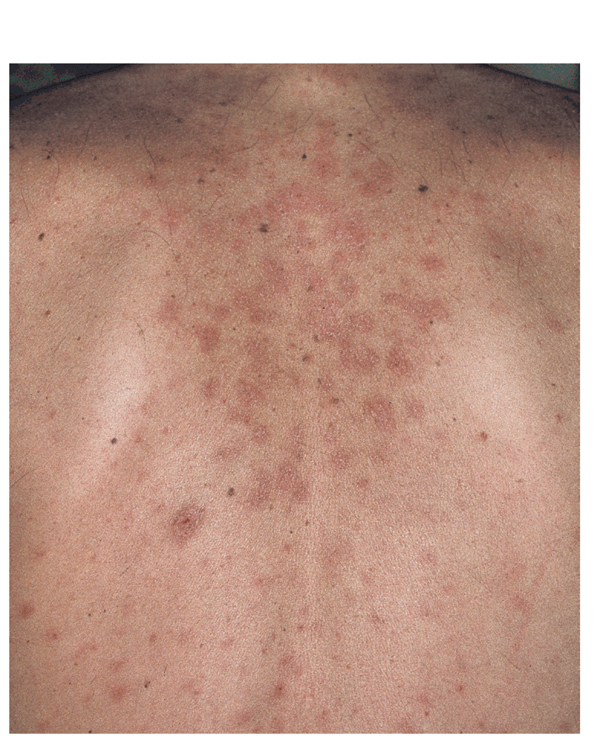
One of the most important indicators not to miss is primary HIV infection. This seroconversion illness presents with a flu-like illness often lasting more than two weeks with a rash (see figure 2, opposite), sore throat and lymphadenopathy. An HIV test should be performed straightaway on all MSM presenting with these features.
The benefits of increased testing and early diagnosis include reduced mortality and morbidity related to HIV and the potential to reduce onward transmission.11 It has been shown that many new infections are acquired from people who are unaware of their diagnosis.12
Primary care
The NICE guidance4 advocates regular HIV testing of MSM (see table 1, p26), with annual HIV testing included as part of routine healthcare.
As men may not disclose sexual activity with other men, it is recommended that all men are tested in areas with a large MSM population, or where diagnosed HIV prevalence exceeds 2 per 1,000 adults.
It is important to offer HIV testing to MSM who request a sexual health screen or who are diagnosed with another sexually transmitted infection. A high proportion of MSM with an STI are also infected with HIV.1
HIV testing should be voluntary and confidential, and MSM should have access to testing in a variety of settings. These should include:
- GP surgeries
- GUM clinics
- LGBT (lesbian, gay, bisexual and transgender) services
- outreach services in public environments where MSM may have sexual encounters, e.g. pubs, clubs and saunas.
GPs should offer HIV testing and be able to inform their MSM patients of how to access other sources of testing.
A suitable method of managing MSM undergoing HIV testing is shown in the algorithm in box 1.
It should be within the remit of all GPs and other clinicians in the primary care team to offer and conduct HIV testing.13
Lengthy and onerous pre-test discussion is unnecessary. Verbal consent should be obtained in the same manner as for any other blood test (see current GMC guidance on consent.14)
As a minimum the patient should be informed of the benefits of testing and advised how they will receive their result. Details of the pre-test discussion and the HIV result should be recorded in the patient's notes.6
HIV prevention strategies, of which testing is only one element, should be part of integrated healthcare offered to MSM. GPs should be aware of local specialist services offering behaviour interventions for those at ongoing risk and be able to refer patients to them if necessary.
Confidentiality
All frontline staff should be trained in diversity issues to challenge the stigma of, and dispel the myths surrounding, HIV testing. Training should cover topics such as HIV-related stigma, homophobia and cultural issues. It may be available from local NHS training departments or HIV voluntary organisations.
General practices should be able to create a welcoming and non-discriminatory environment in which MSM feel able to discuss issues relating to their sexual health. HIV testing should be presented as an empowering and responsible course of action for MSM. This message can be reinforced by providing health promotional material in the clinical setting.
Concerns about confidentiality should be addressed with explicit confidentiality policies in practice leaflets and waiting rooms. Insurance applications should not be a deterrent to HIV testing as since 2004 insurance applicants have only been asked if they have ever tested positive for HIV or are currently awaiting an HIV test result which, if it proves negative, will not have any effect on acceptance terms.15
Surveys have shown that up to one-third of MSM have never been tested for HIV and less than half have been tested in the past 12 months.16 It has been demonstrated that uptake of HIV tests is increased when a strategy of opt-out testing is adopted.6 This strategy has been successful in MSM outside primary care: uptake of HIV testing in MSM in GUM clinics in the UK reached 86% in 2007.1
Consider offering the test to all men in areas with a large MSM population, or where diagnosed HIV prevalence exceeds 2 per 1,000 adults.
Follow up
As far as possible, results should be given to the patient in person. Patients who test positive should be seen by an HIV specialist ideally within 48 hours, but definitely within 2 weeks of diagnosis.
REFERENCES
1 Health Protection Agency (2008) Sexually Transmitted Infections and Men who have Sex with Men in the UK: 2008 Report. www.hpa.org.uk/web/HPAwebFile/
HPA web_C /1227515298225
2 Health Protection Agency (2010) HIV in the United Kingdom: 2010 Report.
www.hpa.org.uk /web/HPAwebFile/
HPAweb_C/1287145367237
3 Ruf M, Delpech V, Osuagwu U et al. Men who have sex with men: estimating the size of at-risk populations in London primary care trusts. Int J STD AIDS 2011; 22(1):25-91
4 National Institute for Health and Clinical Excellence
PHG 34. Increasing the uptake of HIV testing to reduce undiagnosed infection and prevent transmission among men who have sex with men. NICE. London. 2011
5 Sigma Research (2009) Testing targets: findings from the United Kingdom Gay Men's Sex Survey 2007. www.sigmaresearch.org.uk/files/report2009f.pdf
6 British HIV Association, British Association of Sexual Health and HIV, British Infection Society (2008) UK National Guidelines for HIV Testing 2008. www.bhiva. org/documents/Guidelines/Testing/
GlinesHIVTest08.pdf
7 Meiberg AE, Bos AE, Onya HE et al. Fear of stigmatization as barrier to voluntary HIV counselling and testing in South Africa. East Afr J Public Health 2008; 5(2):49-54
8 Fortenberry JD, McFarlane M, Bleakley A et al. Relationships of stigma and shame to gonorrhea and HIV screening. Am J Public Health 2002; 92(3):378-81
9 Lucas SB, Curtis H, Johnson MA. National review of deaths among HIV-infected adults. Clin Med 2008; 8(3):250-2
10 Health Protection Agency (2010) Time to test for HIV: Expanded healthcare and community HIV testing in England. www.hpa.org.uk/web/HPAwebFile/
HPAweb_C /1287145497243
11 Fox J, White PJ, Macdonald N et al. Reductions in HIV transmission risk behaviour following diagnosis of primary HIV infection: a cohort of high-risk men who have sex with men. HIV Med 2009; 10(7):432-8
12 Marks G, Crepaz N, Janssen RS. Estimating sexual transmission of HIV from persons aware and unaware that they are infected with the virus in the USA. AIDS 2006;20(10):1447-50
13 Palfreeman, A, Fisher M (2011). Diagnosis and management of HIV infection. Br J Hosp Med 2011;72 (3):146-150
14 General Medical Council (2008) Consent: patients and doctors making decisions together. www.gmc-uk.org/static/documents/content/Consent_0510.pdf
15 Association of British Insurers (2008) ABI Statement of Best Practice for HIV and Insurance July 2008. www.abi.org.uk/Information/40470.pdf
16 Sigma Research (2010) Tactical dangers: findings from the United Kingdom Gay Men's Sex Survey 2008. www.sigmaresearch.org.uk/files/report2010b.pdf
USEFUL INFORMATION
For patients
Terence Higgins Trust Direct
Provides services, support and advice for people affected by HIV
0845 12 21 200
National AIDS Trust
Provides advice and information for people affected by HIV
Waverley Care
Scottish charity providing care and support to people living with HIV and hepatitis C and their partners, families and carers
For healthcare professionals
BHIVA
UK professional association representing professionals in HIV care.
Guidelines for diagnosis and management can be found on the website:
 Download this article in PDF format