SEARCH

Practitioner 2011; 255 (1737):25-27
GPs have key role in detecting familial hypercholesterolaemia
23 Feb 2011
AUTHORS
Professor Steve Humphries BSc PhD FRCPath MRCP
BHF Professor Cardiovascular Genetics, UCL, London
Kristina Pedersen BA MA
FH Audit Project Manager
Royal College of Physicians, London
Article
Currently the vast majority of people with familial hyper- cholesterolaemia (FH) in the UK remain undiagnosed, probably 85% of the predicted 120,000 cases.1
FH is a common inherited disorder of lipid metabolism causing high levels of LDL cholesterol which leads to early CHD. It is caused by mutations in any of three genes. It has an autosomal dominant pattern of inheritance so siblings and children of a patient with FH will have a 50% chance of inheriting the condition.
Most cases are heterozygous. FH is present in the heterozygous form in 1 in 500 of the population. The homozygous form is very rare, affecting 1 in 1,000,000 of the population.
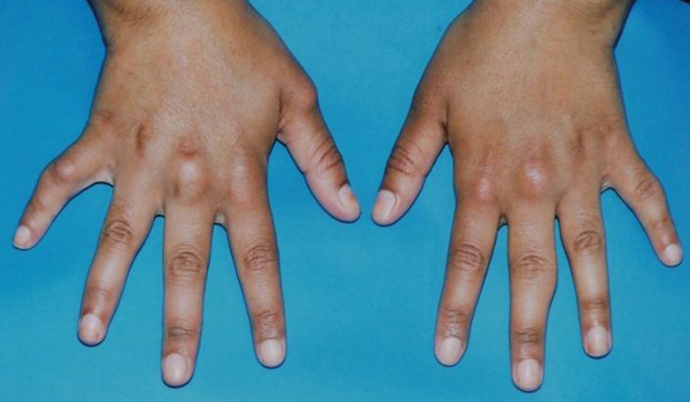
Homozygotes present in early childhood with widespread cutaneous xanthomata and before the age of ten are symptomatic with shortness of breath due to coronary and proximal aortic atherosclerosis. They require specialist treatment with lipoprotein apheresis.
Around half of men with FH, if untreated, will have developed clinically evident CHD by the age of 55 years, and approximately one third of women by the age of 60.2
A significant reduction in the mortality and morbidity of the disease can be achieved through changes in lifestyle and the use of statins to lower cholesterol.
Testing the families of known cases of FH, cascade testing, can identify those with FH. Data obtained from a large ongoing project in the Netherlands and a DH pilot project in the UK has shown that this approach is cost-effective.
In August 2008, NICE published evidence-based guidelines on the diagnosis and management of FH.3 The guidelines set out recommendations on how people with FH should be diagnosed and treated, and very importantly, how their families should be screened.
Using these recommendations as the standards, and following a successful 14-site pilot in 2009, a full national audit was carried out by the RCP between April and September 2010.4 The RCP audited 122 sites (108 in England, six in Wales, four in Scotland and four in Northern Ireland) against questions based on the NICE guidelines, covering the notes of 2,324 (15% of total) adults and 147 (30% of total) children with FH. Confidentiality was maintained throughout.
The audit revealed that overall the current management of people identified with FH is good. There is good documentation of family history and the majority of case notes contained a pedigree. Before diagnosis, secondary causes of hypercholesterolaemia were excluded. However, the audit identified significant inadequacies in the screening of relatives, both in terms of cascade testing and in the use of DNA testing (see box 1).
Overall, these results indicate a great missed opportunity, as cascade testing is not being effectively implemented.
Implications for GPs
NICE recommends that clinical management of FH patients should primarily be carried out in lipid clinics. There should be formalised shared care arrangements with general practice after optimisation of lipid-lowering treatment has been achieved and the patient discharged back to the GP. Annual review arrangements should also be shared. Data from the audit demonstrates that this needs to be implemented in many centres, requiring input from GPs.
The audit results also underline the important role of GPs in three different aspects, but most importantly all require a working knowledge of FH.
Cascade testing
When cascade testing from lipid clinics is underway, GPs will be approached by relatives who have been identified as being at 50% risk of having FH, because they have an affected first-degree relative with the disorder. They will then need to take a blood sample for total and LDL cholesterol measurement, and often will also be asked to provide a sample for DNA testing.
A preliminary investigation in the surgery of a family member would involve a full lipid profile in order to calculate LDL cholesterol. If this is not elevated in an adult, cut-off value 4.9 mmol/L, FH is highly unlikely. If
it is elevated secondary causes of hypercholesterolaemia, such as hypothyroidism, renal impairment, obstructive liver disease or diabetes need to be excluded before referral to a lipid clinic.
Cholesterol levels in affected children, however, may not be raised, and diagnosis in children with borderline levels is only unequivocal using DNA diagnosis.
On average half these people will not have FH. In situations where the results are negative, GPs will still have to answer questions about the disorder and reassure the individual that they don't have a genetic condition. These individuals may also need treatment if their lipid levels are modestly elevated and in addition may benefit from lifestyle advice.
In cases where an elevated LDL cholesterol is found, and particularly in the presence of a mutation on DNA testing, GPs will need to refer the patient to a local lipid clinic as well as providing advice and support. A list of lipid clinics across the UK can be found on the HEARTUK website (www.heartuk.org.uk).
At present it is easier for patients to be referred to the lipid clinic for DNA testing. Local DNA diagnostic services come under the remit of the clinical genetics service, and are not at present widely available for FH. It is hoped that demand will increase availability. Each PCO should have information about its clinical genetics service.
To complete the cascade testing, other first-degree relatives of a newly identified patient may need to be approached. If the GP has them under their care, for example the children of the patient, they will also need to be referred.
Risk management
Even if an FH patient is young, currently does not have CHD and may have no other CHD risk factors, the Framingham risk charts should not be used to estimate risk. These individuals are at increased CHD risk which warrants treatment with statins.
New probands
The final implication for GPs is the identification of potential new probands from the practice list. This is particularly the case when practices are carrying out the vascular health check screening programme, which recommends that where a total cholesterol of > 7.5 mmol/L is identified that a diagnosis of FH should be considered.
The NHS Health Check guidance states that if an individual has been identified through the programme with a total cholesterol of >7.5 mmol/L, the following steps should be taken:
- repeat the measurement on a fasting blood sample
- if on the retest the LDL cholesterol is >4.9 mmol/L, exclude secondary causes of hypercholesterolaemia.
- if secondary causes of hypercholesterolaemia have been excluded, or the patient continues to have a high cholesterol despite management of the secondary cause, then the patient should be referred to a local lipid clinic.
It is important to enquire about a family history of early CHD, and if this is present the patient should definitely be referred to a local lipid clinic for further investigations and confirmation of diagnosis.
Supporting FH patients and their families
Although on average half the members of an FH family unit will not have the disorder, the finding of a genetic disease can be used to motivate the whole family to adopt a healthier lifestyle. Improving diet, quitting smoking, and taking more exercise will reduce the diabetes and cardiovascular risk of both affected and unaffected members.
In FH families, patients sometimes feel guilty about passing on a defective gene, and there are often concerns about confidentiality surrounding genetic diagnoses. However, in general most people find that knowing the cause of the early heart disease in their family and, more importantly, that the risk can be very significantly reduced by adherence to statins, means that anxiety is easily dealt with and is very shortlived.
It is important that all members of the primary healthcare team have a good working knowledge of the simple Mendelian inheritance of FH, and can explain the elevated risk and how it can be reduced through medication and lifestyle changes.
Acknowledgements
We would like to thank Dr Mary Seed, Honorary Consultant Lipidologist, Charing Cross Hospital, London for her contribution to this article.
The audit was funded by the Royal College of Physicians, British Heart Foundation, HEARTUK and the Cardiac Network Coordinating Group in Wales.
REFERENCES
1 Marks D, Thorogood M, Farrer JM et al. Census of clinics providing specialist lipid services in the United Kingdom. J Pub Health 2004;26:353-4
2 Slack J. Risks of ischaemic heart-disease in familial hyperlipoproteinaemic states. Lancet 1969;2:1380-2
3 National Institute for Health and Clinical Excellence (CG71). Identification and management of familial hypercholesterolaemia. NICE. London. 2008
4 Pedersen KMV, Humphries SE, Roughton M et al. National Clinical Audit of the Management of Familial Hypercholesterolaemia 2010. Clinical Standards Dept, RCP. London. 2011
ARTICLE IN PDF
 Download this article in PDF format