SEARCH

Practitioner 2011; 255 (1736):23-26
Early aggressive treatment improves prognosis in complex regional pain syndrome
23 Jan 2011
AUTHORS
Dr John Lee BSc MSc MBBS MRCP FFPMRCA, Consultant in pain medicine
Dr Paul Nandi MBBS FRCP FRCA FFPMRCA, Consultant in pain medicine and anaesthesia
Pain Management Centre, National Hospital for Neurology & Neurosurgery, Queen Square, London
Article
The condition now named complex regional pain syndrome (CRPS) has been recognised for many years, and known by many terms, although the adoption of the current taxonomy is recent.
It was previously believed that some aberration of sympathetic outflow was a prerequisite for the development of the disorder, hence the term reflex sympathetic dystrophy (RSD) was coined. However, this term has now been rejected because there is no evidence that the condition results from a reflex; the role of the sympathetic nervous system is doubtful; and dystrophy is no longer considered to be a necessary diagnostic element.
Diagnosis
The criteria for making a diagnosis of CRPS have been the subject of much debate, but are encapsulated in the widely accepted proposal made by an international group of specialists in 20031 (see table 1, p24). CRPS type I occurs without obvious nerve injury. Type II, corresponds to the earlier term causalgia, in which a peripheral nerve injury is present, although the pain may not be limited to the distribution of that nerve.
CRPS remains a much investigated but only partially understood condition. The pathophysiological nature of the disorder is still not clear. Despite continuing efforts to clarify diagnostic criteria, there is no reliable diagnostic test, and the diagnosis continues to rest on the presence of a constellation of symptoms and signs, almost all of which are individually non-specific.
Presentation
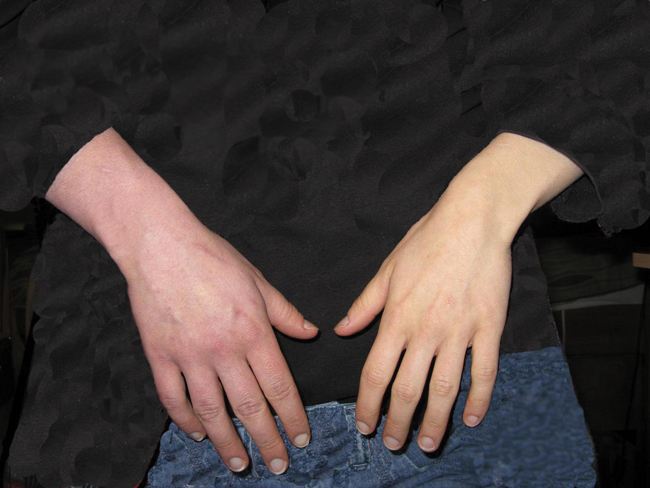
The condition typically starts with an injury to an extremity, which is often seemingly trivial, followed by immobilisation, such as an ankle sprain or Colles' fracture. However, instead of the expected resolution of symptoms, persistent pain and dysfunction develop. In addition, patients exhibit symptoms and signs shown in table 1, above, e.g. extreme sensitivity, changing skin colour and temperature, trophic changes in the nails, skin and hair, and a decreased range of motion and loss of function. All of these features are accompanied by considerable pain for which no other unifying diagnosis can be made.
The diagnosis may be more difficult if CRPS follows more significant trauma or surgery as complications such as thrombosis or infection need to be actively ruled out.
CRPS usually has an early warm phase that suggests an inflammatory process, with local swelling, erythema and heat. It then progresses to a cold phase which often goes on for months or years. There is some evidence of a genetic predisposition to developing CRPS. No single mechanism has been found to account for this complex syndrome, and different mechanisms are likely to be active in different individual cases, and at different times, in its presentation.
Few, if any, treatment modalities have been validated specifically for CRPS and present recommendations are made on the basis of extrapolation from data on other neuropathic pain states. The generic management of neuropathic pain has been addressed in a recent article in this journal by the authors.2
Perhaps the most curious and controversial issue in the past few decades has been the role of the sympathetic nervous system, formerly thought to be a prime instigator in the development of the condition (on the basis of minimal evidence). The origins of this can be traced to an historical observation,3 together with the observed characteristic appearances suggesting local sympathetic excess outflow.
However, studies indicate that sympathetic outflow to affected extremities is typically reduced in CRPS, but regional response to catecholamines may be enhanced. The relevance of this to the pain is unclear; in some cases, it appears that application of catecholamines to the painful extremity exacerbates the pain, whereas in other cases (clinically indistinguishable) this makes no difference.
The previously widespread practice in specialist pain clinics of using sympathetic block in various forms to treat CRPS has all but died out.
Incidence
The incidence of CRPS has been difficult to evaluate because of a lack of agreement on diagnostic criteria. A study using a large Dutch longitudinal database holding more than 600,000 patients found:
- the highest incidence was in the seventh decade
- the condition was 3.4 times more common in women than men
- 44% of cases occurred after a bony fracture
- an estimated overall incidence rate of 26.2 per 100,000 person-years.4 This is four times more common than in a previous study from the US that only looked at CRPS type I.5
Investigations
There is no diagnostic test for CRPS, it is diagnosed clinically. The role of investigations is largely to exclude other conditions. Investigations seeking an inflammatory or infective process i.e. white cell count, ESR,
C-reactive protein should not show any abnormality. X-rays are likely to be normal; although a degree of osteopenia is sometimes seen in the later stages, it is not clear whether this is just a consequence of immobility.
Treatment
There are few recommendations that can be made with certainty of benefit in the treatment of CRPS. The following guidelines from the multidisciplinary CRPS I task force are based on extrapolation from evidence from other neuropathic pain syndromes, and advice from the clinical experience of experts in the field.6
Keeping joints mobile
Most authorities agree that an important element of treatment is to keep the affected part moving as much as possible, especially in the early stages. Sensory stimulation, particularly by self-massage, is also advised. Using a warm or cool water bath can sometimes make it easier to move the affected limb.
Analgesia may enable stretching and exercise, and patients should be encouraged to take this before periods of movement likely to cause pain.
A recent interesting innovation is mirror image therapy, in which an image of the affected limb is presented to the patient normalised by substitution with the mirror image of the normal limb. This is presumed to work through central neuronal plastic reorganisation, but to date the evidence is not strong. Occupational therapy may have a positive effect on functional ability.
Reducing inflammation
The seemingly inflammatory nature of the acute phase has led to its treatment with agents known to suppress acute inflammation, such as NSAIDs, corticosteroids (where the regimens are not clear) and free radical scavengers.
Free radical scavengers are not generally used for CRPS in the UK: topical 50% dimethylsulfoxide (DMSO, not listed in the BNF) and
N-acetylcysteine (NAC, available for use intravenously in paracetamol poisoning) have been recommended for use in the USA.
Modulating the nervous system
The symptoms and signs, and putative mechanisms of CRPS have led to its being treated as a neuropathic pain syndrome. There is some evidence supporting the use of oral gabapentin, nifedipine and phenoxybenzamine in the acute phase, along with intravenous ketamine. In the absence of stronger evidence, following accepted treatment guidelines for neuropathic pain seems appropriate.
Bisphosphonates
Bisphosphonates are best known for their use in osteoporosis as they inhibit bone resorption. They have been the subject of a number of small randomised controlled trials in CRPS with improvement in pain and mobility. Although some patients have regional osteoporosis in CRPS, especially in the early stages, the exact mechanism of symptom reduction using bisphosphonates is not known.
Spinal cord stimulation
A variety of interventions have been studied, largely focusing on sympathetic denervation, but these have generally not been supported by critical analysis. However, spinal cord stimulation has had remarkably good results in non-randomised studies.
Primary care management
Treatment recommendations for primary care are summarised in box 1, below. There is a general consensus that aggressive treatment of the condition in the early stages improves prognosis. Many cases, especially those with relatively minor symptoms, will resolve spontaneously.
Patients who are symptomatically deteriorating, despite regular analgesia, neuropathic agents and physiotherapy, should be referred for assessment by a specialist (often initially an orthopaedic surgeon or rheumatologist). Patient information is often invaluable.7
The most intractable cases are likely to be seen at centres able to provide a wide range of treatments for chronic pain, including group-based cognitive behaviour therapy.
One interesting piece of advice recommended for primary prevention is that vitamin C (500 to 1,000 mg) is likely to prevent CRPS from developing, particularly after wrist fractures.8
Conclusions
CRPS remains a poorly understood condition in terms of pathophysiology, but recent attention to its key features by international authorities should allow the diagnosis to be made with greater confidence by non-specialists. Management should be based upon general principles of neuropathic pain treatment, combined with aggressive physical rehabilitation. Many cases will resolve spontaneously, or with simple measures. For severe or resistant cases, early specialist intervention is indicated.
REFERENCES
1 Harden RN, Bruehl S, Stanton-Hicks M et al. Proposed new diagnostic criteria for complex regional pain syndrome. Pain Med 2007;8(4):326-31
2 Lee J, Nandi P. Improving the management of neuropathic pain. Practitioner 2010;254(1731):27-30
3 Leriche R. De la causalgie envisagee comme au nevrite de sympathique et de son traitement par la denudation et l'excision des plexus nerveaux peri-arteriels. Presse Medicin 1916;24:177-80
4 de Mos M, de Bruijn AGJ, Huygen FJPM et al. The incidence of complex regional pain syndrome: A population-based study. Pain 2007;129(1):12-20
5 Sandroni P, Benrud-Larson LM, McClelland RL et al. Complex regional pain syndrome type I: incidence and prevalence in Olmsted county, a population-based study. Pain 2003;103(1-2):199-207
6 Perez RS, Zollinger PE, Dijkstra PU et al. CRPS I task force. Evidence based guidelines for complex regional pain syndrome type 1. BMC Neurol 2010;10:20
7 NHS Clinical Knowledge Summaries. Complex regional pain syndrome; information for patients. Available from: www.cks.nhs.uk/patient_
information_leaflet/complex_regional_pain_syndrome
8 Zollinger PE, Tuinebreijer WE, Breederveld RS et al. Can vitamin C prevent complex regional pain syndrome in patients with wrist fractures? A randomized, controlled, multicenter dose-response study. J Bone Joint Surg Am 2007;89(7):1424-31
USEFUL INFORMATION
NHS Clinical Knowledge Summaries Complex regional pain syndrome; information for patients. Available from: www.cks.nhs.uk/patient_information_leaflet/complex_regional_pain_syndrome
NHS Choices
www.nhs.uk/Conditions/Complex-Regional-Pain-Syndrome/Pages/Introduction.aspx
Arthritis Research UK
ARTICLE IN PDF
 Download this article in PDF format