SEARCH

Visvanathan A, Lee RP, Doubal FN. Early symptom recognition key in management of TIA and stroke. Practitioner November 2020;264(1842):23-26
Early symptom recognition key in management of TIA and stroke
24 Nov 2020
AUTHORS
Dr Akila Visvanathan PhD, Specialist Registrar, Royal Infirmary of Edinburgh, Edinburgh, UK
Dr Ren Ping Lee MBChB, Specialist Registrar, Royal Infirmary of Edinburgh, Edinburgh, UK
Dr Fergus N Doubal BSc (Hons) MB ChB FRCP PhD FESO, Stroke Association Garfield Weston Foundation Clinical Senior Lecturer, NHS Scotland Research Fellow, Consultant Stroke Physician and Geriatrician, Royal Infirmary of Edinburgh and University of Edinburgh, Edinburgh, UK
Competing interests: None
Article
In the UK, at least 100,000 people have an acute stroke each year. A first ever transient ischaemic attack (TIA) affects around 50 people per 100,000 per year and around 15% of people who have a first stroke have had a preceding TIA. Assessing patients and instituting treatment quickly represents a golden opportunity to prevent a potentially disabling stroke. A validated tool, such as the FAST (Face Arm Speech Time to call 999) test may be used to screen people with sudden onset of neurological symptoms. However, the FAST test may miss some patients with a TIA/stroke, particularly when it occurs in the posterior circulation. If TIA/stroke is suspected even if the FAST test is negative, urgent action is required with referral to, and review by, specialist services. Patients with a suspected TIA should be referred immediately for specialist assessment and investigation, to be seen within 24 hours of onset of symptoms. Patients with a suspected stroke should be admitted immediately to hospital, ideally to an acute stroke unit. Patients with a suspected TIA who have a bleeding disorder or are taking an anticoagulant should also be admitted to an acute stroke unit as haemorrhage must be excluded.
Stroke and transient ischaemic attack (TIA) are common and cause significant morbidity and mortality.
A first ever TIA affects approximately 50 people per 100,000 per year in the UK.1 Around 15% of people who have a first stroke have had a preceding TIA. Assessing patients and instituting treatment quickly represents a golden opportunity to prevent a potentially disabling stroke.2,3
In the UK, at least 100,000 people have an acute stroke each year and there are more than 1.2 million stroke survivors.4 Stroke is the fifth major cause of death and disability in the UK.5 Improved stroke survival and a growing ageing population means the number of stroke survivors is likely to rise.6
Worldwide, in 2016, there were greater rates of stroke in men between the ages of 55 and 75 years but women and men had similar incidences below the age of 55 and above the age of 75.7
TIAs are brief episodes of normally focal neurological dysfunction (< 24 hours) resulting from focal cerebral ischaemia of presumed vascular cause not associated with permanent cerebral infarction.8 Different organisations have slightly different definitions of TIA, depending on the duration of symptoms and confirmation of absence of infarction, see box 1.
There are also slight differences in the definition of stroke, see box 2. Regardless of the definition, the key aspects for a diagnosis of stroke are the nature of progression of symptoms (i.e. rapid) and duration of symptoms (i.e. persistence of symptoms beyond 24 hours) with or without radiological evidence of brain tissue damage.
Risk factors
Identifying and modifying risk factors is key in stroke prevention. A recent study found that 90% of strokes (ischaemic and haemorrhagic) worldwide were attributable to ten modifiable risk factors. The most important of these was hypertension. Others included smoking, diabetes mellitus, lack of physical activity, diet, psychosocial stress (combined measure of general stress at home and in the workplace) and depression, abdominal obesity, excess alcohol and cardiac causes.9
Around a third of TIAs and strokes are of undetermined cause.10
Diagnosis
Rapid recognition of symptoms and timely diagnosis is important for both TIA and stroke. This will help guide investigations and initial early management to minimise the risk of a future stroke and also maximise the potential to recanalise blocked arteries. Stroke treatments such as thrombolysis and thrombectomy offer the most benefit within a short and defined timeframe.11,12
A validated tool, such as FAST (Face Arm Speech Time to call 999) may be used to screen people with sudden onset of neurological symptoms. However, the FAST test may miss some patients with a TIA/stroke, particularly when it occurs in the posterior circulation.13 If TIA/stroke is suspected even if the FAST test is negative, urgent action is required with referral to, and review by, specialist services.
The prevalence of conditions that mimic stroke further adds to the challenge of diagnosis.14 Cognitive impairment and recall bias make diagnosis of TIA and stroke challenging. Certain clinical features, listed in table 2, make a diagnosis of TIA/stroke less probable. Knowing the exact time of onset, the presence of definite focal symptoms and neurological signs, being able to lateralise signs to the left or right side of the brain and being able to determine a clinical stroke sub-classification increases the probability that the event is a stroke.18
All patients with suspected TIA should be assessed by a stroke specialist before a decision on brain imaging is made.19 For those with clinically definite TIAs, the use of diffusion weighted imaging (DWI) MRI is debatable. Between 15 and 30% of patients with a clinically definite TIA have a DWI-positive lesion (i.e. an acute ischaemic lesion) on MRI. The five-year risk for these patients is 10-15% and for DWI-negative patients 5-10%. MRI scanning of all TIAs is difficult to achieve and unlikely to be cost effective.8,20
For those cases where there is diagnostic uncertainty, imaging (either CT or MRI) may be helpful. This is done largely to exclude an alternative diagnosis (e.g. a space occupying lesion). Where imaging cannot be undertaken within seven days of symptoms, MRI with appropriate blood sensitive sequences is the preferred means of excluding haemorrhage.19
The utility of other CT modalities (CT angiogram, CT perfusion) has not been studied extensively in patients with TIAs. Systematic reports of a multimodal CT approach for evaluation of patients with TIA alone are lacking.21
In contrast to TIAs, the role of brain imaging in acute stroke is more clearly defined.
In the context of thrombolysis, an urgent CT is required to exclude a bleed if the patient is eligible for thrombolysis within 4.5 hours of symptom onset.11
For mechanical thrombectomy, a CT angiography is also performed to assess emergent large vessel occlusion and leptomeningeal collateral status.22,23 There is ongoing debate about whether CT perfusion should be part of a standard imaging protocol.24
For patients with unknown time of symptom onset25,26 MRI to look for the presence of a visible ischaemic lesion on DWI combined with the absence of a clearly visible hyperintense signal in the same region on fluid-attenuated inversion recovery may allow thrombolysis.27
Other investigations for patients presenting with TIA or stroke include blood tests e.g. full blood count, blood glucose, lipid profile and a coagulation screen looking for other rarer causes of stroke such as thrombophilia.
An ECG is done routinely to assess cardiac rhythm. Other cardiac investigations such as prolonged cardiac monitoring may be indicated in those with a cortical stroke or TIA where arrhythmia may be a cause.28 A bubble contrast echocardiogram may be indicated where a patent foramen ovale is suspected29 and a transthoracic echo for detection of a thrombus or mass, poor left ventricular function and other structural abnormalities.30 However, the yield of these investigations can be low and therefore investigation plans should be individualised.30
Initial management of suspected TIA
NICE guidance19 recommends that patients with suspected TIA should be referred immediately for specialist assessment and investigation, to be seen within 24 hours of onset of symptoms.
If patients with suspected TIA have a bleeding disorder or are taking an anticoagulant, they should be immediately admitted to hospital (preferably an acute stroke unit) for urgent assessment and imaging to exclude haemorrhage.31 For patients who present with a TIA or a minor stroke, stroke prevention medication should be initiated without delay.32
Antiplatelet therapy
Aspirin (300 mg daily) is the treatment of choice and should be offered immediately to all patients who are suspected of having had a TIA in the emergency department or community, provided they do not have any contraindications.1,19 Clopidogrel can be used as an alternative if the patient is allergic or intolerant to aspirin.
A proton pump inhibitor can be offered wherever suitable.19 Once the diagnosis of TIA has been confirmed, clopidogrel (75 mg daily) should replace aspirin immediately and be continued as long-term prevention. In patients with a high-risk TIA (ABCD2 score > 4), aspirin plus clopidogrel for a duration of 21 days has been shown to reduce further ischaemic events.32,33
Cholesterol lowering therapy
High-dose statin therapy is recommended in all patients unless contraindicated for long-term secondary prevention.1 When high-dose statin therapy is not tolerated or suitable, other alternative statins at the maximum tolerated dose can be considered.1
Antihypertensive therapy
Blood pressure (BP) should be monitored regularly and treated on initial assessment with a target of 130/80 mmHg.1
Most patients under 55 should be started on an angiotensin converting enzyme inhibitor (ACEi) or an angiotensin II receptor blocker (ARB).1 For those aged 55 and over, or patients of African or Caribbean origin of any age, the antihypertensive medication of choice should be a thiazide-like diuretic or calcium channel blocker. An ACEi or ARB can be added if target BP is not achieved.1
Anticoagulation
Anticoagulation should be offered early to patients with a TIA and atrial fibrillation (AF) although there is debate about the timing of initiation following ischaemic stroke. Novel oral anticoagulants which inhibit factor Xa offer a number of advantages.1
Carotid endarterectomy
Patients with a TIA or a non-disabling carotid artery stroke should be considered for carotid revascularisation (carotid endarterectomy) if the symptomatic carotid artery has a NASCET stenosis > 50%. The decision to offer intervention should be based on individual risk estimates taking gender, age, duration from symptom onset, patient preference and plaque ulceration into account. Risk based calculators can be used to aid decisions.1
Management of stroke
Patients with stroke should be admitted immediately to hospital, ideally to an acute stroke unit, to receive specialist care.1 This will involve a multidisciplinary team (stroke physicians, specialist nurses, physiotherapists, occupational therapists, speech and language therapists, dietitians and other specialists as required).
Patients should be scanned (CT or MRI brain) as soon as possible and immediately in some circumstances.
Thrombolysis
Patients presenting with an ischaemic stroke within 4.5 hours from symptom onset should be considered for intravenous thrombolysis (the current medication of choice in the UK is alteplase) and this should be delivered as quickly as possible, aiming for a door to needle time < 30 minutes.1
Mechanical thrombectomy
Mechanical thrombectomy is indicated for patients who have had an ischaemic stroke secondary to a large artery occlusion in the anterior circulation within 6 hours of onset (or more if advanced imaging is used) in addition to thrombolysis and occasionally in posterior circulation stroke.25
Decompressive hemicraniectomy
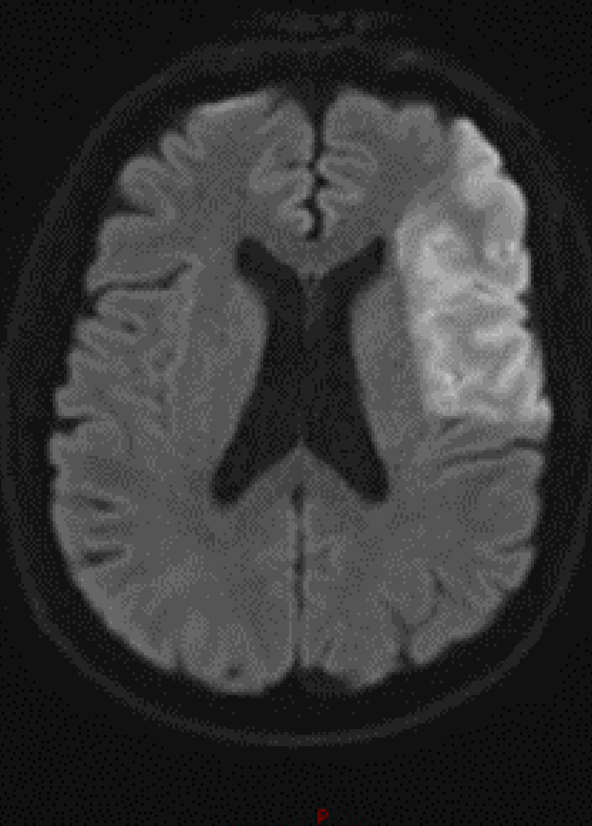
Patients should be referred to neurosurgery within 24 hours of stroke onset and considered for decompressive hemicraniectomy within 48 hours if they have a middle cerebral artery (MCA) infarct, see figure 1, p23, producing malignant MCA syndrome with reduced consciousness from increased intracranial pressure. However, early discussion with the patient and/or their family about acceptable outcomes is recommended.1
Other treatments
Aspirin (300 mg daily) is used following ischaemic stroke switching to clopidogrel after 2 weeks or on hospital discharge. In addition, patients with minor stroke (NIHSS < 4), should be treated with aspirin and clopidogrel for 21 days32,33 Anticoagulants should be considered in patients who are in AF.1,19
Intracerebral haemorrhage
In patients with a diagnosis of intracerebral haemorrhage, treatment should aim to return clotting levels to normal as soon as possible with reversal agents, vitamin K and prothrombin complex concentrate depending on the cause. BP control is important in this group of patients aiming for a target systolic BP of 130-140 mmHg to be achieved within 1 hour of treatment initiation.1
Monitoring and follow-up
Patients who have suffered a TIA or ischaemic stroke should have their medications reviewed, before discharge from hospital, and in the community.1 Secondary prevention is key. Patients should be encouraged to lead a healthy lifestyle by eating a balanced diet, maintaining a healthy weight, drinking alcohol responsibly (not more than 14 units per week), not smoking and aiming to be physically active every day.
All patients who have had a TIA or stroke should be considered for review in a multidisciplinary Life after Stroke clinic to address any areas of unmet clinical need and rehabilitation. Patients may be referred following the acute event or from primary care.
REFERENCES
1 Royal College of Physicians. National clinical guideline for Stroke. RCP. London. 2016 www.strokeaudit.org/Guideline/Full-Guideline.aspx [Last accessed 29 Sep 2020]
2 Rothwell PM, Giles MF, Chandratheva A et al. Effect of urgent treatment of transient ischaemic attack and minor stroke on early recurrent stroke (EXPRESS study): a prospective population-based sequential comparison. Lancet 2007;370(9596):1432-42
3 Lavallee P, Meseguer E, Abboud H et al. A transient ischaemic attack clinic with round the clock access (SOS-TIA): feasibility and effects. Lancet Neurol 2007;6(11):953-60
4 Stroke Association. State of the Nation Stroke Statistics. 2018 www.stroke.org.uk/system/files/sotn_2018.pdf
5 Saka Ö, Mcguire A, Wolfe C. Cost of stroke in the United Kingdom. Age Ageing 2009;38(1):27-32
6 Anderson CS. The global burden of stroke: persistent and disabling. The global burden of neurological disorders. Lancet Neurol 2019;18(5):417-18
7 Feigin VL, Roth GA, Naghavi M et al. Global burden of stroke and risk factors in 188 countries, during 1990-2013: a systematic analysis for the Global Burden of Disease Study 2013. Lancet Neurol 2016;15(9):913-24
8 Definition and Evaluation of Transient Ischemic Attack. AHA/ASA Scientific statement. Stroke 2009;40:2276-93
9 O’Donnell MJ, Yusuf S. Global and regional effects of potentially modifiable risk factors associated with acute stroke in 32 countries (INTERSTROKE): a case control study. Lancet 2016;388:761-75
10 Li L, Yiin GS, Geraghty OC et al. Incidence, outcome, risk factors, and long-term prognosis of cryptogenic transient ischaemic attack and ischaemic stroke: a population-based study. Lancet Neurol 2015;14(9):903-13
11 The IST-3 collaborative group. The benefits and harms of intravenous thrombolysis with recombinant tissue plasminogen activator within 6 h of acute ischaemic stroke (the third international stroke trial [IST-3]): a randomised controlled trial. Lancet 2012;379:2352-63
12 Goyal M, Menon BK, Zwam W et al. Endovascular thrombectomy after large-vessel ischaemic stroke: a meta analysis of individual patient data from five randomised trials. Lancet 2016;387:1723-31
13 Merwick A, Werring D. Posterior circulation ischaemic stroke. BMJ 2014;348:g3175
14 Amort M, Fluri F, Schäfer J et al. Transient ischemic attack versus transient ischemic attack stroke-mimics: frequency, clinical characteristics and outcome. Cerebrovasc Dis 2011;32(1):57-64
15 World Health Organization. Cerebrovascular disorders: a clinical and research classification. 1978. pp 1-84
16 World Health Organization. International Classification of Diseases 11. www.who.int/classifications/icd/en/ [Last accessed 29 Sep 2020]
17 National Institute of Neurological Disorders and Stroke. Transient ischemic attack information page www.ninds.nih.gov/Disorders/All-Disorders/Transient-Ischemic-Attack-Information-Page/15109/publications/1294 [Last accessed 29 Sep 2020]
18 Hand PJ, Kwan J, Lindley RI et al. Distinguishing between stroke and mimic at the bedside: the brain attack study. Stroke 2006;37(3):769-75
19 National Institute for Health and Care Excellence. NG128. Stroke and transient ischaemic attack in over 16s: diagnosis and initial management. NICE. London. 2019 www.nice.org.uk/guidance/ng128 [Last accessed 28 Sep 2020]
20 Hurford R, Li L, Lovett N. Prognostic value of ‘tissue-based’ definitions of TIA and minor stroke: population-based study. Neurology 2019;92(21):2455-61
21 Smith WS, Roberts HC, Chuang NA et al. Safety and feasibility of a CT protocol for acute stroke: combined CT, CT angiography, and CT perfusion imaging in 53 consecutive patients. Am J Neuroradiol 2003;24:688-90
22 Campbell BCV, Mitchell PJ, Kleinig TJ at al. Endovascular therapy for ischemic stroke with perfusion-imaging selection. N Engl J Med 2015;372:1009-18
23 Jovin TG, Chamorro A, Cobo E et al. Thrombectomy within 8 hours after symptom onset in ischemic stroke. N Engl J Med 2015;372:2296-2306
24 Albers GW, Marks MP, Kemp S et al. Thrombectomy for stroke at 6 to 16 hours with selection by perfusion imaging. N Engl J Med 2018;378:708-18
25 Powers WJ, Rabinstein AA, Ackerson T et al. 2018 Guidelines for the early management of patients with acute ischemic stroke: a guideline for healthcare professionals from the American Heart Association/American Stroke Association. Stroke 2018;49(3):e46-e110
26 Fink JN, Kumar S, Horkan C et al. The stroke patient who woke up: clinical and radiological features, including diffusion and perfusion MRI. Stroke 2002;33:988-93
27 Thornalla G, Simonsen CZ, Boutitie F et al for the WAKE-UP investigators. MRI-guided thrombolysis for stroke with unknown time of onset. N Engl J Med 2018;379:611-22
28 Tsivgoulis G, Katsanos A, Grory B et al. Prolonged cardiac rhythm monitoring and secondary stroke prevention in patients with cryptogenic cerebral ischemia. Stroke 2019;50:2175-80
29 Maggiore P, Bellinge J, Chieng D et al. Ischaemic stroke and the echocardiographic ‘Bubble Study’: Are we screening the right patients? Heart Lung Circ 2019;28(8): 1183-89
30 Douen A, Pageau N. Usefulness of cardiovascular investigations in stroke management: clinical relevance and economic implications. Stroke 2007;38:1956-58
31 National Institute for Health and Care Excellence. Clinical knowledge summaries. Stroke and TIA. NICE. London. 2020 cks.nice.org.uk/topics/stroke-TIA/
32 Wang Y, Wang Y, Zhao X et al. CHANCE Investigators. Clopidogrel with aspirin in acute minor stroke or transient ischemic attack. N Engl J Med 2013;369:11-19
33 Johnston SC, Easton JD, Farrant M et al. Clopidogrel and aspirin in acute ischemic stroke and high-risk TIA. N Engl J Med 2018;379:215-25
ARTICLE IN PDF
 Download this article in PDF format