SEARCH

Boelaert K. Diagnosis and management of thyroid dysfunction in primary care. Practitioner June 2020;264(1838):21-25
Diagnosis and management of thyroid dysfunction in primary care
22 Jun 2020
AUTHORS
Professor Kristien Boelaert MD PhD FRCP, Professor of Endocrinology, Institute of Applied Health Research, College of Medical and Dental Sciences, University of Birmingham, Birmingham, UK
Competing interests: None
Article
Hyperthyroidism affects up to 2% of women in the UK and the US and is ten times more common in women than men. In regions with normal levels of iodine, hyperthyroidism is caused by Graves’ disease in 60-80% of cases. In regions with iodine insufficiency toxic nodular disease (caused by toxic adenomas) accounts for 50% of cases of hyperthyroidism and this aetiology is more common in older people. Graves’ disease is characterised by pathognomonic antibodies to the TSH-receptor (TRAbs), the presence of which is largely (80%) determined by genetic factors. Ophthalmopathy may occur in around 25% of patients with Graves’ disease. The clinical features of hyperthyroidism can be varied. Older people may be relatively asymptomatic. It is important to distinguish thyrotoxicosis with hyperthyroidism from transient causes of thyrotoxicosis without hyperthyroidism. Patients with hyperthyroidism should be referred. Overt hypothyroidism is present in 0.2-5% of the population and is more common in women and with advancing age. This is usually managed in primary care and rarely requires referral. The most common aetiology is chronic autoimmune inflammation (Hashimoto’s thyroiditis).
Thyroid dysfunction affects up to 5% of adults in the UK and can be broadly divided into hypothyroidism and hyperthyroidism.1 Primary thyroid dysfunction refers to conditions originating from the thyroid gland and not causes of pituitary or hypothalamic dysfunction.
In November 2019 NICE published guidelines on the diagnosis and treatment of primary thyroid dysfunction and thyroid enlargement.2 This article focuses on the management of thyroid dysfunction in primary care. The management of drug-induced thyroid dysfunction and thyroid disease in pregnancy are outside the scope of this article.
Hyperthyroidism
Prevalence and aetiology
Thyrotoxicosis refers to the symptoms and signs caused by excess concentration of thyroid hormones whereas hyperthyroidism is characterised by increased synthesis and secretion of thyroid hormones by the thyroid gland. Thyrotoxicosis without hyperthyroidism is caused by extra-thyroidal sources of thyroid hormone or by release of stored thyroid hormones into the circulation for example thyroiditis.
In regions with normal levels of iodine, hyperthyroidism is caused by autoimmune Graves’ disease in 60-80% of cases whereas in iodine-deficient regions toxic nodular disease (caused by one or more toxic adenomas) accounts for 50% of all cases of hyperthyroidism and this aetiology is more common in older people.3
Hyperthyroidism affects up to 2% of women in the UK and the US and is ten times more common in women than men.4 Graves’ disease is characterised by pathognomonic antibodies to the TSH-receptor (TRAbs), the presence of which is largely (80%) determined by genetic factors (including those associated with certain HLA regions) and 20% by environmental factors such as smoking, stress, and viral infections, and female gender.5
Clinical presentation
As thyroid receptors are present in most organs, the clinical features of hyperthyroidism can be varied. Typical symptoms and signs are listed in table 1, and those relating to the cardiovascular system are often most prominent. Older people may present in a relatively asymptomatic way.6
In patients with Graves’ disease, ophthalmopathy may occur in around 25% and features include proptosis, peri-orbital swelling and in severe cases diplopia.3 Table 2, lists red flag symptoms and signs which require urgent ophthalmology referral. Ideally, significant Graves’ ophthalmopathy should be managed in a multidisciplinary setting involving endocrinologists and ophthalmologists.
Thyroid dermopathy, characterised by pigmented thickened skin usually in the pretibial area, and thyroid acropachy, a form of finger clubbing, are rare extra-thyroidal manifestations of Graves’ disease. Inflammatory reactions involving TRAbs underlie the pathogenesis of most extra-thyroidal Graves’ disease manifestations.7
Patients with Graves’ disease often have a diffuse goitre, whereas single or multiple nodules may be clinically evident in those with toxic nodular hyperthyroidism. Thyroiditis is usually transient and may occur as part of a viral infection (subacute thyroiditis) which is usually associated with a painful neck swelling or post partum when a silent form of the disease not usually associated with thyroid swelling occurs in up to 10% of pregnancies.3
Rarely patients present with an acute thyroid storm which is a potentially life-threatening condition characterised by psychiatric disturbance, altered mental state, arrhythmias and cardiac failure. Prompt recognition is required as mortality rates remain high.8
Diagnosis
Measurement of serum TSH is the most sensitive way to detect thyroid dysfunction when pituitary disease (causing secondary thyroid dysfunction) is not suspected.
If TSH is below the reference range, NICE recommends measurement of serum free thyroxine (fT4) and free tri-iodothyronine (fT3) in the same sample.1 It is important to distinguish thyrotoxicosis with hyperthyroidism from transient causes of thyrotoxicosis without hyperthyroidism.
TRAbs are raised in Graves’ disease and can be easily measured in most centres. Raised antibodies to thyroid peroxidase (TPO) reflect the presence of generalised thyroid autoimmunity but are not specific to Graves’ disease.
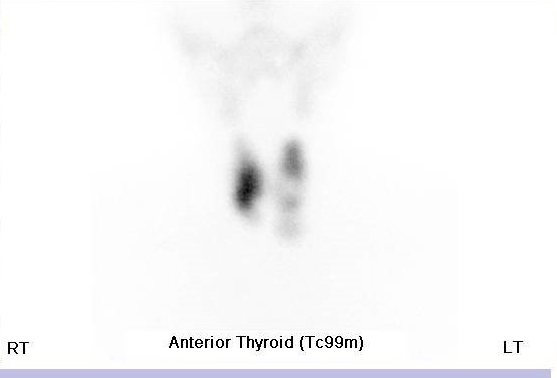
If TRAbs are not raised, a technetium scan helps to distinguish Graves’ disease (diffuse uptake) from toxic nodular hyperthyroidism (localised uptake in toxic nodules with suppression of uptake in the remainder of the gland, see figure 1) and thyroiditis (usually absence of uptake).
Thyroid ultrasonography is not usually indicated unless there is a clinically palpable thyroid nodule.2
Complications of hyperthyroidism
Patients aged over 60 years with hyperthyroidism have a three-fold increased risk of atrial fibrillation (AF) and the risk of embolic stroke is high in these individuals.9 AF is also an independent predictor of heart failure in hyperthyroidism.
Longstanding untreated hyperthyroidism is associated with osteoporosis and reduced fertility.
There is increasing evidence that the induction of hypothyroidism with radioiodine improves long-term cardiovascular outcomes.10,11
Treatment
Patients with hyperthyroidism should be referred to secondary care for evaluation and discussion of the different treatment options. Transient thyrotoxicosis without hyperthyroidism usually only needs supportive treatment with beta-blockers to block the peripheral effects of circulating thyroid hormones.
Most patients with hyperthyroidism are started on antithyroid drugs to block the synthesis of thyroid hormones at least in the short to medium term. Often this medication is started in primary care while waiting for a specialist appointment. NICE recommends baseline measurements of full blood count and liver function prior to starting antithyroid drugs.2
There are three treatment modalities for Graves’ disease: a course of antithyroid drugs, the administration of radioiodine (I-131) or thyroidectomy. It is important that all options are discussed with patients so that they are actively involved in decision making. NICE recommends that radioactive iodine is offered as first-line treatment to patients with Graves’ disease unless it is unsuitable i.e. patients who are pregnant, trying to become pregnant or trying to father a child in the next 6 months, when there is a compressive goitre or if coexisting thyroid malignancy is suspected. In patients with mild and uncomplicated Graves’ disease, i.e. those with mildly raised levels of thyroid hormones and low levels of TRAbs, a choice between a 12-18 month course of antithyroid drugs and radioiodine may be offered since antithyroid drugs may induce a remission.
A total thyroidectomy is recommended if there are concerns about compression or a suspicion of thyroid malignancy or if antithyroid drugs and radioiodine are unsuitable.2
Patients with toxic nodular hyperthyroidism are best treated with radioiodine or surgery, although if these are not suitable, e.g. in elderly patients with multiple comorbidities, then life-long low dose carbimazole may be used.
A hemithyroidectomy is sufficient when a single toxic adenoma is present. Patients undergoing thyroidectomy should be rendered euthyroid with antithyroid drugs prior to surgery.2 Depending on the extent of surgery, hypothyroidism, hypoparathyroidism and recurrent laryngeal nerve damage are recognised complications of thyroid surgery.12
The most commonly used antithyroid drug is carbimazole, whereas propylthiouracil is the preferred medication during pregnancy and in women trying to become pregnant (in view of potential teratogenic effects with carbimazole) in patients with a history of pancreatitis and in those with adverse effects to carbimazole.
Neutropenia (neutrophil count < 1.0 x 10⁹/L) and agranulocytosis (neutrophil count < 0.5 x 10⁹/L) are rare side effects of antithyroid drugs but all patients should be advised to have an urgent blood count done if they develop a sore throat, fever or mouth ulcers. Antithyroid drugs should be discontinued and never restarted if these side-effects develop.
Propylthiouracil may rarely cause liver dysfunction and both antithyroid drugs may cause a rash, gastrointestinal discomfort and arthralgia.13 Antithyroid drugs may be given either in a titration regimen, starting at a higher dose which is reduced according to the response, or a block and replace regimen, when high-dose antithyroid drugs are continued and levothyroxine is added when the thyroid gland has been blocked.
Remission may occur in up to 50% of patients after a 12-18 month course and longer duration of treatment has not been associated with improved cure rates.14
Radioactive iodine is usually given as a fixed activity of 400-600 MBq in tablet form and patients need to adhere to radiation protection guidance and be counselled regarding the risk of developing permanent hypothyroidism which occurs in around 80% of patients depending on the dose administered.15 Most patients receive antithyroid drugs in the short term to render them euthyroid prior to radioiodine treatment.
Permanent remission rates are around 80-90% after a single dose15 and the clinical and cost effectiveness of this treatment led to the NICE recommendation to offer this as first-line treatment in most patients with hyperthyroidism.
Radioactive iodine is relatively contraindicated in patients with active Graves’ ophthalmopathy. In those with inactive or mildly active eye disease, glucocorticoids may need to be given around the time of radioiodine administration.
Monitoring and follow-up
Patients treated with antithyroid drugs should have TSH, fT4 and fT3 monitored every 6 weeks until TSH is in the reference range and TSH measurement only (with cascading i.e. measurement of fT4 and fT3 if TSH is abnormal) every 3 months thereafter until the medication is stopped.
When antithyroid drugs have been stopped, careful monitoring every 2-3 months during the first year is indicated with more prompt testing in those with a recurrence of symptoms.
Following radioiodine, measurement of TSH, fT3 and fT4 every 6 weeks is recommended until the TSH is in the reference range during the first 6 months with prompt initiation of levothyroxine when hypothyroidism develops.
When TSH is normal 3 to 6 monthly TSH measurements are recommended until the patient becomes hypothyroid.
If patients remain hyperthyroid at 6 months following radioiodine, a further dose may be considered.
Subclinical hyperthyroidism
This is a biochemical diagnosis of below normal serum TSH with circulating fT3 and fT4 concentration within the reference range. It may be endogenous due to toxic nodular or mild Graves’ disease or exogenous in patients taking excessive doses of levothyroxine. It is usually further subdivided depending on the degree of TSH suppression, which may be undetectable (severe subclinical hyperthyroidism) or low but detectable (mild subclinical hyperthyroidism).
The prevalence of this condition is 2-18% depending on iodine status.16
It is important to repeat thyroid function when subclinical hyperthyroidism is found since abnormal TSH concentrations may be transient in up to 50% of patients.17
The potential clinical consequences of subclinical hyperthyroidism include progression to overt hyperthyroidism, cardiovascular conditions including arrhythmias, bone loss, fractures and dementia.18-21
Older patients with subclinical hyperthyroidism are usually asymptomatic but younger people may have symptoms of thyrotoxicosis. NICE recommends that patients with two serum TSH readings less than 0.1 mIU/L, measured 3 months apart, are referred to secondary care for further evaluation and consideration of treatment.
It is appropriate to measure serum TSH on a 6 monthly basis if subclinical hyperthyroidism is untreated, with determination of fT4 and fT3 if TSH is abnormal. Once serum TSH stabilises (two similar measurements 3 months apart) consider stopping monitoring.2
A reduction in levothyroxine dosage is appropriate for those with exogenous subclinical hyperthyroidism.
Hypothyroidism
Prevalence and aetiology
Overt hypothyroidism is present in 0.2-5% of the population22 and is more common in women and with advancing age. This is usually managed in primary care and rarely requires referral.
The most common aetiology is chronic autoimmune inflammation (Hashimoto’s thyroiditis) which is characterised by raised concentrations of thyroid antibodies, predominantly anti-TPO and anti-thyroglobulin antibodies and lymphocytic thyroidal infiltrates. Notably, raised concentrations of TPO antibodies are detected in around 11% of the general population.23
An interplay between genetic predisposition and environmental factors underlies the pathogenesis of autoimmune hypothyroidism. Iodine deficiency results in hypothyroidism
and if severe in cretinism although iodine fortification programmes aim to prevent significant consequences of iodine deficiency.22 Hypothyroidism is common following treatment for hyperthyroidism with radioiodine or thyroidectomy.24
Clinical presentation
Clinical features of hypothyroidism can be varied and depend on the patient’s age and gender as well as time between onset and diagnosis. The most common symptoms and signs are listed in table 3. Often symptoms are non-specific, especially in elderly patients. A case control study found that none of 34 hypothyroidism-related symptoms could be used to identify subjects with hypothyroidism, 15% of those with autoimmune hypothyroidism were asymptomatic and 70% of euthyroid controls had one or more symptoms of hypothyroidism.25
Diagnosis
Primary hypothyroidism is diagnosed by the finding of a serum TSH above and fT4 below the reference range. The routine measurement of fT3 is generally not required in diagnosing hypothyroidism. The measurement of TPO antibody levels helps to identify the underlying aetiology but the levels do not affect treatment decisions and repeat measurement of thyroid antibodies is not usually required.2
Thyroid ultrasonography is not usually indicated unless thyroid palpation identifies significant abnormalities. Hashimoto’s thyroiditis is typically characterised by a hypoechoic pattern with altered doppler blood flow on ultrasound.
Long-term outcomes
Untreated hypothyroidism is associated with increased risks of coronary heart disease events and mortality, heart failure, non-alcoholic fatty liver disease and increased cancer mortality, although causality is often not proven.24,26,27
Treatment
The treatment of choice is levothyroxine (L-T4) monotherapy in tablet form taken on an empty stomach. The optimal dose is 1.6 mcg/kg/day (rounded to the nearest 25 mcg) and the recommendation is to start the full treatment dose in adults under 65 years. A lower starting dose (25-50 mcg daily) is appropriate in people aged 65 and over or in those with a history of cardiovascular disease.2
Around 10% of patients treated with levothyroxine for hypothyroidism have continued symptoms despite normalisation of their thyroid function.
In euthyroid individuals, 20% of the active T3 is derived directly from the thyroid gland and there is a theory that patients who continue to feel unwell derive insufficient T3 from deiodination of levothyroxine.
Trials of levothyroxine/liothyronine (L-T3) have not consistently shown improvements in quality of life.28 L-T3 is significantly more expensive than L-T4, and NICE does not recommend the routine administration of L-T4/L-T3 combination therapy based on a lack of clinical and cost effectiveness. Desiccated thyroid extract, which is animal derived, is not licensed in the UK.2 Current Regional Medicines Optimisation Committee (RMOC) guidance stipulates approaches for administration of L-T4/L-T3 combination therapy through shared care protocols between primary and secondary care.29
Monitoring and follow-up
The aim of treatment is to keep serum TSH within the reference range.
If symptoms of hypothyroidism persist despite normalisation of TSH further adjustments to levothyroxine dosage may improve feelings of wellbeing.
It may take up to 6 months for serum TSH to return to normal especially if hypothyroidism was longstanding before treatment was started.
Measurement of serum TSH on a 3 monthly basis following initiation of L-T4 is appropriate until TSH stabilises (two similar readings within the reference range taken 3 months apart).
An annual thyroid function test is usually sufficient once stable replacement therapy has been established. If patients continue to have significant symptoms despite normalisation of TSH within the reference range the measurement of serum fT4 may be informative.2
Hypothyroidism in pregnancy
During pregnancy higher doses of levothyroxine are usually required to achieve an optimal supply of thyroid hormone to the mother and fetus. Women are usually advised to double the dose of levothyroxine on two days of the week following a positive pregnancy test. Ideally thyroid function tests should be carried out using pregnancy-specific reference ranges and prompt referral to the antenatal clinic for advice is recommended.30
Subclinical hypothyroidism
Subclinical hypothyroidism is a biochemical diagnosis of a raised serum TSH with normal concentrations of fT4, which affects up to 10% of the population. It is most commonly caused by early Hashimoto’s thyroiditis but may be exogenous in patients who are on insufficient doses of levothyroxine.31
Generally, serum TSH concentrations increase with age and mildly raised levels are physiological in those aged over 70 years. If TPO antibodies are present then the risk of progression to overt hypothyroidism is higher.
Subclinical hypothyroidism has been associated with increased cardiovascular risks, and in middle-aged patients with cognitive impairment, fatigue and altered mood.31
A trial of levothyroxine replacement in patients aged over 65 with subclinical hypothyroidism did not improve outcomes of mood or cardiovascular morbidity, although the subclinical hypothyroidism was mild in these patients and more than 25% had no symptoms at baseline.32 There are currently no large randomised trials of treatment in younger people.
NICE recommends the measurement of TPO antibodies in subclinical hypothyroidism. Levothyroxine replacement is indicated for those with serum TSH ≥ 10 mIU/L on two separate occasions 3 months apart. For those with serum TSH above the reference range but lower than 10 mIU/L treatment may be considered in patients aged under 65 who have symptoms of hypothyroidism.2
Conclusions
Overt thyroid dysfunction is common and almost always requires treatment to avoid long-term complications most notably those relating to the cardiovascular system, osteoporosis and cognitive function.
Hyperthyroidism usually necessitates referral to secondary care, whereas hypothyroidism is generally managed in the community. The management of subclinical thyroid dysfunction depends on the degree of TSH abnormality and the age of the patient.
REFERENCES
1 Taylor PN, Albrecht D, Scholz A et al. Global epidemiology of hyperthyroidism and hypothyroidism. Nat Rev Endocrinol 2018;14(5):301-16
2 National Institute for Health and Care Management.NG145. Thyroid disease: assessment and management. NICE. London. 2019 www.nice.org.uk/guidance/ng145
3 De Leo S, Lee SY, Braverman LE. Hyperthyroidism. Lancet 2016;388(10047):906-18
4 Garmendia Madariaga A, Santos Palacios S, Guillén-Grima F, Galofré JC. The incidence and prevalence of thyroid dysfunction in Europe: a meta-analysis. J Clin Endocrinol Metab 2014;99(3):923-31
5 Marinò M, Latrofa F, Menconi F et al. Role of genetic and non-genetic factors in the etiology of Graves' disease. J Endocrinol Invest 2015;38(3):283-94
6 Boelaert K, Torlinska B, Holder RL, Franklyn JA. Older subjects with hyperthyroidism present with a paucity of symptoms and signs: a large cross-sectional study. J Clin Endocrinol Metab 2010;95(6):2715-26
7 Bartalena L, Fatourechi V. Extrathyroidal manifestations of Graves' disease: a 2014 update. J Endocrinol Invest 2014;37(8):691-700
8 Chiha M, Samarasinghe S, Kabaker AS. Thyroid storm: an updated review. J Intensive Care Med 2015;30(3):131-40
9 Osman F, Franklyn JA, Holder RL et al. Cardiovascular manifestations of hyperthyroidism before and after antithyroid therapy: a matched case-control study. J Am Coll Cardiol 2007;49(1):71-81
10 Okosieme OE, Taylor PN, Evans C et al. Primary therapy of Graves' disease and cardiovascular morbidity and mortality: a linked-record cohort study. Lancet Diabetes Endocrinol 2019;7(4):278-87
11 Boelaert K, Maisonneuve P, Torlinska B, Franklyn JA. Comparison of mortality in hyperthyroidism during periods of treatment with thionamides and after radioiodine. J Clin Endocrinol Metab 2013;98(5):1869-82
12 Bobanga ID, McHenry CR. Treatment of patients with Graves' disease and the appropriate extent of thyroidectomy. Best Pract Res Clin Endocrinol Metab 2019;33(4):101319
13 Burch HB, Cooper DS. Anniversary review: Antithyroid drug therapy: 70 years later. Eur J Endocrinol 2018;179(5):R261-r74
14 Abraham P, Avenell A, McGeoch SC et al. Antithyroid drug regimen for treating Graves' hyperthyroidism. Cochrane Database Syst Rev 2010;2010(1):Cd003420
15 Boelaert K, Syed AA, Manji N et al. Prediction of cure and risk of hypothyroidism in patients receiving 131I for hyperthyroidism. Clin Endocrinol 2009;70(1):129-38
16 Biondi B, Cooper DS. Subclinical hyperthyroidism.
N Engl J Med 2018;378(25):2411-19
17 Meyerovitch J, Rotman-Pikielny P, Sherf M et al. Serum thyrotropin measurements in the community: five-year follow-up in a large network of primary care physicians. Arch Intern Med 2007;167(14):1533-38
18 Aubert CE, Bauer DC, da Costa BR et al. The association between subclinical thyroid dysfunction and dementia: The Health, Aging and Body Composition (Health ABC) study. Clin Endocrinol 2017;87(5):617-26
19 Blum MR, Bauer DC, Collet TH et al. Subclinical thyroid dysfunction and fracture risk: a meta-analysis. JAMA 2015;313(20):2055-65
20 Collet TH, Gussekloo J, Bauer DC et al. Subclinical hyperthyroidism and the risk of coronary heart disease and mortality. Arch Intern Med 2012;172(10):799-809
21 Gencer B, Collet TH, Virgini V et al. Subclinical thyroid dysfunction and the risk of heart failure events: an individual participant data analysis from 6 prospective cohorts. Circulation 2012;126(9):1040-49
22 Zimmermann MB, Boelaert K. Iodine deficiency and thyroid disorders. Lancet Diabetes Endocrinol 2015;3(4):286-95
23 Åsvold BO, Vatten LJ, Bjøro T. Changes in the prevalence of hypothyroidism: the HUNT study in Norway. Eur J Endocrinol 2013;169:613-20
24 Chaker L, Bianco AC, Jonklaas J, Peeters RP. Hypothyroidism. Lancet 2017;390(10101):1550-62
25 Carlé A, Pedersen IB, Knudsen N et al. Hypothyroid symptoms and the likelihood of overt thyroid failure: a population-based case-control study. Eur J Endocrinol 2014;171(5):593-602
26 Rodondi N, den Elzen WP, Bauer DC et al. Subclinical hypothyroidism and the risk of coronary heart disease and mortality. JAMA 2010;304(12):1365-74
27 Tseng FY, Lin WY, Lin CC et al. Subclinical hypothyroidism is associated with increased risk for all-cause and cardiovascular mortality in adults. J Am Coll Cardiol 2012;60(8):730-37
28 Grozinsky-Glasberg S, Fraser A, Nahshoni E et al. Thyroxine-triiodothyronine combination therapy versus thyroxine monotherapy for clinical hypothyroidism: meta-analysis of randomized controlled trials. J Clin Endocrinol Metab 2006;91(7):2592-99
29 Updated RMOC Guidance: Prescribing of liothyronine. https://wwwspsnhsuk/articles/updated-rmoc-guidance-prescribing-of-liothyronine/
30 Alexander EK, Pearce EN, Brent GA et al. 2017 Guidelines of the American Thyroid Association for the diagnosis and management of thyroid disease during pregnancy and the postpartum. Thyroid 2017;27(3):315-89
31 Biondi B, Cappola AR, Cooper DS. Subclinical hypothyroidism: A review. JAMA 2019;322(2):153-60
32 Stott DJ, Rodondi N, Kearney PM et al. Thyroid hormone therapy for older adults with subclinical hypothyroidism. N Engl J Med 2017;376(26):2534-44
ARTICLE IN PDF
 Download this article in PDF format