SEARCH

Collier F, Ingram JR. Holistic assessment key in hidradenitis suppurativa. Practitioner Sept 2019;263(1829):21-24
Holistic assessment key in hidradenitis suppurativa
25 Sep 2019
AUTHORS
Dr Fiona Collier MBChB MRCGP DPD MRes, GPwSI Dermatology, NHS Forth Valley, UK
Dr John R Ingram MA MSc DM FRCP FAcadMedEd, Senior Lecturer and Consultant Dermatologist, Division of Infection and Immunity, Cardiff University, Cardiff, UK
Competing interests: Dr John Ingram has been a consultant to UCB Pharma and Novartis, received travel expenses and speaker’s honorarium from UCB Pharma and travel expenses from Abbvie. Dr Fiona Collier has no competing interests.
Article
Abstract
Hidradenitis suppurativa is a chronic inflammatory skin disease which can develop from puberty onwards, with painful, deep-seated inflamed lesions at characteristic sites. A prevalence of 1-4% has been reported in studies of European populations, and a higher prevalence in those of African-American and mixed race ethnicity. Figures from a UK GP database show that 75% of people diagnosed with hidradenitis suppurativa are women. Patients are mostly of working age with an average age of 36 years at diagnosis. It is much more common in smokers. There is also a clear link with obesity, and a relationship between increase in BMI and worsening severity of hidradenitis suppurativa in women. Up to 40% of patients are aware of a family history of the condition. Underlying mechanisms causing the disease are still unclear, but evidence suggests that the inflammatory process is driven by an abnormal immunological response, along with follicular occlusion and hormonal factors. Patients have a significant increase in the risk of myocardial infarction, stroke, diabetes mellitus and metabolic syndrome, and double the risk of sudden cardiac death. Patients complain of recurring painful boils in one or more of the typical areas. In women the most common areas affected are under the arms, under the breasts, in the groin, medial thighs, or suprapubic area and in men the armpits, buttocks and perianal area. Hidradenitis suppurativa is diagnosed on history and clinical appearance.
Hidradenitis suppurativa is often considered to be a rare and incurable disease, but early presentations of this condition are not uncommon in primary care and are an opportunity for intervention to control inflammation, prevent scarring and relieve distress.
Patients with hidradenitis suppurativa are also at risk of a number of comorbidities, including depression, metabolic syndrome and diabetes, which can be effectively treated to reduce morbidity and mortality.
It is a chronic inflammatory skin disease which can develop from puberty onwards, with painful, deep-seated inflamed lesions at characteristic sites.1 A prevalence of 1-4% has been reported in studies of European populations, and a higher prevalence in those of African-American and mixed race ethnicity.2 Figures from a UK GP database show that 75% of people diagnosed with hidradenitis suppurativa are women.3 Patients are mostly of working age, with an average age of 36 years at diagnosis.3
Risk factors
Hidradenitis suppurativa is much more common in smokers, with rates of current smoking between 44 and 70% in those with the disease.3,4
There is also a clear link with obesity, and observational studies support a relationship between increase in body mass index (BMI) and worsening severity of hidradenitis suppurativa in women.4
Up to 40% of patients are aware of a family history of the condition. However, the pattern of genetic inheritance is unclear and several genes may be involved, with environmental factors influencing their expression in overt disease.5 Underlying mechanisms causing the disease are still unclear, but existing evidence suggests that the inflammatory process is driven by an abnormal immunological response, along with follicular occlusion and hormonal factors.6
Associated conditions
Associated comorbidity is an important aspect of hidradenitis suppurativa. Patients have a significant increase in the risk of myocardial infarction, stroke, diabetes mellitus and metabolic syndrome, and the risk of sudden cardiac death is twice that of population controls.7 Other conditions associated with hidradenitis suppurativa include acne vulgaris, polycystic ovarian syndrome, thyroid disease, arthropathy and Crohn’s disease. Rarely squamous cell carcinoma may develop in chronic lesions.8 Individuals with hidradenitis suppurativa have increased rates of depression, anxiety and completed suicide, reflecting the effect the condition has on mental health.8,9
Presentation
The typical patient presenting with hidradenitis suppurativa in primary care is a woman in her 30s who complains of recurring painful boils in one or more of the characteristic flexural areas: under the arms, under the breasts, in the groin, medial thighs, or suprapubic area. In men the most common areas affected are the armpits, buttocks and perianal area.10 Atypical sites include the posterior neck and retroauricular area. Pilonidal sinuses are common in people with hidradenitis suppurativa and may predate other signs of the disease.10 Patients are often treated for several years with short courses of penicillin for suspected boils and folliculitis, and may undergo repeated incision and drainage of abscesses, before hidradenitis suppurativa is recognised as the cause of their symptoms.3,11
Disease flares are often very painful, particularly when the axillae and groin are involved. They can affect everyday activities, personal relationships and employment. Some patients progress to more severe disease and are significantly disabled by scarring, persistently discharging malodorous wounds and chronic pain.
UK data show that patients with hidradenitis suppurativa attend their GP on average nine times per year prior to diagnosis, with frequent attendances continuing after diagnosis, as a result of poor disease control.3
Diagnosis
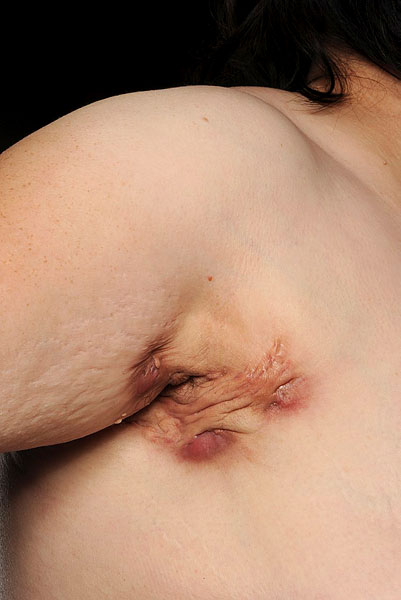
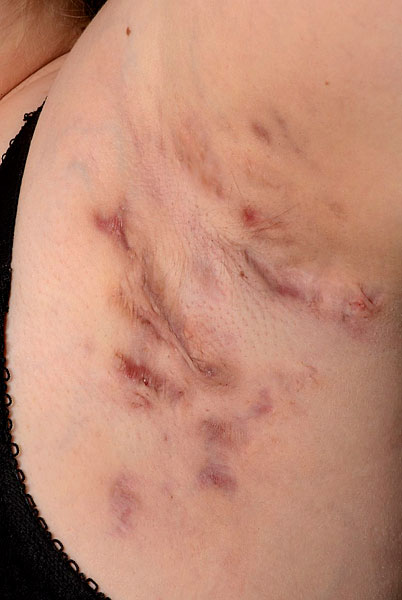
Hidradenitis suppurativa is a diagnosis that is made clinically, in the presence of typical skin lesions (see figure 1) at characteristic sites (see figure 2), with a pattern of recurrence or persistence of lesions despite standard treatment for common skin infections, such as courses of antibiotics and incision of ‘boils’.1 There is general agreement that at least two lesions over six months, or five lesions over a lifetime, are required to meet the criteria.6
A good screening question, which has high diagnostic accuracy for active hidradenitis suppurativa is:
• Have you had recurrent boils during the past six months?
• If yes, have these been located in the armpits or groin? 12
Examination of the patient should include all the typical areas affected by hidradenitis suppurativa, see figure 2. Post-inflammatory pigmentation and scarring are often seen and characteristic lesions including tender nodules, discharging sinuses and cord-like scarring may be present. Coexistent acne is common.
Hidradenitis suppurativa is diagnosed on typical history and clinical appearance and investigations such as wound swabs are not usually helpful.10 At the time of diagnosis, an assessment of the severity of the disease should be made so that appropriate treatment can be chosen, and response assessed. The Hurley scale13 (see box 1) is commonly used for this purpose, but does not reflect changes in severity over time, so the number of inflamed and discharging lesions, and frequency of disease flares should also be documented.
Other important approaches to guide holistic management are enquiry about smoking, calculation of BMI and waist circumference, and blood pressure measurement. A formal assessment of cardiovascular risk using a tool such as QRISK or ASSIGN is appropriate given the high prevalence of adverse lifestyle factors in hidradenitis suppurativa patients.3
Screening for depression is important, along with assessing the impact on quality of life and pain scoring. Suitable tools for this include the Hospital Anxiety and Depression Scale (HADS), standard chronic disease depression screening questions, the Dermatology Life Quality Index score (DLQI) and the Visual Analogue Scale (VAS) for pain.6
Management
Patients presenting with a typical clinical picture can be confidently diagnosed in primary care and treatment commenced. Empowering patients with information about hidradenitis suppurativa and directing them to sources of self-help such as the Hidradenitis Suppurativa Trust (see External Links) will help them self-manage their condition. Patients at all stages of the disease should be informed of the effects of obesity and smoking and associated comorbidities, where relevant, and offered support for weight reduction and smoking cessation.
Appropriate treatment to manage cardiovascular risk factors, such as dyslipidaemia, are also indicated, regardless of disease severity. Treating pain and depression will help improve quality of life and the ability to comply with health advice. Guided self-help and referral for psychological treatments such as cognitive behaviour therapy may help address the embarrassment and isolation felt by many people with hidradenitis suppurativa.
Coping with chronically discharging wounds is demoralising and debilitating, and suitable dressings and wound pads should be supplied if required, with expert opinion endorsing low adherent, gentle border dressings to avoid damage to macerated flexural skin.
Specific treatment for hidradenitis suppurativa is determined by the severity on clinical assessment, along with patient preference in consultation with their clinician. All treatments are off licence (apart from the biologic drug adalimumab, see below) and patients should be advised of this at the outset. Evidence to guide treatment of hidradenitis suppurativa is limited and many established treatments are supported by relatively low quality evidence, tempered by expert opinion.
In Hurley stage I (mild) disease, where there is no skin scarring, topical treatment with 1% clindamycin lotion twice daily for three months may be as effective as oral tetracyclines.6
If systemic treatment is preferred, or in patients with more frequent flares, then either lymecycline 408 mg or doxycycline 100 mg once or twice daily for three months is recommended. Many clinicians also advise washing with topical antiseptics such as chlorhexidine 4% lotion or benzalkonium chloride to delay the development of bacterial resistance.
In Hurley stage II (moderate) disease, where scarring has occurred, systemic treatment with oral tetracyclines is likely to be more effective than topical treatment and can be initiated and continued in primary care. Patients should be encouraged to persist with treatment for the full three-month course, unless unacceptable side effects occur, as this allows the anti-inflammatory effects of tetracyclines to take effect.
At review at 12 weeks, if there is a good treatment response the therapy should be continued for at least a further three months.
Hidradenitis suppurativa is a chronic inflammatory condition so patients are likely to require ongoing treatment. However, treatment holidays are often possible; for how often, and how long will depend on patient preference and disease activity.
If the response to treatment is not satisfactory at the three-month review referral should be made to dermatology services, or a specialist hidradenitis suppurativa clinic if available.
If patients have advanced disease at presentation (Hurley stage III) with extensive sinus tract formation throughout one or more areas, an early referral to secondary care is likely to be the appropriate initial course of action, as management of these patients is often complex, involving both medical and surgical interventions.
Direct referral for surgery is rarely helpful, as limited excision of individual hidradenitis suppurativa lesions will not prevent new lesions appearing close to the site of excision, or at other sites. Control of the disease with medical therapies, prior to planned surgical intervention if appropriate, is recognised as being the most effective approach for moderate to severe hidradenitis suppurativa.6 The evidence base for surgical intervention in hidradenitis suppurativa is poor, but extensive excision of the skin at the affected site, with secondary intention healing, appears to be most effective in preventing recurrence. 6
If the patient has failed to improve on an adequate trial of tetracyclines then clindamycin 300 mg twice daily and rifampicin 300 mg twice daily for 10 weeks is the next step, and is generally initiated in secondary care.6 This combination is also advised as initial treatment for patients presenting with Hurley stage III disease, as clinical experience suggests this is more effective than oral tetracyclines in these patients. It is important to warn patients that rifampicin will change the colour of their urine, and that it is an enzyme inducer, rendering many hormonal contraceptive methods ineffective.14 Clindamycin may rarely cause antibiotic associated colitis, so patients need to be counselled to stop this drug if they develop severe diarrhoea.
Baseline FBC, U&E and LFTs are advised by the manufacturers of rifampicin, with repeat blood tests during the course if patients have a history of alcohol dependence.14
If the combination of clindamycin and rifampicin is effective then expert opinion supports repeating the ten-week course up to 2 to 3 times a year. Some patients will wish to go on to an oral tetracycline as maintenance therapy after completing the course, particularly if they have very active disease.
Patients whose disease has not responded to clindamycin and rifampicin may be offered one of several different drugs used off licence in a secondary care setting.1,6 Dapsone can be helpful in some patients with mild to moderate hidradenitis suppurativa.14
It is also useful in patients on warfarin as, unlike most other options, there are no drug interactions.
Acitretin has some evidence of effectiveness in hidradenitis suppurativa, but its prolonged teratogenicity (three years after cessation) means it cannot be used in women of childbearing age. Metformin (500 mg three times daily) can be a useful addition to oral tetracycline therapy for women with troublesome hidradenitis suppurativa of mild to moderate severity, particularly if there is coexisting polycystic ovarian syndrome.6 It can also be used alone as a safe option for pregnant women. Isotretinoin is not effective in hidradenitis suppurativa but is used to treat coexisting acne in a specialised setting.6
Adalimumab is now licensed and approved by NICE for specialist use in moderate to severe hidradenitis suppurativa, where standard therapies have failed to produce adequate disease control.15 Experience has shown it to be largely well tolerated and it can produce significant improvement in patients with severe hidradenitis suppurativa. However, recurrence frequently occurs on stopping the drug, necessitating long-term treatment for disease control.15
Conclusion
Hidradenitis suppurativa is a distressing chronic condition, with the potential for GPs to improve patients’ quality of life significantly by initiating effective treatment for their skin disease and referring appropriately for specialist care.
Holistic assessment of the patient’s needs, with particular emphasis on psychosocial issues and cardiovascular risk reduction is equally important. Patients will require ongoing support to address lifestyle issues which exacerbate hidradenitis suppurativa and its comorbidities, as well as the considerable challenges they face from the disease itself.
REFERENCES
1 Zouboulis C, Desai N, Emtestam L et al. European S1 guideline for the treatment of hidradenitis suppurativa. J Eur Acad Dermatol Venereol 2015;29(4):619-44
2 Garg A, Kirby J, Lavian J et al. Sex- and age-adjusted population analysis of prevalence estimates for hidradenitis suppurativa in the United States. JAMA Dermatol 2017;153 (8):760-64
3 Bewley A, Malcolm B, Shah P. The primary care management of hidradenitis suppurativa in the UK: an evaluation of patient pathways and healthcare resource use, using the Health Improvement Network Database. Br J Dermatol 2016;175:Suppl 51, 9-15
4 Revuz J, Canoui-Poitrine F, Wolkenstein P et al. Prevalence and factors associated with hidradenitis suppurativa: results from 2 case control studies. J Am Acad Dermatol 2008;59:596-601
5 von Der Werth JM, Williams HC, Raeburn JA. The clinical genetics of hidradenitis suppurativa revisited. Br J Dermatol 2000;142(5):947-53
6 Ingram JR, Collier F, Brown D et al. British Association of Dermatologists guidelines for the management of hidradenitis suppurativa (acne inversa) 2018. Br J Dermatol 2018;180(5):1009-17
7 Egeberg A, Gislason GH, Hansen PR. Risk of major cardiac events and all-cause mortality in patients with hidradenitis suppurativa. JAMA Dermatol 2016;152:429-34
8 Shlyankevich J, Chen AJ. Hidradenitis suppurativa is a systemic disease with substantial co-morbidity burden. J Am Acad Dermatol 2014;71:1144-50
9 Thorlacius L, Cohen AD, Gislason GH et al. Increased suicide risk in patients with hidradenitis suppurativa. J Invest Dermatol 2018;138(1):52-7
10 Revuz J. Hidradenitis suppurativa. J Eur Acad Dermatol Venereol 2009;23(9):985-98
11 Saunte DM, Boer J, Stratigos A et al. Diagnostic delay in hidradenitis suppurativa is a global problem. Br J Dermatol 2015;173(6):1546-49
12 Yazdanyar S, Jemec GB. Current and future treatments of hidradenitis suppurativa. Exp Rev Dermatol 2010;5(3):335-43
13 Hurley H. Axillary hyperhidrosis, apocrine bromohidrosis, hidradenitis suppurativa, and familial benign pemphigus: surgical approach. In: Roenigh R(Ed). Dermatologic surgery. Marcel Dekker. New York. 1989. pp729-39
14 British National Formulary 2019 https://bnf.nice.org.uk [Last accessed 4 September 2019]
15 Tappenden P, Carroll C, Stevens JW et al. Adalimumab for treating moderate-to-severe hidradenitis suppurativa: An evidence review group perspective of a NICE single technology appraisal. Pharmacoeconomics 2017;35(8):805-15
 Download this article in PDF format