SEARCH

Catalao R, Adlington K, Protti O. Prompt detection vital in postpartum mood disorders. Practitioner June 2019;263(1827):21-26
Prompt detection vital in postpartum mood disorders
24 Jun 2019
AUTHORS
Dr Raquel Catalao BSc (Hons) MBBCh, Academic Clinical Fellow in Psychiatry, South London and Maudsley NHS Foundation Trust and King’s College London, London, UK
Dr Katherine Adlington MBBS MA MRCP MRCPsych, Core Psychiatry Trainee, East London Foundation NHS Trust, London, UK
Dr Olivia Protti MBBCh MRCOG MRCPsych, Consultant Perinatal Psychiatrist, East London Mother and Baby Unit, City and Hackney Centre for Mental Health, East London Foundation Trust, London, UK
Competing interests: None
Article
Abstract
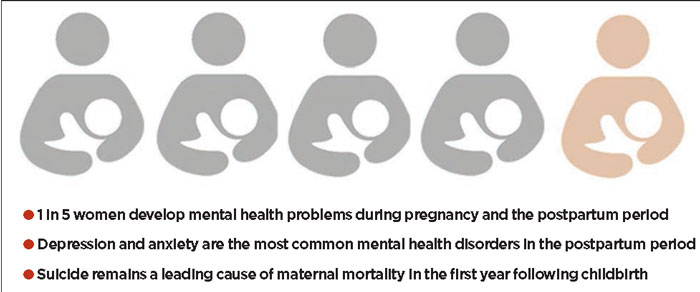
Common mental health disorders affect around one in five women during pregnancy and the first year following childbirth. Depression and anxiety disorders are the most prevalent mental health disorders during this period as they are at other times of life. Epidemiological studies suggest that that there is an increase in the incidence of depression in the postpartum period. However, a significant proportion of postnatal depression or anxiety may begin in the antenatal period. It is important to distinguish postnatal depression from baby blues, which is common and requires no treatment, although it is a potential risk factor for postnatal depression. The most common postpartum anxiety disorder is generalised anxiety disorder but women may also be affected by obsessive compulsive disorder, panic disorder or post-traumatic stress disorder (PTSD). PTSD can be triggered by a traumatic pregnancy or childbirth. Postpartum psychosis, a severe mood disturbance with psychotic symptoms, affects 1 in 1,000 women and can develop very quickly in the first two weeks postpartum, often requiring urgent admission to a specialised mother and baby unit. It is estimated that more than a third of women with bipolar disorder will have a postpartum relapse and one in six will develop postpartum psychosis. Other risk factors include previous postpartum psychosis and a family history of affective psychosis.
Common Mental health disorders affect one in five women during pregnancy and the 12-month period following childbirth.1 However, they are often unrecognised and undertreated in general practice.2 Depression and anxiety disorders are the most prevalent mental health disorders during this period as they are at other times of life.
Epidemiological studies suggest that there is an increase in the incidence of depression in the postpartum period compared with rates before pregnancy, during pregnancy or after the 12 months following childbirth.3 However, a significant proportion of postnatal depression and anxiety may begin in the antenatal period.4
The most common anxiety disorder postpartum is generalised anxiety disorder but women may also be affected by obsessive compulsive disorder (OCD), panic disorder or post traumatic stress disorder (PTSD), which can be triggered as a result of a traumatic pregnancy or childbirth.
The postpartum period is also associated with an increased risk of psychosis.5 Postpartum psychosis, a severe mood disturbance with psychotic symptoms, affects 1 in 1,000 women and can develop very quickly in the first two weeks postpartum, often requiring urgent admission to a specialised mother and baby unit.
Prompt detection of perinatal mental health disorders can expedite treatment and reduce the impact on the woman, her baby and her family. Left untreated perinatal mental illness can impact on mother-infant bonding, the mother’s long-term mental health and have a range of negative child outcomes which can persist into adulthood. 6 Suicide remains a leading cause of maternal mortality in the postpartum period in the UK.7 The NHS Long Term Plan has pledged to improve access to specialist perinatal mental health services and its availability from preconception to 24 months after birth and also offer help to partners.8
Presentation
Mood disorders often go undetected after childbirth as they can be confused with normal postpartum psychological and physiological changes.
It is important to distinguish postnatal depression from a minor mood disturbance (baby blues), the latter is fairly common and requires no treatment but is a potential risk factor for postnatal depression.9
During baby blues, the mother typically presents with mood swings ranging from elation to sadness, insomnia, tearfulness, crying spells, irritability, anxiety, and a diminished ability to concentrate. Symptoms develop within 2 to 3 days postpartum, peak on the fifth day, and resolve within 10-14 days.10 Distinguishing between baby blues and other postpartum mental disorders can be difficult and it is advisable to offer follow-up contacts to monitor the severity of symptoms.11
It is also important to recognise that women who may be experiencing poor mental health during this period may have difficulty in discussing their problem for fear of stigma, negative perceptions of them as mothers or fear of social services becoming involved.12 Therefore, current NICE guidance states that all women should be asked about their mental wellbeing on routine postnatal contacts.13 NICE guidelines recommend the use of the Whooley case finding questions for screening for depression. These two questions, see box 1, address symptoms of depression that are necessary but not sufficient to make a diagnosis of depression and have been found to be highly sensitive at detecting perinatal mood disorders in primary care.14
Assessment
If a woman gives a positive response to either of the Whooley questions, which suggests that she may have a mental health problem or there is clinical concern, a full assessment should be performed. Consider using other self-report validated questionnaires such as the Edinburgh Postnatal Depression Scale (EPDS) or the Patient Health Questionnaire (PHQ-9) as an aid in the assessment. A score of > 12 on the EPDS indicates probable depression. However, a positive score does not equate to diagnosis and should always prompt further assessment,14 see box 2.
Ask about a history of mental health problems, including previous pregnancies and postpartum, as well as any family history of mental health problems in a first-degree relative, particularly of affective psychosis.
A past or present history of severe mental illness or a family history of severe perinatal illness in a first-degree relative places women at higher risk of a mental health disorder in the postpartum period, see box 3.15,16
It is estimated that more than a third of those with bipolar disorder (37%) will have a postpartum relapse, and one in six (17%) will have a psychotic relapse i.e. postpartum psychosis.17
This information should ideally be gathered antenatally at booking and a referral facilitated to local perinatal mental health services where a collaborative plan can be agreed between the woman and services on how to monitor and treat the condition during the whole perinatal period.13
This plan should be shared with all the relevant healthcare professionals including the GP. This is of vital importance as discontinuation of medication without consultation with healthcare professionals may trigger a relapse during this period.18
Ask sensitively about current symptoms of low mood, anxiety, feelings of worthlessness and hopelessness about the future, and about biological symptoms such as severe insomnia, i.e. even when the baby is asleep the woman cannot sleep, and poor appetite, although this may be masked if the woman is breastfeeding. Women’s worries or preoccupations should be explored as well as their relationship with, and feelings towards, the baby. Impaired bonding with the baby, a lack of feeling of attachment with the infant, and a sense of numbness are important features to note.
Assess the physical wellbeing of the mother and the baby as well as the mother’s level of social support. It is also important to enquire sensitively about domestic violence and abuse as well as comorbid substance misuse13 and to be aware of the wider socioeconomic and psychosocial factors that may make the woman more vulnerable to the development of postpartum mental health disorders, see box 2.
It is important to explore the risk of harm to self and to the baby by directly asking about suicidal thoughts and self-harm as well as thoughts of harming the baby. There is no evidence that raising these issues with women increases the risk of self-harm or suicide.19
The Royal College of General Practitioners (RCGP) has produced a toolkit to help GPs to open a discussion with women in the perinatal period about their mental health and to identify red flags. The RCGP Perinatal Mental Health Toolkit can be accessed online (www.rcgp.org.uk/clinical-and-research/resources/toolkits/perinatal-mental-health-toolkit.aspx).
Women should be screened for symptoms of mania or hypomania by asking about periods of abnormally high or irritable mood and increased activity, or a change in their usual energy level that was noticed by others as abnormal, or got them into a difficult situation. It is vital to exclude the presence of psychotic symptoms such as confusion, delusions or hallucinations. Postpartum psychosis often presents as a mixed-affective, schizoaffective or manic state, with prominent confusion and fluctuating symptoms, but depressive and schizophrenia-like presentations may also occur.20
Confirming diagnosis
A diagnosis of depression or an anxiety disorder in the postpartum period is always a clinical diagnosis that should follow the usual diagnostic criteria as set out in ICD-10 or DSM-5, see box 4. There are no criteria for these disorders that are specific to the postpartum period. There is some evidence that in postpartum depression sad mood is less prominent whereas psychomotor agitation/restlessness and impaired concentration are more prominent when compared with depression at other times.21 It can also be difficult to decide whether somatic symptoms such as sleep disturbance are due to pregnancy and motherhood or depression. It has been suggested that sleep deprivation is an important contributing factor for postpartum depression.21 Interestingly, sleep loss can also trigger episodes of elevated mood in patients with bipolar affective disorder.22 There are no consensual diagnostic criteria for postpartum psychosis as presentation can be highly variable but important clinical features are described in box 5, below left.20
Referral
Refer women suspected to be suffering from postpartum psychosis urgently to secondary mental health services, preferably the local perinatal mental health service, for immediate assessment, ideally within four hours of referral.13 There are significant risks associated with the disorder and women often require inpatient treatment in a specialised mother and baby unit.23
Because of the high risk of significant recurrence in the perinatal period, women with a history of severe mental illness should be under the care of mental health services, ideally a specialist perinatal mental health team wherever possible.
NICE guidelines recommend that women with a known or suspected mental health problem in the postnatal period should be assessed for treatment within two weeks of being referred to a specialist team and psychological interventions should be provided within one month of initial assessment.13
Management
For women who have a known diagnosis of past or present mental health problems, it is preferable to discuss management of their mental health when they are planning a pregnancy. A pre-emptive discussion about the risks and benefits of different psychological and pharmacological treatment in the perinatal period can help minimise the risk of relapse for the mother and the impact of the illness or medication on a developing fetus or infant.5
Psychological therapies are recommended in the treatment of postpartum mood disorders but access is variable. The UK government has committed to improving access to evidence-based psychological therapies such as parent-infant, couple, coparenting and family interventions within perinatal mental health services and expanding access to IAPT services in the coming years.8
There is limited evidence regarding the risks and benefits of psychotropic medication, including antidepressants and antipsychotics, in the perinatal period.24 Most studies exclude pregnant and breastfeeding women and guidelines in this field often make recommendations by generalising evidence from studies in non perinatal populations. One exception is sodium valproate, for which a recent MHRA warning was issued against prescribing in women of childbearing potential unless certain strict conditions are met, because of the risk of malformations and developmental problems in children if exposed in utero.25
Decisions regarding management should be made together with the woman and her partner. It is important to ensure that they are well informed about the diagnosis and the effect it could have on their quality of life, the baby’s development and family relationships. If the woman wants to breastfeed, consider the attitudes of the woman and her partner to the balance of risk of recurrence or worsening of illness versus the safety of medication in breastfeeding.
Depression
Interventions should be tailored to the patient according to the severity of symptoms and past history.13 Offer women with persistent subthreshold depressive symptoms or mild to moderate depression in the postnatal period facilitated self-help. However, if a woman has a prior history of severe depression, antidepressants should be considered, even if she is presenting with mild symptoms, because of the high risk of perinatal relapse.
For women presenting with moderate or severe depression in pregnancy or postnatally, the NICE guidelines recommend either a high-intensity psychological intervention, such as CBT; an antidepressant or – if there is little or no response to CBT or antidepressants alone – a combination of both medication and psychological intervention. Similarly, SIGN recommends CBT for mild-moderate depression and antidepressants for moderate-severe depression.9
Anxiety
If a woman has persistent subthreshold symptoms of anxiety in the perinatal period, consider facilitated self-help, such as CBT-based self-help delivered face to face or over the phone. If the criteria for an anxiety disorder are met, offer low-intensity or high-intensity psychological intervention as first-line treatment (do not offer low-intensity for PTSD or social anxiety disorder and progress to high-intensity if there is no improvement in other anxiety disorders in two weeks).
Generally, medication is only started for anxiety disorders in the perinatal period if psychological therapy has been unsuccessful and it is the woman’s preference following an informed discussion. Women with severe anxiety disorders impacting on function or care of the baby should be referred to specialist perinatal services.
Psychosis
Women with postpartum psychosis should be managed in secondary care mental health services. Some antipsychotics can be prescribed in pregnancy and when the woman is breastfeeding. Psychological interventions can be offered to try to reduce the risk of relapse arising from stress or potential switches or cessation of medication during the perinatal period.
Starting antidepressants
None of the currently available antidepressants are absolutely contraindicated in pregnancy or breastfeeding. Most guidelines recommend SSRIs as first-line treatment for depression in general as well as for antidepressant-naïve women in the perinatal period. Decisions about prescribing antidepressants need to be individualised.
Previous treatment response should guide future treatment choices. Women who are depressed in pregnancy are at an increased risk of postnatal depression so if an antidepressant has been commenced during pregnancy, it is usually recommended that this is continued in the postpartum period.
If a woman has previously been treated successfully with an antidepressant, it may be preferable to prescribe this again rather than starting a medication of unknown efficacy even if it possibly has a lower risk in breastfeeding. If a decision is made to start medication, do not use subtherapeutic doses.24 However, wherever possible, use the lowest effective dose and avoid polypharmacy.26
Remind the woman that some antidepressants can cause drowsiness particularly on initiation and that sedation can hinder baby care and breastfeeding. For these reasons, women on antidepressants should be advised not to sleep with their baby.
There is limited data about the safety of antidepressants in breastfeeding,26 therefore choose medication with the lowest known risk and advise women that there is very limited knowledge about long-term neurodevelopmental outcomes for the baby.
A useful guide to the possible risk of breastfeeding while taking a medication is the relative infant dose (RID), which represents the daily amount of drug ingested by an infant during exclusive breastfeeding (infant dose per kg/maternal dose per kg).27 Drugs with an RID below 10% are usually regarded as safe in breastfeeding.
Recent guidelines from the British Association of Psychopharmacology (BAP) state that the SSRIs with the lowest reported levels of exposure or adverse physical effects include sertraline and paroxetine.24 However, sertraline is the preferred first-line treatment when breastfeeding because of its relatively lower risks of side effects and withdrawal symptoms.28 The Maudsley guidelines also recommend mirtazapine as a first-line option.26
For women with treatment-resistant depression or those with complex pharmacological regimens, advice should be sought from the local perinatal mental health team or community mental health team.
Stopping antidepressants
In general, patients should be advised not to discontinue antidepressants suddenly during the perinatal period, including postnatally, because of the risk of discontinuation syndrome and relapse. For moderate depression, consider switching to a high-intensity psychological intervention or an alternative medication with a lower risk of adverse effects. For severe depression, only advise a woman to stop after exploring the options of continuing the medication, changing to an alternative or combining with a psychological intervention.
There is little evidence to suggest that infants are at risk of withdrawal if mothers are breastfeeding when stopping an antidepressant, however, it would be advisable for women to follow down-titration guidelines and monitor for any signs of withdrawal in their baby.
Breastfeeding
Offer support to women to choose the feeding method that best suits them. Women with a mental health problem can be encouraged to breastfeed, unless they are taking carbamazepine, clozapine or lithium.
Advise women who are breastfeeding and also taking psychotropic medication to be alert to any adverse effects on their baby, such as sedation or poor feeding. Be much more cautious when prescribing psychotropic medication to women who are breastfeeding premature or sick infants. There is little evidence to support discarding breast milk or timing breastfeeding according to time of medication administration and it is not recommended by the BAP guidelines.
Mother-baby relationship
Some women with a mental health disorder may experience difficulties with the mother-baby relationship and bonding with their child. It is important to be alert to the nature of this relationship at each postnatal contact and assess verbal interactions, emotional sensitivity and physical care.13 Discuss any concerns and consider referral to perinatal mental health teams who may have access to parent-infant psychotherapists. If there are any concerns regarding risk to the baby the local safeguarding procedures should be followed. A recent UK cohort study found that the offspring of women with severe persistent postnatal depression were at substantially increased risk of preschool behavioural problems, poor academic attainment and adolescent depression.29 Therefore early identification and prompt treatment of postpartum mental health disorders in primary care can have beneficial effects not only for the health of the mother but also for the long-term development and wellbeing of the child.
REFERENCES
1 Howard LM, Molyneaux E, Dennis C-L et al. Non-psychotic mental disorders in the perinatal period. Lancet 2014;384(9956):1775-88
2 Ford E, Shakespeare J, Elias F, Ayers S. Recognition and management of perinatal depression and anxiety by general practitioners: a systematic review. Fam Pract 2017;34(1):11-19
3 Munk-Olsen T, Laursen TM, Pedersen CB et al. New parents and mental disorders: A population-based register study. JAMA 2006;296(21):2582-89
4 Heron J, O’Connor TG, Evans J et al, ALSPAC study team. The course of anxiety and depression through pregnancy and the postpartum in a community sample. J Affect Disord 2004;80(1):65-73
5 Jones I, Chandra PS, Dazzan P, Howard LM. Bipolar disorder, affective psychosis, and schizophrenia in pregnancy and the post-partum period. Lancet 2014;384(9956):1789-99
6 Stein A, Pearson RM, Goodman SH et al. Effects of perinatal mental disorders on the fetus and child. Lancet 2014;384(9956):1800-19
7 Knight M, Nair M, Tuffnell D, Kenyon S et al. Saving Lives, Improving Mothers’ Care - Surveillance of maternal deaths in the UK 2012-14 and lessons learned to inform maternity care from the UK and Ireland Confidential Enquiries into Maternal Deaths and Morbidity 2009-14. MBRRACE UK. Oxford. 2016
8 NHS England. The NHS Long Term Plan. 2019 www.longtermplan.nhs.uk
9 Scottish Intercollegiate Guidelines Network. SIGN127. Management of perinatal mood disorders. SIGN. Edinburgh. 2012
10 Heron J, Haque S, Oyebode F et al. A longitudinal study of hypomania and depression symptoms in pregnancy and the postpartum period. Bipolar Disord 2009;11(4):410-17
11 Stewart DE, Vigod S. Postpartum depression. N Engl J Med 2016;375(22):2177-86
12 Dolman C, Jones I, Howard LM. Pre-conception to parenting: a systematic review and meta-synthesis of the qualitative literature on motherhood for women with severe mental illness. Arch Women’s Ment Health 2013;16(3):173-96
13 National Institute for Health and Care ExceIlence. CG192. Antenatal and postnatal mental health: clinical management and service guidance. NICE. London. 2014 www.nice.org.uk/cg192
14 National Collaborating Centre for Mental Health. Antenatal and postnatal mental health. The NICE guideline on clinical management and service guidance (updated edition). The British Psychological Society and the Royal College of Psychiatrists. 2014
15 Munk-Olsen T, Laursen TM, Mendelson T et al. Risks and predictors of readmission for a mental disorder during the postpartum period. Arch Gen Psychiatry 2009;66(2):189-95
16 Harlow BL, Vitonis AF, Sparen P et al. Incidence of hospitalization for postpartum psychotic and bipolar episodes in women with and without prior prepregnancy or prenatal psychiatric hospitalizations. Arch Gen Psychiatry 2007;64(1):42-48
17 Wesseloo R, Kamperman A, Munk-Olsen T et al. Risk of postpartum relapse in bipolar disorder and postpartum psychosis: A systematic review and meta-analysis. Am J Psych 2016;173:111-27
18 Viguera AC, Nonacs R, Cohen LS et al. Risk of recurrence of bipolar disorder in pregnant and nonpregnant women after discontinuing lithium maintenance. Am J Psychiatry 2000;157(2):179-84
19 Musters C, McDonald E, Jones I. Management of postnatal depression. BMJ 2008;337:a736
20 Jones I, Smith S. Puerperal psychosis: identifying and caring for women at risk. Adv Psychiatr Treat 2009;15(6):411-18
21 Bernstein IH, Rush AJ, Yonkers K et al. Symptom features of postpartum depression: are they distinct? Depress Anxiety 2008;25(1):20-26
22 Lewis K, Gordon-Smith K, Forty L et al. Sleep loss as a trigger of mood episodes in bipolar disorder: Individual differences based on diagnostic subtype and gender. Br J Psychiatry 2017;211(3):169-74
23 Royal College of Psychiatrists. Perinatal mental health services: Recommendations for the provision of services for childbearing women. 2015
24 McAllister-Williams RH, Baldwin DS al. British Association for Psychopharmacology consensus guidance on the use of psychotropic medication preconception, in pregnancy and postpartum 2017. J Psychopharmacol 2017;31(5):519-52
25 Medicines and Healthcare Products Regulatory Agency. Valproate use by women and girls. 2018
26 Taylor DM, Barnes TRE, Young AH. The Maudsley Prescribing Guidelines. 13th ed. Wiley, editor. The Maudsley Prescribing Guidelines. 2018
27 U.S. National Library of Medicine. Drugs and Lactation Database (LactMed®). U.S. National Library of Medicine. toxnet.nlm.nih.gov
28 Cleare A, Pariante C, Young A et al. Evidence-based guidelines for treating depressive disorders with antidepressants: A revision of the 2008 British Association for Psychopharmacology guidelines. Nutt DJ, Blier P, editors. J Psychopharmacol 2015;29(5):459-525
29 Netsi E, Pearson R, Murray L et al. Association of persistent and severe postnatal depression with child outcomes. JAMA Psychiatry 2018;75(3):247-53
ARTICLE IN PDF
 Download this article in PDF format
EXTERNAL WEBLINKS
For healthcare professionals
RCGP Perinatal Mental Health Toolkit
A toolkit to help GPs to open a discussion with women in the perinatal period about their mental health and to identify red flags
For patients
Tommy’s Pregnancy and Post-birth Wellbeing Plan
A 2-page plan, endorsed by NICE and the RCGP, to help women cope with emotional and mental health problems during and after pregnancy