SEARCH

Stollery N. Fungal infections. Practitioner 2016– 260(1791):32-33
Fungal infections
21 Mar 2016
AUTHORS
Dr Nigel Stollery MB BS DPD, GPwSI Dermatology, Kibworth, Leicestershire, UK
Article
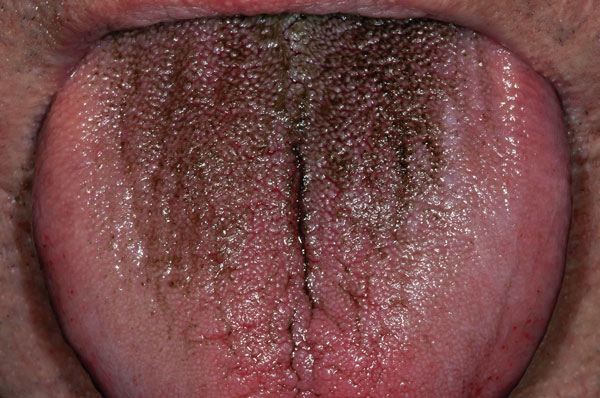
Lingua villosa nigra
This is a harmless condition caused by the presence of fungi or bacteria in the mouth which results in a black hairy tongue. The organisms tend to build up on the papillae on the tongue’s surface which elongate to up to 15 times their normal length. Pigments from tobacco, food and the organisms themselves stain the tongue which looks darker than normal. This condition is more common in smokers, IV drug users and those who are HIV positive. It can also occur following antibiotic treatment and overuse of mouthwashes. Management includes good oral hygiene, gently brushing or scraping the surface of the tongue and stopping smoking. In more severe cases the papillae can be removed surgically or by laser.
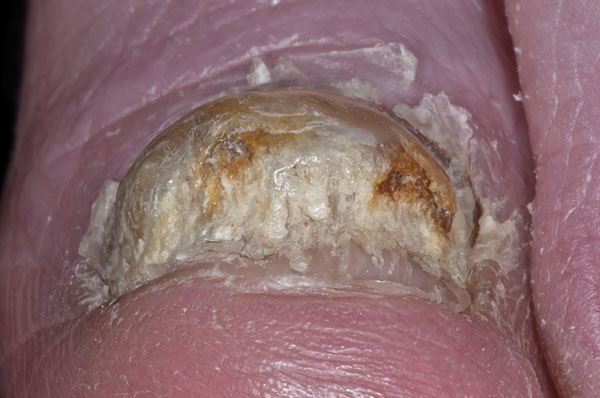
Onychomycosis
Onychomycosis may be caused by fungi, yeasts or moulds. It is increasingly common with age and rarely affects children. Different patterns are seen from a mild superficial infection to a more severe infection affecting the whole nail with subungual hyperkeratosis. In severe infections the nails can become very dystrophic and painful and in the worse cases may be completely destroyed and lost. The differential diagnosis includes trauma, psoriasis, bacterial infection and lichen planus. If the diagnosis is in doubt clippings can be sent for microscopy and culture. In more severe cases the treatment of choice is an oral antifungal which may be required for up to six months. However, treatment is not always successful and, even if it is, the infection may recur.
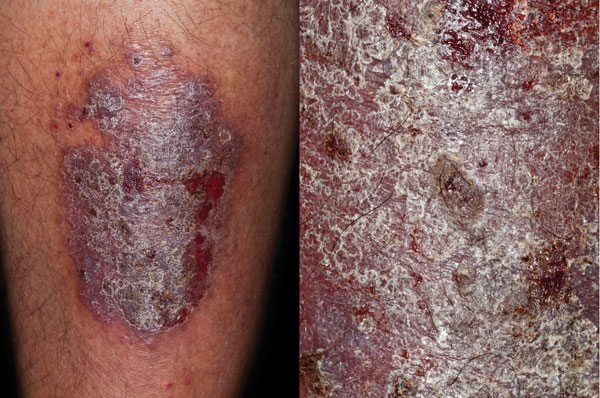
Tinea corporis
When dermatophyte fungi infect the skin the condition is often referred to as ringworm because of the annular appearance of the rash with a leading edge and central clearing. In the UK the most common cause is Trichophyton rubrum. Typical symptoms include pruritus, a characteristic rash and in some cases the presence of pustules. Investigations are not usually required, but if response to treatment is poor skin scrapings can be sent for microscopy and culture. In most cases a topical antifungal is all that is required, in more severe or resistant cases an oral antifungal such as terbinafine or itraconazole can be used.
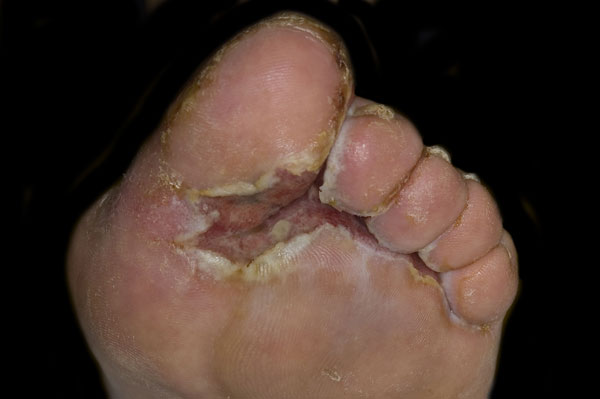
Tinea pedis
This is a fungal infection of the feet and toe webs most commonly affecting young men especially those living in warm humid conditions. There are various causative organisms such as T. rubrum, T. interdigitale and Epidermophyton floccosum. In this case the fungus caused a breach of the normally protective skin creating a portal for bacteria resulting in a secondary cellulitis requiring oral antibiotics and a topical antifungal. This type of infection is more common in patients with diabetes and those who are immunosuppressed.
Id reaction
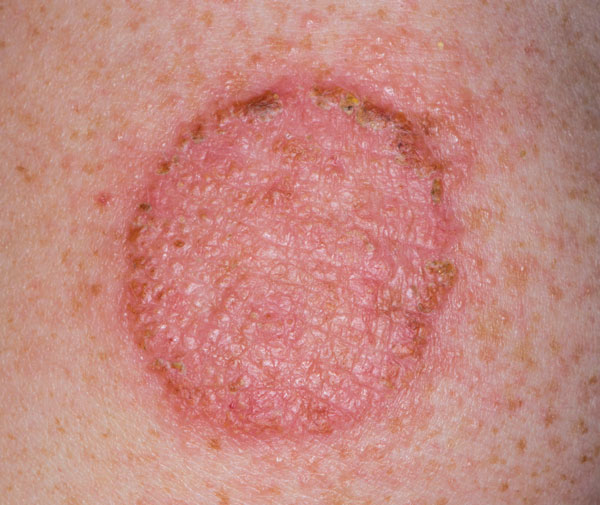
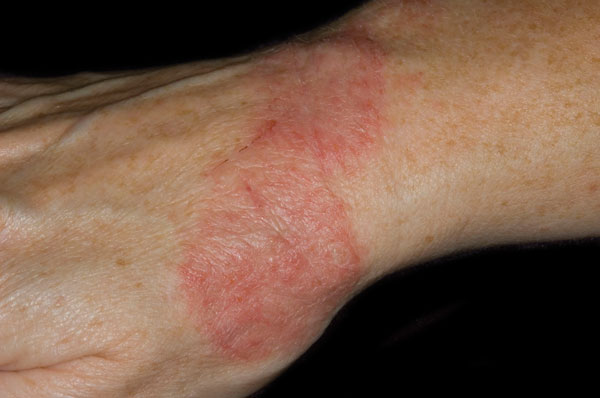
This is a rare condition in which an allergic reaction to an inflammatory fungal infection occurs at a distant site. This leads to the development of itchy eczema with vesicle or pustule formation on the face, trunk or limbs. In this case the original fungal infection was on the right shoulder and the main focus of the id reaction was the left wrist with a more diffuse dermatitis over most of the body. The original ringworm responded well to a topical antifungal but the dermatitis required a more prolonged course of emollients and topical steroids. In more severe cases treatment with an oral steroid may be needed for a number of weeks.
Tinea incognito
When a fungal skin infection is misdiagnosed or inappropriately treated with a topical immunosuppressive agent such as a steroid cream the clinical appearance can be affected making diagnosis more difficult. The affected area can extend and become more pustular with less scale and look increasingly like eczema. This usually prompts the use of a stronger topical steroid which fails to treat the underlying infection. Where the steroid course is prolonged, telangiectasia and skin atrophy may also develop complicating the appearance further. Where tinea incognito is suspected the steroid should be stopped for a few days to allow the scale to redevelop after which scrapings can be taken and sent for microscopy and culture which should confirm the diagnosis.
 Download this article in PDF format