SEARCH

Stollery N. Photoguide: Inherited disorders. Practitioner 2016;260(1790):28-29
Inherited disorders
22 Feb 2016
AUTHORS
Dr Nigel Stollery MB BS DPD, GPwSI Dermatology, Kibworth, Leicestershire, UK
Article
Darier’s disease
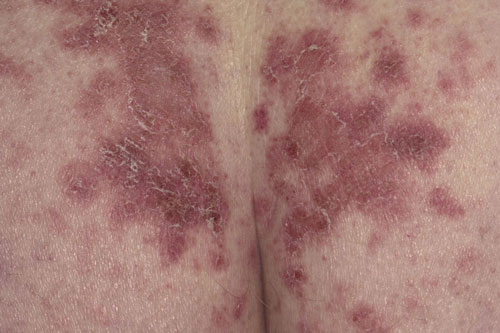
Darier’s disease is a rare hereditary acantholytic dermatosis which usually develops in adolescence. It is inherited in an autosomal dominant pattern. The abnormal gene has been identified as ATP2A2 on the 12q23-24.1 chromosome. The condition is characterised by persistent greasy scaly papules in sebum-rich areas which have a coarse feel and are skin coloured, yellow-brown or brown. The scalp may also be affected with a thick crust similar in appearance to seborrhoeic dermatitis. Diagnostic uncertainty is not uncommon and a biopsy may be needed. Treatment is only required for symptomatic lesions and includes emollients, sun protection, dermabrasion and either topical or oral retinoids.
Diffuse palmoplantar keratoderma
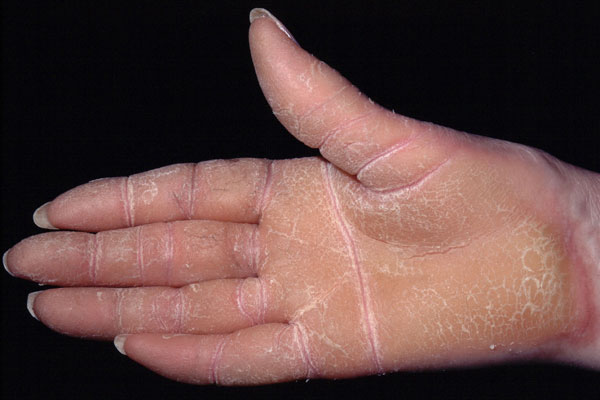
This is an autosomal dominant disorder which causes hyperkeratosis of the palms and soles. It is usually present from birth or the first few months of life. There are two types. The epidermolytic form is the most common and has a dirty snakeskin appearance. In the non-epidermolytic form the skin looks waxy. The patient shown here is suffering from the non-epidermolytic form associated with keratin 1 and keratin 16. Treatment consists of emollients, keratolytics, topical vitamin D ointment, and topical and oral retinoids.
Familial hypercholesterolaemia
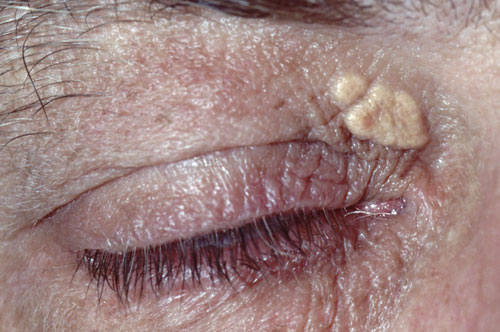
Xanthelasma palpebrarum caused by deposits of cholesterol under the skin of the eyelids is more commonly seen in people with familiarly high levels of LDL cholesterol. Similar deposits can also occur in other areas such as the iris, tendons and blood vessel walls. It is thought that around 85% of people with this condition remain undiagnosed and hence are not being treated with lipid-lowering agents. In familial hypercholesterolaemia higher doses of statins are usually required.
Neurofibromatosis type 1
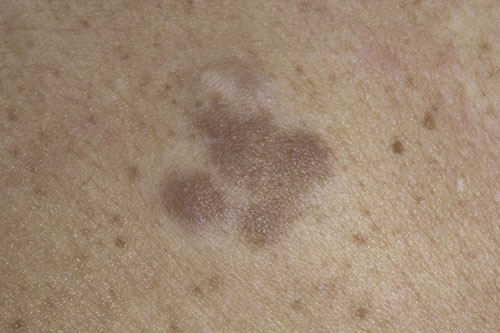
Neurofibromatosis type 1 was formerly known eponymously as von Recklinghausen’s disease. It is a tumour disorder resulting from mutation of a gene on chromosome 17 responsible for cell division. Around 150,000 people in the UK are currently diagnosed with the condition. Typical symptoms include Lisch nodules (red/brown spots on the eyes), neurofibromas in the skin, larger plexiform neurofibromas in the nerves, scoliosis, learning difficulties, café au lait spots, epilepsy and visual disorders. The condition shows variable expressivity even among family members so the prognosis can be very difficult to predict. There is currently no cure.
Haemophilia A
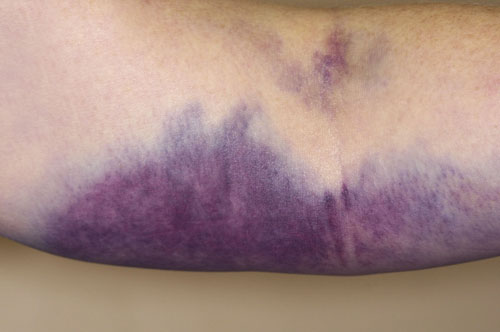
Haemophilia A is a recessive X-linked genetic condition in which there is a deficiency of clotting factor VIII. It is the most common form of haemophilia accounting for 80% of cases and affecting between 1 in 5,000 and 1 in 10,000 males. As males have only one X chromosome they are more likely to be affected whereas in females a second unaffected X chromosome means that they are usually protected and are generally asymptomatic carriers. There is currently no cure for haemophilia A but it can be controlled with regular infusions of factor VIII. In some cases sufferers can develop antibodies against this in which case a porcine factor VIII can be used.
Epidermolysis bullosa simplex
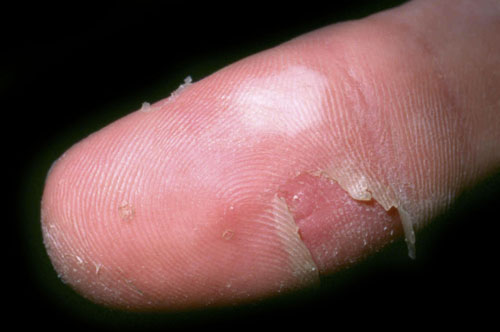
This is a rare autosomal dominant condition resulting in mutations in the genes responsible for keratin 5 or keratin 14. Blister formation occurs at the dermoepidermal junction in areas subjected to friction and trauma. In the more common milder form, blister formation is usually confined to the palms and soles, but in more severe cases it is more widespread. The blisters are usually first seen in childhood and are more common in warmer weather. Although the blistering tends to be lifelong the severity and frequency generally decrease with age. The mainstay of management in milder cases is avoiding friction to prevent blister formation.
 Download this article in PDF format