SEARCH

Stollery N. Photoguide: Urgent referral for skin lesions. Practitioner 2015– 259(1788):28-29
Urgent referral for skin lesions
25 Nov 2015
AUTHORS
Dr Nigel Stollery MB BS DPD, GPwSI Dermatology, Kibworth, Leicestershire, UK
Article
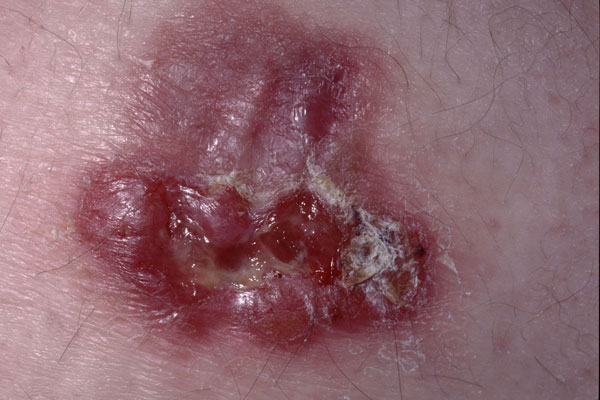
Anaplastic large-cell lymphoma
This is a rare form of non-Hodgkin’s lymphoma that is more common in males and occurs at a younger age than other lymphomas. The primary form is defined by skin-only involvement at presentation without systemic dissemination. It usually presents with a single or localised cluster of skin nodules which are often ulcerated. Differential diagnoses include: metastatic carcinoma; granulocytic sarcoma; malignant melanoma; malignant histiocytosis; B-cell lymphoma and primary cutaneous Hodgkin’s disease. Treatment includes radiotherapy or surgical excision.
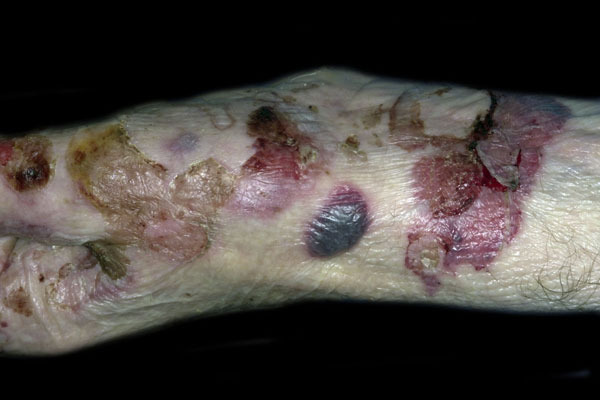
Bullous pemphigoid
Bullous pemphigoid is more common in the middle aged and elderly and when widespread usually requires urgent referral or hospital admission. It is thought to occur as a result of IgG immunoglobulins and activated T-lymphocytes attacking components of the basement membrane. Those affected develop widespread crops of tense itchy bullae filled with clear, cloudy or blood-stained fluid. This may be preceded by a non-specific red itchy rash which may have been present for a few months before the bullae appear. Treatment is usually with oral steroids the dose of which is reduced over a number of weeks. Other treatments include topical steroids, dapsone, nicotinamide, methotrexate, azathioprine and mycophenolate.
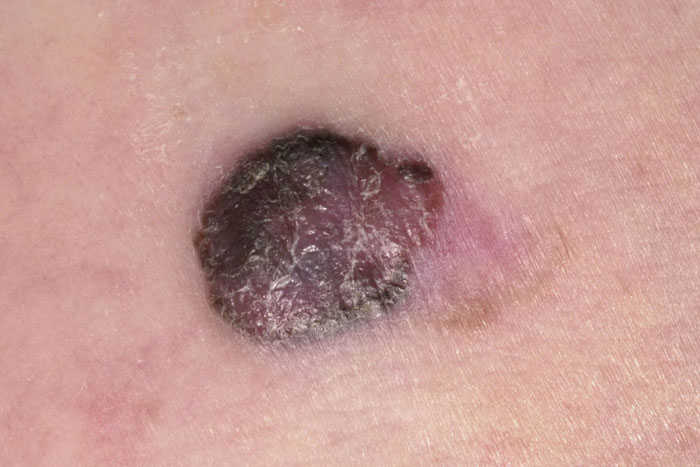
Malignant melanoma
Malignant melanomas are potentially fatal skin cancers which are associated in most cases with a history of UV exposure and sunburn. In patients with a positive family history, around 10% of cases, melanoma tends to occur at a younger age and may be associated with multiple dysplastic naevi. The most common genetic mutation in these families is in the CDKN2A tumour suppressor gene. NICE recommends that patients with a suspected melanoma should be referred urgently using a suspected cancer pathway referral, for an appointment with a specialist within two weeks (www.nice.org.uk/guidance/ng14). Urgent excision with sentinel node biopsy is still the mainstay of treatment. Currently adjuvant medical therapy is only indicated for those with advanced metastatic melanoma.
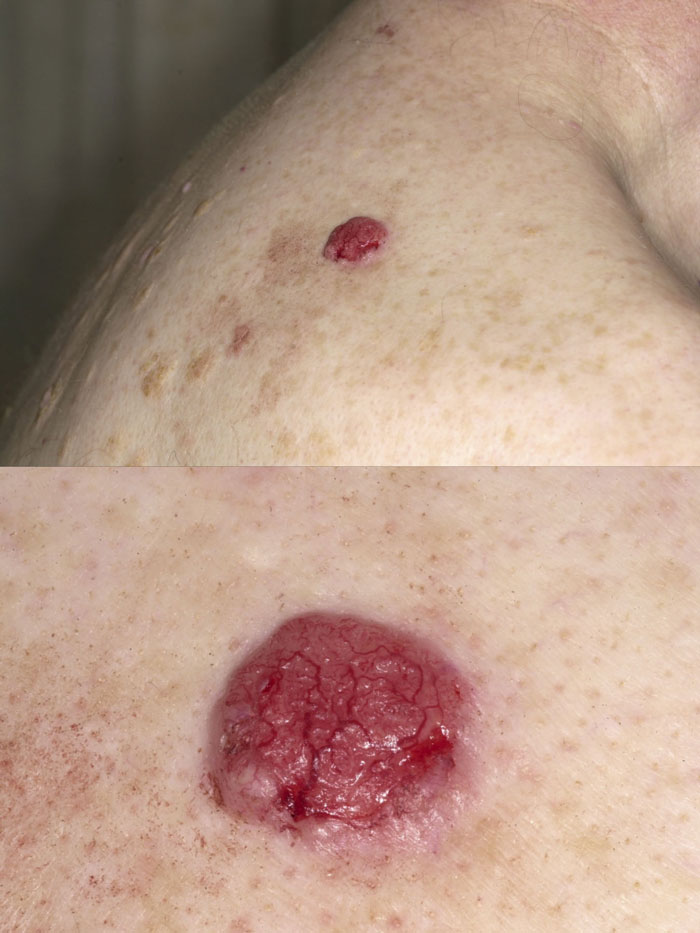
Squamous cell carcinoma
Cutaneous squamous cell carcinoma (SCC) is the second most common form of skin malignancy after basal cell carcinoma (BCC). SCC are more common in areas of pre-existing sun damage and on sun-exposed sites. Unlike BCC where metastatic spread is extremely rare, SCC, especially lesions on the head and neck, may metastasise and be potentially fatal. NICE recommends that patients with a suspicious lesion should be referred urgently using a suspected cancer pathway referral. Biopsy or complete excision is undertaken and the sooner this is done the lower the risk of spread. Alternatives to excision, where appropriate, include radiotherapy and oral or topical chemotherapy.
Gangrene
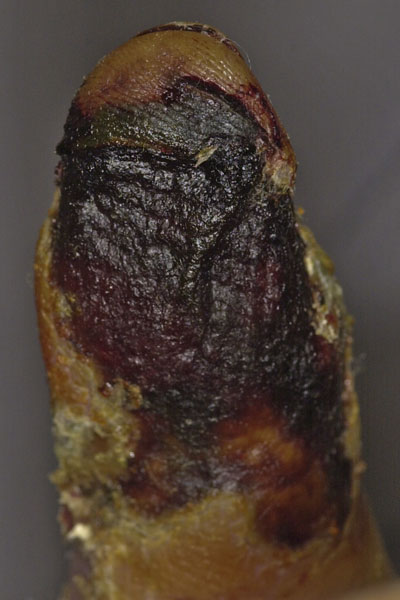
Gangrene is a type of tissue necrosis that occurs as a result of a critically insufficient blood supply which may be caused by infection, injury or conditions such as peripheral vascular disease and diabetes. Depending on the affected area it may be fatal. Gangrene is more common in smokers and frequently affects the lower limbs. The different forms include dry, wet, gas and internal gangrene. Treatment depends on the underlying aetiology and degree of tissue loss. It usually consists of antibiotics, revascularisation, and hyperbaric oxygen therapy.
Necrotising fasciitis
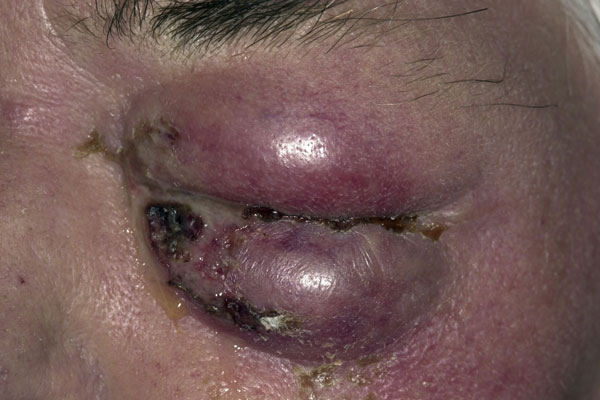
Necrotising fasciitis is a rare but potentially fatal inflammatory bacterial infection that spreads along fascial planes. The rate of spread of infection depends on the thickness of the subcutaneous layer, but is usually rapid. Hence prompt diagnosis and treatment are crucial. Individuals who are immunosuppressed (e.g. patients with conditions such as diabetes, cancer, HIV, or receiving immunosuppressant drugs) are at increased risk. Treatment includes urgent surgical debridement of all affected tissue which may include amputation if limbs are involved. This is followed by antibiotic therapy and hyperbaric oxygen therapy.
 Download this article in PDF format