SEARCH

Stollery N. Photoguide:Psoriasis June 2015; 259(1783):30-31
Psoriasis
22 Jun 2015
AUTHORS
Dr Nigel Stollery MB BS DPD, GPwSI Dermatology, Kibworth, Leicestershire, UK
Article
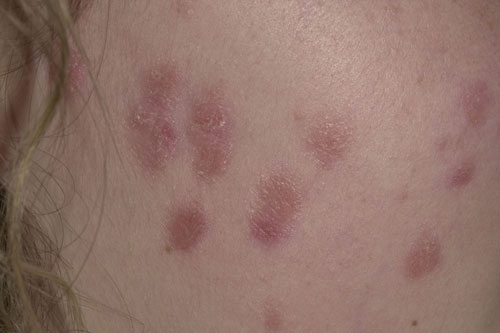
Facial psoriasis
In patients with chronic plaque psoriasis the most commonly affected areas are the extensor surfaces of the elbows and knees. However, in around 50% of cases the face will become affected at some time. Although this is usually mild, with multiple small well demarcated symmetrical plaques, it can have a more significant psychosocial effect. Facial psoriasis tends to be exacerbated by UV light, smoking and skin flora especially malassezia. Many of the standard psoriasis treatments can be very irritating to facial skin so treatment usually consists of emollients and mild to moderate potency topical steroids. Although not licensed for use on the face, calcineurin inhibitors such as pimecrolimus can be very effective especially when the eyelids are involved.
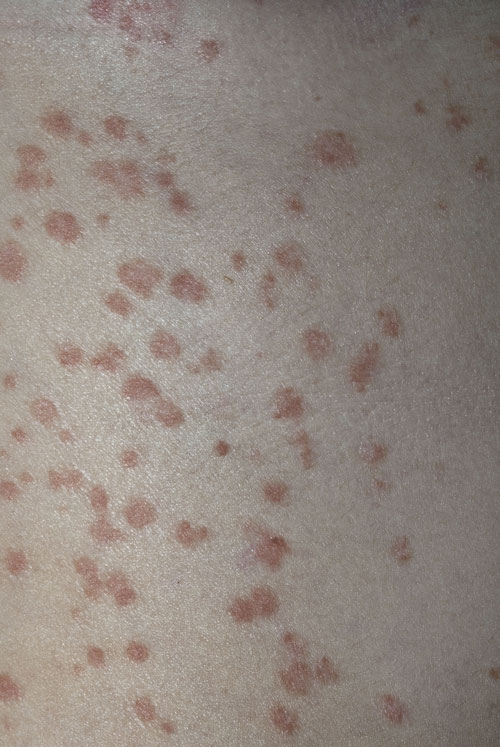
Guttate psoriasis
In this form of psoriasis there are multiple small scaly plaques which tend to affect most of the body. The torso, upper arms and thighs are the most commonly affected areas. The rash develops rapidly, often with no past history of psoriasis, and usually follows a streptococcal throat infection. Children and young adults are most likely to be affected. In most cases the rash will clear completely with time but occasionally it will progress to full blown plaque psoriasis. Management includes treatment of the streptococcal infection with antibiotics, topical agents such as steroids, vitamin D analogues and coal tar. In more severe and persistent cases, phototherapy may be recommended.
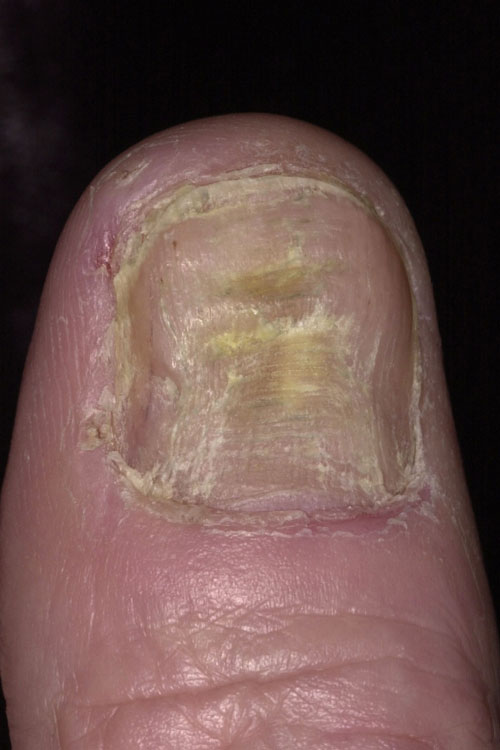
Nail psoriasis
Nail psoriasis is usually associated with either plaque psoriasis or psoriatic arthropathy and only occurs on its own in 5% of cases. Features may include oil drop or salmon patches, pitting, Beau’s lines, leukonychia, subungual hyperkeratosis and nail plate crumbling. Where the diagnosis is in doubt a nail biopsy may be required. It is a difficult condition to treat and may have a significant psychosocial impact on those affected as well as making the fingers feel uncomfortable. The condition may also be complicated by secondary fungal infections. Topical treatments include calcipotriol solution, high potency corticosteroid solutions, topical 5 fluorouracil and intralesional steroid injections. Where these are ineffective systemic treatment may be required such as methotrexate, retinoids, ciclosporin and biologics.
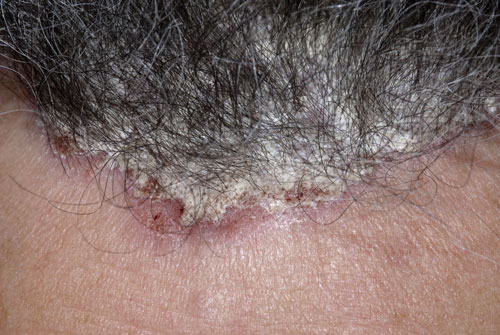
Scalp psoriasis
Scalp psoriasis often occurs in patients with plaque psoriasis which is a common chronic skin condition thought to affect around 2% of the population. It may occur in isolation but this is rare. The back of the head is the most commonly affected area. It is characterised by multiple well demarcated plaques with thick silvery white scales over an underlying erythema. Itching may be a feature but is not present in most cases. Although alopecia may occur in severe cases, hair loss is not permanent. Affected areas are usually covered by the hair but the resulting dandruff can be very distressing. The presence of the hair makes the application of emollients and topical therapies more difficult but these remain the mainstay of treatment. Gels, lotions and shampoos can be helpful.
Palmoplantar pustulosis
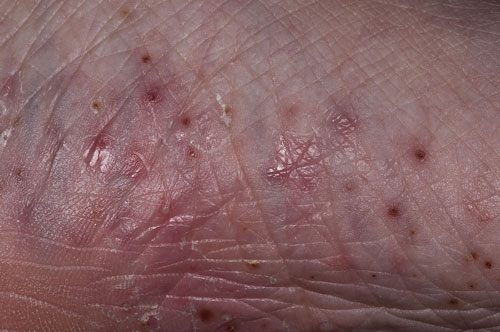
This is a chronic pustular condition which presents with multiple sterile pustules associated with thickened scaly, erythematous skin on the palms and soles. It often lasts for many years and can affect walking and occupations which involve the use of the hands. Between 10 and 25% of those affected also have plaque psoriasis and it may be associated with autoimmune conditions such as coeliac disease, type 1 diabetes and thyroid disease. Palmoplantar pustulosis is thought to occur following activation of nicotine receptors in the sweat glands. Most of those affected are either current or former smokers. Treatments include emollients, topical steroids, acitretin and phototherapy. Although smokers who have this condition should be encouraged to stop this does not usually result in an improvement of the psoriasis.
ARTICLE IN PDF
 Download this article in PDF format