SEARCH

Stollery N. Photoguide: Conditions in infants. Practitioner 2015; 259(1782):32-33
Conditions in infants
21 May 2015
AUTHORS
Dr Nigel Stollery MB BS DPD, GPwSI Dermatology, Kibworth, Leicestershire, UK
Article
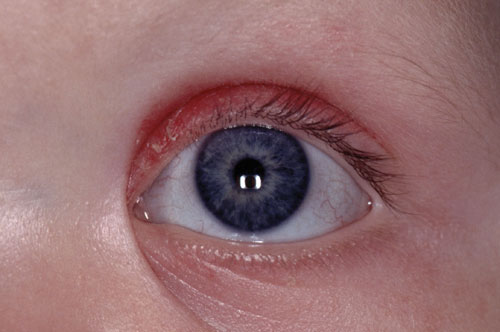
Candida intertrigo
Intertrigo can develop on any part of the body where areas of skin come into direct contact with each other and moisture collects. In some cases, the erythema is simply caused by irritation but in this case a swab confirmed the cause to be secondary infection with Candida albicans. Only one eye was affected and the condition responded well to topical treatment with 1% clotrimazole cream which was applied to the affected area three times a day for five days.
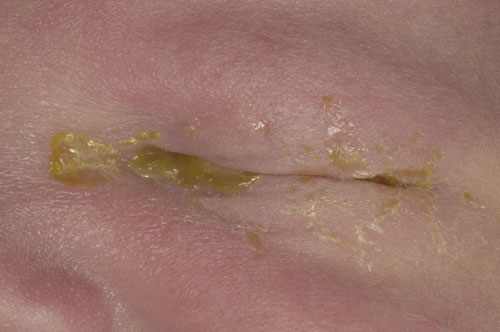
Sticky eyes
In older children and adults a green discharge in the eyes is often associated with a bacterial infection. In infants the cause is more likely to be blocked tear ducts with mucus refluxing back from the nose. Where this is the cause the conjunctiva will be a normal white colour. If there is diagnostic doubt a swab can be taken and topical antibiotics applied if the swab is positive. If the discharge is present very soon after a vaginal delivery it may be a sign of an infection acquired from the mother’s genital tract. In this situation swabs should always be taken to check for chlamydia and gonorrhoea.
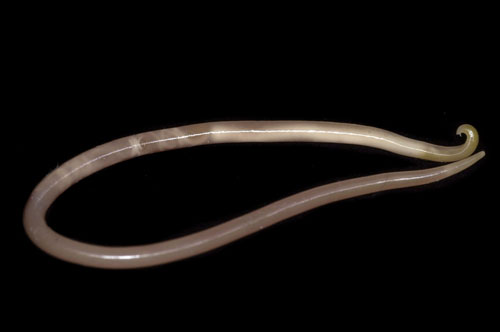
Roundworm
Roundworms, unlike the smaller threadworms, can grow to a length of 35 cm in the human bowel. In this case, the 15 cm long worm was found in a baby’s nappy. The worms usually cause no symptoms, but those infected may develop a temperature and a dry cough 4-16 days after ingesting the eggs. If very large numbers of worms are present bowel obstruction may develop, however, this is rare. Human roundworm infection is relatively uncommon in the UK but more widespread in Africa and Asia. Treatment is usually with an oral preparation such as mebendazole or albendazole.
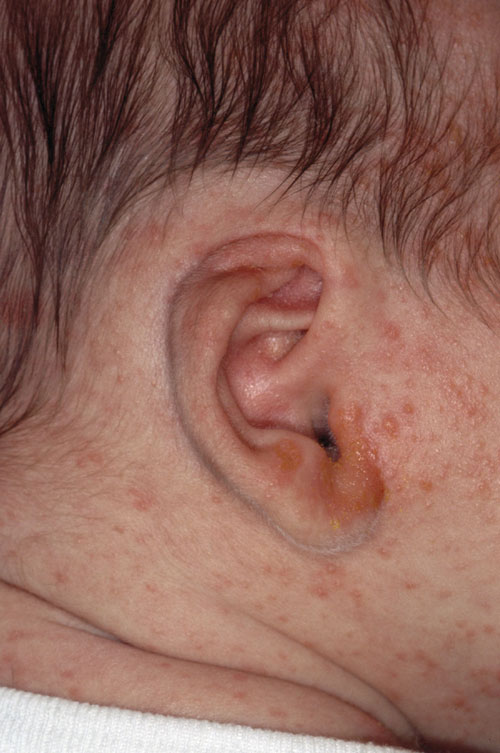
Infantile eczema
Eczema in infants is very common with around 12% affected at any one time. In most cases the condition is short lived. The incidence decreases with age, and 60-70% of children affected are clear by their early teens. Poor prognostic factors are: a strong family history of atopy (asthma and hay fever); onset at a very early age; and more severe disease. The condition can generally be managed in primary care with emollients and topical steroids. Children should be referred if there is diagnostic doubt, poor response to treatment, significant facial eczema, significant social or psychological effects or recurrent infections. Most hospitals will have specialist dermatological nurses who can be very helpful in supporting parents of severely affected children.
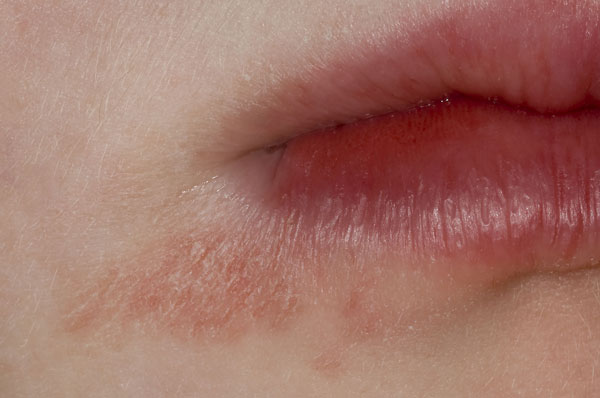
Lick lip dermatitis
The most common cause of peri-oral dermatitis in children is the so-called lick lip dermatitis which, as the name suggests, results from repeated licking of the lips. It is seen more frequently in the winter when the lips tend to become dry and irritated and are soothed by the moisturising effect of the saliva. Unfortunately, the saliva can also have an irritant effect making the lips feel more dry and sore and a vicious circle develops. Regular application of greasy emollients has a barrier effect protecting the skin. Children should also be encouraged not to lick their lips, but this can be difficult to achieve.
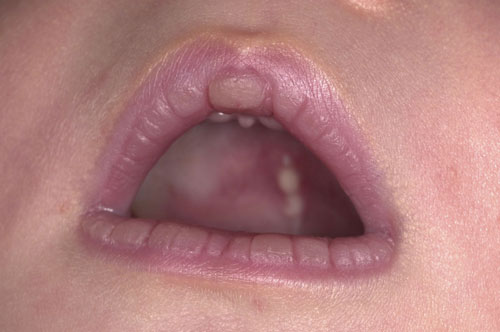
Milk blisters
Breast-fed babies can develop blistering of the lips which is more common on the top lip than the bottom. Although this may look painful it is generally asymptomatic. Milk blisters are thought to result from friction between the lips and the nipples. The blisters may come and go between feeds. In most cases the condition will improve as the baby gets used to breast feeding. Treatment is not usually required and feeding can continue as normal. Milk blisters may also be seen in bottle-fed babies but the incidence is much lower as the milk usually flows faster requiring less vigorous sucking.
ARTICLE IN PDF
 Download this article in PDF format