SEARCH

Stollery N.Photoguide: Acne. Practitioner 2015;259(1781):36-37
Acne
23 Apr 2015
AUTHORS
Dr Nigel Stollery MB BS DPD, GPwSI Dermatology, Kibworth, Leicestershire, UK
Article
Late onset acne
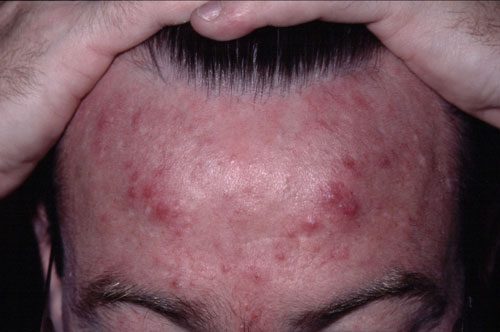
Acne vulgaris generally starts in the teenage years with the onset of puberty. In most cases it will eventually clear, but 25% of men and 50% of women report some degree of acne persisting in adult life. In some patients acne does not develop until later life. Late onset acne most commonly occurs in women and is often limited to the chin. Nodular and cystic lesions may develop and the condition is often more difficult to treat and may persist. First-line treatment is the same as for teenage acne, but referral to secondary care for treatment with isotretinoin may be required.
Acne agminata
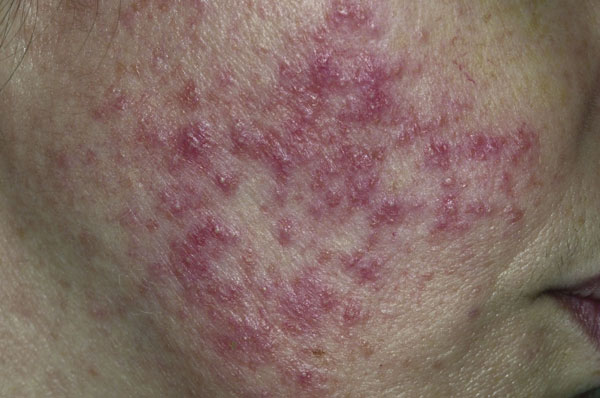
Lupus miliaris disseminatus faciei or acne agminata is an uncommon inflammatory dermatosis which is characterised by yellow or red papules mainly on the central face. It was previously thought to be a tuberculous condition. However, current opinion is that it is more likely to be an extreme variant of granulomatous rosacea. The cause is unknown and cultures are normal. The condition typically lasts for 12-36 months after which spontaneous resolution usually occurs leaving permanent scars. If the diagnosis is in doubt then a punch biopsy can be undertaken. Treatment options include isotretinoin, low-dose prednisolone, oral tetracyclines, riboflavin, antimalarials, pyridoxine hydrochloride, and dapsone.
Exogenous acne
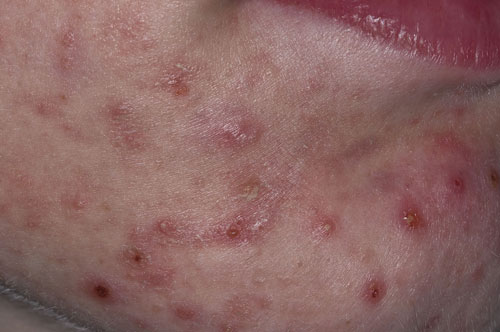
Exogenous acne as the name suggests is caused by exogenous material coming into direct contact with the skin. This has an occlusive effect on the pilosebaceous units which become blocked and inflamed. In this case, oil from the workplace was the cause. Other causes are hair oils, tar, hydrocarbons, oily cosmetics and emollients. In those susceptible to acne, non greasy, acne friendly emollients should be used. Care is also needed when choosing sunscreens which may have a similar effect on acne-prone skin. The mainstay of treatment is the withdrawal and avoidance of the causative agents.
Acne rosacea
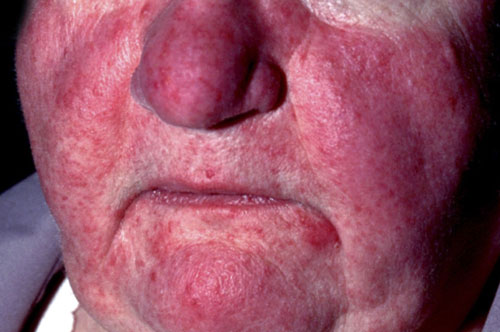
Acne rosacea can be divided into four clinical types: erythematotelangiectatic (shown here); papulopustular; phymatous; and ocular. For patients with erythematotelangiectatic rosacea flushing and erythema are the most distressing features and until recently treatment for this has been limited. A new topical treatment brimonidine, an alpha adrenergic agonist, is now available. When it is applied directly to areas of flushing a response is seen within a short period and lasts for 12 hours. Topical brimonidine is licensed for patients aged over 18 years. In studies where brimonidine has been used for up to 52 weeks it has been shown to be safe and well tolerated with few side effects.
Acne conglobata
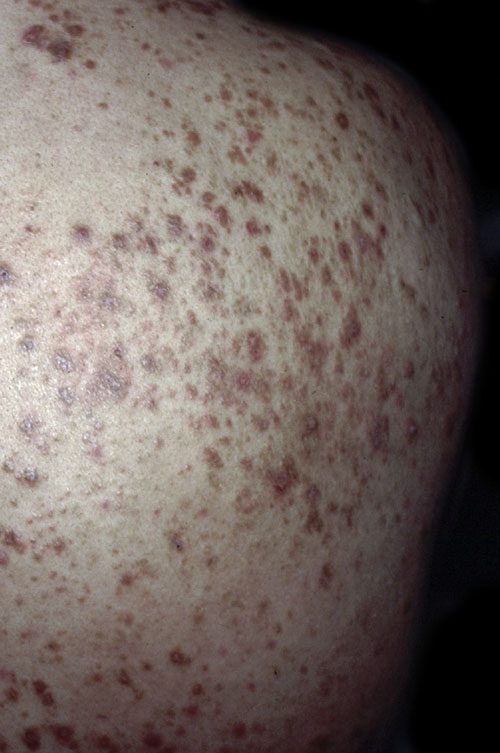
Conglobata is used to describe the severe form of acne in which cysts and abscesses are common, presenting as inflamed balls in the affected areas. The condition usually starts in the late teens and twenties and often persists until the forties. It may start as a less severe form of acne or develop in patients whose acne has previously subsided. The cause is not known, but there does appear to be a link with testosterone hence it is mainly seen in men. Interconnecting sinuses can also develop between the abscesses which contain a thick serosanguinous pus. Scarring is common including keloid scarring especially on the torso. In most cases treatment with oral isotretinoin is required.
Folliculitis
Folliculitis can have a similar appearance to acne vulgaris but clinically it is a completely separate entity. In acne, occlusion of the pilosebaceous unit occurs first, with abnormal keratinisation which is then followed by bacterial colonisation and pustule formation. In folliculitis the inflammatory cells are in the wall or lumen of the follicle and inflammation occurs as a primary event rather than a secondary event as in acne. Folliculitis can develop at any age. It is most common on areas of the body where hairs are present rather than the sebum-rich areas where acne is most common. There are many causative organisms. Pseudomonas folliculitis infection can occur after the use of a hot tub. Treatment with an oral antibiotic such as flucloxacillin or erythromycin is usually required. In recurrent cases a nasal swab to detect the carriage of staphylococcus or streptococcus can be helpful. If present these organisms can be eradicated with appropriate topical or oral antibiotics.
ARTICLE IN PDF
 Download this article in PDF format
CLICK ON IMAGES