SEARCH

Photoguide:Eczema. Practitioner 2015;259(1779):30-31
Eczema
23 Feb 2015
AUTHORS
Dr Nigel Stollery MB BS DPD, GPwSI Dermatology, Kibworth, Leicestershire, UK
Article
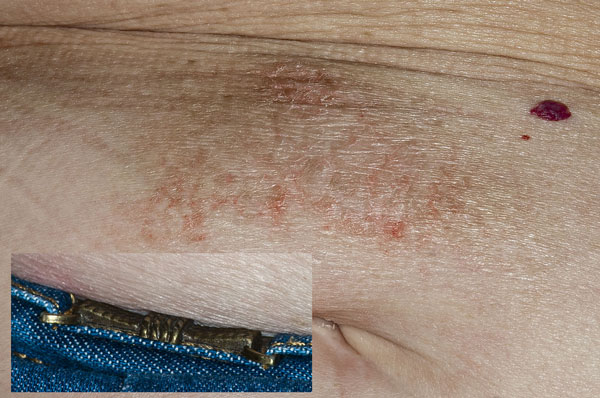
Nickel allergy
Allergy to nickel is one of the most common causes of allergic contact dermatitis. It can develop at any age and is seen in females more than males. In some cases it may resolve with time but it often persists throughout life. The resulting eczema usually develops at the point of contact with the metal. Nickel allergy can be confirmed by patch testing. Treatment includes topical steroids, emollients and, if secondary infection is present, antibiotics. Avoiding contact with nickel is essential to prevent recurrence.
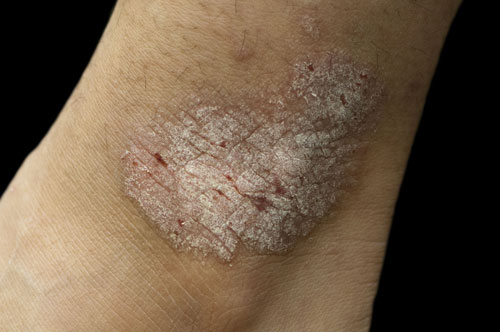
Tinea incognito
When eczema fails to respond to treatment care needs to be taken to look for clues. Infection may affect treatment but when there is no evidence of this an incorrect diagnosis may have been made. With the exception of contact dermatitis, eczema is usually symmetrical. So a unilateral unresponsive area of dry skin, which has previously been treated with steroids, may be tinea incognito caused by a dermatophyte fungus. Application of a steroid will change the appearance of the area which may lose the raised margin and scale, and may make the skin look more inflamed and pustular. If this is suspected, skin scrapings can be taken for microscopy and culture, but there may be little scale as a result of the steroid treatment. A biopsy will usually confirm the presence of the organisms.
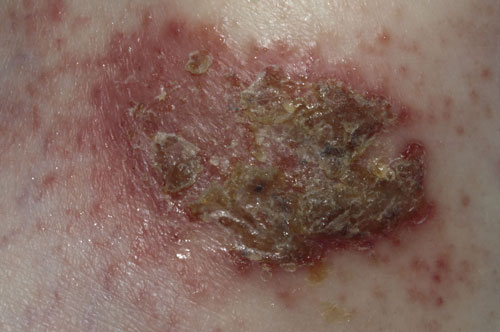
Infected eczema
Skin affected by eczema is very susceptible to secondary infection. This should always be considered if eczema suddenly fails to respond to treatment which has worked well before. The organism most commonly responsible is Staphylococcus aureus which produces a typical yellow crust, warmth and serous discharge in the infected areas. Infection may also be caused by viruses most commonly herpes simplex and molluscum contagiosum. Diagnosis of staphylococcal infection is usually made clinically but if in doubt a swab can be taken. Treatment is generally with either a topical of oral antibiotic depending on the extent and severity of the infection.
Varicose eczema
Varicose eczema is a common type of chronic eczema which usually affects the lower legs of people with varicose veins and venous insufficiency. It is estimated that around 20% of people over the age of 70 suffer from varicose eczema. Affected areas are typically pruritic, swollen, red and often have a dry scale or crust. With time haemosiderin may become deposited in the affected areas giving a dark discoloration. Untreated areas of eczema may progress to venous ulceration. Treatment consists of measures to reduce the underlying swelling and includes compression hosiery and elevation of the limb. Emollients applied regularly will decrease the dryness and, as with other forms of eczema, topical steroids will reduce the inflammation.
Atrophie blanche
Atrophie blanche is a type of scarring that usually occurs in legs affected by venous insufficiency and is often seen with varicose eczema. An idiopathic form has been described which tends to occur in younger individuals. Affected skin typically has small star-shaped or polyangular ivory coloured atrophic depressed plaques which contain small dilated capillary blood vessels and areas of haemosiderin deposition. The condition develops over a long period and can be challenging to treat. No therapy has been particularly effective in the treatment of atrophie blanche, but drugs which inhibit platelet thrombus formation or stimulate endogenous fibrinolytic activity arrest the disease in most cases.
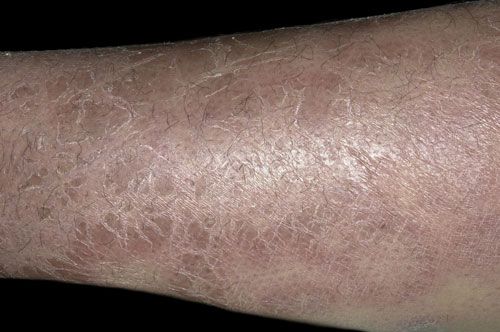
Asteatotic eczema
Also known as eczema craquele, asteatotic eczema is a common type of eczema that develops on very dry skin. It most often occurs on the shins but can also affect the upper limbs and torso. Underlying the condition is a breakdown of the normally protective skin barrier caused by factors such as low humidity, excessive bathing and overuse of soaps and detergents. The skin then dries and small fissures appear giving the cracked pavement appearance often with associated redness and occasionally blistering. Diagnosis is usually made on clinical appearance. Treatment consists of the regular application of emollients and reducing exacerbating factors such as bathing and the use of soaps. Increasing the humidity and avoiding direct heat to affected areas can also be very helpful.
ARTICLE IN PDF
 Download this article in PDF format