Tophaceous gout
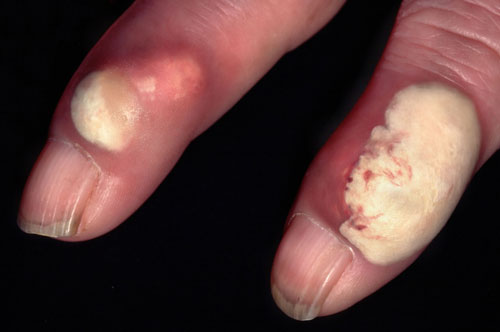
Tophaceous gout is a chronic form of gout in which uric acid crystals are deposited in soft tissue around the body. It occurs in around 10% of patients with gout. Commonly affected sites include the fingers, elbows and toes. In rare cases the ears, vocal cords and even the area around the spinal cord can be affected. Early treatment of gout is important to prevent tophi formation. Once established tophi can be treated surgically. Indications for surgery include cosmetic appearance, pain, interference with function e.g. when tendons or joints are affected, ulceration occurs, or there is proximity to nerves.
Heberden’s nodes
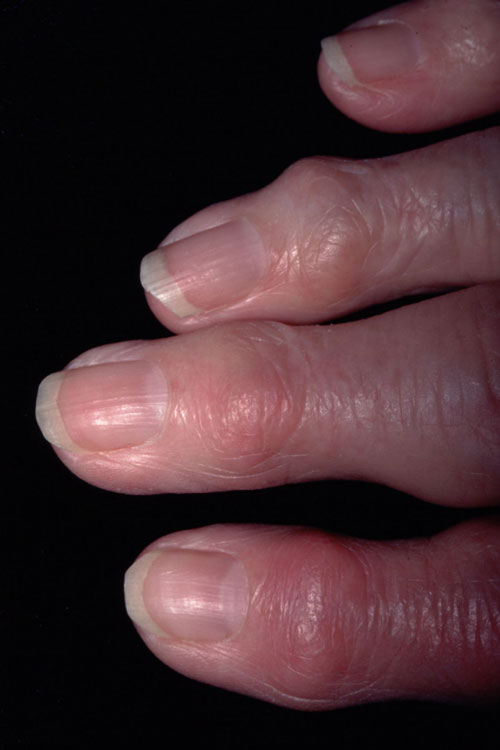
Heberden’s nodes are bony swellings that develop in the distal interphalangeal joints. These are an early sign of osteoarthritis and are caused by the development of osteophytes in response to trauma. Initially they may be associated with pain, redness, numbness and a decrease in function but with time these symptoms subside leaving permanent swelling. They are more common in women and there appears to be a genetic component. There is as yet no effective treatment.
Mallet finger
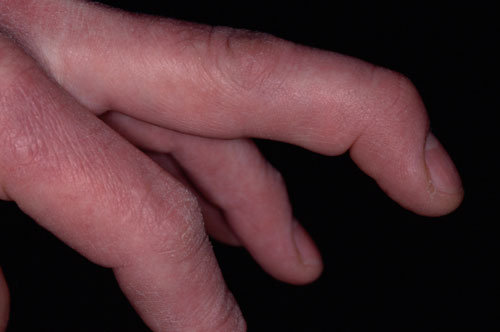
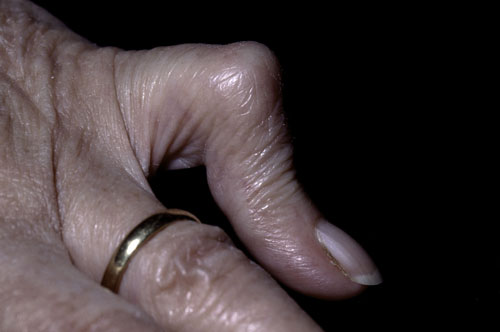
Mallet finger develops after an injury to the extensor tendon, resulting in inability to extend the proximal interphalangeal joint, which remains in a flexed position. It commonly occurs after trying to catch a ball which then strikes the finger tip causing hyperextension, hence the alternative name of baseball finger. The condition is treated by wearing a mallet splint for 6-8 weeks to immobilise the joint and prevent flexion. The splint needs to be worn all the time to allow the two ends of the tendon to heal. In 75% of cases this will be successful. In the other 25% surgery may be required.
Dupuytren’s contracture
Dupuytren’s contracture is a benign progressive condition in which there is thickening of the connective tissue of the palm leading to the formation of nodules and cords. This is turn affects extension of the fingers leading to impairment of function. The condition is usually bilateral. Treatment includes needle fasciotomy in the early stages with surgery for more advanced cases. Radiation therapy may also be used in early disease. The mechanism of action is thought to involve a reduction in the growth rate of fibroblasts in the palmar fascia.
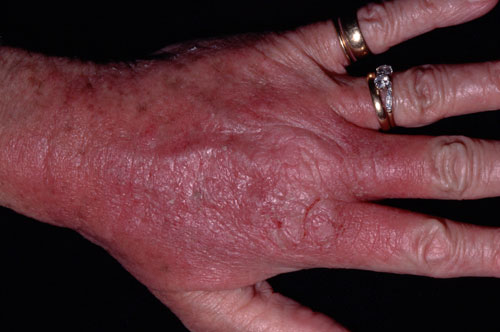
Hand dermatitis
Hand dermatitis can be a very disabling condition especially when, as in this case, it occurs as a result of contact with chemicals at work. Hairdressing is one of the most commonly affected occupations and at worst the patient may be forced to change career. Treatment options include potent topical steroid ointments, oral immunosuppressants and phototherapy. If patients fail to respond to these treatments, alitretinoin may be prescribed. NICE recommends that treatment with alitretinoin should only be commenced and monitored by dermatologists or clinicians with experience in the use of the drug in severe chronic hand eczema.
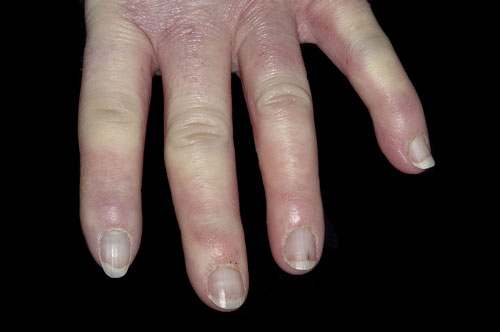
Scleroderma/Raynaud’s disease
Scleroderma is a chronic systemic autoimmune disease characterised by sclerosis of the skin. The vast majority (95%) of patients with scleroderma will develop Raynaud’s phenomenon at some time during their illness, causing typical white fingers especially in colder weather. Other hand signs include healed pitting ulcers on the finger tips and telangiectasia. Limited scleroderma (previously called CREST syndrome) affects cutaneous tissue mainly on the arms, hands and face. Diffuse scleroderma affects large areas of skin and internal organs such as the kidneys, oesophagus, heart and lungs. The treatment goal in scleroderma is to relieve symptoms, prevent worsening of the condition, manage complications (such as pulmonary hypertension) and reduce disability. Treatments include immunosuppressive drugs, high-dose steroids and occasionally surgery.
 Download this article in PDF format