Juvenile plantar dermatosis
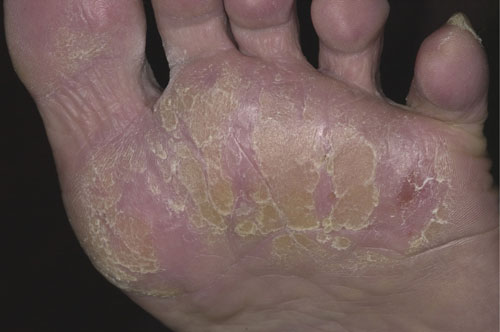
This skin condition is almost exclusively seen on the feet of children, especially boys, between the ages of four and eight. The sole of the forefoot is typically shiny and glazed with scaling. Toes may be affected but toe webs are usually spared compared with tinea infection where the toe webs are often affected. In the worst cases painful fissures may develop, usually on weight-bearing areas. Juvenile plantar dermatosis is more common in atopic children and seems to be related to friction and sweaty feet. Management is aimed at avoiding sweat and friction. Well fitting, non-synthetic footwear should be worn and cotton socks changed frequently. Greasy emollient ointments should be applied regularly. In more severe cases rest and topical steroids may be required.
Molluscum contagiosum
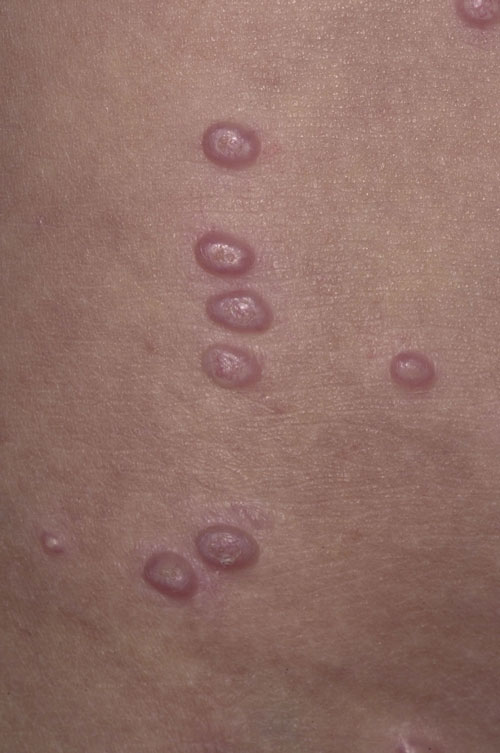
Molluscum contagiosum is caused by a DNA pox virus and spread by direct contact with an infected individual or contaminated objects. The virus replicates in the cytoplasm of epithelial cells causing cytoplasmic inclusions and enlargement of the cells. Macroscopically this produces characteristic rounded, dome-shaped pink papules 2-5 mm in diameter with an umbilicated centre and a waxy surface. There may be single papules but more commonly multiple adjacent papules are seen. Occasionally, very large mollusca may develop up to 1.5 cm in diameter. In healthy individuals this is a self-limiting condition, not requiring treatment, and the lesions persist for many months. Where treatment is required e.g. in patients who are immunosuppressed, imiquimod can be very helpful although it is not licensed for this use.
Verrucas
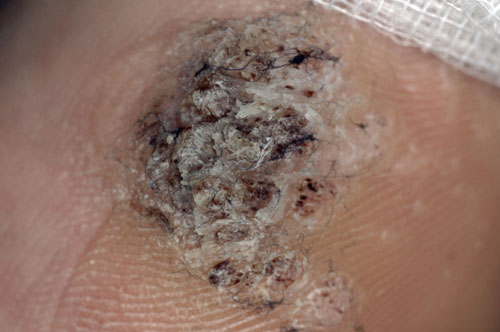
The human papilloma virus (HPV), of which 100 different types have been identified, causes a variety of skin lesions including common warts, genital warts, flat plane warts and deep palmoplantar warts. Spread is by direct or indirect contact with an incubation period of up to six months. The virus can survive freezing, and prolonged periods outside the host cells. Verrucas are commonly acquired from public swimming pools and showers. The deeper penetration of verrucas compared with warts in other locations means that they are more likely to be painful especially those that develop on weight-bearing areas. The presence of blood vessels, which bleed when the skin is pared, differentiate them from corns which have no blood vessels. Verrucas are self-limiting and do not always need treatment. If treatment is required, options include topical preparations or cryotherapy.
Impetigo
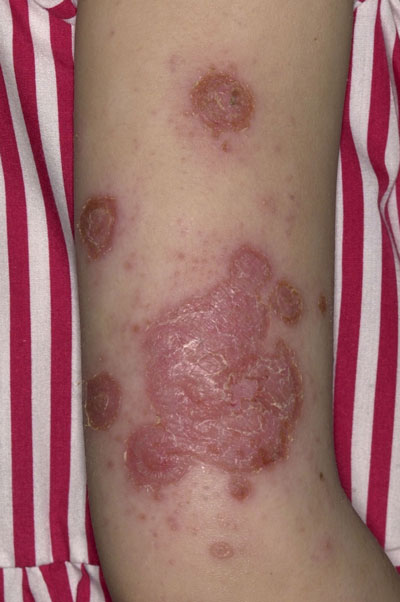
Impetigo is a common, highly contagious Gram-positive bacterial infection of the superficial epidermis. The infection can arise in normal skin or develop in an area of previous trauma such as a cut or abrasion. There are two forms, the bullous form which can resemble cigarette burns with a circular vesicle and the more common non-bullous form. The latter may be caused by Staphylococcus aureus, group A beta haemolytic streptococci or a combination of both.
The bullous type is almost exclusively caused by S. aureus. Management involves a topical or oral antibiotic and wound care. The typical honey-coloured crusts can be removed, and antibacterial washes and wet dressings applied to affected areas.
Breast buds
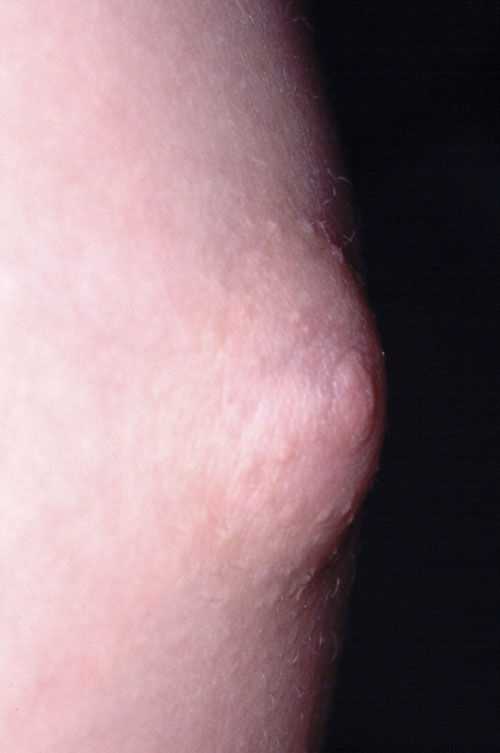
During puberty breast bud formation is normally seen in girls. It is initially unilateral and may be associated with tenderness. However, the appearance of breast buds in babies, caused by maternal hormones crossing the placenta, can cause parental concern. Occasionally there may also be a milky discharge from the nipple. Treatment is only required if mastitis develops producing red painful breast tissue in which case antibiotics may be needed. Similar breast bud development can be seen in pubertal boys. This is usually unilateral and a tender lump may be palpable beneath the nipple. Reassurance can be given and the swelling will settle as male hormone levels increase. Where there is continued bilateral breast enlargement this is called gynaecomastia and although in most cases it is benign and of no consequence there may be a more important underlying cause such as drugs, hormone-excreting tumours or genetic conditions such as Klinefelter syndrome.
Slapped cheek disease
Also called fifth disease or erythema infectiosum this is a benign childhood infection caused by human parvovirus B19. One week after exposure there are usually mild prodromal symptoms including headache, fever, sore throat and abdominal pain that last for 2-3 days. Following a 7-10 day symptom-free period the typical facial erythema develops, the so-called slapped cheek, which lasts 2-4 days. This is followed by a more widespread maculopapular rash that fades into a classic lace-like reticular pattern, which will then clear and recur for a few weeks. Diagnosis is usually made by the clinical appearance with no testing required. If the diagnosis is in doubt IgM assays or PCR testing can be helpful. The condition is benign and self-limiting with only symptomatic treatment such as NSAIDs, rest and plenty of fluids